









- bhavya gada
- No Comments
Building a fire pit sounds simple, but common assembly mistakes can lead to poor performance, safety risks, or costly repairs. Here’s what you need to know to avoid failure:
- Skipping Instructions: Ignoring manufacturer guidelines can result in uneven heat, weak structure, or unsafe designs. Always follow the manual carefully.
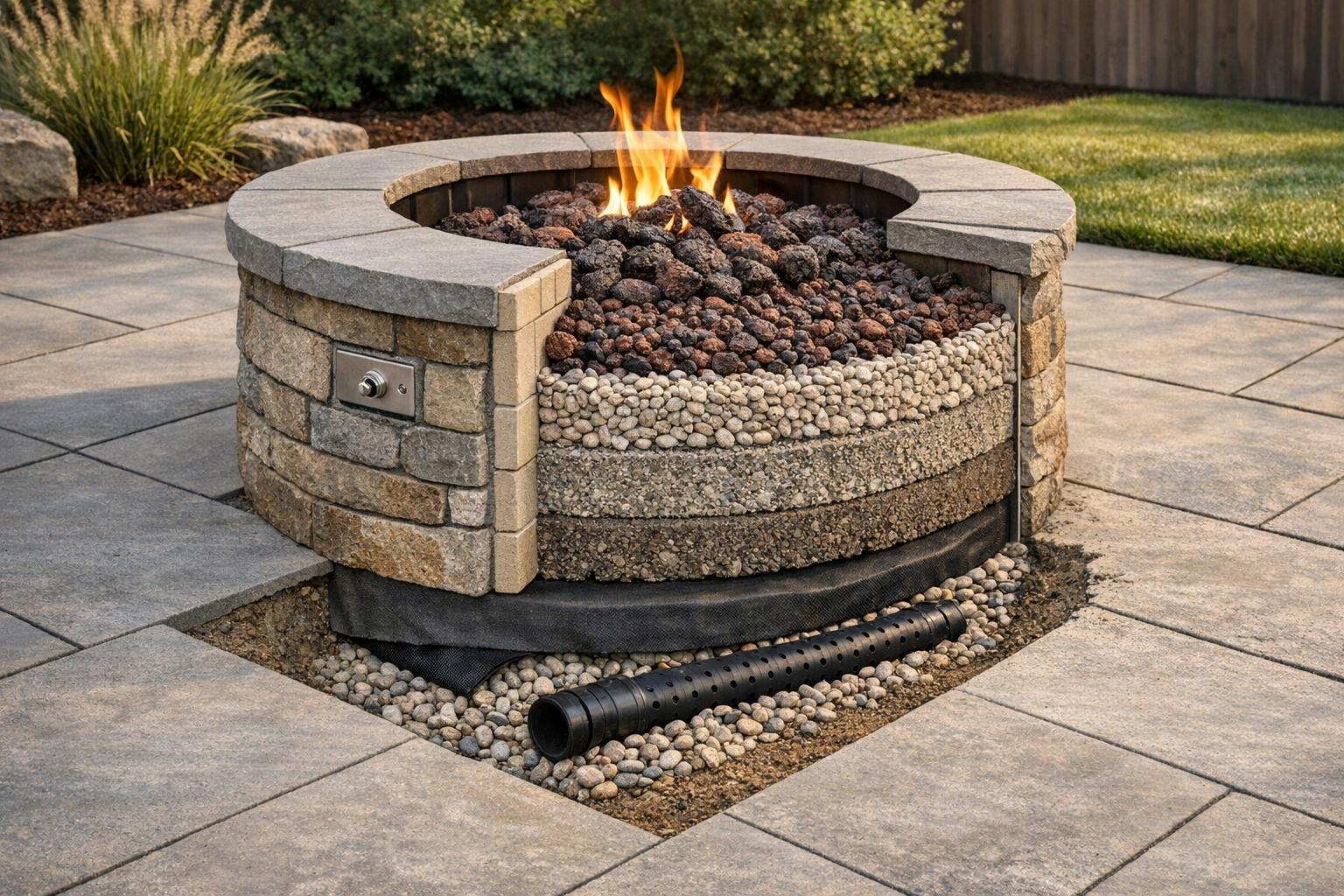
- Unstable Base: Placing a fire pit on soil or grass can cause shifting and drainage problems. Use a compacted crushed stone base for stability.
- Wrong Materials: Decorative stones may crack under heat. Opt for fire-rated materials like refractory bricks or natural stone.
- Gas Pit Errors: Faulty gas connections, poor ventilation, or ignoring clearance rules can lead to dangerous malfunctions. Hire licensed professionals for gas line installations.
- Maintenance Oversights: Failing to plan for access to gas lines or drainage systems makes future repairs difficult. Include removable panels or interlocking pavers.
Maryland homeowners face additional challenges like freeze-thaw cycles and heavy rainfall. Proper drainage, durable materials, and adherence to local codes are critical for long-lasting fire pits.
Key Takeaway: A well-constructed fire pit begins with proper planning, the right materials, a stable foundation, and compliance with safety guidelines. For gas fire pits, professional installation is essential.
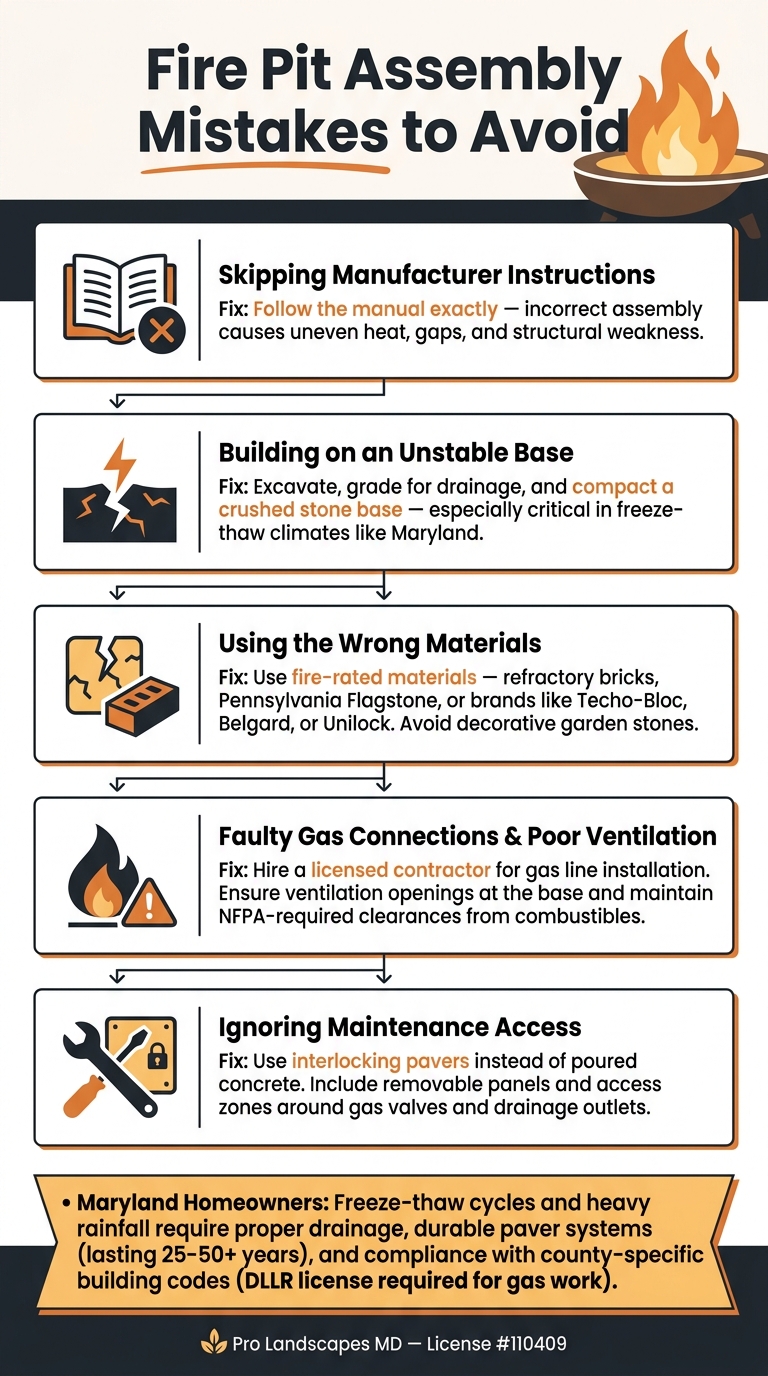
Fire Pit Assembly Mistakes to Avoid: A Quick Reference Guide
Fire Pit Burner CLOGGED! How to Troubleshoot and FIX Your Flame + Bonus Tips
sbb-itb-843f8be
Common Assembly Mistakes To Avoid
When it comes to fire pits, most problems boil down to three key missteps: ignoring the manufacturer’s instructions, building on an unstable base, and using inappropriate materials. Any of these can lead to serious issues with both the structure and performance of your fire pit.
Skipping or Misreading Manufacturer Instructions
Overlooking or skimming the manual is a recipe for trouble. These instructions are there for a reason – they outline the exact steps to follow and explain how each component contributes to the fire pit’s stability and heat resistance. Missing details like proper measurements or assembly sequences can cause gaps, leading to uneven heat distribution and poor weight support. The result? A fire pit that’s not just inefficient but potentially unsafe.
Building on the Wrong Base
A solid foundation is critical for a fire pit’s longevity. Placing it directly on soil, grass, or loose dirt creates drainage problems and compromises stability. This is especially true in areas like Maryland, where freeze-thaw cycles are common. When water seeps into an unstable base and freezes, it expands, causing the foundation to shift or heave. This can leave you with a crooked and unsafe fire pit.
The solution? Start with proper site preparation. Excavate the area, grade it for drainage, and lay down a compacted base of crushed stone. This ensures stability and helps prevent future issues.
Using the Wrong Materials
Choosing the wrong materials can lead to rapid wear and tear. For instance, decorative garden stones may look nice, but they retain moisture and can crack or explode when exposed to high heat.
"We only use the highest-quality materials to ensure that your hardscaping projects stand the test of time." – Pro Landscapes MD [1]
Instead, opt for fire-rated materials like refractory bricks, natural stones such as Pennsylvania Flagstone, or engineered options from trusted brands like Techo-Bloc, Belgard, and Unilock. These materials are designed to handle extreme heat and the challenging weather conditions typical of the Baltimore and Washington, D.C. area [1]. Additionally, using polymeric sand between the stones can further enhance durability. This sand locks the pieces in place and resists erosion, even during harsh seasonal weather changes [5].
Avoiding these common mistakes is essential to creating a fire pit that’s both durable and safe, setting the stage for addressing more specific issues with gas fire pit assembly.
Preventing Gas Fire Pit Assembly Errors
Assembling a gas fire pit comes with its own set of challenges. Unlike simpler fire pits, gas models involve fuel lines, burners, and ventilation systems, making it crucial to follow safety standards carefully. Mistakes here can be more than just expensive – they can pose serious safety risks. Let’s break down some of the most common issues and how to avoid them.
Faulty Gas Connections and Components
One of the biggest culprits behind gas fire pit malfunctions is improper gas connections. Problems like undersized gas lines, misaligned burners, or blocked vents can disrupt the system’s performance. For instance:
- Inadequate gas line sizing can result in weak or uneven flames.
- Misaligned burners may cause incomplete combustion, leading to soot buildup on nearby surfaces. This is a clear sign that the fuel isn’t burning cleanly.
- Blocked vents restrict oxygen flow, which can create unusual noises signaling turbulent airflow.
These issues aren’t just minor annoyances – they can lead to gas leaks or even fire hazards. Weak flames, soot, or strange sounds are all red flags that something’s wrong. To prevent these problems, it’s essential to have gas lines installed and tested by licensed professionals. For example, in Maryland, only state-licensed contractors, like Pro Landscapes MD (License #110409), are authorized to handle such installations [6].
Once gas connections are correctly set up, the next step is ensuring proper ventilation and clearance.
Ventilation and Clearance Requirements
Even with flawless gas connections, poor ventilation or insufficient clearance can undermine safety and performance. The National Fire Protection Association (NFPA) and local building codes specify minimum clearances from combustible materials like fences, pergolas, outdoor kitchens, and overhangs. Ignoring these rules can lead to overheating nearby structures or dangerous gas buildup.
Ventilation is equally important for the burner enclosure. A sealed or poorly vented enclosure traps heat and prevents combustion gases from escaping, which can cause the burner to malfunction or allow gas to collect at ground level. To avoid these risks:
- Ensure the fire pit enclosure has ventilation openings at its base.
- Never install a gas fire pit in a fully enclosed outdoor area without consulting a professional to assess ventilation needs [2].
Building With Maintenance in Mind
When constructing a fire pit, it’s not just about the initial build – it’s about ensuring it remains functional and safe over time. Regular upkeep is essential, as components like gas lines, drainage systems, and ignition mechanisms need periodic checks to prevent costly repairs. Planning for maintenance from the start ensures your fire pit is both durable and easy to service.
"Landscape designers are the visionaries, blending aesthetics with functionality to create a cohesive plan that suits your taste and lifestyle." – Pro Landscapes MD [3]
This balance between style and practicality becomes especially important when repairs are needed later on.
Building in Access Points
One of the most common mistakes during fire pit construction is failing to plan for future access. Key parts like gas burners, ignition systems, and drainage pathways need occasional cleaning or inspection. Without removable panels, lift-out burner pans, or cleanout caps, even basic repairs might require dismantling parts of the structure.
A smart workaround is using interlocking pavers or stone sections instead of solid poured concrete. If a paver gets damaged or needs to be removed for maintenance, it can be replaced individually. By contrast, repairing solid concrete often means breaking apart large sections, even for minor fixes [5]. During the design phase, be sure to allocate "access zones" around critical areas like gas valves and drainage outlets – before construction begins.
Avoiding Permanent Sealing Mistakes
Sealing is vital for protecting surfaces from stains and weather damage, but it’s easy to overdo it. Applying sealant over joints or panels that cover functional components can make them inaccessible, effectively locking them in place [5].
Instead, consider polymeric sand for filling joints in a fire pit enclosure. It forms a strong bond while allowing for the natural expansion and contraction caused by Maryland’s fluctuating temperatures [5]. Use surface sealants only on exposed areas, leaving functional components accessible for future maintenance.
"With proper care and maintenance, hardscaping materials such as stone and concrete can last decades." – Pro Landscapes MD [1]
However, that durability depends on thoughtful planning. Sealing over critical components doesn’t protect your fire pit – it just makes inevitable repairs more complicated and expensive.
Fire Pit Assembly Considerations for Maryland Homeowners
Maryland’s weather swings between humid summers and freezing winters, putting outdoor structures to the test. A fire pit built without considering these conditions can quickly deteriorate. To withstand the elements, homeowners need to prioritize durability and safety in their design choices.
Handling Freeze-Thaw Cycles and Drainage
In Maryland, water – not fire – is the biggest threat to fire pits. The state’s freeze-thaw cycles can wreak havoc on poorly designed structures. When water infiltrates the base and freezes, it expands, creating pressure that can damage rigid materials like poured concrete. Materials such as interlocking pavers and natural stone are better suited to these conditions because they allow for slight movement, reducing the chances of cracking. Properly installed paver-based systems can last 25 to 50 years or more, making them an ideal choice for fire pit surrounds in this region [5].
Additionally, poor drainage can lead to soil erosion beneath the fire pit, causing it to shift or sink over time. To prevent this, start with professional grading to ensure water flows away from the fire pit area. A compacted layer of crushed stone should serve as the base before installing surface materials. In areas prone to heavy rainfall, such as Gaithersburg or Silver Spring, consider adding a French drain or a dry riverbed to channel runoff away from the structure [4].
"Poor drainage can lead to a variety of problems that can damage your landscape, home foundation, and overall property." – Pro Landscapes MD [4]
Meeting Local Code Requirements
Beyond structural considerations, Maryland homeowners must adhere to local building codes to ensure safety and compliance. Gas fire pits, in particular, are subject to strict rules regarding setback distances (the required distance from structures, fences, and property lines), gas line connections, and ventilation. These regulations vary by county, meaning the requirements in Howard County may differ from those in Montgomery or Prince George’s County.
Before starting any project, confirm that your contractor holds a valid license with the Maryland Department of Labor, Licensing & Regulation (DLLR). For instance, Pro Landscapes MD operates under license #110409. For further guidance, you can also contact the Maryland State Board of Examiners of Landscape Architects at 410-230-6322. Ensuring compliance with these codes not only protects your investment but also guarantees a safe and legally approved installation.
Conclusion: How To Build a Fire Pit That Lasts
The most common reasons fire pits fail? A weak base, poor drainage, using the wrong materials, or ignoring local building codes. The good news is that these problems can be avoided with proper planning right from the start.
Lay the groundwork with a compacted crushed stone base. Choose durable materials like Techo-Bloc, Belgard, or Pennsylvania flagstone. Make sure to include access points for gas components and avoid sealing off areas that might need inspection later. As Pro Landscapes MD explains, "With proper care and maintenance, hardscaping materials such as stone and concrete can last decades" [1].
For Maryland homeowners, there’s even more to think about. The region’s freeze-thaw cycles, heavy rainfall, and specific permit requirements add extra challenges. Addressing these details upfront ensures your fire pit will stand the test of time instead of wearing out quickly [5].
If your project involves gas lines, advanced drainage systems, or a custom design, hiring a professional is the smart move. Companies like Pro Landscapes MD specialize in fire pit installations across central Maryland, including Howard County, Montgomery County, and Prince George’s County. With their deep knowledge of local codes and commitment to using high-quality materials, they provide installations you can count on. With 15 years of experience and an A+ rating from the BBB, their reputation speaks volumes [6].
"Our hardscaping services provide both functionality and aesthetic appeal… our expert team will deliver high-quality craftsmanship tailored to your needs." – Pro Landscapes MD [1]
FAQs
How deep should a fire pit base be?
The depth of a fire pit base varies based on soil type and the design of the pit, but it needs to be deep enough to ensure the stone layers remain stable. Generally, you’ll want to start with a subbase made from ASTM No. 2 stone, followed by a base layer of No. 57 stone (3/4-inch gravel), and finish with a top layer of No. 8 stone. Compacting the base is crucial to avoid shifting or drainage problems over time.
How can I tell if my fire pit materials are heat-safe?
To build a fire pit that can withstand high temperatures, it’s essential to use materials specifically designed for heat resistance. Pro Landscapes MD relies on trusted, professional-grade options like Techo-Bloc for its strength and El Dorado Stone for its decorative, long-lasting durability. Steer clear of materials that aren’t heat-rated, as they can crack or deteriorate when exposed to intense heat. Choosing specialized hardscaping products ensures your fire pit remains safe, sturdy, and ready to enjoy for years to come.
When should I hire a pro for a gas fire pit?
If your gas fire pit project involves tricky conditions – like tough soil, steep slopes, or areas with heavy foot traffic – it’s a smart move to hire a professional. While straightforward setups might be manageable as a DIY project, bringing in an expert guarantees safety and durability over time. Pro Landscapes MD excels in creating custom fire pits, helping you dodge expensive errors and ensuring your outdoor space is practical and built to stand the test of time.
Chat with Us