









- bhavya gada
- No Comments
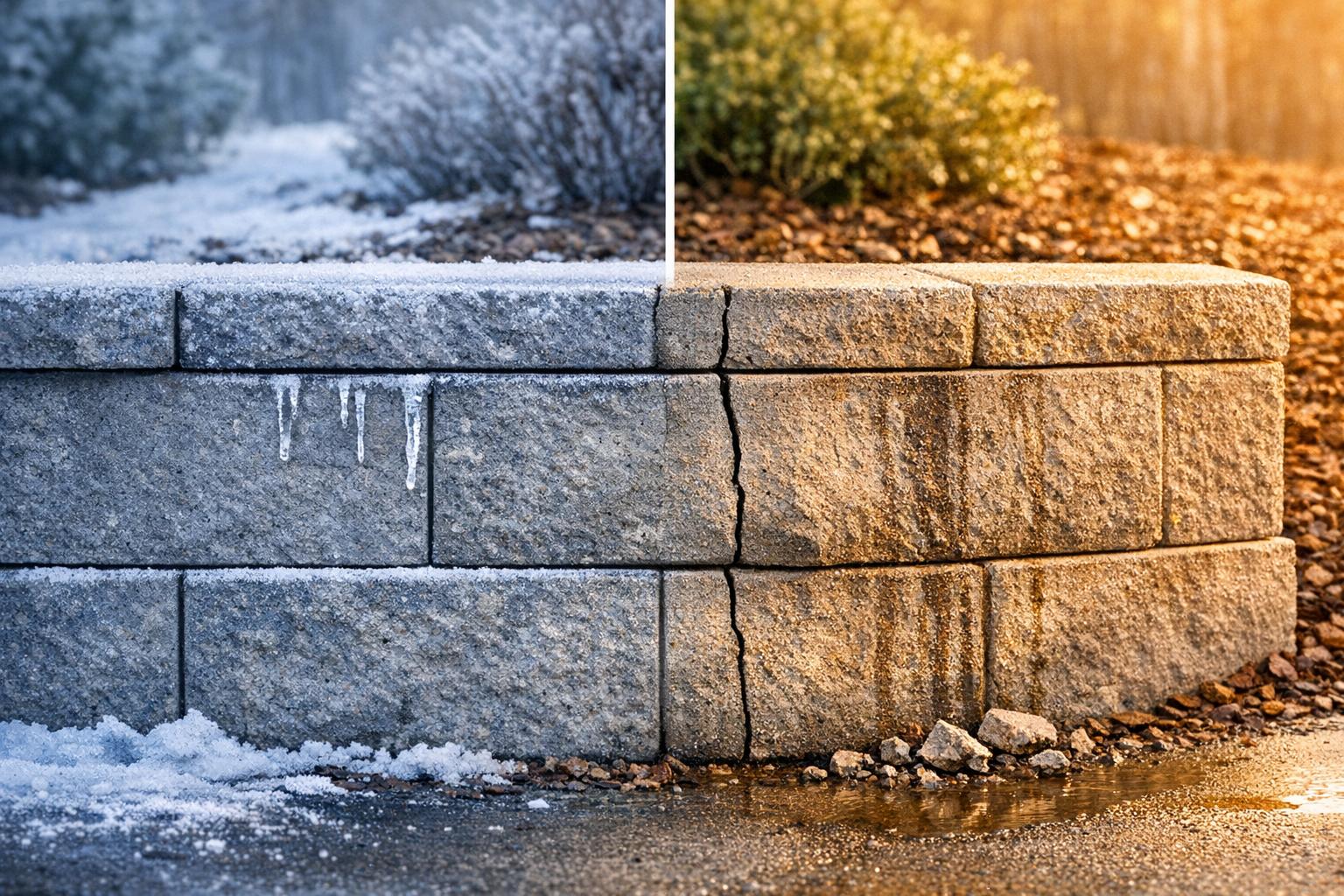
Freeze-thaw cycles can wreak havoc on retaining walls, especially in areas like Maryland with fluctuating winter temperatures. These cycles occur when water seeps into cracks, freezes, expands, and then melts – gradually weakening the wall over time. Without proper drainage and maintenance, this process can lead to cracking, bulging, leaning, or even wall failure.
Key Takeaways:
- How Damage Happens: Water freezes inside cracks, expands by ~9%, and stresses the wall. Repeated cycles worsen the damage.
- Common Signs: Look for vertical cracks, bulging sections, misaligned stones, or white chalky deposits (efflorescence).
- Prevention Tips: Ensure proper drainage with weep holes, backfill with gravel, and avoid piling snow against walls.
- Repair Strategies: Minor cracks can often be sealed DIY, but leaning or bowing walls require professional help.
For Maryland’s climate, where freeze-thaw cycles are frequent, regular inspections and proactive repairs are essential to prevent costly structural damage.
How Freeze-Thaw Cycles Damage Retaining Walls: Process and Prevention
How Freeze-Thaw Cycles Damage Retaining Walls
The Freeze-Thaw Process
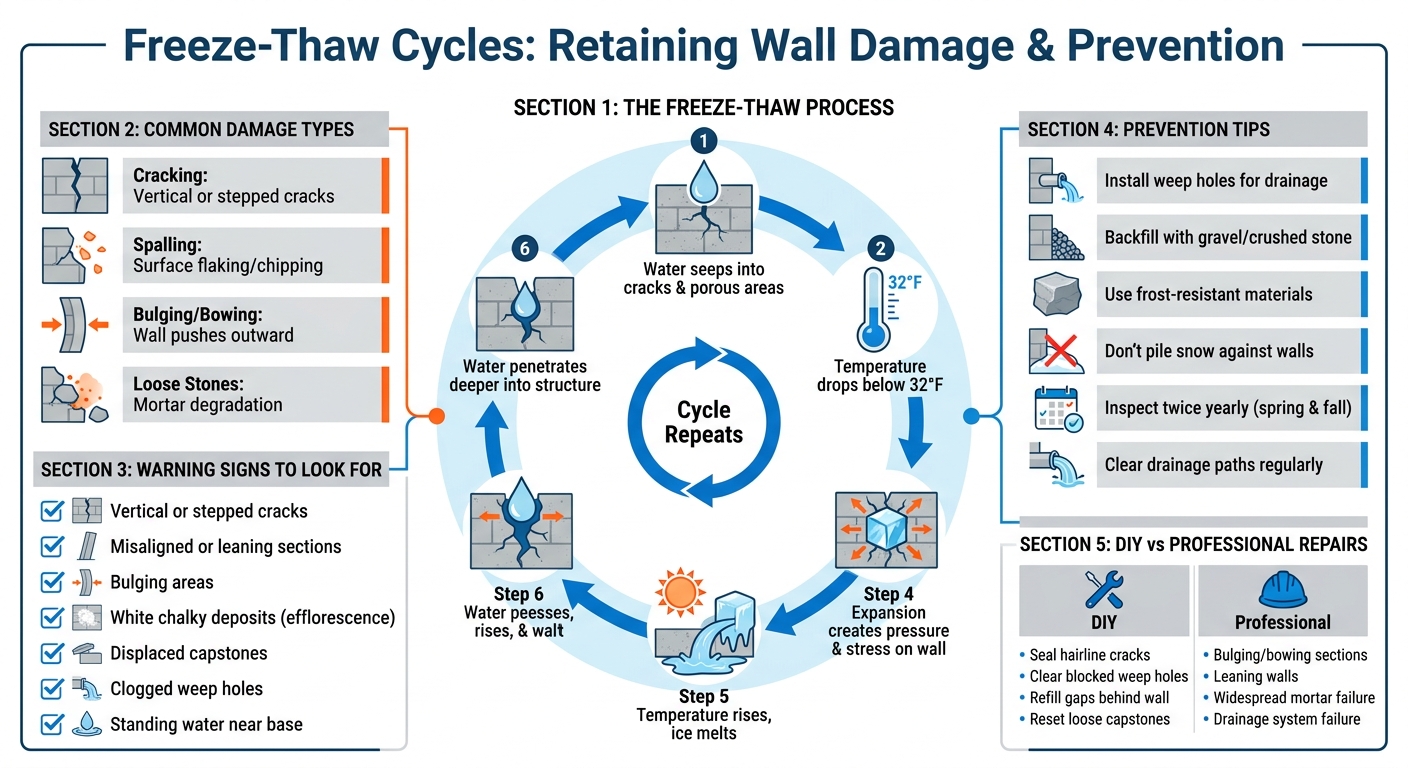
When water seeps into cracks or porous areas of a retaining wall and temperatures dip below 32°F, the water freezes and expands. This expansion exerts pressure on the wall, causing stress and worsening existing cracks. As temperatures rise again, the ice melts, allowing water to penetrate deeper into the structure. This repeated freezing and thawing cycle leads to progressively worse damage over time.
"The freeze-thaw cycle occurs when water seeps into cracks or porous surfaces, freezes, and expands as temperatures drop below freezing." – Geof Pelaia, DANE Contractors [2]
Common Types of Damage
The freeze-thaw process leaves retaining walls vulnerable to a variety of issues:
- Cracking: Vertical or stepped cracks often indicate structural movement caused by freeze-thaw stress.
- Spalling: The surface of the wall flakes or chips away, exposing the underlying material to further damage.
- Bulging and Bowing: Expanding frozen soil exerts pressure on the wall, causing it to bulge or bow outward.
- Loose or Displaced Stones: Repeated cycles degrade the mortar, leading to stones becoming loose or shifting out of place.
Beyond visible damage, internal problems can also arise. Soil behind the wall may separate and create gaps that collect water during precipitation. Ice can also clog drainage paths and weep holes, trapping moisture and increasing pressure during the next freeze [1][2].
Why Maryland’s Climate Makes It Worse
Maryland’s winters are especially tough on retaining walls due to frequent temperature fluctuations around the freezing point. Instead of one prolonged freeze followed by a steady thaw, the state experiences multiple freeze-thaw cycles in a single week. This rapid cycling amplifies damage, as walls are exposed to constant stress. Additionally, Maryland’s winter rains often saturate the ground before overnight freezes, ensuring that walls remain soaked and primed for further deterioration [1].
sbb-itb-843f8be
Signs of Freeze-Thaw Damage
Visible Damage
Maryland winters often reveal the toll of freeze-thaw cycles on retaining walls. Keep an eye out for vertical or stepped cracks along mortar joints. If the mortar looks crumbly or recessed, it’s likely a result of repeated freeze-thaw stress.
Another red flag is misalignment. Step back and examine your wall from multiple angles. Look for sections that lean forward, bulge outward, or deviate from a straight line. These distortions typically occur when frozen soil expands behind the wall, pushing against it. Additionally, displaced capstones or face stones suggest the structure’s integrity has been compromised.
Pay attention to efflorescence, the white, chalky deposits that form when water seeps into the wall material. While efflorescence itself doesn’t cause structural harm, it signals moisture issues that can worsen with freezing temperatures. Be sure to inspect for drainage problems, like standing water or clogged weep holes, as these can exacerbate freeze-thaw damage [1][3].
"A retaining wall inspection after freeze-thaw cycles helps catch problems early, while repairs remain manageable and before spring moisture adds new stress." – Lassana’s [1]
These visual clues often hint at deeper, more serious structural problems.
Hidden Structural Problems
Not all damage is visible at first glance. Some issues lurk beneath the surface, threatening the wall’s stability. For instance, uneven surfaces along the top of the wall – such as dips, rises, or a wavy appearance – could indicate base failure or foundation disturbances caused by frost heave. Test the capstones and face stones; if they shift or wobble, it’s a sign of mortar failure [1].
Also, check for gaps between the retaining wall and adjacent structures, like stairs, walkways, or building foundations. These gaps suggest significant movement and settling due to shifting soil. Look behind the wall for areas where the soil has sunk or pulled away, creating voids. These voids trap water, increasing pressure during rain and accelerating damage. When left unchecked, these hidden issues can turn minor cracks into major structural failures, especially with the arrival of spring moisture [1][3].
Retaining Wall Drainage Problem with Snow Melt Spring Thaw
How to Prevent Freeze-Thaw Damage
Freeze-thaw damage happens when moisture infiltrates structures, freezes, and expands, causing cracks or shifts. To prevent this, you need to tackle the root causes: moisture buildup, poor drainage, and weak materials. Here’s how to protect your retaining wall.
Install Proper Drainage
Water is the main culprit behind freeze-thaw damage. When it gets trapped behind a retaining wall, it freezes, expands, and exerts pressure that can crack or displace the structure. A well-planned drainage system can stop this chain reaction.
- Weep Holes: These small openings allow water to escape, but they must stay clear. Regularly check for blockages like debris, ice, or leaves, as clogged weep holes lead to water accumulation and hydrostatic pressure.
- Backfill with Crushed Stone or Gravel: These materials help water flow downward and away from the wall. For extra protection, consider installing French drains or dry riverbeds to direct water away from the base.
- Watch for Warning Signs: After a thaw, look for standing water or muddy soil near the wall – this could mean your drainage system isn’t working properly.
- Avoid Snow Piles: Don’t pile snow against your wall in winter. Melting snow can saturate the soil, and refreezing can block drainage paths. Also, refill and compact any soil that has pulled away from the wall to prevent water pockets from forming.
Once you’ve addressed drainage, the next step is to ensure your wall is made of materials that can withstand the challenges of freezing and thawing.
Choose the Right Materials and Design
The materials and construction methods you use play a big role in how well your wall handles freeze-thaw cycles.
- Use Frost-Resistant Materials: Choose materials designed to endure freezing and thawing without cracking or crumbling. These are especially important in regions like Maryland, where temperature fluctuations are common.
- Reinforce with Geogrid: Geogrid reinforcement helps anchor the wall into the soil, making it more resistant to the outward pressure caused by frozen, expanding earth. Pair this with proper drainage aggregate to reduce water saturation and boost the wall’s strength.
- Include Weep Holes: Properly spaced weep holes are key to long-term stability, allowing trapped water to escape before it can freeze and cause damage.
Inspect and Maintain Regularly
Even with the best materials and drainage systems, regular upkeep is essential to catch potential problems early. Aim to inspect your wall twice a year – once in spring and once in fall.
- Spring Inspections: After the snow melts, check for leaning, bulging, or shifting blocks. This is when freeze-thaw damage from winter becomes most noticeable.
"A small issue in fall can become a major problem by spring." – Q&A Landscaping [4]
- Fall Inspections: Prepare for winter by repairing weak spots. Fix any crumbly or recessed mortar joints to keep moisture out. Test capstones and face stones for movement – loose stones indicate mortar failure that could allow water to seep in. Clear all drainage paths, including weep holes, and check the soil behind the wall for gaps or separation. Refill and compact these areas to restore proper support [1].
Repairing Freeze-Thaw Damage
Freeze-thaw damage can worsen quickly if left unaddressed, potentially leading to serious structural problems. Tackling these issues early, especially in the spring, can help prevent further deterioration. Spring is the perfect time for repairs, as it allows you to address winter damage before spring rains exacerbate the problem [1]. The steps below offer guidance on managing freeze-thaw damage and ensuring your wall remains strong over time.
Small Repairs
Minor damage, if treated promptly, can save you from bigger headaches later. Many small repairs are manageable without professional help. For instance:
- Seal hairline cracks: Use masonry patching compound to keep moisture from seeping in.
- Clear blocked weep holes: Remove debris or ice to restore proper drainage.
- Test capstones and face stones: If they’re loose, it often means mortar has failed. Reset them with fresh mortar or masonry adhesive.
- Refill gaps behind the wall: Add soil and compact it firmly to improve support and drainage.
These straightforward fixes help reduce water infiltration and minimize the risk of repeated freeze-thaw damage in the future.
Major Repairs and Rebuilding
When the damage goes beyond small cracks or loose stones, professional assistance becomes necessary. Warning signs of more extensive problems include:
- Bulging or bowing sections: Often caused by soil expansion or poor drainage, these issues won’t resolve without intervention.
- Leaning walls: These require realignment, grading adjustments, and support restoration.
- Vertical or stepped cracks: Such patterns often indicate deeper structural movement.
- Widespread mortar failure: This compromises the wall’s integrity and calls for rebuilding.
- Standing water or soil erosion: These issues near the wall’s base point to drainage and stability problems that need expert evaluation.
In most cases, major repairs involve rebuilding damaged sections and addressing the underlying causes, like drainage or soil stability.
DIY vs. Professional Repairs
The table below can help you decide whether a repair is something you can handle yourself or if it’s time to call in a professional.
| Repair Task | DIY Recommended | Professional Required |
|---|---|---|
| Sealing hairline surface cracks | Yes | No |
| Clearing blocked weep holes | Yes | No |
| Refilling/compacting sunken soil behind wall | Yes | No |
| Resetting loose capstones | Yes | No |
| Correcting bulging or bowing sections | No | Yes |
| Realigning leaning or tipping walls | No | Yes |
| Repairing widespread mortar failure | No | Yes |
| Addressing standing water/drainage failure | No | Yes |
| Structural evaluations and root cause analysis | No | Yes |
Pro Landscapes MD‘s Freeze-Thaw Protection Services

Drainage and Retaining Wall Solutions
With 16 years of experience, Pro Landscapes MD has become a trusted name in protecting Maryland retaining walls from the challenges of freeze-thaw cycles. Their approach combines effective drainage systems with durable wall designs to handle the stress caused by Maryland’s fluctuating temperatures [1].
Their expertise includes French drain installations and stormwater management, both of which prevent water from pooling and creating pressure that can force masonry outward [1]. By addressing grading issues and improving structural support, they tackle the root causes of wall instability.
"Correcting grading, drainage, and structural support together prevents repeat issues" [1].
When building retaining walls, they focus on proper base preparation, installing drainage systems, and using the right backfill materials to reduce pressure during freeze-thaw cycles [5]. They also rely on interlocking pin systems to ensure blocks stay in place, even as soil expands and contracts with temperature changes [5]. Their commitment to quality has earned them an impressive 4.74/5 average rating from 298 online reviews, with customers frequently highlighting their professionalism and attention to detail [6].
Their technical know-how is complemented by a deep understanding of Maryland’s climate, allowing them to create solutions tailored to the region’s unique weather challenges.
Local Expertise Across Maryland
Pro Landscapes MD leverages its local knowledge to deliver solutions that work specifically for Maryland’s conditions. They serve communities across Howard County (including Dayton, Clarksville, Ellicott City, and Columbia), Montgomery County (Bethesda, Rockville, Silver Spring, Gaithersburg, and Potomac), as well as areas like Frederick and Baltimore [6]. This regional focus allows them to design retaining walls and drainage systems that can withstand central Maryland’s freeze-thaw cycles, keeping structures stable through the area’s frequent winter temperature swings.
Their service area also covers parts of the Washington, DC region, where understanding local factors like frozen soil expansion, heavy snow loads, and blocked drainage paths is key to ensuring long-lasting wall stability [1]. By combining technical skill with local expertise, Pro Landscapes MD delivers solutions that stand up to the toughest seasonal challenges.
Conclusion
Freeze-thaw cycles can seriously weaken retaining walls. When water seeps into cracks or mortar joints, freezes, and expands, it creates pressure that enlarges these openings. Over time, this leads to leaning, bulging, and other structural problems [2]. To avoid these issues, it’s crucial to maintain proper drainage, seal any cracks before winter, and schedule inspections in the spring and fall to catch and fix minor issues early [1]. Taking these steps can help prevent costly structural failures down the line.
For walls already showing signs of damage or movement, it’s important to address the root causes, such as poor grading or drainage problems, rather than just treating surface-level symptoms [1]. A thorough approach like this can help stop the damage from recurring.
Pro Landscapes MD brings 16 years of experience in freeze-thaw protection to central Maryland. Their expertise spans drainage remediation, stormwater management, and retaining wall construction – solutions specifically designed for the region’s tough climate. With a 4.74/5 rating from 298 reviews, they’ve built a reputation for delivering results that last [6]. If you’ve noticed freeze-thaw damage or want to prevent it, reach out to Pro Landscapes MD for a professional evaluation. Serving Howard County, Montgomery County, and nearby areas, their team combines technical skill with local expertise to protect your property from ongoing freeze-thaw issues.
FAQs
How many freeze-thaw cycles does Maryland typically experience each winter?
Maryland experiences numerous freeze-thaw cycles each winter, as temperatures often swing above and below freezing. This constant fluctuation causes moisture within materials to expand and contract, creating stress that can weaken retaining walls and other outdoor structures over time.
When is a crack in a retaining wall an emergency?
Cracks in a wall can escalate into an emergency when they start to widen, deepen, or cause parts of the wall to separate or lean forward. These changes often signal a structural problem that might eventually result in a collapse. Tackling these issues quickly is crucial to avoid further damage and to maintain safety.
What drainage upgrade helps the most behind a retaining wall?
Proper drainage is key to maintaining the stability of a retaining wall. The best upgrades include installing drain pipes, French drains, and stormwater management systems. These solutions work to control water flow, preventing buildup and minimizing the pressure that can lead to structural issues – especially during freeze-thaw cycles.
Chat with Us