









- bhavya gada
- No Comments
If your French drain still leaves water in place more than 24–48 hours after a storm, something is wrong. I’d keep it simple: check the yard after heavy rain, clear grates and basins, make sure the outlet is open, and test the line with a hose. In central Maryland, clay soil slows drainage and pushes more silt into the system, so small clogs can turn into bigger pipe or grading problems.
Here’s the short version:
- Walk the yard after storms and look for soggy grass, mulch washout, or water near the house.
- Clear leaves, sediment, and mulch from grates, basins, and cleanouts.
- Check the outlet and make sure water can discharge without blockage.
- Flush light buildup with a hose from the high end of the line.
- Watch for warning signs like muddy outlet water, repeat pooling, basement dampness, musty smells, or water moving toward the home.
- Call for service if water sits longer than 48 hours, flow stays weak, or the pipe may be crushed, blocked by roots, or out of slope.
The main point: routine checks help you catch clogs early, but repeat pooling usually means the drain needs more than basic cleaning.
I’ve boiled the article down so you can see what to check, what you can handle yourself, and when it’s time to get help.
How to Clean French Drain Including Gravel, Complete Guide for Homeowners
sbb-itb-843f8be
Seasonal Inspection Checklist
Use this checklist after storms and at the start of each season. Begin with the seasonal checks, then confirm flow after major rain.
| Inspection Task | When to Check | Local Note |
|---|---|---|
| Yard & Foundation Walk | After heavy storms | Check for standing water, mulch washout, or soggy turf near the foundation [1] |
| Grate & Basin Check | Fall (after leaf drop) | Clear leaves and mulch before winter to prevent clogs |
| Outlet & Emitter Check | Spring (after thaw) | Make sure the discharge point isn’t blocked by winter sediment or new growth |
| Hose Flow Test | Spring | Verify the line is clear of silt after the spring thaw and heavy rains [1] |
Walk the Yard After Heavy Rain
After a storm, walk the drain path while the ground is still wet. This is often when problems show themselves. Look for standing water, soggy turf, or mulch that has washed away from beds near the house [1].
Check Grates, Basins, and Cleanouts
Check surface inlets in fall before debris compacts over winter. Leaves, grass clippings, and mulch can build up over grates fast and slow water entry before spring rains begin.
Inspect the Outlet for Clear Discharge
The outlet is the final discharge point, so it needs to stay open. Check that soil, grass, weeds, or other debris aren’t blocking the opening. Then run a hose into the upstream cleanout or basin and confirm strong discharge at the outlet [1]. If flow is weak or blocked, move on to cleaning and basic upkeep.
Routine Cleaning and Basic Upkeep
If your inspection shows only light buildup, deal with it early. That’s the easiest time to fix it. French drain care is pretty simple: keep debris out, keep the surface open, and rinse away light buildup with a hose.
Clean Inlet Grates and Remove Organic Debris
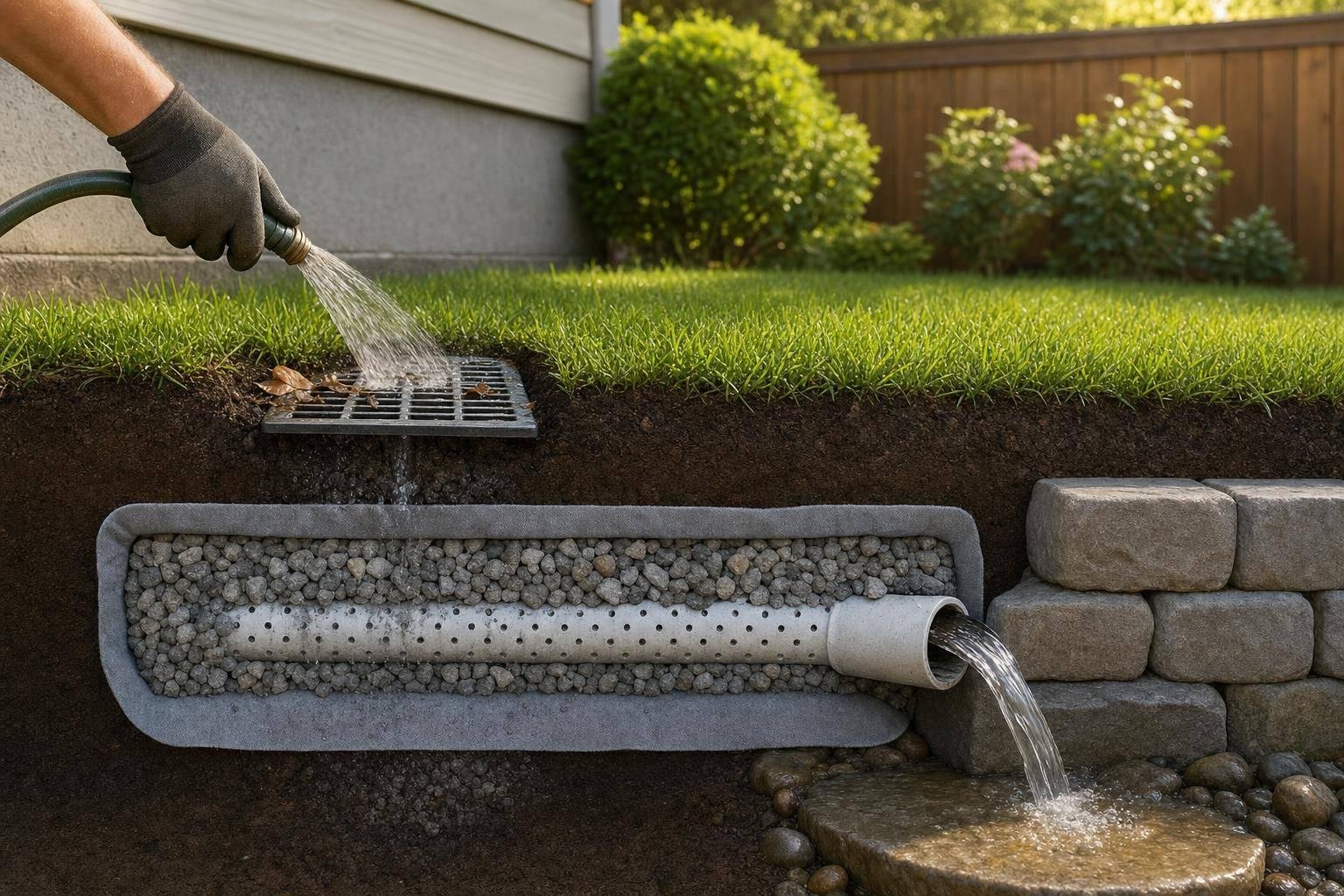
Start with the spots that catch the most junk. If the grate comes off, lift it and clear out leaves, sediment, and debris with a small trowel or a gloved hand. After the basin is clear, rinse it with a hose to wash out smaller particles. Then move that debris well away from the drain line so the next rain doesn’t send it right back.
Keep Gravel Surfaces and Trench Edges Open
In central Maryland, clay soil can seal over the gravel surface and slow water from getting in. When the exposed stone starts to crust over or clog with sediment, rake it loose.
Also, don’t spread fresh mulch or topsoil right over the drain line. If you’re touching up beds near the drain, keep that material back from the trench edge so it doesn’t choke off drainage.
Flush Minor Buildup and Retest Flow
If there’s light sediment inside the pipe, a hose flush is often enough. Start at the highest cleanout or inlet so gravity can carry the debris toward the outlet. After flushing, check that the outlet is discharging freely.
A good rule of thumb: water should leave almost as fast as it goes in. If discharge is slow, or nothing comes out, you’re likely dealing with a deeper blockage like roots, packed sediment, or a crushed pipe. At that point, stop and inspect the line instead of forcing more water into it. If the flow still looks weak, the drain needs a closer look.
Settling, Sediment Buildup, and Signs of Trouble
If cleaning doesn’t bring the flow back, it’s time to check for settling, sediment, or damage. French drains age like anything else. Some change is normal. The trick is knowing when normal wear turns into a drainage problem. Start with the trench line, then check the outlet and any signs inside the basement.
How to Spot Trench Settling Along the Drain Line
A small dip or a narrow strip of exposed gravel after installation is usually normal. Trouble starts when that low spot holds water instead of moving it away. If one area above the trench stays wet, the grade in that section may be off and slowing drainage.
Warning Signs of Sediment Buildup Inside the System
Central Maryland’s clay soil can push fine sediment through the fabric and into the pipe over time. As that buildup grows, water moves more slowly. You may notice muddy discharge at the outlet during or after rain, water backing up at inlet grates, or wet spots that keep coming back in the yard.
If water is still pooling, or the ground still feels spongy 48 hours after a storm, the system likely needs professional attention [2].
Signs of Root Intrusion, Crushed Pipe, or Poor Slope
Some signs point to more than routine cleaning. If pooling keeps coming back after basic maintenance, something deeper may be wrong. Cracks in nearby driveways or walkways can hint at movement around the drain line. Bowing foundation walls are another red flag.
Inside the home, basement dampness, musty odors, or efflorescence can all point to drainage failure.
Once you spot the symptom, use the table below to tell the difference between a maintenance issue and damage that needs service.
| Observed Problem | Likely Cause | Response Level |
|---|---|---|
| Water pooling more than 48 hours | Clogged pipe or collapsed line | Professional service |
| Muddy discharge at outlet | Fine sediment infiltration | Professional – hydro-jetting or flush |
| Water flowing toward the foundation | Improper slope or ground shift | Professional service – regrading |
| Basement dampness, musty odors, or efflorescence | Drainage failure | Professional service |
When to Schedule Professional French Drain Service
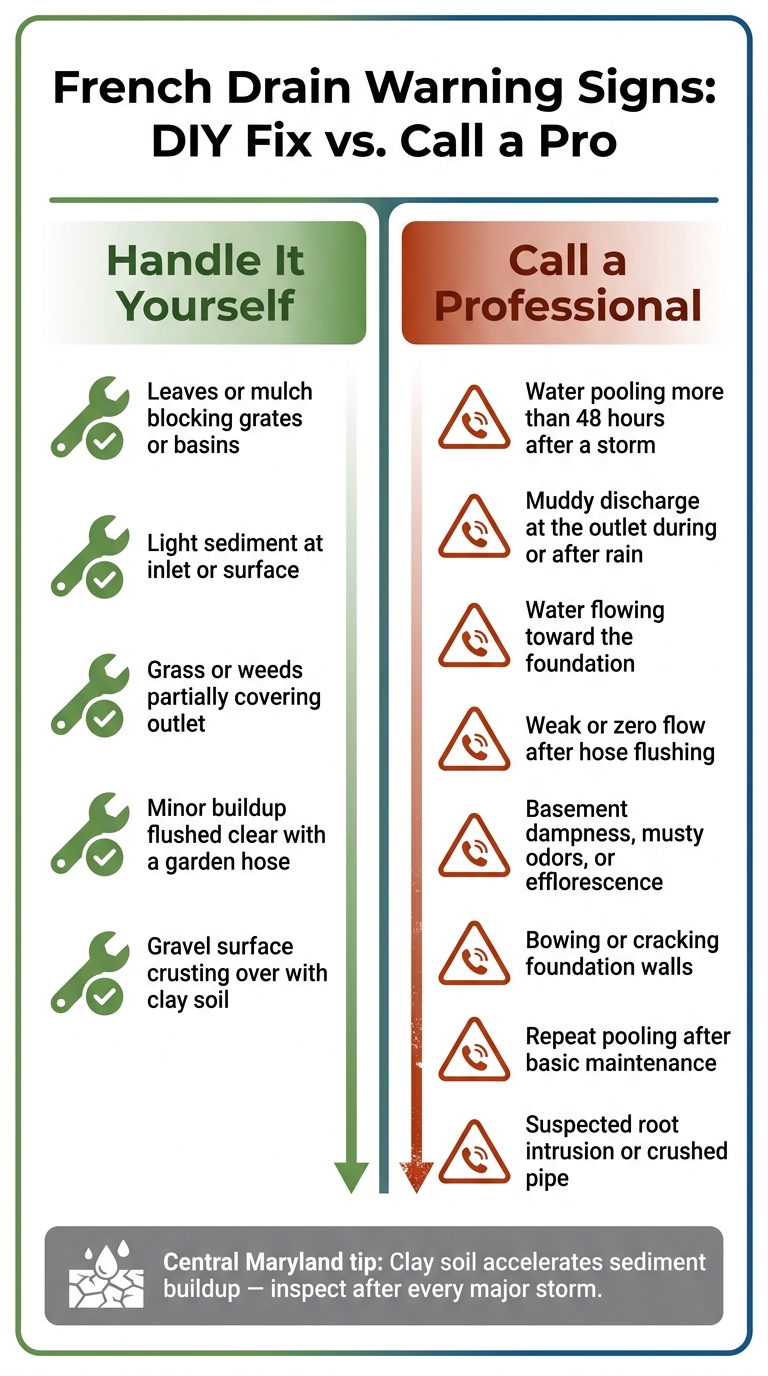
French Drain Warning Signs: DIY Fix vs. Call a Pro
Problems That Should Not Wait
If cleaning and flushing don’t bring the drain back to normal, you’re no longer dealing with basic upkeep. At that point, it’s time to call for service.
Watch for signs like:
- Water that keeps pooling
- An outlet that stops flowing
- Heavy sediment clogs
Inside the home, efflorescence, a musty odor that sticks around, or foundation walls that bow or crack can point to a drainage failure. When that happens, a professional inspection is the next step.
What Professional Service May Include
A professional inspection can pinpoint blockages, slope issues, or collapsed pipe sections. Once the cause is clear, the work may involve deeper cleaning, pipe repair in one area, outlet correction, or trench repair. If the yard’s grade has shifted, regrading or yard leveling may be needed to get water moving again.
Pro Landscapes MD provides drainage repair, grading, and yard leveling across central Maryland.
Conclusion: Simple Maintenance Steps That Protect Your Yard
Routine inspections, clean grates, and an open outlet help keep a French drain working the way it should. If flow starts to slow down or stop, schedule service before the damage spreads.
FAQs
How often should I inspect my French drain?
Inspect your French drain on a regular basis for clogs, blockages, or signs of damage. Clear leaves and other debris from intake points before heavy fall rains. Then, after a normal spring rain, walk your property and watch where the water goes.
It also helps to check the system after storms for standing water or erosion. If water is still sitting there 24 to 48 hours after the rain stops, it’s time to schedule a professional assessment.
Can I clean a French drain myself?
Yes. You can take care of routine French drain maintenance on your own. Check the inlets and catch basins for leaves, dirt, and grass clippings. If a catch basin is more than one-third full, clean it out to help stop clogs.
You should also look over the system for any damage. If water keeps pooling near your foundation, or the drain clearly isn’t working the way it should, contact a professional.
When should I call for professional drain service?
Call a professional if routine upkeep doesn’t fix recurring standing water, foundation moisture, or a drain that’s clearly not working.
You should also bring in a pro for repeated flooding, widespread settling, suspected pipe or gravel clogs, structural repairs, major grading, or any drainage problem that feels too big or too technical to take on yourself.
Regular professional inspections can help spot problems early.
Chat with Us