









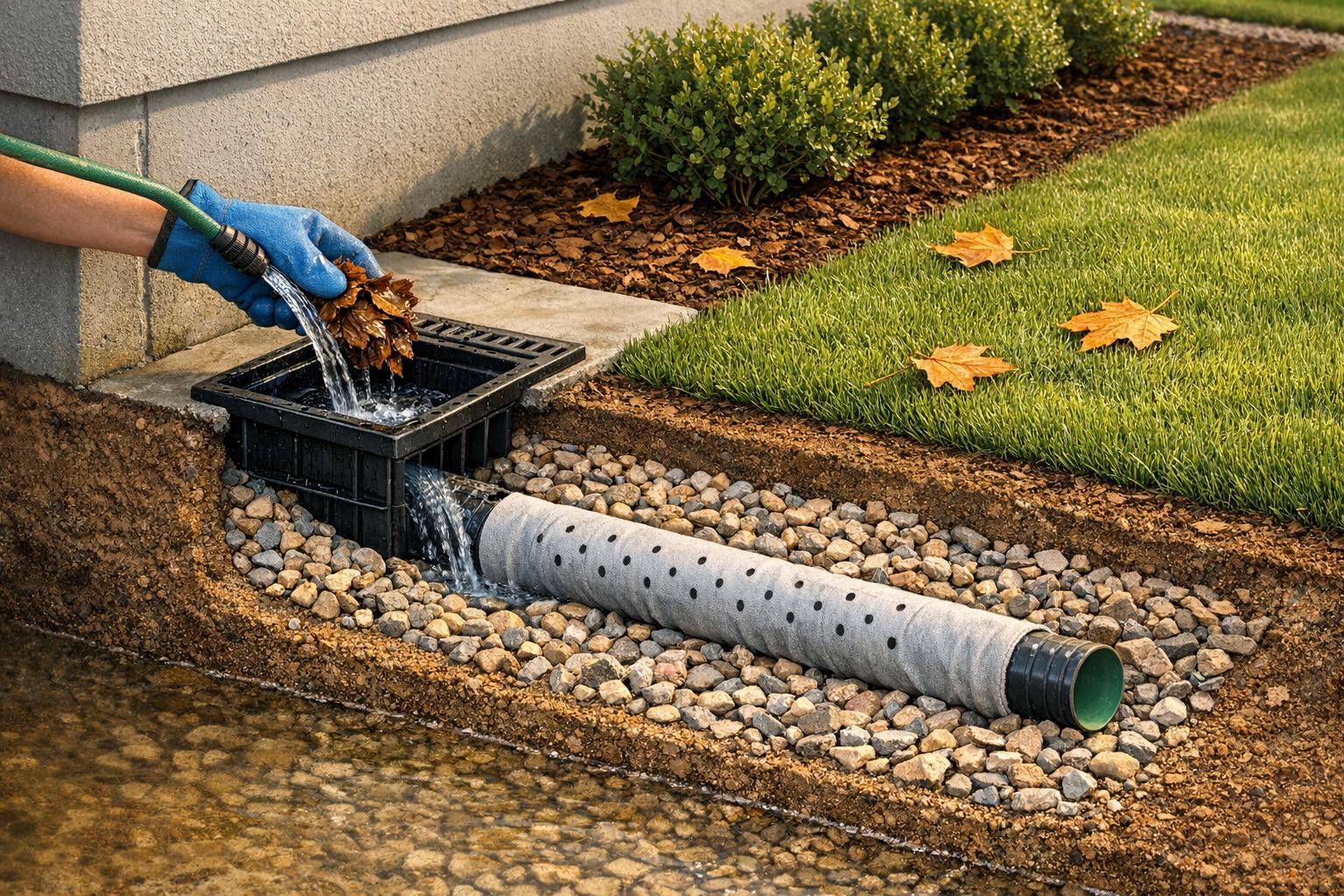
- bhavya gada
- No Comments
Keeping your French drain in working order is straightforward but necessary to avoid costly repairs. Regular maintenance ensures water flows freely, protecting your home from issues like water pooling, basement flooding, or structural damage.
Key Takeaways:
- Inspect Seasonally: Check for standing water, blockages, or uneven ground at least twice a year or after major storms.
- Clean Regularly: Flush pipes with a garden hose, remove debris from outlet points, and use a drain auger for minor clogs.
- Protect the System: Keep vegetation trimmed, clean gutters, and avoid heavy structures over the drain path.
- Address Maryland-Specific Challenges: Clay-heavy soils and heavy rains can strain drains, making proper grading and geotextile fabric essential.
- Professional Help: For severe clogs, pipe damage, or slope issues, consult experts to avoid further complications.
Routine care like flushing pipes, cleaning debris, and inspecting for problems can save thousands in repair costs. A professional inspection every two years is also a smart move to catch hidden issues early.
How to Clean French Drain Including Gravel, Complete Guide for Homeowners
sbb-itb-843f8be
How a French Drain System Works
A French drain uses gravity to redirect water away from your property. It works by allowing waterlogged soil to seep through a gravel-filled trench, where it enters a perforated pipe. From there, gravity carries the water to a safe discharge point, such as a dry well, rain garden, or a lower area of your yard.
Key Components and Their Roles
A French drain relies on several critical parts to function effectively:
- Perforated pipe: Often called a weeping tile, this pipe serves as the main pathway for water to flow away.
- Washed gravel: Surrounding the pipe, this gravel creates spaces that direct water toward the pipe.
- Geotextile fabric: This material wraps the trench or pipe, preventing soil, silt, and roots from clogging the system.
- Catch basin: Some systems include this surface feature to collect runoff before it enters the pipe.
- Outlet point: This is where the water is safely discharged, keeping it away from your home’s foundation.
The trench’s slope is a crucial factor. A proper French drain has a consistent downward grade – typically dropping ¼ inch vertically for every foot of horizontal pipe. This ensures smooth water flow and minimizes sediment buildup.
"If the slope is too steep, water can flow too quickly, leaving solids behind. If it’s too shallow, water can move too slowly, leading to sediment buildup." – Housecall Pro [5]
For most residential setups, a 4-inch diameter perforated pipe is standard [4]. However, areas with higher water volumes may require two parallel pipes to handle the increased flow [3].
How Maryland Weather Affects French Drains
Maryland’s weather can put extra pressure on French drain systems. Heavy spring and summer rains can quickly saturate the soil, testing the system’s capacity. Additionally, the clay-heavy soils found in counties like Howard, Montgomery, and Prince George’s tend to drain more slowly. Over time, fine clay particles can migrate into the gravel layer, reducing the system’s efficiency.
This is why using geotextile fabric and properly graded gravel is so important for long-term performance, especially in regions like Maryland. These measures help the system withstand local challenges and ensure it continues to function effectively. Understanding these factors is essential for maintaining your French drain and keeping it in top condition.
Routine Maintenance Tasks for Homeowners
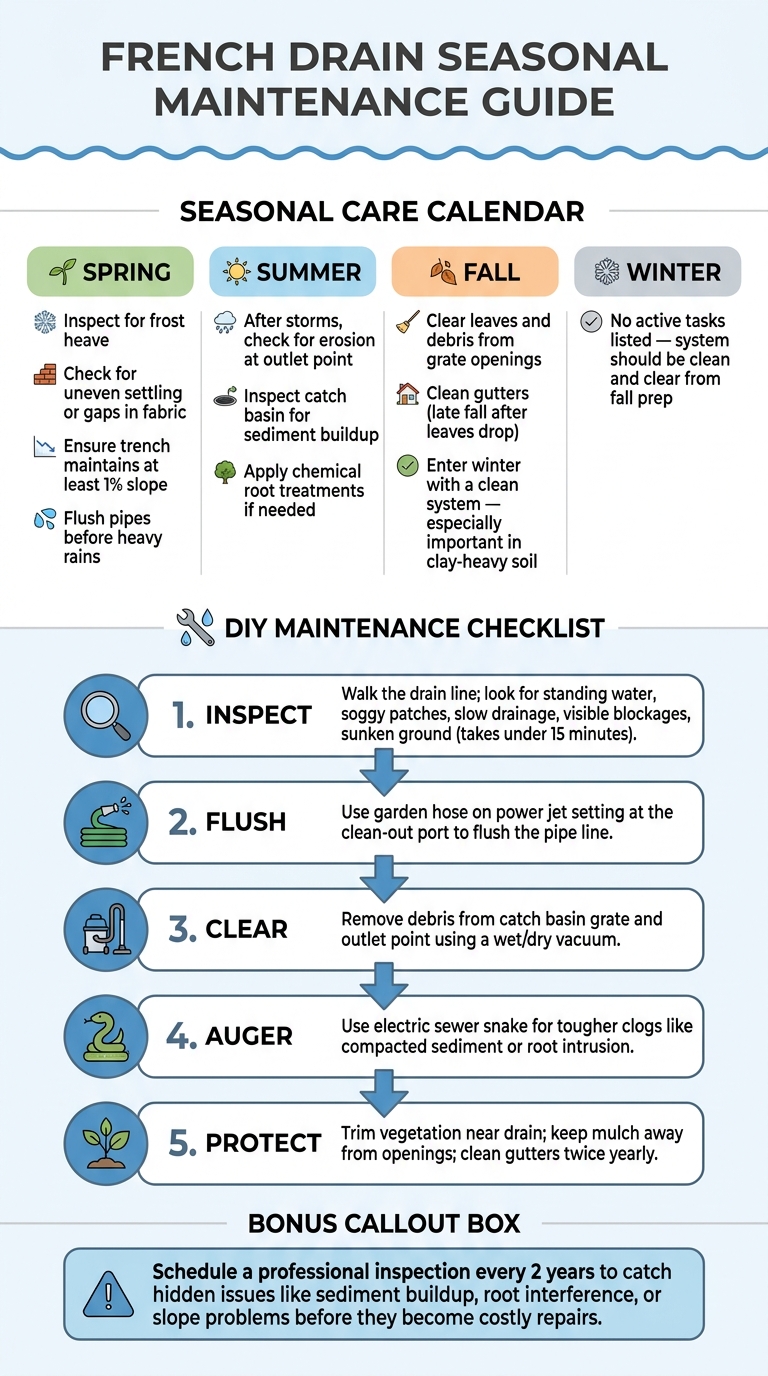
French Drain Seasonal Maintenance Guide for Homeowners
Simple, regular tasks can go a long way in keeping your French drain clear and functioning properly.
Seasonal Inspection Checklist
Check your French drain at least once a year – ideally in early spring before heavy rains – and again after any major storm. Walk along the length of the drain and look for these potential issues:
- Standing water or soggy patches near the drain line
- Slow drainage that takes longer than usual to clear
- Visible blockages at the catch basin grate or outlet point
- Sunken or uneven ground above the trench, which may signal pipe collapse or sediment buildup
Pay extra attention to the outlet point, where water exits the system. If water isn’t flowing out after a rainstorm, something could be blocking the pipe. Similarly, check the catch basin for debris buildup. A quick visual inspection takes less than 15 minutes and can help you catch small problems before they turn into costly repairs.
These routine checks are an essential first step before moving on to more hands-on cleaning methods.
DIY Cleaning Methods
Maintaining your French drain doesn’t have to be complicated. Start at the clean-out port (if your system has one) to remove sediment before it settles deeper into the pipe. Use the power jet setting on your garden hose to flush the line, and a wet/dry vacuum to extract stubborn debris from the catch basin without pushing it further into the system. For tougher clogs, like compacted sediment or early-stage root intrusion, an electric sewer snake can help break through the obstruction.
In addition to cleaning the pipe, keeping your yard in good shape will help reduce the amount of debris entering the system.
Yard Maintenance to Protect the Drain
What you do above ground has a direct impact on what ends up inside your French drain.
"Keep gutters and downspouts clean to prevent excess debris from entering the drain." – Kevin Francis Design [2]
Clogged gutters can overflow, dumping water and debris onto the soil near your drain, which speeds up sediment buildup. Clean your gutters at least twice a year – once in late fall after the leaves have dropped and again in early spring.
Around the drain, clear away leaves, mulch, and other organic material regularly. These materials break down into fine particles that can clog the system over time. If you use mulch in nearby garden beds, keep it a safe distance from any drain openings or grates. For the gravel layer above the pipe, opt for round, natural stones that are at least 1 inch in diameter. This helps filter water while preventing smaller particles from entering the pipe.
Preventive Care and Seasonal Upkeep
Adding seasonal preventive measures to your routine inspections can help extend the life of your French drain. A little extra attention each season can save you from costly repairs down the line. By combining these steps with regular maintenance, you can ensure your drain continues to work efficiently year-round.
Protecting Drain Components
Your French drain’s key components – gravel, fabric, and pipe – need protection both above and below ground. Avoid building heavy structures like sidewalks, patios, or porches over the drain path. If repairs or replacements are ever needed, removing these structures can drive up costs significantly.
Make sure the drainage gravel stays level with the surrounding sod. This helps prevent surface water from bypassing the system and causing erosion around the trench. The landscape fabric lining the trench is crucial – it blocks sediment from entering the pipe. If the fabric becomes compromised, fine soil particles can clog the system, reducing its effectiveness. These preventive measures, along with regular cleaning, help protect your investment for the long haul.
For hidden issues that aren’t visible on the surface, consider scheduling a professional inspection every two years [1].
Landscaping and Root Management
Tree roots are a frequent cause of French drain failures. Certain species, like willows and silver maples, are particularly aggressive and can block a drain pipe within just two years. To avoid this, plant large trees far away from the drain line.
For areas directly above or near the drain, opt for low-growing groundcovers or turf grass. Their shallow roots help stabilize the soil without threatening the pipe. If roots have already infiltrated the system, manually removing them may only address the surface problem. A commercial-grade drain auger is a better solution, as it clears the entire pipe diameter. During warmer months, you can also use a chemical root killer inside the pipe to prevent new growth. Just make sure any chemical treatments comply with local environmental regulations [1].
Adjusting your care practices with the seasons will keep your drain running smoothly.
Seasonal Care by Season
Maryland’s changing seasons call for tailored upkeep. Here’s what to focus on:
| Season | Key Task |
|---|---|
| Spring | Inspect for frost heave, which can shift gravel and displace pipe sections. Check for uneven settling or gaps in the fabric before heavy spring rains begin. Ensure the trench maintains at least a 1% slope to avoid water stagnation [1]. |
| Summer | After storms, look for erosion at the outlet point or sediment buildup in the catch basin. Summer is also the ideal time to apply chemical root treatments if roots are an ongoing issue [1]. |
| Fall | Clear leaves and debris from grate openings and surrounding areas. Maryland’s clay-heavy soil retains moisture, so entering winter with a clean system is especially important [1]. |
"In Maryland’s heavier rain seasons, that excess moisture can create bigger headaches that are far more expensive to fix later." – Allmaster Home Services [6]
If you’re unsure how your system is holding up through seasonal changes, Pro Landscapes MD provides inspections and drainage repairs across central Maryland.
Troubleshooting Common French Drain Problems
French drains can encounter issues over time, even with regular maintenance. Spotting these problems early can save you from expensive repairs down the line. Regular inspections are key to catching issues before they escalate.
Common Issues and How to Spot Them
One clear sign of trouble is standing water near areas the drain is supposed to protect, like between the drain line and your home’s foundation. If water isn’t flowing from the discharge point during heavy rain, it’s a strong indicator of a blockage. Under normal conditions, the outlet should release water during significant rainfall [7].
Another red flag is soggy ground above the drain. This often points to compacted soil, which can prevent water from filtering through to the pipe. As drainage expert Solar Mike explains:
"On many soils, rain will only penetrate an inch or so. So if you have a good layer of soil then you have effectively waterproofed your drain." – Solar Mike, Stack Exchange Contributor [7]
If your drain is covered with soil instead of open gravel, check the depth of the soil layer. A soil cover thicker than 3 inches can act as a barrier, stopping water from reaching the pipe beneath [7].
DIY Tools vs. Professional Services
For minor issues, you can try simple DIY fixes. For example:
- Flush the outlet with a garden hose to clear loose debris.
- Use a drain auger to tackle partial blockages [8].
However, these methods have their limits. They won’t remove compacted sediment or handle severe blockages. Also, ensure the perforated pipe holes face downward to collect water effectively [8]. If these DIY efforts don’t solve the problem, it’s time to consider professional intervention.
When to Call a Professional
If DIY methods don’t work or the issue worsens, professional help is essential. Some problems, like soil buildup from missing geotextile fabric, may require excavation and rebuilding. Professionals can also address slope issues, ensuring the drain maintains the necessary 1% downward pitch [8]. Settled pipes or pipes flowing back toward your foundation need more than surface-level fixes.
If your French drain connects to downspouts or is part of a larger drainage system, professional expertise is especially important. Experts can integrate catch basins and ensure the system handles heavy rain without backing up. For those in central Maryland, Pro Landscapes MD provides French drain repairs, drainage installations, and full system evaluations, serving areas like Howard County, Montgomery County, and Baltimore County.
Conclusion
Keeping a French drain in top shape comes down to consistent care. By sticking to a few straightforward tasks – like flushing the pipes, clearing grates and outlets, trimming nearby plants, and keeping gutters clean – you can ensure your drain works smoothly throughout the year. Scheduling a professional inspection every two years is also a smart move, as it can uncover hidden problems like sediment build-up, root interference, or slope issues.
As the saying goes:
"Proactive maintenance will prevent clogs and other unwanted disasters like a soggy yard or flooded basement." [1]
Stay alert for signs of trouble, such as standing water, slow drainage, or damp spots in your yard. Catching these issues early makes upkeep easier and helps you avoid expensive repairs.
If you’re a Maryland homeowner in need of expert help, Pro Landscapes MD provides a range of drainage services to keep your foundation and yard protected. From routine inspections to full repairs, their team has the skills to keep your system running smoothly year-round.
FAQs
How do I know my French drain is clogged?
Signs that your French drain might be clogged include water pooling around your foundation or yard and reduced water flow at the drain’s access or exit points, particularly after heavy rain. To stay ahead of potential problems, make it a habit to inspect the drain regularly and check for blockages at the access point. Catching issues early can save you from bigger headaches down the line.
Can I flush a French drain with a garden hose?
Yes, you can flush a French drain using a garden hose, but it’s important to adjust the hose’s pressure setting to prevent any damage to the pipe. After clearing the drain with tools like a pressure washer or a sewer snake, you can test its functionality by running water through the system. Keep the hose on a gentle spray setting to avoid issues. Routine checks and upkeep are key to keeping your French drain functioning effectively.
When should I call a pro for French drain repairs?
If you’re dealing with persistent clogs, visible damage, or simply don’t feel comfortable maintaining your French drain, it’s time to call in a professional. Issues like debris that won’t budge or damage that could shorten the drain’s lifespan are clear signals that expert assistance is needed. To keep your drain working efficiently and avoid costly repairs later, scheduling annual inspections with a specialist is a smart move.
Chat with Us