









- bhavya gada
- No Comments
If a French drain keeps clogging in a Maryland yard, clay soil is usually a big part of the problem. I’d boil it down to 4 main causes: fine sediment, bad slope, roots, and a blocked outlet.
Here’s the short version:
- Clay drains slowly, so more water stays near the surface
- Fine particles move into the stone and pipe, which cuts flow
- Flat or uneven pipe runs hold water, and that lets debris settle
- Roots move toward wet trenches and can get into the line
- A blocked or low outlet backs water up through the whole system
In many yards, even a small grade error can lead to standing water after storms. And once water stops moving, sediment starts to build. That’s why the fix is usually not just cleaning the pipe. It’s fixing the layout: washed stone, non-woven fabric, steady slope, root-aware routing, and a discharge point that stays clear.
A few simple checks can also help stop repeat problems:
- Look at the outlet after rain
- Flush the line through the cleanout
- Watch for weak flow, soggy spots, or pooling water
- Fix small issues before the trench starts holding sediment again
That’s the core issue: in Maryland clay, a French drain has to move water out fast because the soil around it won’t do much of the work. That is why clogs show up more often, and why proper setup matters from day one.
| Problem | What happens |
|---|---|
| Fine sediment | Stone bed and pipe start to fill in |
| Poor slope | Water sits in the pipe |
| Root growth | Roots press into or enter the line |
| Outlet blockage | Water backs up and drops sediment |
If I were summarizing the whole article in one line: French drains in Maryland clay soil clog when water slows down, sediment moves in, or the outlet can’t keep up.
Why French Drains Clog in Maryland Clay Soil: 4 Causes & Fixes
Clay, Climate & Clogging: Build Your French Drain to Withstand Anything | Back to Basics Pt. 3
The Main Reasons French Drains Clog in Clay-Heavy Yards
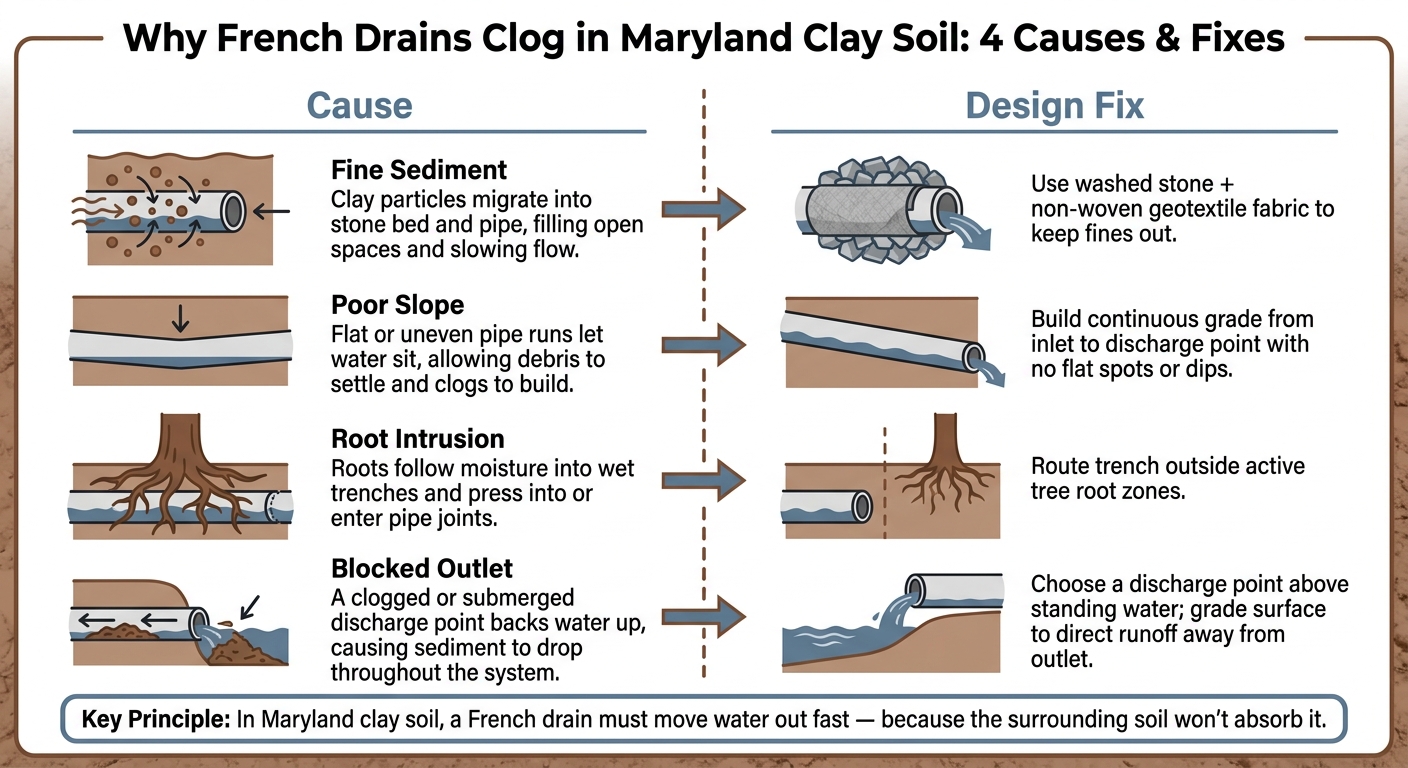
In clay-heavy Maryland yards, French drain clogs usually trace back to four common failures. And in most cases, these are the trouble spots that show up first.
Fine Sediment Movement and Sediment Buildup
Clay soil lets water carry tiny particles into the stone bed and pipe. Over time, those fines fill the open spaces, slow the flow, and trap even more sediment.
Poor Slope and Standing Water in the Pipe
When a drain is too flat or uneven, water can sit inside the pipe instead of moving through it. That standing water collects debris, and a small drainage problem can snowball into a clog.
Root Intrusion
Roots naturally move toward wet trenches and may work into pipe joints or press against the line. Because clay yards tend to stay wet longer, root intrusion is more likely.
Blocked Outlet or Failed Discharge
If the outlet is blocked, underwater, or too small, water backs up through the whole system. Instead of pushing water out, the drain starts holding sediment.
These are the main reasons drain design needs to deal with sediment, slope, roots, and discharge from day one.
French Drain Design Fixes That Prevent Repeat Clogs
Most of the failure points above come down to design. Fix the design, and you cut down the odds of the drain clogging again. Outlet backup is its own problem, and it comes from how the discharge point is set up.
| Common Cause | Design Fix |
|---|---|
| Fines migration | Non-woven geotextile fabric + washed stone |
| Poor slope | Continuous grade from inlet to discharge |
| Root growth | Route trench outside active root zones |
Use Washed Stone and Non-Woven Geotextile Fabric
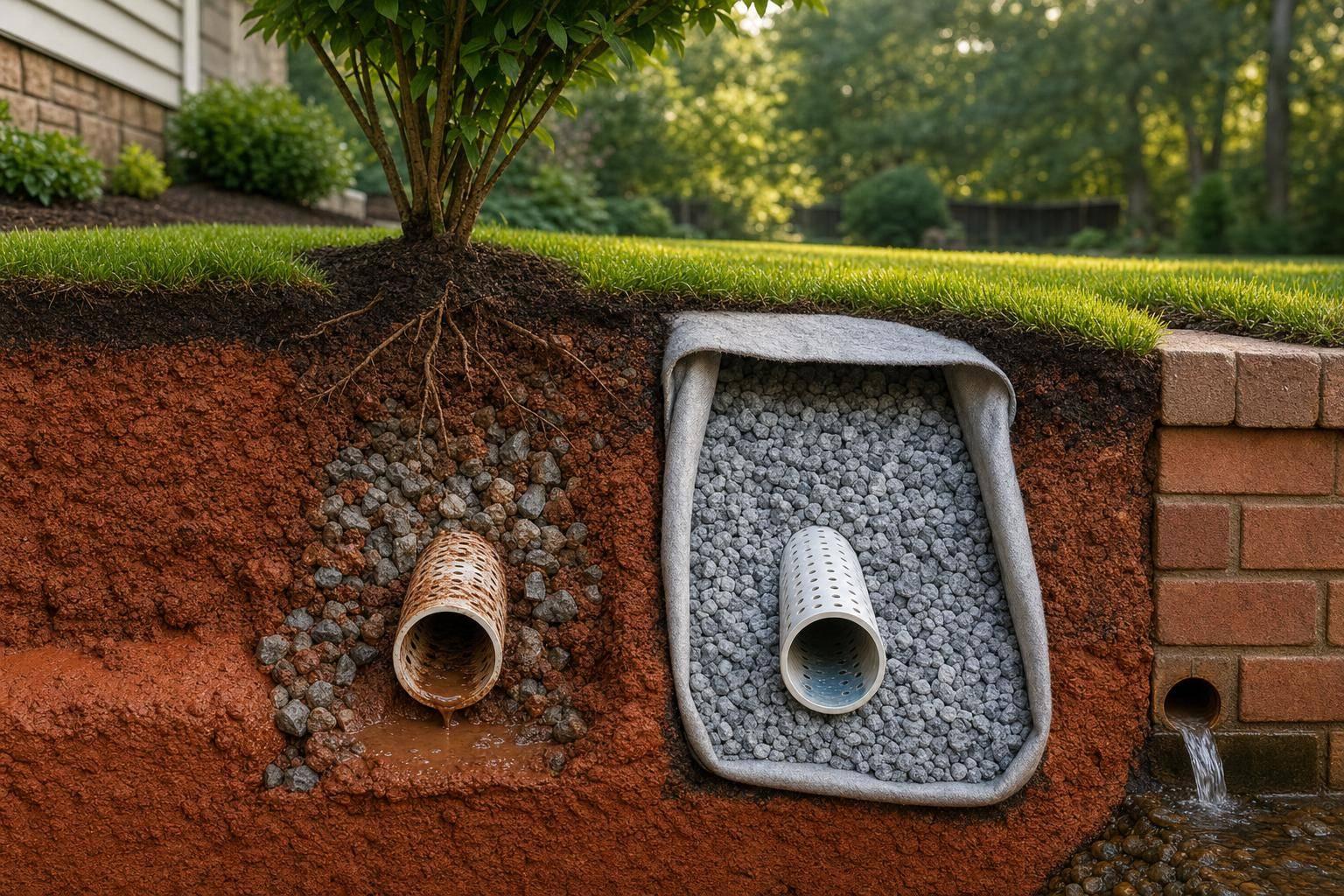
Use washed stone to keep water moving through the drain bed. Pair it with non-woven geotextile fabric, which works like a separator: water can pass through, but fine clay particles stay out of the stone bed. That matters a lot in clay soil, where fines can pack in, seal the stone bed, and stop flow.
Build in Continuous Slope
A French drain needs a steady slope from the inlet all the way to the outlet. Any flat spot or low dip can hold water inside the pipe. Once that happens, sediment has time to settle, and clogs start to build.
Route the Drain Away From Trees
Roots follow moisture. So the fix is pretty simple: keep the trench out of active root zones. Routing the drain outside tree root zones lowers the chance that roots will work their way into the drainage system later.
sbb-itb-843f8be
Outlet Planning and Surface Water Control
Even a well-built trench can fail if the outlet can’t drain. In many Maryland yards, French drain problems start at the outlet, not the pipe. If the outlet gets blocked or ends up under water, flow backs up into the trench and sediment settles near the discharge end. In clay-heavy soil, that risk goes up because the outlet can sit in pooled water.
Choose the Right Discharge Point
Pick a discharge point that stays above standing water and can drain during storms. Don’t place the outlet in a low spot where runoff collects. Once the discharge path is clear, the next job is making sure surface water doesn’t flood that area.
Keep Surface Water From Overloading the Drain
Keep surface water away from the discharge point. Grade the area so runoff moves away from the outlet instead of toward it. When water pools there, sediment drops out first and starts the next clog. After that area is set up the right way, routine checks help keep the system flowing.
Maintenance and Long-Term Clog Prevention
Routine Checks That Catch Problems Early
Even a well-built French drain needs routine upkeep in Maryland clay soil. Once it’s in the ground, you still need to keep an eye on it. If you don’t, clay fines and roots can work their way back in and slow the system down.
Check the outlet on a regular basis. Look for debris blocking the opening, erosion near the end of the drain, or standing water that shouldn’t be there. After rain, a weak trickle at the outlet often points to sediment buildup or root intrusion.
It’s also smart to flush the drain through the cleanout and watch how the water moves. If the flow slows down in a noticeable way, that’s often a sign of a partial blockage from fines or roots. Pay attention to wet spots that stick around after heavy rain too. In many cases, those show up above a section of pipe that’s losing flow because sediment has settled inside or roots have started moving toward moisture in the trench.
These checks matter even more in clay soil, where small drainage issues can turn into clogs fast.
Key Takeaways for Maryland Homeowners
In Maryland clay soil, regular outlet checks, cleanout flushing, and early repair help French drains keep working longer.
For recurring clogs or new installations in central Maryland, Pro Landscapes MD provides French drain installation, drainage repair, grading, and stormwater management.
FAQs
How do I know if clay soil is clogging my French drain?
Check your yard after a storm. If the lawn stays soggy or puddles sit near the drain for 24 to 48 hours after the rain stops, the system is probably failing.
A few other signs can point to trouble too. Your sump pump may run nonstop. The soil may smell sour. Or water may bubble back up to the surface instead of draining away.
You can also do a simple hose test. Run water along the system and watch what happens. If the water backs up instead of moving through, the pipe or filter fabric may be clogged.
What slope does a French drain need to work properly?
A French drain needs a steady downward slope so water keeps moving instead of pooling inside the pipe. The usual grade is 1/8 inch to 1/4 inch per foot, or at least 1%.
That steady pitch needs to stay the same from start to finish. If the run has high spots or dips, water can get stuck in the pipe. And because a French drain works by gravity, that even slope is what keeps the whole system doing its job.
Can a French drain be fixed without replacing the whole trench?
Yes. A French drain can often be fixed without replacing the whole trench if the issue is limited to one area, like a clog or a damaged section of pipe.
That said, a repair only makes sense if it fixes the actual cause of the problem too. For example, the trouble may come from missing filter fabric, poor slope, or an outlet that doesn’t drain well enough. In those cases, patching one spot alone won’t do much.
A professional can inspect the system, find the source of the problem, and repair only the sections that need work.
Chat with Us