









- bhavya gada
- No Comments
French drains and retaining walls are two key tools for managing water and stabilizing soil in your yard. On their own, they serve specific purposes – French drains redirect water, while retaining walls hold back soil. But when used together, they create a system that prevents water buildup, reduces pressure on retaining walls, and protects your landscape from erosion and flooding.
Key Takeaways:
- French Drains: Underground systems that channel water away using perforated pipes, gravel, and fabric.
- Retaining Walls: Structures that hold soil in place, especially on slopes, but can fail under water pressure.
- The Combination: French drains reduce water saturation behind retaining walls, preventing cracks, seepage, and collapse.
- Benefits: Improves stability, prevents costly repairs (up to $30,700), and protects landscapes from erosion and flooding.
For areas like Maryland, where clay-heavy soils and seasonal rains are common, combining these systems is especially effective. Proper design and installation – like placing the drain behind the wall, using nonwoven fabric, and ensuring proper slope – are essential for long-term success. Work with professionals to tailor the system to your property’s needs and avoid common mistakes like clogged drains or poor pipe placement.
How To Install French Drain Behind Concrete Retaining Wall The Right Way
sbb-itb-843f8be
French Drains and Retaining Walls: The Basics
Before diving into how these two systems complement each other, let’s break down their individual roles.
What Is a French Drain?
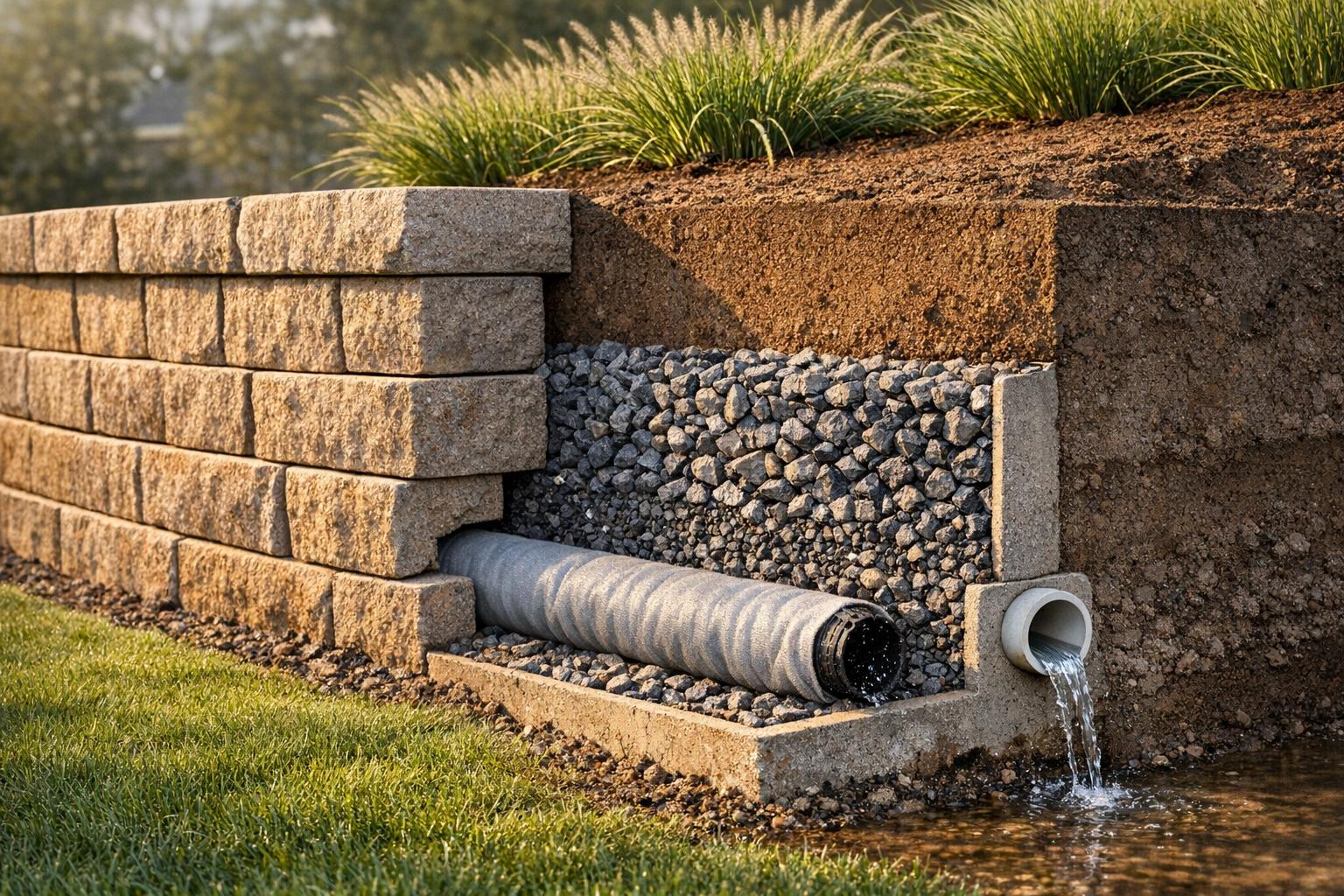
A French drain is a type of underground drainage system designed to channel water away from areas where it could cause problems. It typically includes a perforated pipe surrounded by gravel and wrapped in geotextile fabric. The system is installed in a trench about 18 inches deep and 9–12 inches wide, with a slight slope of 1 inch per 10 feet to ensure proper water flow. When installed correctly, a French drain can function effectively for 30–40 years [2].
"French drains are used to prevent flooding in yards and basements by diverting water away from your home and yard instead of letting it pool in your yard or seep back into your basement." – Bailey Carson, Home Care Expert, Angi [2]
What Is a Retaining Wall?
A retaining wall is a sturdy structure designed to hold back soil, manage changes in elevation, and reduce erosion. These walls are often used in sloped yards to prevent soil from sliding downhill. They can be constructed from materials like concrete blocks, natural stone, timber, or poured concrete.
While retaining walls are excellent at controlling soil movement, they aren’t built to handle water on their own. Excess water in the soil creates hydrostatic pressure, which can weaken the wall over time unless a proper drainage system is in place.
Now that you understand the basics, it’s easier to see how combining these systems can improve both structural stability and water management.
Why Use French Drains and Retaining Walls Together?
Retaining walls are designed to hold back soil – not water. When the soil behind a retaining wall becomes saturated, the buildup of water pressure can push against the structure, leading to seepage, cracks, and even complete failure over time.
How the Combination Improves Stability and Lifespan
A French drain works by intercepting groundwater before it reaches the retaining wall, which helps reduce water pressure and keeps the soil drier. This matters because saturated soil weighs much more than dry soil, adding extra strain to the wall. By keeping the soil lighter and well-drained, the wall can handle its load more effectively, lasting longer without damage.
This setup is especially important in central Maryland, where heavy clay soils tend to trap water instead of letting it drain naturally. The combination of a French drain and retaining wall helps prevent pressure buildup in these conditions, improving stability and providing extra protection against issues like flooding and erosion.
Better Flood and Erosion Control
Without proper drainage, water can pool behind the wall and eventually overflow, seep through cracks, or even erode the wall’s base. This can lead to surface erosion, sinkholes, and damage to your yard or landscaping. By reducing water pressure, you help prevent these problems and improve flood management in your outdoor space.
A French drain and retaining wall system work together to redirect water before it becomes a surface issue. The drain pipe collects water from the soil, gravel filters it, and the discharge point safely releases it away from your property. This keeps your landscape stable even after heavy rain, protecting your lawn, garden beds, and the foundation of your home. Ignoring poor drainage can lead to costly foundation repairs – sometimes reaching up to $30,700 [2]. Investing in this integrated system is a smart, preventative step to avoid those expenses down the road.
Design Guidelines for Integrated French Drain and Retaining Wall Systems
Getting the design right from the beginning is key – it can make the difference between a drainage system that lasts for years and one that fails during heavy rain. These details are essential to creating a durable system that works seamlessly with the retaining wall’s structural support. Two critical aspects to focus on are the correct placement of the drain and ensuring steady water flow through the system.
Placement and Installation Considerations
The French drain pipe should be installed behind the wall, positioned at the base of the lowest block course and below the wall’s footing to catch groundwater as early as possible.
"Drain pipes go BEHIND the wall on the side with the surcharge, the soil that that wall or foundation is holding back. They are also always lower than the footing of a foundation or wall." – Stormy, Professional Builder and Consultant [3]
For backfill, use 12 to 24 inches of clean, ¾-inch crushed stone instead of materials like pea gravel or sand, which can trap moisture. To prevent fine soil particles from clogging the drainage aggregate, wrap the perforated pipe in non-woven geotextile fabric [4][5].
In areas like Maryland, where clay soils are common, these measures are especially important. For retaining walls taller than 6 feet, you may need multiple drain pipes installed at different elevations to handle the increased water volume [4].
Once the drain is properly placed and backfilled, the next step is to focus on maintaining continuous water flow with the right slope and discharge methods.
Drainage Slope and Water Discharge Options
A consistent slope is essential to avoid water pooling, which can compromise the system. Maintain a minimum 1% downward grade (roughly ⅛ inch per foot) along the pipe to ensure water flows freely [4][5].
Equally critical is how the water exits the system. The outlet should "daylight" into an open, downslope area or connect to a proper drainage basin. Never end the outlet in a shaded or low-lying area where water could collect or freeze in winter [4][5]. In Maryland’s colder months, ice blockages can become a serious problem. Smooth-walled pipes work better in freeze-thaw conditions since they are less likely to accumulate ice compared to corrugated ones [6].
To avoid overloading the wall’s drainage system, connect roof downspouts to separate solid pipes. Combining high-volume roof runoff with the wall’s drainage system can overwhelm it, especially during storms that drop around 2 inches of rain per hour [5]. Always check that your discharge locations comply with local regulations, particularly if your property is near a stream or riparian buffer zone [3].
Common Mistakes and How to Avoid Them
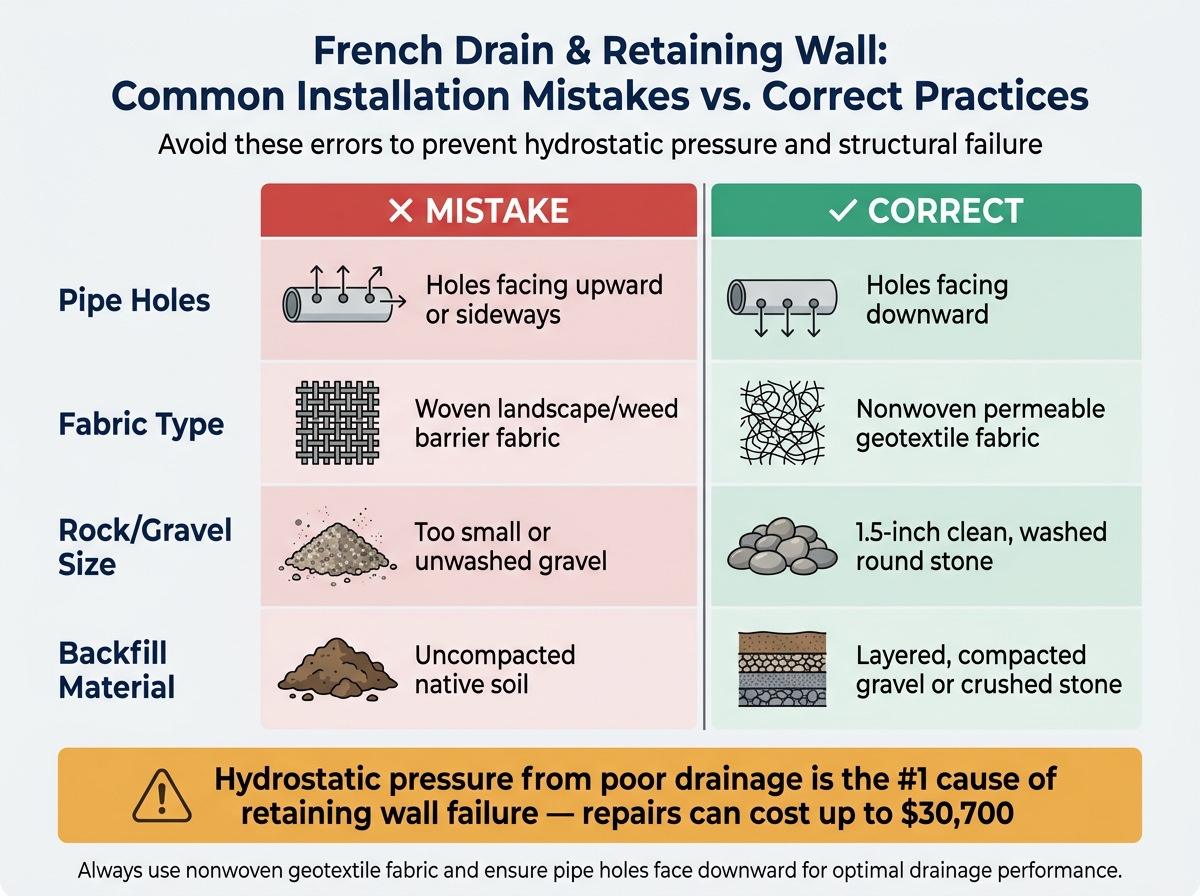
French Drain vs. Retaining Wall: Common Mistakes vs. Correct Installation
Even a well-designed system can fail if the installation isn’t done correctly. Here’s a look at some frequent errors and how to sidestep them.
Problems Caused by Poor Drainage Installation
One major misstep is incorrect pipe orientation. The perforated holes in drainage pipes should always face downward. This positioning allows water to flow in as the trench fills. If the holes are pointed sideways or upward, the pipe’s ability to collect water is significantly reduced [8].
Another common issue is selecting the wrong fabric. Homeowners often grab standard landscape fabric, but woven fabric – the type designed for weed control – doesn’t allow enough water to pass through. The better choice is nonwoven geotextile fabric, which is specifically designed to filter out debris while letting water flow freely.
"Excluding drainage fabric from your design means there is no separation between the dirt and the drain, which can lead to reduced capacity and, eventually, clogging and system failure." – Landscape Drains [8]
Here’s a quick guide to avoid the most common specification errors:
| Component | Mistake | Correct |
|---|---|---|
| Pipe Holes | Facing upward or sideways | Facing downward [8] |
| Fabric Type | Woven (weed barrier) | Nonwoven permeable geotextile [8] |
| Rock Size | Too small or unwashed | 1.5-inch clean, washed round stone [8] |
| Backfill | Uncompacted native soil | Layered, compacted gravel or crushed stone [7] |
Another critical tip: Never cover the gravel with soil. Doing so reduces drainage efficiency and speeds up clogging [8].
These errors don’t just hinder drainage. They can also increase the risk of hydrostatic pressure, which can lead to structural damage.
Hydrostatic Pressure and Structural Damage Risks
When water isn’t properly drained, it builds up pressure behind walls. This is known as hydrostatic pressure, and it’s the leading cause of retaining wall failures [5]. As McCluskey Contracting explains:
"Water can accumulate behind the wall, exerting pressure that leads to bulging or even collapse." [7]
The danger here is that hydrostatic pressure doesn’t make itself known right away. It silently increases until the wall starts to lean, crack, or shift. Repairs for water-related foundation damage can range from $2,000 to over $30,700, depending on the extent of the problem [2].
To prevent this, include weep holes, ensure proper drain outlet flow, and avoid dead-end pipes [5]. If you notice water pouring through random wall joints during heavy rain instead of through designated outlets, it’s a clear sign that the internal drainage system is either clogged or overwhelmed. Address this immediately to avoid further damage [5].
Planning Your System with Professional Help
Getting the design right from the start can save you from repairs that might cost as much as $30,700 [2].
How to Assess Your Property’s Drainage Needs
A professional evaluation is key to identifying the root causes of drainage problems. Experts will look into factors like clay-heavy soil, low elevation, or hydrostatic pressure that could be causing water issues. They’ll also check for existing drainage systems that might have collapsed pipes or blockages needing attention before any new installation begins [1].
Two crucial details often overlooked are the discharge point and utility clearance. A professional will determine the best spot for diverting water – whether it’s a municipal storm drain, a dry well, or a natural low point on your property. They’ll also coordinate with services like 811 to locate buried utilities such as gas, power, or communication lines before digging starts [2]. Poor discharge planning, like routing water to a steep hillside, can lead to dangerous ground instability, so this step is critical [1].
By addressing every detail, from discharge points to utility clearance, professionals help ensure a successful, long-lasting drainage system.
"A French drain is a worthwhile investment if it will help protect your home and yard. If installed correctly, it shows prospective buyers that you took care of your home and were willing to invest in the right projects to maintain it." – Bailey Carson, Home Care Expert, Angi [2]
Here’s a practical tip: ask your contractor to include a cleanout port with surface access. This small addition makes future maintenance much easier, allowing for simple flushing without needing to dig up the system [1].
These preventive measures highlight the importance of working with local experts who understand the challenges of your area.
Working with Maryland Landscaping Experts
In Maryland, where clay soils create unique drainage challenges, expert planning is especially important. The clay-heavy soil found in areas like Howard, Montgomery, and Prince George’s counties holds water longer, increasing hydrostatic pressure against retaining walls. Proper installation of geotextile fabric and sufficient backfill depth are essential to counteract this pressure. Additionally, Maryland’s freeze-thaw cycles demand careful design. Professionals use non-porous angular aggregate and install weep holes – spaced about every 6 to 10 feet – to prevent ice-related damage to retaining walls [6].
Pro Landscapes MD specializes in creating integrated French drain and retaining wall systems tailored to Maryland’s conditions. Their services cover everything from drainage installation and grading to full retaining wall construction across central Maryland, including Howard, Montgomery, Carroll, and Baltimore counties. By managing both systems together, they ensure your property’s drainage and structural needs are met effectively.
Conclusion: Building a Functional and Long-Lasting Landscape
French drains and retaining walls work together to create an effective system for managing water. Together, they help protect against soil erosion and the pressure caused by water buildup.
This combined approach is especially important when you consider the risks. A 2026 University of Alabama study revealed that over 17 million people in the United States face significant flood risks [9]. Having the right drainage system in place is a smart way to protect both your home and its value.
Brad Holley puts it plainly:
"If you don’t consider how water wants to move through your soil during a heavy rain, or the implications it can have, your amazing wall will come tumbling right down." – Brad Holley, Owner, The UnDesign [9]
To ensure these systems last, focus on proper design, using the right materials, and performing maintenance twice a year – like clearing debris and roots. Skipping these steps can lead to costly repairs down the road.
If your property has sloped terrain, dense clay soil, or frequent water problems, combining French drains with retaining walls can be a reliable solution to prevent flooding and erosion. Pro Landscapes MD specializes in designing and installing systems that are tailored to Maryland’s particular soil and weather conditions. They serve homeowners in Howard, Montgomery, Carroll, Baltimore, and nearby counties. By trusting professionals, you not only extend the life of your landscape but also protect your property’s value. Let the experts handle the details to ensure your Maryland landscape stands the test of time.
FAQs
Do I always need a French drain behind a retaining wall?
A French drain is often installed behind a retaining wall to help manage water by capturing it on the uphill side and channeling it below the wall’s footing. However, its necessity isn’t universal. Factors such as the soil’s ability to drain, the local water table, and the specific design of the wall all play a role. Ultimately, whether you need a French drain depends on the unique conditions of your site.
Where should a French drain outlet discharge on my property?
A French drain should release water at the lowest point in your yard, directing it to a suitable spot like a storm drain, ditch, or naturally low area. Make sure the discharge location can manage the water flow without leading to flooding or damage to your property or nearby areas.
How can I tell if my retaining wall drainage is failing?
Signs that a retaining wall’s drainage system might be failing include water pooling behind the structure, bulging or leaning of the wall, and the appearance of cracks – or worse, a complete collapse – due to the buildup of excessive pressure. To avoid these problems, it’s essential to have effective drainage solutions in place, such as perforated pipes, gravel backfill, and weep holes. These features help manage water flow and reduce stress on the wall.
Chat with Us