









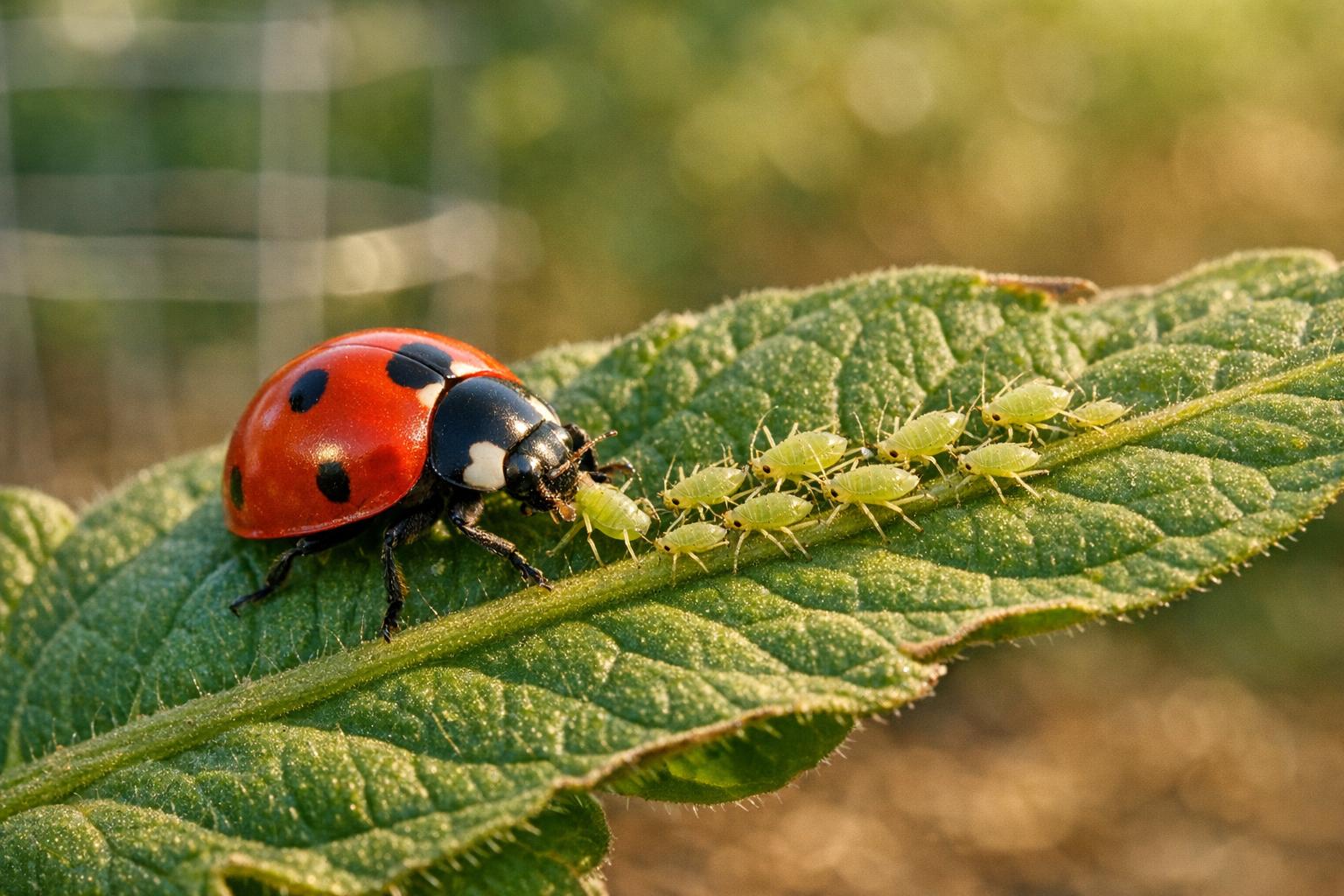
- bhavya gada
- No Comments
Maryland gardens host thousands of insects, but less than 1% are harmful. Misidentifying pests can lead to wasted time and money. This guide helps you differentiate between helpful insects like ladybugs and harmful ones like aphids or Japanese beetles. You’ll also learn how to recognize damage signs, use simple detection methods, and apply control strategies.
Key Takeaways:
- Helpful insects (e.g., ladybugs, bumblebees) pollinate plants and control pests naturally.
- Harmful pests (e.g., aphids, stink bugs) damage plants by sucking sap, chewing leaves, or piercing crops.
- Early detection of species like the Box Tree Moth (spotted in Maryland in 2025) and Spotted Lanternfly is critical.
- Timing matters: Treatments for grubs work best in May or June when larvae are young.
- Simple prevention steps like aeration, proper drainage, and soil testing reduce pest risks.
- Biological controls, such as encouraging predatory insects, offer natural pest management.
Quick Insect Overview:
| Insect | Helpful or Harmful | Impact |
|---|---|---|
| Ladybug | Helpful | Eats aphids and other small pests |
| Japanese Beetle | Harmful | Skeletonizes leaves; grubs damage roots |
| Aphids | Harmful | Sucks sap, causing yellowing and curling |
| Stink Bug | Harmful | Pierces crops, leaving dimpled spots |
Proper identification is the first step in protecting your garden. Learn more about spotting pests, preventing infestations, and keeping your garden thriving with professional landscaping care.
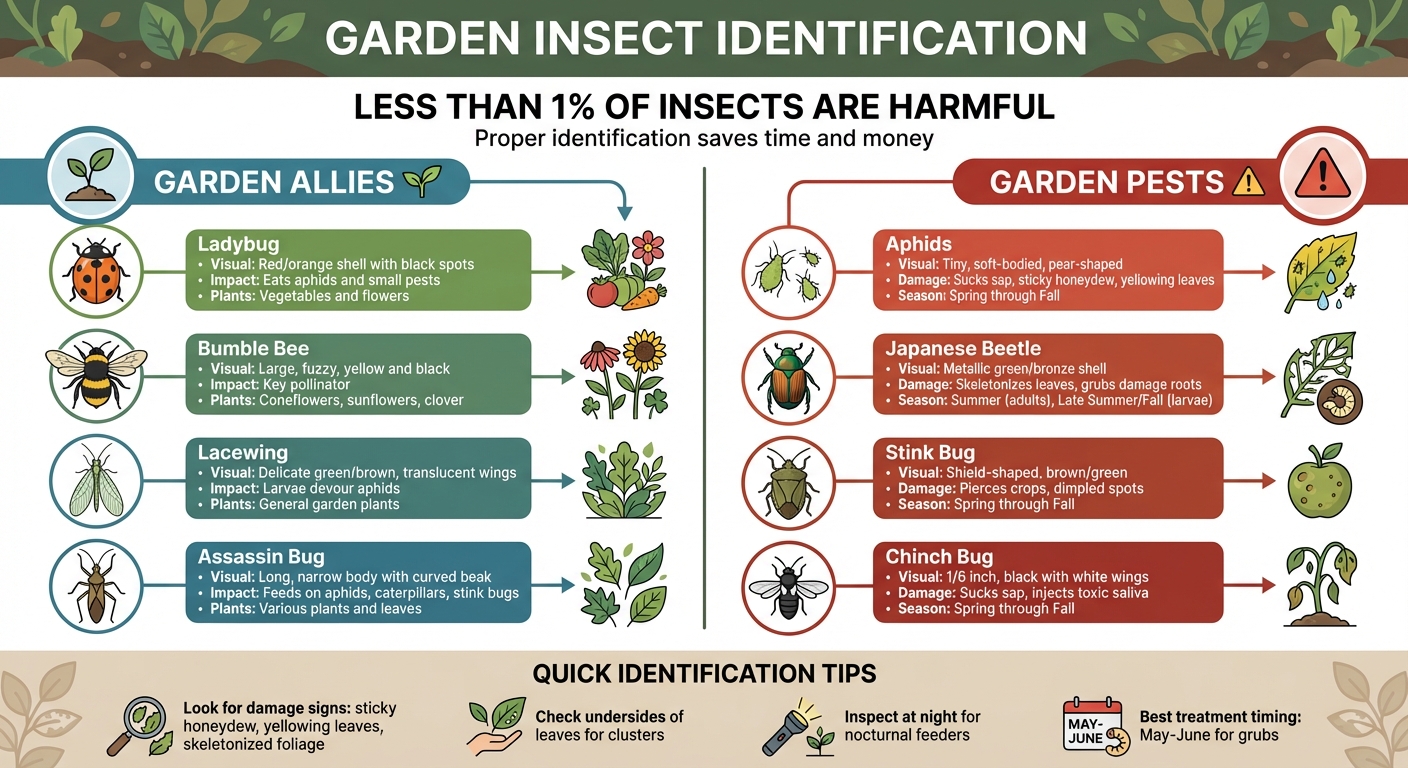
Helpful vs Harmful Garden Insects in Maryland: Visual Identification Guide
How to Identify Insect Pests in Your Vegetable Garden – CSI Garden Pests
Helpful vs Harmful Garden Insects
Not every insect in your Maryland garden is a problem. In fact, many insects are allies, falling into two main categories: pollinators and predators. Pollinators like bumble bees and flower flies are essential for plant reproduction, transferring pollen from one plant to another. Predators, such as assassin bugs and lacewings, help by feeding on pests that harm your plants. According to the University of Maryland Extension:
All spiders are predators and aid us by eating many garden pests [2].
That said, some insects can cause real damage to your garden.
Harmful insects attack plants in specific ways. For instance, sap-sucking insects like chinch bugs and aphids pierce plant tissues to draw out fluids, often leaving behind sticky honeydew. Chewing insects, such as Japanese beetles and armyworms, physically eat leaves and roots. Armyworms, in particular, leave grass blades riddled with ragged holes [1].
The difference between helpful and harmful insects lies in their effect on your garden’s ecosystem. While helpful insects naturally manage pests and assist with pollination, harmful pests weaken plants by disrupting their water flow, damaging roots, or stripping away foliage. For example, honeybees alone contribute to approximately $40 million in agricultural crops in Maryland, with over 18,592 colonies maintained statewide [4].
Recognizing these distinctions can prevent you from mistakenly removing beneficial species. Lauren Schmitt from the University of Maryland Extension emphasizes:
Simple changes to yard maintenance and greenspace management in cities and suburbs can facilitate healthy insect communities and maximize ecosystem services [3].
By encouraging predatory insects, you allow nature to handle pest control, reducing the need for chemical solutions.
Comparison Table: Helpful vs Harmful Insects
| Insect Name | Visual Traits | Garden Impact | Common Maryland Plants Affected |
|---|---|---|---|
| Ladybug | Red or orange shell with black spots | Helpful: Eats aphids and other small pests | Various vegetables and flowers |
| Bumble Bee | Large, fuzzy, yellow and black | Helpful: Key pollinator; rarely stings | Coneflowers, sunflowers, clover |
| Lacewing | Delicate green or brown, translucent wings | Helpful: Larvae devour aphids | General garden plants and trees |
| Assassin Bug | Long, narrow body with a curved beak | Helpful: Feeds on aphids, caterpillars, stink bugs | Found on various plants and leaves |
| Japanese Beetle | Metallic green/bronze shell; white grub larvae | Harmful: Adults skeletonize leaves; larvae damage roots | Roses, hibiscus, turfgrass |
| Aphids | Tiny, soft-bodied, pear-shaped; sticky honeydew | Harmful: Sucks sap, weakening plants | Roses, vegetables, ornamental shrubs |
| Chinch Bug | About 1/6 inch long; black with shiny white wings | Harmful: Sucks sap, injects toxic saliva | Lawn grasses (especially in thick thatch) |
| Stink Bug | Shield-shaped with five-segmented antennae | Harmful: Pierces and damages crops | Fruit trees, vegetables, farm crops |
Common Harmful Garden Insects in Maryland
Maryland gardens are home to a variety of insects that can wreak havoc on your plants if not addressed promptly. Spotting these pests early can make all the difference in maintaining a healthy landscape.
Aphids
Aphids are tiny, soft-bodied insects that gather on new plant growth, stems, and the undersides of leaves. They come in a range of colors – green, black, yellow, or pink – and are just a few millimeters long. Using their piercing mouthparts, aphids drain sap from plants, robbing them of essential nutrients. Look for sticky honeydew, sooty mold, yellowing or curling leaves, and distorted new shoots – common signs of an aphid infestation. Their populations tend to explode during the warmer months of spring and summer.
Japanese Beetles
Japanese beetles are easy to recognize with their metallic green bodies and bronze wing covers. These half-inch pests emerge in summer and are known for their appetite for foliage, especially roses and ornamental shrubs, leaving behind a lace-like appearance on leaves.
"If you’ve seen a Japanese beetle on your rose bushes, for instance, you’ve seen an adult grub."
The grubs, or larvae, are equally damaging underground. These C-shaped, white grubs with brown heads feed on grass roots from late summer through fall. Signs of grub damage include spongy turf that lifts easily, like a rolled-up carpet. If you notice animals like raccoons or birds digging up your lawn, they might be after these grubs. Preventative treatments in May and June, when the larvae are most vulnerable, are often the most effective solution.
Stink Bugs
Stink bugs are known for their shield-shaped bodies and five-segmented antennae. Measuring about half an inch, these insects can be brown or green. They pierce fruits, vegetables, and ornamental plants, injecting enzymes that break down plant tissue. The damage shows up as dimpled, discolored spots, often with a corky texture beneath the surface. Besides their garden impact, stink bugs can become a household nuisance in the fall when they seek shelter indoors, releasing a foul odor if disturbed. In Maryland, their activity peaks in late summer but spans from spring through fall.
Whiteflies and Spider Mites
Whiteflies, though not true flies, are tiny white insects that scatter in swarms when plants are disturbed. They cluster on the undersides of leaves, sucking sap and secreting honeydew, which leads to sooty mold. This can cause yellowing leaves, stunted growth, and sticky foliage.
Spider mites are even smaller, often appearing as tiny red, brown, or yellow dots. They thrive in hot, dry conditions and create fine webbing on leaves and stems. By piercing plant cells, spider mites cause foliage to develop a stippled, bronze look. A quick way to check for them is by tapping a branch over white paper – moving specks usually indicate their presence. Both pests multiply quickly in warm weather, so early action is crucial.
Scale Insects
Scale insects look like small bumps or shells attached to stems and leaves. They range in size from 1/16 to 1/8 inch and come in two types: armored scales with hard coverings and soft scales with waxy coatings. These pests extract sap from plants, leading to yellowing leaves, branch dieback, and overall decline. Like aphids, many scale species produce honeydew, which attracts ants and encourages sooty mold. Severe infestations can kill branches or even entire plants. Their protective coverings make them especially tough to manage, but sticky residue and ant activity beneath plants are telltale signs.
Summary Table: Common Harmful Insects
| Insect Name | Size and Color | Damage Signs | Peak Activity Season in Maryland |
|---|---|---|---|
| Aphids | Small, soft-bodied; various colors | Sticky honeydew, yellowing leaves | Spring through Fall |
| Japanese Beetle | Metallic green/bronze (Adult); C-shaped white grubs (Larvae) | Skeletonized leaves; spongy turf | Summer (Adults); Late Summer/Fall (Larvae) |
| Stink Bug | 1/2 inch; shield-shaped; brown or green | Dimpled, discolored spots on fruits | Spring through Fall |
| Whiteflies | Tiny white flying insects | Yellowing leaves, sticky coating, sooty mold | Spring through Fall |
| Spider Mites | Barely visible; red, brown, or yellow | Fine webbing, stippled bronze leaves | Summer (hot, dry weather) |
| Scale Insects | 1/16–1/8 inch; bump-like; brown or white | Sticky residue, yellowing, branch dieback | Year-round (varies by species) |
sbb-itb-843f8be
Advanced Identification Methods
Once you’ve mastered basic insect identification, these advanced techniques can help you pinpoint pest problems with greater precision. Some pests are incredibly small – like chinch bugs, which are only about 1/6 of an inch long – and others, such as grubs, stay hidden underground, making them tricky to detect without the right approach [1].
A coffee can or bucket test is a simple but effective method to uncover tiny pests. To try it, push an open-ended coffee can about 2 inches into the soil at the edge of a damaged area. Fill the can with water and wait 5 to 10 minutes. This causes insects to float to the surface, where you can identify them. Nymphs often appear orange or red, while adult insects typically have dark bodies and white wings. Another option is to dig out a 1‑square‑foot section of grass and soil, submerge it in a bucket of water, and observe which insects rise to the top [1].
For pests that live underground, such as grubs or cranefly larvae, soil sampling is a reliable method. Dig up a 1‑square‑foot patch in an affected area and carefully inspect the root zone for C‑shaped white larvae with brown heads. You can also lift the thatch layer at the edge of healthy and damaged grass to reveal hidden pests. Since nocturnal feeders like sod webworms and cutworms are active at night, inspecting your lawn in the evening may reveal larvae that are otherwise hidden during the day [1]. If these DIY methods don’t provide clear answers, it might be time to consider professional diagnostics.
It’s important to note that insect damage – such as brown spots, wilting, or bare patches – can often look like drought stress, nutrient deficiencies, or even disease. Advanced diagnostics, including soil tests and monitoring, help identify pests during their most vulnerable stages. For example, treatments for grubs are most effective in May and June [1]. This ensures that pest control efforts are precise and based on solid evidence.
If DIY solutions fall short, Pro Landscapes MD offers expert services throughout central Maryland. Their team of professional horticulturists specializes in insect monitoring and targeted pest management. Using advanced tools and eco-friendly solutions, they can identify pests with accuracy and address the issue without the trial-and-error approach. This expertise not only saves time and money but also minimizes environmental impact.
Prevention and Control Strategies
The best way to deal with garden pests? Stop them before they start. Healthy plants are naturally better equipped to handle insect damage, so the foundation of pest management lies in proper garden care. In Maryland, gardeners who prioritize soil health, good drainage, and thoughtful habitat management often face fewer pest challenges, saving time and effort in the long run.
Garden Maintenance for Prevention
Strong, healthy plants are your first line of defense against pests. Start by testing your soil before adding fertilizer. This ensures you’re giving your garden exactly what it needs – no more, no less – while also avoiding nutrient runoff that could harm the environment.
Keep an eye on thatch buildup, as it creates a cozy home for pests like chinch bugs. Annual aeration and overseeding can help reduce thatch and improve soil structure, making your garden less inviting to these unwelcome visitors. Proper drainage is equally important, as soggy areas in your lawn can attract moisture-loving pests. If you notice patches of turf that feel "spongy" or don’t respond well to watering, it could be a sign of early pest activity, such as grub or chinch bug infestations [1].
| Preventive Strategy | Target Pest(s) | Eco-Friendly Benefit |
|---|---|---|
| Aeration & Overseeding | Chinch bugs, Sod webworms | Reduces thatch naturally and enhances soil health |
| Proper Drainage | Cranefly larvae | Discourages egg-laying without the use of chemicals |
| Soil Testing | General lawn pests | Prevents over-fertilization and nutrient runoff |
| Manual Inspection | Spotted lanternflies, Grubs | Early detection minimizes the need for pesticides |
These steps work hand in hand with pest identification techniques to keep your garden thriving.
Biological Control Methods
Once your garden is healthy, you can boost its natural defenses with biological controls. Beneficial insects like ladybugs, lacewings, and parasitic wasps are excellent allies, preying on aphids, whiteflies, and other harmful pests. In fact, they’re often more effective than chemical treatments. It’s crucial to avoid broad-spectrum insecticides, as these can harm beneficial insects along with the pests. As Planet Natural points out, less than 1% of insects are actually pests [5].
For Maryland gardeners, encouraging predatory species like spiders and assassin bugs can help keep common pests in check. If pest treatments are necessary, timing is everything. For example, grub treatments are most effective in May and June when larvae are young and easier to control [1]. Targeted applications during active feeding periods can also minimize environmental impact.
Pro Landscapes MD‘s Professional Services

Sometimes, you need a professional touch. For homeowners in Howard, Montgomery, Carroll, Frederick, Prince George’s, and Baltimore Counties, Pro Landscapes MD offers expert garden care with a focus on prevention. Their team of horticulturists conducts regular monitoring during maintenance visits, catching pest problems before they spiral out of control [1].
Pro Landscapes MD provides a range of services, including soil testing, aeration, drainage solutions, and targeted pest management. Their use of commercial-grade equipment and eco-conscious techniques ensures precise, effective treatments. In fact, professional applications often use less product than DIY methods, thanks to the precision of trained technicians. Whether you’re in Ellicott City, Bethesda, Columbia, or nearby communities, Pro Landscapes MD helps you maintain a healthy, pest-resistant garden all year long. Their expertise complements the preventive strategies outlined above, offering peace of mind for Maryland gardeners.
Conclusion: Maintaining a Healthy Garden
Knowing how to tell the difference between helpful insects and pests is a game-changer for creating a thriving garden. Spotting chinch bugs before they release their harmful secretions or catching grubs during May and June when they’re most vulnerable can stop problems before they even start. Getting identification right not only protects your garden but also saves you time and money.
Once you’ve mastered identifying pests, staying proactive is the next step. The healthiest gardens in Maryland all have one thing in common: they combine preventive care with smart, timely interventions. Simple practices like regular inspections, maintaining proper drainage, and annual aeration make it harder for pests to take hold. At the same time, natural allies like lacewings and assassin bugs step in to control pests without the need for chemicals.
For a more tailored approach, professional assistance can make a big difference. Services like targeted soil testing help address nutrient gaps and reduce runoff, setting the stage for focused pest control. Homeowners in Howard, Montgomery, Carroll, Frederick, Prince George’s, and Baltimore Counties can rely on Pro Landscapes MD for expert care. Their team uses advanced equipment and horticultural know-how to monitor for early signs of trouble during routine visits, catching potential infestations before they escalate into expensive problems.
A truly thriving garden strikes a balance by keeping insect populations in check. Learn what to watch for, act swiftly, and lean on professional help when needed to maintain a resilient and beautiful outdoor space year-round.
FAQs
How can I tell pest damage from drought or disease?
Pest damage typically appears as holes, skeletonized leaves, or the presence of insects or droppings, and it’s often confined to specific areas. Chewing pests, such as beetles, create ragged holes, while sap-sucking insects can lead to yellowing or stippling on the leaves.
On the other hand, drought stress tends to impact larger sections of the plant, causing wilting, browning, or leaves that become brittle to the touch. Diseases may show up as spots, mold, or unusual growths. To confirm pest activity, look for signs like insects, eggs, or frass (insect waste).
What’s the easiest way to find tiny lawn pests fast?
The simplest way to identify tiny lawn pests is through regular inspections, especially in spots showing damage – like yellowing patches or thinning grass. Check the soil surface and grass blades for pests like grubs, chinch bugs, or armyworms. A magnifying glass or traps can make spotting them easier, and using visual identification guides can speed up the process.
When should I treat grubs in Maryland for best results?
The best time to address grub issues in Maryland is from late summer to early fall, usually in August and September. At this stage, grubs are actively feeding close to the soil’s surface, which makes treatments far more effective before they settle into dormancy for the winter.
Chat with Us