









- bhavya gada
- No Comments
If I want fewer garden pests, I need to act before leaves are full of holes. In Maryland, humid summers, damp soil, and spring rain help slugs, aphids, beetles, and plant disease get started fast. The fix is simple: I get better results when I combine prevention, close checks, and targeted treatment instead of waiting and then using one last-step spray.
Here’s the full game plan in plain English:
- Companion planting helps keep some pests away and can pull pollinators and predator insects into the garden.
- Mulch control and cleanup cut down wet hiding spots, crop debris, and places pests use through winter.
- Barriers and hand-picking stop damage at once, especially on seedlings and small infestations.
- Predator insects and wildlife help lower pest numbers over time if I give them flowers, cover, and water.
- Traps and monitoring tell me what’s in the garden and when numbers are climbing.
- Insecticidal soap and mild sprays work on soft-bodied pests, but only when I hit them directly.
- Pruning or plant removal stops local spread fast when pests are packed into one stem, shoot, or plant.
A few numbers matter here:
- Maryland spring rainfall often runs about 3 to 4 inches per month
- Healthy plants can often handle about 20% to 30% leaf loss without long-term harm
- One lady beetle may eat up to 5,000 aphids in its lifetime
The Complete Guide To Organic Pest Control (aphid, thrip, slugs, moles, sawflies, and more!)
sbb-itb-843f8be
Quick Comparison
| Method | Best for | Works best when | Main drawback |
|---|---|---|---|
| Companion planting | Early deterrence | I use it from the start | Takes time |
| Mulch control & cleanup | Slugs, stink bugs, cutworms | Beds stay damp or messy | Too much cleanup can remove insect shelter |
| Barriers & hand-picking | Seedlings, large visible pests | I need same-day protection | Takes repeat effort |
| Predator insects & wildlife | Long-term control | I plant flowers and leave shelter | Slow payoff |
| Traps & monitoring | Finding pests early | I need to confirm what’s there | Often does not solve the issue alone |
| Soap & mild sprays | Aphids, mites, whiteflies, thrips | Pests are active and exposed | Must hit the pest directly |
| Pruning & removal | Localized infestations | Damage is still contained | Less useful once the problem spreads |
One more thing: not every “pest problem” is a pest problem. Poor drainage, compacted soil, wrong planting depth, and herbicide drift can look a lot like insect damage. So before I spray again, I check the plant’s growing conditions too.
If I keep that order in mind – prevent, watch, then treat – I can keep most garden pest problems under control with less spraying and less plant stress.
Why Organic Pest Control Works in Maryland Yards
Maryland’s climate makes organic pest control a practical choice because it works with the same conditions pests use to spread. Humid summers and erratic springs create ideal conditions for insects and fungi, which puts extra pressure on garden plants.
That combination also makes targeted organic controls a smart fit for home landscapes, especially yards with lots of pollinators.
If children play in the yard or pets roam through the beds, lower-toxicity options are often a better match. They can also cut runoff risk near streams and stormwater systems.
Organic pest control works best when spacing, soil health, and plant choice are right from the start. In plain terms, how you space your garden, how healthy your soil is, and which plants you grow all affect how easily pests spread.
That’s why layered organic methods tend to work better than relying on a single fix.
1. Companion Planting
Companion planting means growing certain plants together so they can help each other. One plant might discourage pests, another might draw in helpful insects, and another might act like a decoy so pests leave your crops alone.
It works best as a first line of defense. Then, if pest pressure starts to build, you can add faster controls on top of it.
Best Use
This approach fits nicely in vegetable beds, herb gardens, and raised beds. A few pairings tend to do well in Maryland gardens:
| Companion Example | Target Pest | How It Helps |
|---|---|---|
| Basil + Tomatoes | Hornworms, thrips, flies | Repels hornworms; handles Maryland humidity well. |
| Marigolds + Peppers | Aphids, beetles, nematodes | Deters pests and attracts native pollinators. |
| Dill + Cucumbers | Aphids, cucumber beetles | Draws predatory wasps and hoverflies. |
| Garlic + Roses | Japanese beetles, aphids | Strong scent masks the host plant. |
| Nasturtiums | Aphids, flea beetles | Works as a trap crop along garden borders. |
Target Pests
Nasturtiums are especially handy along the edge of the garden. They pull aphids and flea beetles away from vegetables, which gives your main crops a better shot.
Maryland-Specific Limits
There’s one catch: if plants are packed too tightly, airflow drops and fungal problems can show up faster. In Maryland’s humid conditions, that matters. Raised beds can help here because they improve drainage and may cut down on slug pressure too.
Speed of Results
Companion planting is mostly about prevention, not instant pest control. Some of the effect can start right away, but the full payoff takes time. If pests are already leaving clear damage, pair this method with something faster, like hand-picking or organic sprays.
For pests already spreading, move next to mulch control and garden sanitation.
2. Mulch Control and Garden Sanitation
Maryland gardens tend to stay damp, especially when you mix humid weather with heavy clay soil. Add thick mulch, and you’ve got a cozy hiding place for slugs, snails, and other pests.
Best Use
Use mulch with a light hand in moist, shady areas and around tender seedlings. If mulch gets too thick, it holds extra moisture and gives pests a place to hide. It also helps to pull mulch back from stems and trunks. When mulch is piled against them, it can trap moisture, lead to rot, and give pests cover [2][6].
This step is most useful in:
- Vegetable beds
- Areas with young seedlings
- Spots near woody ornamentals that often deal with fungal disease [2][5]
Garden cleanup matters just as much. Removing crop residue, weeds, and fallen fruit cuts down places where pests can spend the winter, including brown marmorated stink bug [5][6].
Use these cleanup steps to match the problem to the pest.
Target Pests
| Pest | Action to Take | Why It Matters in Maryland |
|---|---|---|
| Slugs & Snails | Reduce mulch thickness near vulnerable plants; remove damp debris | High humidity and clay soil retain moisture [5][3] |
| Brown Marmorated Stink Bugs | Clear overwintering sites near structures in fall | A common invasive pest across Maryland [5] |
| Cutworms | Remove debris at the base of plants | They hide in soil and debris during the day [3] |
Maryland-Specific Limits
There’s a tradeoff here. Cleanup can also remove shelter for helpful insects. Ground beetles and spiders spend the winter in leaf litter and deadwood, so it makes sense to leave a small patch of leaf litter or brush in low-traffic corners [4][6].
Speed of Results
Slug damage can drop overnight once you remove damp hiding spots [3]. Sanitation helps cut pest pressure the next season [5].
Water early in the day, and skip overhead irrigation.
If cleanup alone doesn’t do the job, move to physical barriers and hand-picking for direct control.
3. Physical Barriers and Hand-Picking
Physical barriers do their best work before pests get to the plant. In Maryland gardens, row covers can block many common insects early in the season and stop feeding damage right away. That’s the big advantage here: while methods like companion planting or sanitation may take time, barriers can protect plants on day one. A good approach is simple: start with exclusion, then hand-pick anything that gets past it.
Row covers work best during peak pest periods in late spring, especially from May through June [5][6]. Take them off at first bloom so pollinators can reach the flowers [6]. In humid weather, check them often. Trapped moisture can lead to disease problems [2].
For larger animals, fabric covers usually aren’t enough. Switch to netting or mesh fencing for deer, rabbits, and birds [6]. Copper tape around raised beds can help deter slugs and snails, but there’s a catch: if soil or plant debris creates a bridge over the tape, it stops working as well [1][3].
Hand-picking comes in when prevention falls short. It works best for pests you can easily spot and reach, like Japanese beetles, tomato hornworms, and slugs. Pick beetles in the morning and slugs in the evening [5]. Then drop them into a bucket of soapy water for fast disposal [5].
Use the table below to match each barrier with the pest it handles best.
Best Use
Row covers matter most for seedlings and transplants because young plants can’t handle much damage [2]. Collars around the base of young vegetable starts protect stems from cutworms right at planting time [1].
Target Pests
| Method | Target Pests | Timing |
|---|---|---|
| Row Covers | Flea beetles, squash vine borers, cabbage worms, leaf miners | Late spring; remove at first bloom |
| Hand-Picking | Japanese beetles, hornworms, slugs, bagworms | Early morning or evening |
| Netting/Fencing | Birds, rabbits, deer | Year-round or during fruit ripening |
| Copper Tape | Slugs, snails | Spring and after heavy rains |
| Collars | Cutworms | At planting for young seedlings |
Maryland-Specific Limits
Hand-picking gets hard to keep up with during large outbreaks [6][4]. Row covers also need regular checks in humid weather, since trapped moisture can encourage fungal disease [2].
Speed of Results
Barriers and hand-picking work immediately [5][4]. That fast payoff makes them especially useful early in the season, when seedlings are most exposed.
When pest pressure keeps building, beneficial insects can help keep control going.
4. Beneficial Insects and Wildlife Allies
When row covers and hand-picking help but don’t quite get you there, the next move is simple: make your yard a place where pest hunters want to stay.
Beneficial insects and backyard wildlife keep working after you’ve finished cleanup. They help cut pest pressure when you give them three basics: nectar, shelter, and a shallow water source.
Lady beetles and lacewings go after aphids. Ground beetles and toads feed on slugs and cutworms. Parasitoid wasps, birds, and syrphid flies help knock back hornworms, leafminers, and other soft-bodied pests. A single lady beetle can consume up to 5,000 aphids during its lifetime [3].
To keep these helpers around, plant for bloom across the growing season. Serviceberry feeds them in early spring. Milkweed and echinacea carry that into summer. Goldenrod and asters pick up the slack in fall. A brush pile and clumps of perennials in a quiet corner give them cover, and a shallow water source helps support dragonflies, frogs, and toads.
| Beneficial Ally | Target Pests | How to Attract Them |
|---|---|---|
| Lady Beetles | Aphids, scale, small caterpillars | Yarrow, coreopsis, tansy |
| Lacewings | Thrips, aphids, soft-bodied insects | Dill, goldenrod, cosmos |
| Parasitoid Wasps | Tomato hornworms, leafminers | Joe-Pye weed, alyssum, white clover |
| Ground Beetles | Slugs, cutworms, snails | Brush piles, mulch, perennial groundcovers |
| Syrphid Flies | Aphids, soft-bodied insects | Asters, black-eyed Susans, mints |
| Frogs & Toads | Slugs, cutworms, ground-dwelling insects | Shallow water source, dense groundcovers |
| Dragonflies | Mosquito larvae | Native sedges, aquatic vegetation |
Maryland-Specific Limits
This approach takes more time than barriers or sprays, but it can help lower repeat infestations as predator numbers build from one season to the next.
That said, Maryland gives pests a head start. Humid summers and average spring rainfall of 3 to 4 inches per month help slugs and aphids get moving early [3]. During heavy outbreaks, natural enemies may not build fast enough to stop crop damage right away [4]. Native plantings also need time. It can take 2 to 5 years for them to mature enough to support steady predator populations [4].
There’s another weak spot too: invasive pests. The Spotted Lanternfly is a good example. Local predators have not adapted to target it well [4].
Speed of Results
Biological control builds slowly over multiple seasons. So yes, you may see some chewing, stippling, or leaf loss while things balance out.
That doesn’t always mean your plants are in trouble. A healthy plant can tolerate 20% to 30% leaf defoliation without lasting harm [2]. In many cases, a little damage is just part of letting beneficial insects get established.
If pest pressure keeps climbing, use traps and monitoring to spot outbreaks early.
5. Organic Traps and Monitoring Tools
Traps and monitoring tools act like an early warning system. They show you which pests are around and whether their numbers are starting to climb. Use them when you need to confirm the pest before moving to a direct treatment.
Yellow sticky cards work well in vegetable beds and around prized ornamentals. Set them out in late spring to catch whiteflies and flea beetles before populations take off [5]. Pheromone traps target one pest species, such as the cabbage looper, which helps you time other organic treatments with more precision. For Japanese beetle traps, keep them far from plants you care about. If they’re too close, they can pull in more beetles than they catch [6].
In shady, damp beds, use slug boards and beer traps. Slug boards give slugs a cool place to hide, so check them early in the morning. Beer traps catch slugs overnight, but you’ll need to refill them after rain [3].
When trap counts go up and new growth shows 20% to 30% distortion, it’s time to step up control.
Here’s how to match the tool to the pest and the season:
| Tool | Target Pests | Best Use in Maryland | Speed of Results |
|---|---|---|---|
| Yellow Sticky Cards | Aphids, whiteflies, flea beetles | Greenhouses, vegetable beds, and valuable ornamentals in late spring | Immediate monitoring |
| Beer Traps | Slugs, snails | Shady, moist areas with clay-rich soil | Overnight results |
| Slug Boards | Slugs, snails | Near seedlings; check early morning | Immediate for collection |
| Pheromone Traps | Specific moths (e.g., cabbage looper) | Vegetable gardens to time organic sprays | Seasonal tracking |
| Sticky Traps | Brown marmorated stink bug | Near fruit trees and late-season vegetables | Weekly monitoring |
Traps mostly show pest pressure. On their own, they usually don’t fix the problem. Use trap counts to decide when to switch to insecticidal soap or another targeted spray.
6. Insecticidal Soap and Mild Organic Sprays
When traps show pest numbers going up and other methods aren’t moving fast enough, switch to contact sprays. If your monitoring shows soft-bodied pests are active, that’s the right moment to use them. Insecticidal soap and neem oil only kill the pests they hit, so timing and full coverage make a big difference.
These sprays work best on aphids, mites, whiteflies, and thrips. They don’t do much against hard-bodied pests like adult Japanese beetles or wood-boring insects. In Maryland, humid spring weather can set off fast aphid outbreaks, so early treatment helps.
Spray at dawn or dusk, stay away from open blooms and midday heat, and test a small part of the plant first. After heavy rain, spray again. Start with spot treatments so you protect ladybugs, lacewings, and other helpful insects.
| Spray Type | Target Pests | Best Time | Main Limit |
|---|---|---|---|
| Insecticidal Soap | Aphids, mites, whiteflies, thrips | Early morning / dusk | No lasting residue; reapply after rain |
| Neem Oil | Aphids, mites, whiteflies, thrips | Early morning | Needs direct contact |
| Horticultural Oil | Scale insects, spider mites | Late winter / early spring | Best for scales and mites, not a broad all-purpose spray |
If pests are tucked inside damaged shoots or thick, crowded growth, pruning is often the faster next step.
7. Targeted Pruning and Plant Removal
Cut out infested growth before pests spread. It’s the fastest nonchemical fix.
Best Use Cases
When pests are tucked inside shoots or packed into plant clusters, cutting out the damaged parts works faster than waiting for sprays to do the job. This method works best when the problem is still contained to one area. Bagworms on evergreens are a good example: early removal matters, because if you wait too long, the damage can be tough to undo.
For annuals and transplants, pulling the whole plant is often the smarter move than trying to trim around heavy damage.
University of Maryland Extension recommends starting with hand removal, watering changes, and pruning. [2]
Target Pests
This method works especially well for scale insects, overwintering egg masses, and bagworms. Early spring – March through April – is the best time to prune infested twigs before eggs hatch.[2][5][6]
Maryland-Specific Limits
Do not prune wet plants. Moisture can spread disease.
Speed of Results and Disposal
The results are immediate. Once infested material is removed, local spread stops right away. But the job isn’t done until the debris is gone too. If cut material stays nearby, pests can come right back from what you removed.
Bag infested material and take it off-site. Do not compost it.[6]
Use this table to decide when pruning is enough and when full plant removal makes more sense.
| Factor | Detail |
|---|---|
| Top target pests | Scale, bagworms, overwintering egg masses |
| Speed of results | Immediate halt to localized spread |
| Key limit | Less effective once damage is widespread or the plant is in decline |
| Disposal rule | Off-site disposal only – never compost heavily infested material |
Comparison Table: Matching Organic Methods to Common Maryland Pest Problems
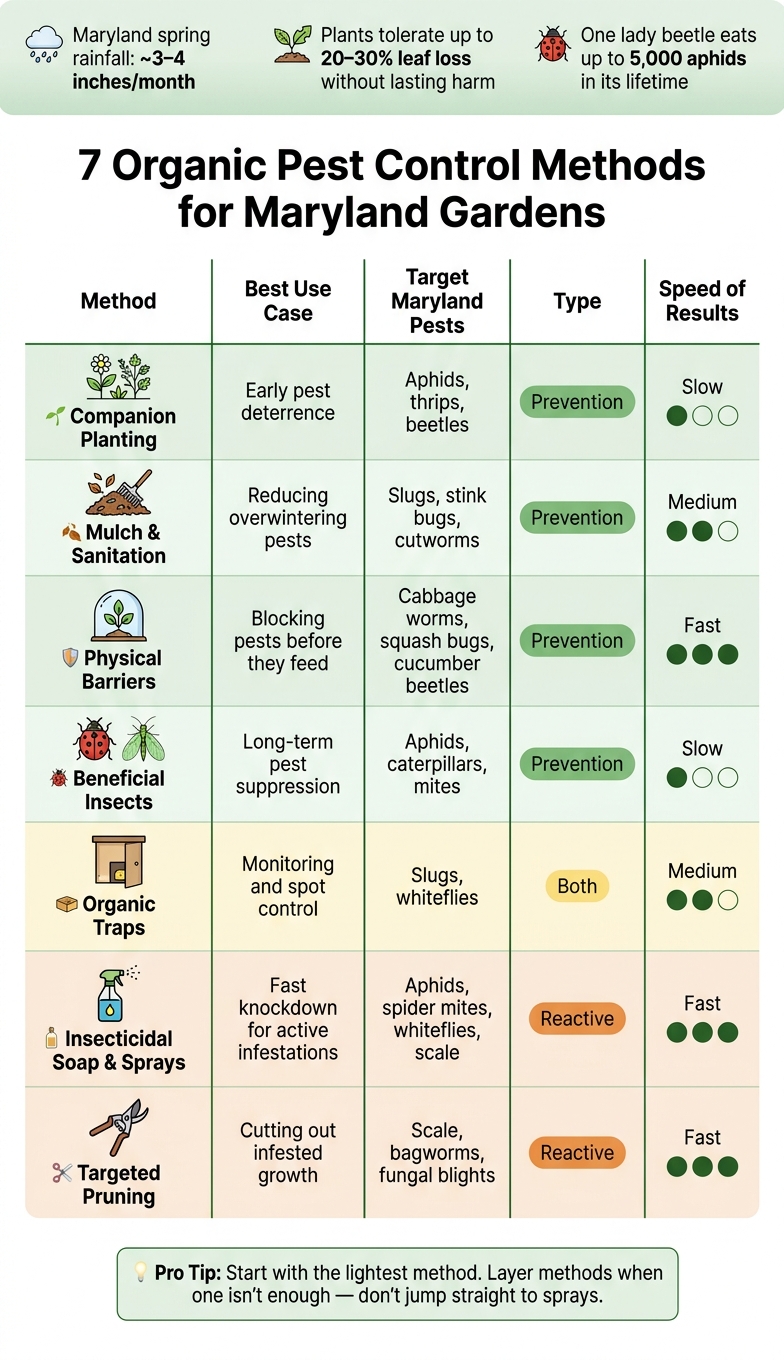
7 Organic Pest Control Methods for Maryland Gardens
The goal is simple: start with the lightest method that can do the job. Companion planting and mulch control help head off trouble early. Traps help you watch pest activity and cut numbers down. Soap sprays and pruning come into play once pests have already shown up. If one method isn’t enough, add a second one instead of jumping straight to a harsher fix.
| Method | Best Use Case | Target Maryland Pests | Prevention or Reactive | Main Limitation |
|---|---|---|---|---|
| Companion Planting | Early pest deterrence | Aphids, thrips, beetles | Prevention | Slow to work and must be spaced carefully. |
| Mulch & Sanitation | Reducing overwintering pests | Slugs, stink bugs, cutworms | Prevention | Too much mulch traps moisture and stresses roots. |
| Physical Barriers | Blocking pests before they feed | Cabbage worms, squash bugs, cucumber beetles | Prevention | Must be sealed and removed for pollination. |
| Beneficial Insects | Long-term pest suppression | Aphids, caterpillars, mites | Prevention | Time lag for establishment; may not stop sudden heavy outbreaks. [4] |
| Organic Traps | Monitoring and spot control | Slugs (beer traps), whiteflies (sticky cards) | Both | Some traps, like Japanese beetle bags, may attract more pests to the yard. [6][5] |
| Insecticidal Soap & Sprays | Fast knockdown for active infestations | Aphids, spider mites, whiteflies, scale | Reactive | Non-selective; can harm beneficial insects and requires direct contact. |
| Targeted Pruning | Cutting out infested growth | Scale, bagworms, fungal blights | Reactive | Less effective once damage is widespread or the plant is in decline. |
University of Maryland Extension notes that many Maryland plant problems are not caused by insects at all, but by abiotic issues like poor drainage, herbicide drift, or planting too deeply. [7]
That last point matters more than many gardeners think. A stressed plant can look pest-damaged even when the root issue is poor drainage, soil compaction, or planting depth. So if a plant still looks off after treatment, pause before adding another spray. Rule out drainage problems, compaction, planting depth, or herbicide drift first.
How to Layer Methods for Better Pest Control
Once pests show up, don’t lean on just one fix. A layered approach works better because each method covers what the others miss.
Start with companion planting and the right mulch depth. Then put row covers in place early to help block flea beetles and cabbage worms. If pests still slip through, switch to direct removal and close monitoring.
Timing matters in Maryland’s warm, humid summers. Japanese beetles usually emerge in June and July, so hand-pick them early in the morning and check leaves every week [7][5]. If damage stays light, keep watching and stick with physical controls first. But if pest pressure keeps building, move from exclusion to targeted treatment.
Use insecticidal soap only when pests are active, when conditions are cool, and before blooms open. In short, use soap only when monitoring shows an active infestation.
Conclusion
Organic pest control in Maryland isn’t about getting everything perfect. It works best when you use a few methods together, before damage gets out of hand. That layered approach matters because one method can cover what another misses.
Start with the right plant in the right place as part of your yard maintenance and landscape projects. That step can cut pest pressure more than any single treatment. In Maryland, that matters even more because humid weather from late spring into summer gives pests a chance to build up fast. Check your garden once a week from May through August, when pest pressure is at its highest.
A little leaf damage usually isn’t a reason to jump in right away. If the damage stays light, keep watching. If it starts to spread, then move to direct control.
In Maryland, prevention, monitoring, and targeted treatment work best as one system. When you use them together, most gardens stay healthier with less spraying.
FAQs
What should I try first for garden pests?
Start with prevention and regular checks. Look over plants once a week so you can spot the pest, figure out what it is, and decide if you need to step in.
Go with the least toxic fix first. Hand-pick large insects, knock aphids off with a strong spray of water, and use barriers like row covers. Healthy soil and helpful insects often handle the problem before you need organic treatments like insecticidal soaps or horticultural oils.
How often should I check my garden for pests?
Check your Maryland garden for pests at least once a week during the growing season. After heavy rain or sharp weather swings, check more often so you can spot trouble early.
Pay close attention to the undersides of leaves, new growth, and stems. That’s where you’re most likely to find eggs, larvae, or early signs of damage.
When should I use soap spray instead of hand-picking?
Start with hand-picking for large, easy-to-see pests like Japanese beetles, slugs, and hornworms. It’s simple, direct, and often the best first move before you reach for any spray.
If soft-bodied pests like aphids or mites start piling up and hand removal isn’t enough, switch to insecticidal soap. That’s usually the point where the problem moves from annoying to harmful for plant health.
Use soap as a spot treatment only, not a blanket spray. Stay off blooms to help protect pollinators, and spray in the early morning or late evening.
Chat with Us