









- bhavya gada
- No Comments
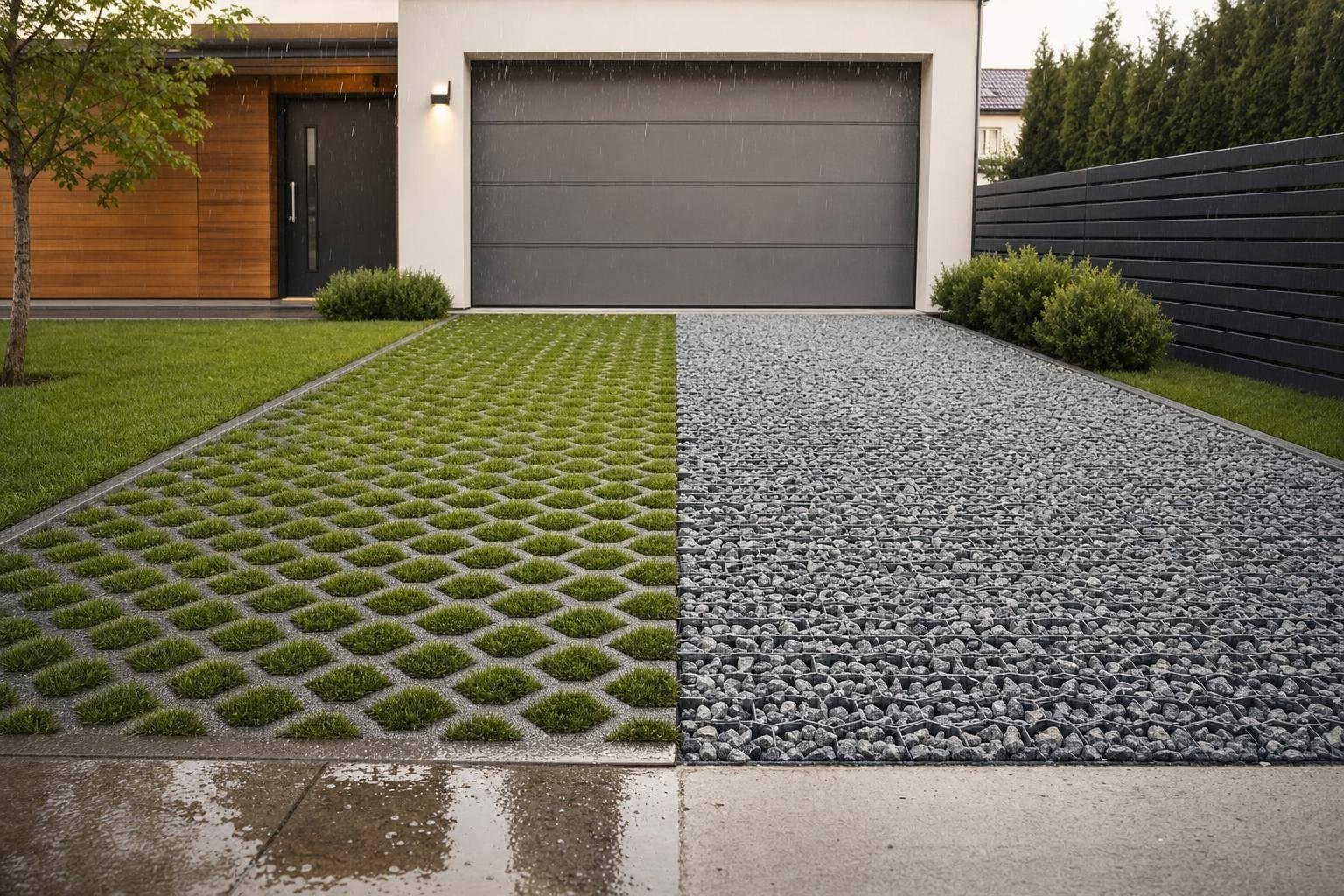
If I had to boil it down to one line: grass pavers fit light use and a green look; gravel grids fit daily driving and less yard work.
If you’re choosing between the two in central Maryland, I’d look at 7 things first:
- Installed cost
- Drainage
- Appearance
- Upkeep
- Wheel load
- Summer surface heat
- Mud control
A few fast takeaways:
- Grass pavers look like lawn and stay cooler in sun, but they need watering, weeding, and reseeding.
- Gravel grids look like stone and usually handle turning, backing, and repeat traffic better.
- In many jobs, the big cost is site prep, not just the top surface, which is a common factor in Baltimore hardscaping projects.
- Clay soil, wet spots, and slopes can add work for either option.
- Grass systems may need 2–4 inches of compost or organic matter to help turf get started in Maryland soils.
- Gravel grids often keep areas cleaner and less muddy after hard rain.
For most full driveways, I’d lean gravel grids.
For overflow parking or a side yard that should blend into the lawn, grass pavers can make sense.
Grass Pavers vs Gravel Grids: Side-by-Side Comparison
Grasspave2 and Gravelpave2 Benefits and Installation
sbb-itb-843f8be
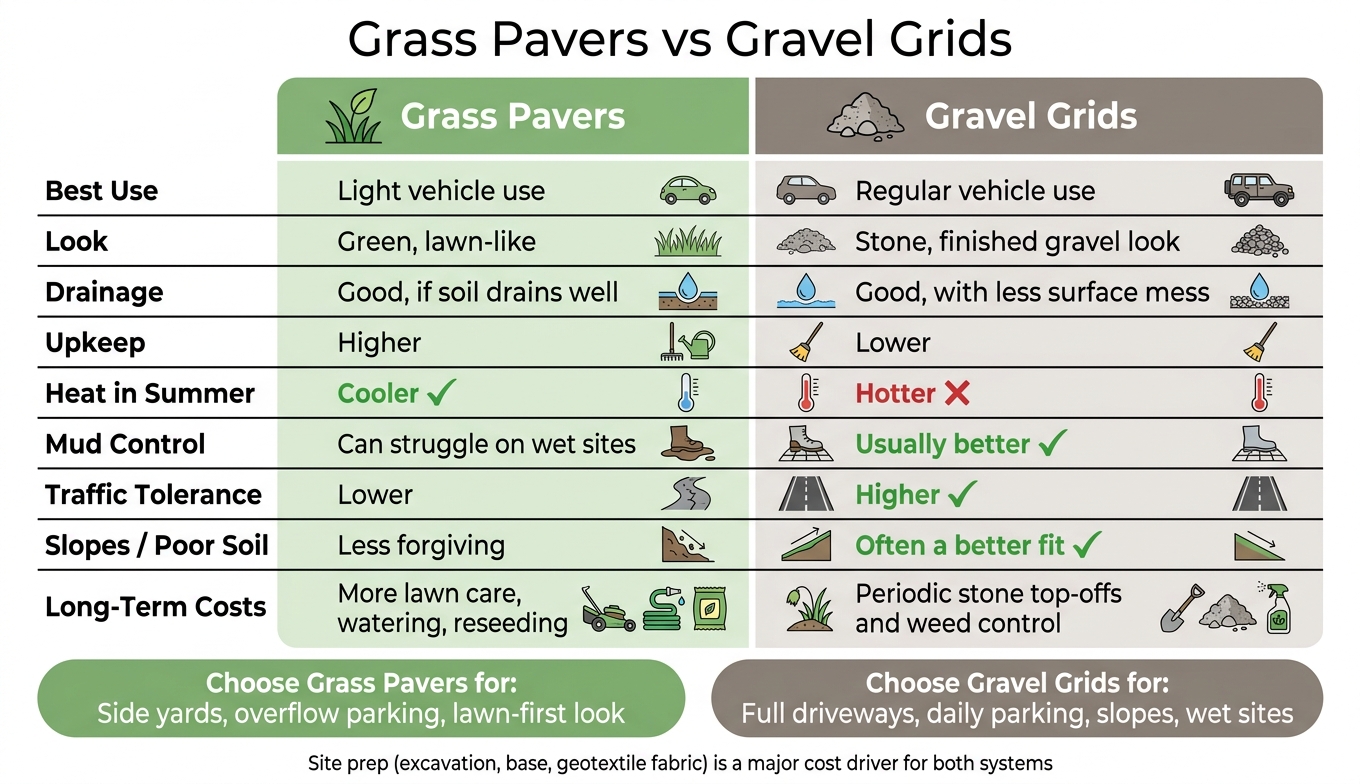
Quick Comparison
| Factor | Grass pavers | Gravel grids |
|---|---|---|
| Best use | Light vehicle use | Regular vehicle use |
| Look | Green, lawn-like | Stone, finished gravel look |
| Drainage | Good, if soil drains well | Good, with less surface mess |
| Upkeep | Higher | Lower |
| Heat in summer | Cooler | Hotter |
| Mud control | Can struggle on wet sites | Usually better |
| Traffic tolerance | Lower | Higher |
| Slopes / poor soil | Less forgiving | Often a better fit |
| Long-term costs | More lawn care | Stone top-offs and weed control |
So if you want looks first, grass pavers are the lawn-style option. If you want use first, gravel grids are usually the safer pick.
Grass pavers: Green appearance and lighter vehicle access
Use grass pavers when the green look matters more than frequent wheel load. They give you a lawn-like surface that can handle light vehicle use, and the living cover stays cooler in direct sun.
Drainage and summer heat
Grass pavers slow runoff and help water soak into the soil, which works well in central Maryland. That living surface also changes how the area handles summer heat and upkeep. Fine fescues are a good fit for low-mow areas, but skip mowing during hot, dry spells.
Appearance, upkeep, and traffic limits
The main appeal is simple: it looks like a lawn, not a hard surface.
New plantings need watering and weeding until they fill in. Fine fescues don’t handle heavy foot traffic well, so grass pavers make more sense in low-traffic spots. They’re a light-duty option that suits passenger cars, not frequent repeated traffic. In shady areas, Pennsylvania sedge can give you a grass-like look for spaces with light traffic.
Best home uses for grass pavers
Good places to use grass pavers include:
- Side yards
- Narrow driveway strips
- Overflow parking
Gravel grids: Stable stone surface for regular vehicle traffic and lower upkeep
If you need steady vehicle access, gravel grids are often the better fit. They give up the lawn-like look of grass pavers in exchange for a harder-wearing surface. The system uses a cellular base filled with angular crushed stone, which creates a permeable surface that stays in place under regular vehicle traffic.
Drainage, mud control, and summer heat
Water moves down through the grid, and the stone stays contained. That helps cut down on washouts and muddy patches after heavy rain.
The downside is simple: heat. In direct summer sun, gravel usually feels hotter than a grass-filled surface.
Appearance, upkeep, and wheel load performance
A gravel grid looks like a finished gravel area, not a lawn. That changes both the appearance and the upkeep. In most cases, maintenance means adding stone now and then, pulling a few weeds, and making sure the edges stay in line. A clean border can make a big difference, especially in HOA neighborhoods where appearance tends to matter. Under Maryland’s 2021 Low-Impact Landscaping Law, HOAs cannot prohibit landscapes designed to conserve water or provide pollution prevention [1].
Where gravel grids stand out is day-to-day vehicle use. They handle turning, backing, and daily traffic without the turf damage that grass surfaces tend to show after repeated use.
Best home uses for gravel grids
Gravel grids work well for:
- Full driveways
- Daily-use parking pads
- Side yards with regular vehicle access
- Sloped areas or poor-soil spots where grass has a hard time getting established
Cost and installation: What affects the final price in central Maryland
Installed cost usually comes down less to the surface you pick and more to the work underneath it. In plain English: site prep is often where the bill grows. After you choose the surface type, the next thing to look at is the condition of the site and what it will take to get it ready.
Main cost drivers for both systems
Both systems need the same core setup: excavation, a compacted base, geotextile fabric, and edge restraints. That base work is where many homeowners get surprised. If the site has clay soil or poor drainage, crews may need deeper excavation or more grading. That adds labor, materials, and time before the surface even goes in.
Slopes can also push costs up for either option, though not in the same way. With grass pavers, a slope may call for extra grading, stabilization, or a different plant choice so the surface can hold up. With gravel grids, the big issue is keeping the stone in place, which often means stronger edge stabilization to stop gravel from creeping downhill.
Grass pavers can bring one more cost that gravel grids often avoid. In Maryland, many native soils don’t work well for standard turfgrass, so the site may need 2–4 inches of compost or organic matter to help the grass get established [1]. That extra soil prep can add a noticeable amount to the install price.
There may be a way to trim the total a bit. Some county stormwater rebate programs can help offset costs, so it’s worth checking local incentives before you set the budget.
Installed cost comparison table
These pricing differences tend to show up in different parts of the project.
| Cost factor | Grass pavers | Gravel grids |
|---|---|---|
| Surface material | Grid system plus soil and turf components | Grid system plus angular gravel infill |
| Labor intensity | Higher: soil prep, turf establishment, and final grading | Lower: simpler surface finishing, but still requires substantial base work |
| Excavation and base | Required for both; depth varies by soil and drainage plan | Required for both; depth varies by soil and drainage plan |
| Drainage add-ons | May need added grading or soil correction on wet sites | May need added grading or edge stabilization on wet sites |
| Early-stage costs after install | Watering, turf establishment, and reseeding if needed | Possible gravel top-off after settling |
| Long-term maintenance costs | Ongoing lawn care, watering, and reseeding | Periodic gravel replenishment, weed control, and edge maintenance |
Over time, grass pavers usually cost more to keep up because turf needs more water and occasional reseeding.
Which system fits driveways, side yards, and parking pads
Once cost and drainage are clear, the fastest way to narrow this down is simple: how the surface will be used. Traffic, upkeep, and the look you want matter most.
| Use case | Grass pavers | Gravel grids |
|---|---|---|
| Full driveway with daily traffic | Usually less ideal where turning and repeated wheel loads are constant | Usually the better fit for stability and lower upkeep |
| Side yard access lane | Good when a greener look matters and traffic is limited | Better for regular utility, contractor, or delivery access |
| Overflow parking pad | Good for occasional parking when you want the pad to blend into the lawn | Good for cleaner use under regular parking |
| Wet or sloped area | Higher risk of turf stress and rutting | Favors gravel grids because they rely less on turf survival |
Driveways and frequent vehicle use
For most homeowners, traffic level is the main deciding factor. If you’re dealing with a full driveway and daily vehicle use, gravel grids are generally the stronger choice. Repeated turning and backing wear down the surface, and turf usually doesn’t handle that kind of stress very well.[2][3]
That becomes even more clear on sloped driveways or wet sites. In those spots, gravel grids tend to stay in better shape and ask for less hands-on care.
Side yards and parking pads
A side yard lane is a different story. If it only gets occasional use and you want it to disappear into the lawn, grass pavers can work well. They make more sense when looks are a big part of the decision and traffic stays light.
But if that lane sees regular contractor vehicles, trash pickup access, or delivery traffic, gravel grids are often the safer bet. They stay cleaner and handle repeat use with less fuss.
Overflow parking pads follow the same pattern. Grass pavers make sense for occasional parking, especially when you want the area to blend into the yard instead of looking like a hard parking surface. If that same pad starts acting like a semi-regular space for a second car or frequent guests, a gravel grid will usually hold up better and demand less work.
Conclusion: Match your choice to look, traffic, and upkeep tolerance
Grass pavers make more sense for occasional use and a lawn-first look. Gravel grids are usually the better fit for regular traffic and lower upkeep. The best pick comes down to traffic, slope, and how much maintenance you’re willing to deal with.
FAQs
Which option lasts longer?
Permeable pavement systems can last 20 to 40 years. That’s often longer than standard asphalt, which usually lasts 15 to 25 years.
The catch is pretty simple: lifespan depends on proper installation and regular maintenance. When both are done well, these systems can keep performing through local freeze-thaw cycles.
Can either system handle Maryland clay soil?
Yes, but Maryland’s clay-heavy soil can be tricky. It tends to drain poorly, and it swells when wet and shrinks as it dries. That movement can limit how well systems that rely only on infiltration perform.
Permeable pavers and gravel grids can still work. But their performance often comes down to site-specific, professional design. Pro Landscapes MD may pair these systems with drainage features like French drains or dry riverbeds to help manage water and protect the installation.
Do grass pavers or gravel grids require permits?
In Maryland, permit rules usually come down to how much land your project disturbs. In many cases, you’ll need a grading permit if the work disturbs more than 5,000 square feet or involves more than 100 cubic yards of fill.
There are also cases where permits may be needed even for smaller jobs. That can include work in historic districts or in the Chesapeake Bay Critical Area.
If a project disturbs 1 acre or more, it will usually trigger state stormwater permitting. Since local rules can differ, it’s smart to check with your city or county before work starts.
Chat with Us