









- bhavya gada
- No Comments
If soil is sliding downhill, a gravity retaining wall helps by doing three jobs at once: holding soil, slowing runoff, and draining water away. That matters because water adds pressure fast. In fact, saturated soil can weigh far more than dry soil, which puts extra force on a wall and the slope behind it.
Here’s the short version:
- The wall’s weight resists soil pressure
- Terraces and grade changes slow stormwater
- Drainage stone and pipe help stop pressure buildup
- Base prep, backfill, and grading affect how long the wall lasts
- After storms, you should check for leaning, bulging, blocked outlets, and soil loss
Put another way: a gravity wall is not just a stack of stone or block. It works as a system with drainage, base support, and surface grading.
A few facts help make this clear:
- Water weighs about 8.34 pounds per gallon
- Just 1 inch of rain on 1,000 square feet can produce about 620 gallons of runoff
- Soil erosion can start with small rills, bare spots, and exposed roots before it turns into slope failure
If I were sizing up an eroding yard, I’d focus on four things first:
- Slope steepness
- Soil type
- Where water flows during rain
- Loads near the edge, like driveways, patios, or foundations
| Part | What it does | Why it matters |
|---|---|---|
| Wall mass | Pushes back against soil | Helps stop sliding and overturning |
| Terrace or stepped layout | Breaks up a long slope | Slows runoff and cuts erosion |
| Drainage stone and pipe | Moves water out | Lowers pressure behind the wall |
| Compacted base and backfill | Supports the wall | Helps limit settlement and movement |
| Top grading | Sends water away | Helps stop washout at the crest |
So when you ask how gravity retaining walls prevent erosion, the plain answer is simple: they control both soil movement and water movement at the same time.
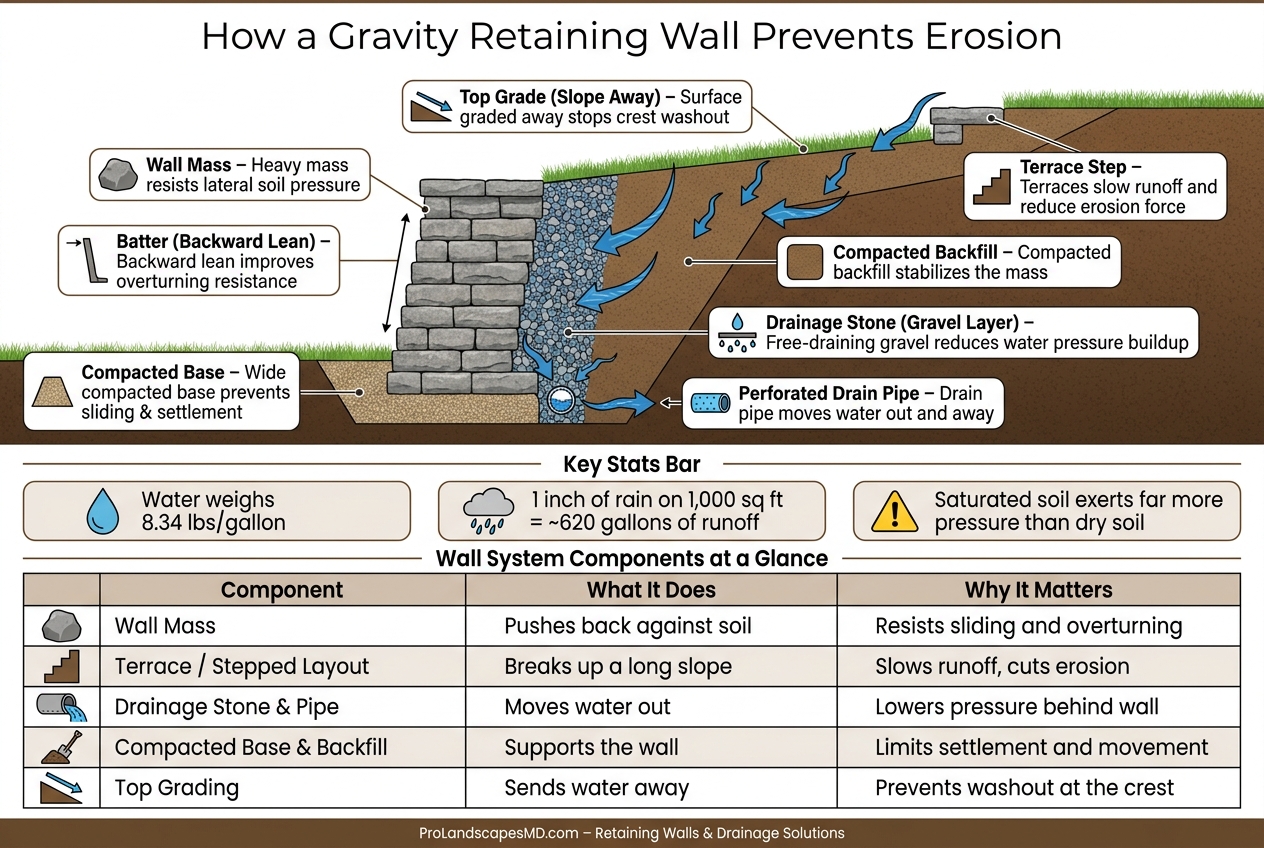
Gravity Retaining Wall System: Parts, Functions & Why They Matter
Gravity Wall Halts Erosion and Saves Neighborhoods (Santa Fe River Trail Project)
How Gravity Retaining Walls Prevent Erosion
Gravity retaining walls help stop erosion in three main ways: they hold soil in place, change how water moves down a slope, and send water away before it builds up behind the wall.
How a Heavy Wall Holds Back Soil on a Slope
A gravity wall relies on its own weight and width to push back against lateral soil pressure. In plain terms, the wall is heavy enough to stay put when the soil behind it presses against it.
That mass helps the wall resist sliding and overturning on a slope. And it doesn’t just keep soil from moving. It also affects how water travels across the slope, which matters a lot when rain starts flowing downhill.
How Grade Changes and Terraces Slow Runoff
Terraces turn one steep slope into a series of smaller steps. That simple shift changes the pace of stormwater runoff.
When water slows down, it has less force to pick up and carry soil away. So instead of rushing straight down a long incline and stripping the surface as it goes, runoff meets shorter sections that help reduce erosion.
Even with a better slope shape, though, the wall still needs drainage to remain stable.
Why Drainage Behind the Wall Prevents Washout
Drainage stone and pipe move water away from the wall. That’s a big deal, because trapped water adds pressure where you don’t want it.
Without drainage, water pressure can build behind the wall and lead to washout from the back side. Once soil starts leaving that space, the wall can lose support, and that soil loss can weaken the entire structure.
Design Features That Make a Gravity Wall Work
Once drainage is in place, three things decide whether a gravity wall holds steady: the wall material, the base, and the backfill.
Material Choices That Add Mass and Drainage
Natural stone, segmental concrete block, and poured concrete are the three materials that most directly shape how well a gravity wall handles erosion.
Natural stone brings a lot of weight to the wall. It also lets water pass through the joints, which helps cut down pressure buildup behind the wall. Segmental concrete block is dense, interlocks for added resistance, and works well on Maryland’s sloped, disturbed soils because the units are consistent in size, which makes drainage planning easier. Poured concrete gives you the most mass per foot of wall, so it’s a strong fit where soil pressure is highest.
From there, the wall’s shape and footing decide how well it stands up to that soil pressure.
Base Width, Batter, and Compacted Base
A wider base spreads the wall’s load across more ground. That lowers the chance of sliding when lateral soil pressure pushes against the wall.
A slight backward lean, called batter, tips the wall into the slope. That helps push back against the forward force of the soil and improves resistance to overturning.
A compacted base helps set the wall in place from day one. Without it, settlement can shift the wall’s geometry and weaken its hold on the grade.
Even a well-built wall can fail if water gets trapped behind it, so the soil and grading around the wall need to move runoff away.
Backfill and Grading That Keep Water Moving
Free-draining gravel placed right behind the wall gives water a path to move down and out instead of building pressure against the structure.
Compacted soil behind that gravel zone helps steady the backfill mass and keeps it from shifting during Maryland’s heavy rain events.
At the top of the wall, the surface grade should slope away from the wall face so runoff doesn’t collect at the crest and soak the backfill below.
sbb-itb-843f8be
How to Plan a Gravity Retaining Wall for an Eroding Yard
Before you build anything, match the wall to the slope, the soil, the runoff, and any loads nearby.
Assess the Slope, Soil, and Nearby Structures
Once you can see erosion, the next move is to match the wall to the slope and the way water moves through the site. Steep slopes and soil that keeps washing out after rain are clear signs that a gravity wall may be the right fix.
Soil type also shapes the design. Some soils drain better than others, and that changes how the wall should be built. Water matters just as much. If it gets trapped behind the wall, it can push on the structure and make it unstable.
You also need to look at what sits near the slope. Nearby structures add load, and that can change the wall design. In Maryland, tall walls often need permits and engineered plans.
Choose Wall Height, Layout, and Terrace Options
Once the site limits are clear, choose a wall height and layout that control runoff without causing new grading issues. The idea is simple: give the wall a footprint that cuts erosion and helps keep the finished grade stable.
If the wall is part of a bigger grading plan, the layout should send water away from spots that are more likely to wash out. On some yards, that may also mean using terraces to break up the slope and slow water down.
Coordinate the Wall with Drainage and Site Grading
At that point, the wall needs to work with the rest of the drainage plan. The wall holds soil in place. Drainage features handle the water.
That often means tying the wall into site elements like:
- Swales
- French drains
- Dry riverbeds
- Regrading
Together, these parts help move water away from the structure instead of letting it build up behind it.
Pro Landscapes MD installs retaining walls with drainage and grading across central Maryland.
Maintenance and Long-Term Erosion Control
A gravity retaining wall needs regular checkups if you want it to keep doing its job against erosion.
What to Check After Storms and Over Time
After heavy rain, look for a few clear warning signs:
- Bulging or leaning in any part of the wall face
- Separated blocks or stones that have shifted out of line
- Blocked drainage outlets that should be letting water out
- Standing water near the base or directly behind the wall
- New soil loss at the base or at the ends
In plain terms, these issues usually point to drainage trouble. Water is building up where it should be draining away, and that pressure can cause the wall to move over time.
How to Protect the Top of the Wall and Surrounding Grade
The wall face isn’t the only part that matters. The soil above the wall plays a big role too.
If the top edge is bare, rain can start cutting new erosion channels. Keep that area covered with ground cover or low plantings, and make sure the slope still sends water away from the wall. When the top stays covered and runoff moves in the right direction, the wall is more likely to keep holding soil for the long haul.
Key Takeaways for Maryland Homeowners
Long-term erosion control works best when the wall, drainage, and grading function as one system.
Pro Landscapes MD designs and installs retaining walls with drainage and grading solutions across central Maryland.
FAQs
When do I need a gravity retaining wall?
You need a gravity retaining wall if you need to stabilize sloped terrain, stop soil erosion, or manage stormwater runoff on your property.
It can also make sense if you notice soil loss, sediment buildup in low-lying areas or near your foundation, water pooling, or shifting soil that puts your landscape or home at risk.
How tall can a gravity wall be without engineering?
The search results don’t give a set maximum height for a gravity retaining wall that can be built without engineering. In practice, height limits and engineering needs depend on local building codes and site conditions.
For clear guidance, talk with a professional. Pro Landscapes MD offers retaining wall design and installation services across Maryland to help with safe construction, erosion control, and compliance with local standards.
What drainage does a gravity retaining wall need?
A gravity retaining wall needs good drainage to relieve hydrostatic pressure, which can cause bowing, tilting, or failure.
That usually means keeping weep holes clear, making sure drainage pipes stay unobstructed, and grading the area so water flows away from the wall instead of building up behind it. Pairing the wall with systems like French drains can also help redirect water and prevent the soil from becoming saturated.
Chat with Us