









- bhavya gada
- No Comments
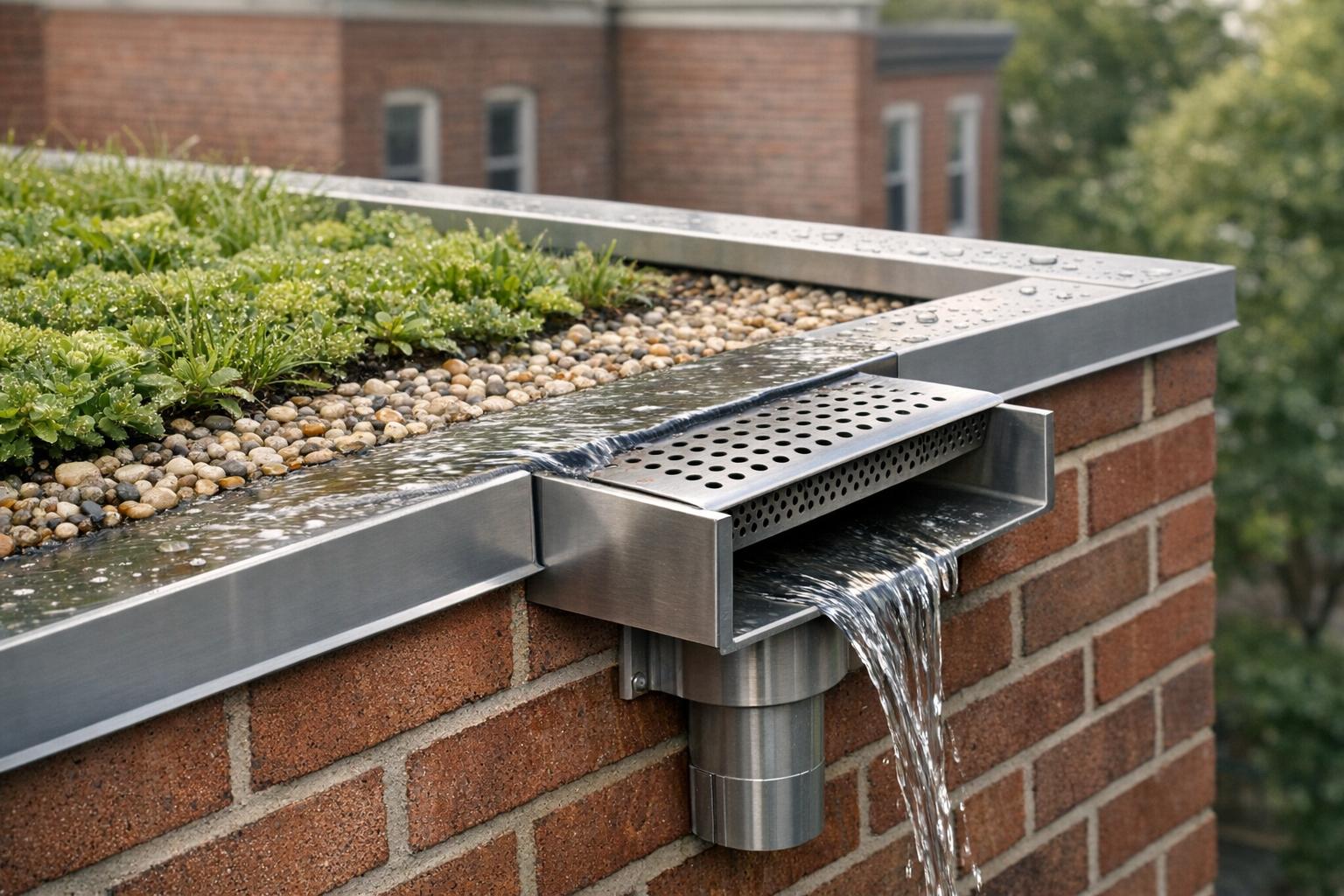
Green roof drainage systems are a smart way to manage stormwater while improving roof functionality. These systems are designed to retain water for plants and drain excess rainwater efficiently, which is especially useful in Maryland’s variable climate. Here’s what you need to know:
- Key Layers: Green roofs consist of a waterproofing layer, drainage layer, substrate (growing media), and vegetation. Each layer plays a role in water management and roof protection.
- Maryland Challenges: Freeze-thaw cycles can degrade materials, affecting drainage and plant health. Using durable substrates and proper design is critical.
- System Types: Extensive roofs are lightweight with shallow substrates, ideal for retrofits. Intensive roofs are heavier, support diverse plants, and require strong structural support.
- Benefits: Green roofs reduce stormwater runoff, improve water quality, lower indoor temperatures, and cut energy costs.
For Maryland homeowners, extensive green roofs are often the best choice for their practicality and compatibility with residential structures. Proper installation, tailored drainage systems, and regular maintenance ensure long-term performance.
GREEN ROOF CONSTRUCTION EXPLAINED | HOW TO BUILD OPTIGREEN GARDEN LAYER SYSTEM CONCEPT| INSTALLATION
How Green Roof Drainage Systems Work
Green roof drainage systems are all about managing water flow through a combination of specialized layers. First, a waterproofing layer protects the roof structure itself. On top of that, a drainage layer directs excess water into the building’s storm drain system, keeping things flowing smoothly [5]. The growing media, or substrate, sits above the drainage layer, temporarily holding onto runoff before it filters through [5]. Water movement here depends on two key factors: hydraulic conductivity (how easily water flows through the substrate) and matric potential (how well the substrate holds onto water) [1]. Finally, the vegetation layer absorbs water, helping slow the flow of precipitation [3].
The Role of Drainage Layers
The drainage layer plays a crucial role in preventing waterlogging. As water passes through the growing media, the drainage layer steps in to remove any excess. Without it, water could build up in the substrate, potentially harming plant health and adding unnecessary weight to the roof structure [5][1]. To keep the system functioning, filter fabric is used to stop fine particles from clogging the drainage layer.
In regions like Maryland, where freeze-thaw cycles are common, this layer faces additional challenges. Substrate particles can degrade significantly after just 30 freeze-thaw cycles [1]. These smaller particles could block drainage pathways, but filter fabric prevents this by maintaining the system’s hydraulic conductivity over time.
Water Retention Versus Water Runoff
Green roofs must strike a delicate balance between storing water for plants and managing runoff to prevent overflow. The growing media captures and holds stormwater, while the drainage layer ensures peak discharge rates don’t overwhelm the system [5]. Meanwhile, plants contribute through evapotranspiration, and water also evaporates directly from the substrate, reducing the total runoff that reaches the drainage layer [5][1].
Different plants vary in their water retention capabilities. For example, sedum species can hold about 166% of their biomass in water, while moss species can retain an impressive 732% [3]. Across Maryland study sites, the average water content in green roof systems was measured at 38.6% [3]. This balance between retention and runoff is especially important for managing Maryland’s unpredictable rainfall patterns.
Types of Green Roof Systems for Maryland Homes
Extensive vs Intensive Green Roofs Comparison for Maryland Homes
When it comes to managing water efficiently, Maryland homeowners have two primary types of green roof systems to consider: extensive and intensive. Each option comes with its own set of benefits and structural requirements, so choosing the right one depends on your home’s design and your goals for stormwater management.
Extensive Green Roofs
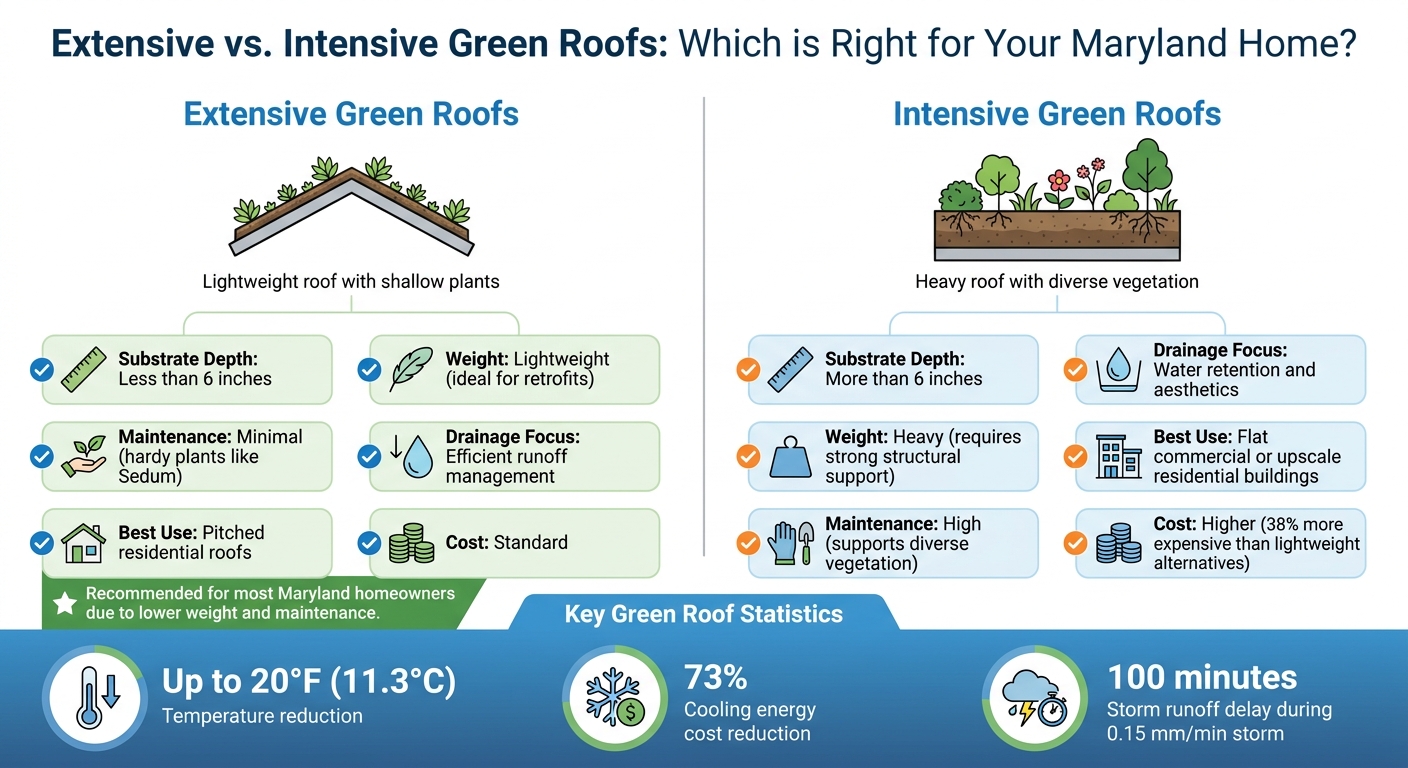
Extensive green roofs are known for their lightweight design and shallow substrates – usually less than 6 inches deep. This makes them an excellent choice for retrofitting existing homes, especially those with pitched or flat roofs commonly found in Maryland [1][2].
These systems focus on efficient drainage rather than maximum water storage. The shallow planting medium supports hardy, low-maintenance plants like Sedum species. Over time, adding organic matter to the substrate can improve plant growth, which helps the system retain more stormwater as it matures [1].
Intensive Green Roofs
Intensive green roofs, on the other hand, are designed for deeper planting media – more than 6 inches – which allows for higher water retention and a wider variety of plants [4]. However, this added depth and diversity come with trade-offs. These roofs are significantly heavier and require robust structural support, making them better suited for new buildings or those designed to handle substantial loads.
A notable example of an intensive system alternative is the "green cloak" retrofit, tested by University of Maryland researcher Laura Marie Schumann in 2007. This trellis-based system reduced indoor temperatures by about 20°F (11.3°C) and cut cooling energy costs by 73%. It also delayed peak storm runoff by 100 minutes during a 0.15 mm/min storm [4].
"demonstrated great potential for mitigating runoff impacts of impervious surfaces, reducing summer temperatures of buildings, and creating urban greenery" – Laura Marie Schumann [4]
Interestingly, lightweight systems like the green cloak can be 38% less expensive than traditional intensive roofs [4].
Comparison of Green Roof Types
Here’s a quick breakdown of how extensive and intensive systems differ:
| Feature | Extensive Green Roofs | Intensive Green Roofs |
|---|---|---|
| Substrate Depth | Less than 6 inches [1] | More than 6 inches |
| Weight | Lightweight; ideal for retrofits [2] | Heavy; requires strong structural support [4] |
| Maintenance | Minimal; uses hardy plants like Sedum [1] | High; supports diverse vegetation |
| Drainage Focus | Prioritizes efficient runoff management [1] | Focuses on water retention and aesthetics |
| Best Use in Maryland | Works well on pitched residential roofs [2] | Suitable for flat commercial or upscale residential buildings [4] |
For most Maryland homeowners, extensive green roofs strike the right balance. They are cost-effective, require less structural adjustment, and handle the region’s weather challenges effectively, making them a practical choice for stormwater management without the added upkeep of intensive systems.
Stormwater Management Benefits in Maryland’s Climate
Maryland’s unpredictable weather – from intense summer storms to winter’s freeze-thaw cycles – demands effective stormwater management solutions. Green roof drainage systems are a powerful tool for this, as they absorb rainfall directly at the source, easing the strain on municipal infrastructure.
Reducing Stormwater Runoff
The substrate layer, or growing medium, plays a key role in retaining stormwater. It acts like a sponge, soaking up rainwater before it can flow off the roof. Whitney Griffin, a researcher at the University of Maryland, highlights this:
"The substrate layer in which the vegetation grows… contributes the majority of stormwater retention capabilities." [1]
Plants on green roofs also help through a process called evapotranspiration, where they release water back into the atmosphere. This mechanism ensures the substrate stays ready for the next storm. During dry spells, the substrate’s water content can drop to as low as 5%, leaving plenty of capacity for future rain events [1].
Benjamin Borchers and his team emphasize the broader impact:
"Green roofs are one solution to stormwater runoff which is a major environmental problem." [2]
In addition to reducing runoff, green roofs improve the quality of water that eventually reaches local waterways.
Improving Water Quality
Green roofs function as natural filters, trapping pollutants as rainwater moves through the substrate and vegetation. This process prevents harmful contaminants from reaching critical ecosystems like the Chesapeake Bay, aligning with Maryland’s watershed protection goals.
The benefits increase over time. As plants grow and expand their canopy – typically over a 3-to-5-year period – the roof’s ability to retain and filter stormwater improves [1]. Adding organic matter to the substrate can speed up this progress by supporting healthier plant development [1].
However, Maryland’s freeze-thaw cycles pose a challenge. Research indicates that substrate materials can degrade significantly after 30 freeze-thaw cycles [1]. To maintain long-term performance, using durable, weather-resistant substrate blends is essential for ensuring effective drainage and water quality in Maryland’s climate.
sbb-itb-843f8be
Design and Installation Considerations for Maryland Homes
When it comes to the stormwater management perks of green roofs, Maryland homes require special attention during the installation process. Unlike the flat roofs common on commercial buildings, most residential properties have sloped or pitched roofs, which bring their own set of challenges for drainage and plant growth [2]. These factors must be addressed early on to guide the design process effectively.
Assessing Roof Structural Capacity
The first step is determining whether your roof can handle the added weight of a green roof system. These systems are made up of five key layers: a waterproof membrane, a root barrier, a drainage layer, a growing medium (substrate), and vegetation [6]. When fully saturated, these layers can add significant weight to your roof. The root barrier, in particular, plays a vital role in protecting the waterproof membrane from being pierced by plant roots [6]. For older homes, using lightweight substrate blends can help avoid costly structural upgrades [2].
Choosing the Right Drainage System
Maryland’s climate and the specific characteristics of your roof – such as its slope and orientation – play a big role in drainage system design. Flat roofs may suffer from water pooling, while steeply sloped roofs can cause plants to dry out too quickly. Adding a geotextile filter can keep the drainage layer free of debris, ensuring proper water flow. For smaller residential properties, features like rain chains can help manage runoff effectively [6]. These details underscore the importance of tailoring the drainage system to the unique demands of your home.
Working with Professional Installers
Research led by Team SO GREEN at the University of Maryland, under Andrew Ristvey, highlights the benefits of specialized green roof designs for pitched roofs. Their lightweight green roof retrofit, which included a recirculating irrigation system, improved both plant health and stormwater management [2]. This kind of expertise is especially valuable for Maryland homeowners. Professional contractors, such as Pro Landscapes MD, can address these challenges by selecting durable substrates suited for local conditions and integrating drainage systems that ensure long-term performance. Their services include drainage installation, stormwater management, and grading solutions tailored to residential needs.
Maintenance Tips for Green Roof Drainage Systems
Green roof drainage systems require consistent care to function effectively in Maryland’s climate. Post-winter inspections are especially important, as the freeze-thaw cycles – common during Maryland winters – can break down substrate particles after about 30 cycles. This breakdown can compact the growing medium, clog drainage layers, and disrupt water flow [1]. To prevent these issues, inspect the substrate every spring for signs of compaction or settling that could hinder proper drainage. This annual check is a key step in keeping the system efficient through Maryland’s unpredictable seasons.
The maintenance needs of a green roof also evolve as the system matures. Whitney Griffin from the University of Maryland highlights this in her research:
"analysis of three- or even five-year retention will likely better predict the effects of organic matter on stormwater performance" [1]
During the first few years, as plants grow and organic matter accumulates, the drainage system’s performance may shift. Allowing the system three to five years to stabilize provides a more accurate understanding of its long-term behavior [1].
As summer arrives, the hot, dry conditions in Maryland bring their own challenges. Substrate volumetric water content can drop to as low as 5% during these periods [1]. For sloped roofs with recirculating systems, it’s crucial to check for blockages or operational failures regularly [2]. Healthy vegetation plays a significant role in supporting drainage by enhancing evapotranspiration. Research shows that planted systems lose more water through evapotranspiration compared to unplanted controls [1].
To maintain effective drainage, monitor plant canopy coverage and organic matter levels throughout the growing season. Address thinning vegetation or bare spots promptly, as the right plant mix can significantly reduce the amount of water reaching the drainage layer during heavy rainfall [3]. Regular maintenance not only ensures proper drainage but also strengthens the system’s contribution to Maryland’s stormwater management efforts.
For homeowners, professional support can make a big difference. Pro Landscapes MD offers specialized drainage repair and stormwater management services tailored to Maryland’s unique climate. Their expertise in grading and drainage installation helps ensure green roofs perform well despite the region’s changing weather patterns. Professional guidance can help address maintenance challenges as the system ages, ensuring long-term efficiency and reliability.
Conclusion
Green roof drainage systems provide Maryland homeowners with a practical way to manage stormwater while delivering additional perks. Studies show these systems can delay peak storm runoff by up to 100 minutes, lower indoor temperatures by as much as 20°F, and cut cooling costs by 73% [4]. A critical factor in achieving these results is the substrate layer, which must be carefully chosen to handle Maryland’s freeze-thaw cycles [1].
Interestingly, the benefits of these systems grow over time. It typically takes three to five years for vegetation to develop a full canopy and robust root systems, at which point stormwater retention reaches its peak efficiency [1].
Both extensive and intensive green roof systems work well on Maryland homes, even on sloped roofs. Research from the University of Maryland in 2014 highlighted that lightweight retrofits with recirculating irrigation perform just as effectively as traditional flat installations [2]. However, roofs must be able to support the added weight and ensure proper drainage, making expert design and installation essential for success.
Professional installation and regular maintenance are vital to keep these systems running at their best. Pro Landscapes MD specializes in drainage solutions and stormwater management across central Maryland, offering services like grading, land leveling, and drainage repair to ensure green roofs thrive in Maryland’s unpredictable climate.
For homeowners in Maryland, green roof drainage systems offer a blend of environmental and practical benefits. With reduced energy bills, improved stormwater control, and increased property durability, these systems are a smart investment for the Mid-Atlantic region’s demanding conditions. Their ability to enhance both resource use and property resilience makes them a valuable choice for any homeowner in the area.
FAQs
Will my roof need structural upgrades for a green roof?
Your roof might already be capable of supporting a green roof without needing structural changes. Green roofs are built to sit on rooftops that can bear the extra weight, but it’s crucial to verify your roof’s load capacity before moving forward with the installation.
How do freeze-thaw cycles affect green roof drainage in Maryland?
Freeze-thaw cycles in Maryland can influence how green roofs manage drainage by shifting the physical characteristics of the substrate. These changes can impact hydraulic conductivity, potentially lowering the roof’s ability to retain stormwater. This, in turn, affects water flow and may pose challenges for maintaining healthy plant life on the roof.
What maintenance keeps green roof drains from clogging over time?
To keep green roof drains clear and functional, make it a habit to inspect and remove any organic matter or debris that might accumulate. It’s also essential to keep an eye on plant growth – unchecked overgrowth can interfere with drainage. Regular maintenance ensures the system continues to work as intended over the long term.
Chat with Us