









- bhavya gada
- No Comments
A green roof can cut roof runoff by about 50% to 60% and slow the surge of water during storms. If I’m looking at one for a Maryland home, I need to check four things first: roof load, waterproofing, drainage path, and upkeep.
Here’s the short version:
- Small and mid-size storms: green roofs hold more water and send out less runoff
- Heavy storms: they still help by slowing flow, even when the roof’s storage fills up
- Typical saturated weight: about 30 pounds per square foot
- Typical shallow system depth: about 3 to 6 inches
- Best fit for many retrofits: shallow extensive systems with strong plant cover
- Must-have details: root barrier, clear drains, and a 12-inch vegetation-free strip near edges and drains
- Overflow still matters: water should move away from the foundation through gutters, drains, grading, or other yard drainage
If I want runoff control that keeps working, I can’t focus on plants alone. The roof structure, media depth, drainage layers, and yearly checks all matter.
A simple way to think about it: the roof stores some rain, delays the rest, and lowers stress on gutters and yard drainage.
Green Infrastructure for Runoff | Elizabeth Fassman-Beck, Ph.D. | TEDxStevensInstituteofTechnology
sbb-itb-843f8be
Check Whether Your Roof Can Support a Runoff-Focused Green Roof
Start with the roof itself. Runoff control only works if the structure can hold the system without trouble. In most homes, three things decide whether a green roof is a safe fit: how much weight the roof can carry, how sound the waterproofing is, and where water goes after it leaves the roof edge.
Structure, waterproofing, and roof condition
Bring in a structural engineer before anything else. A saturated extensive green roof weighs about 30 pounds per square foot [1], and older roofs may need added support. For many homes, retrofit costs fall between $15 and $30 per square foot [1].
You should also inspect the waterproofing membrane before installation, with close attention to its age and current condition. And don’t skip the root barrier. It helps stop plant roots from pushing into the membrane and causing damage over time [1].
Roof slope and drainage paths
Roof slope changes how water behaves. A flatter roof holds water longer, while a steeper roof sheds it faster and needs more engineering to keep the growing media in place [1]. Think of it like this: on a flat surface, water lingers; on an incline, it wants to move.
Keep every roof drain, scupper, and gutter clear. If a drain clogs, stored water can turn into extra roof load fast [1]. It also helps to keep a 12-inch vegetation-free zone around the roof perimeter and around all drains. That gap keeps roots away from edges and leaves overflow paths open [1].
Once the roof drains safely, the next piece is picking media and plant layers that can hold water without slowing drainage too much.
How green roof overflow connects to yard drainage
Even a roof built to store water needs a set overflow route. When a storm pushes past the media’s storage limit, water moves through the drainage layer and exits through roof drains, scuppers, or gutters. If the yard is graded poorly, that runoff can end up right near the foundation instead of away from it.
If your yard slopes toward the house or has low spots, tie roof overflow into ground-level drainage such as:
- French drains
- Dry riverbeds
- Regrading that sends water away from the foundation
Pro Landscapes MD can help central Maryland homeowners plan overflow routing before installation so the roof system and yard drainage work together during heavy storms.
Design Factors That Control Water Retention and Flow
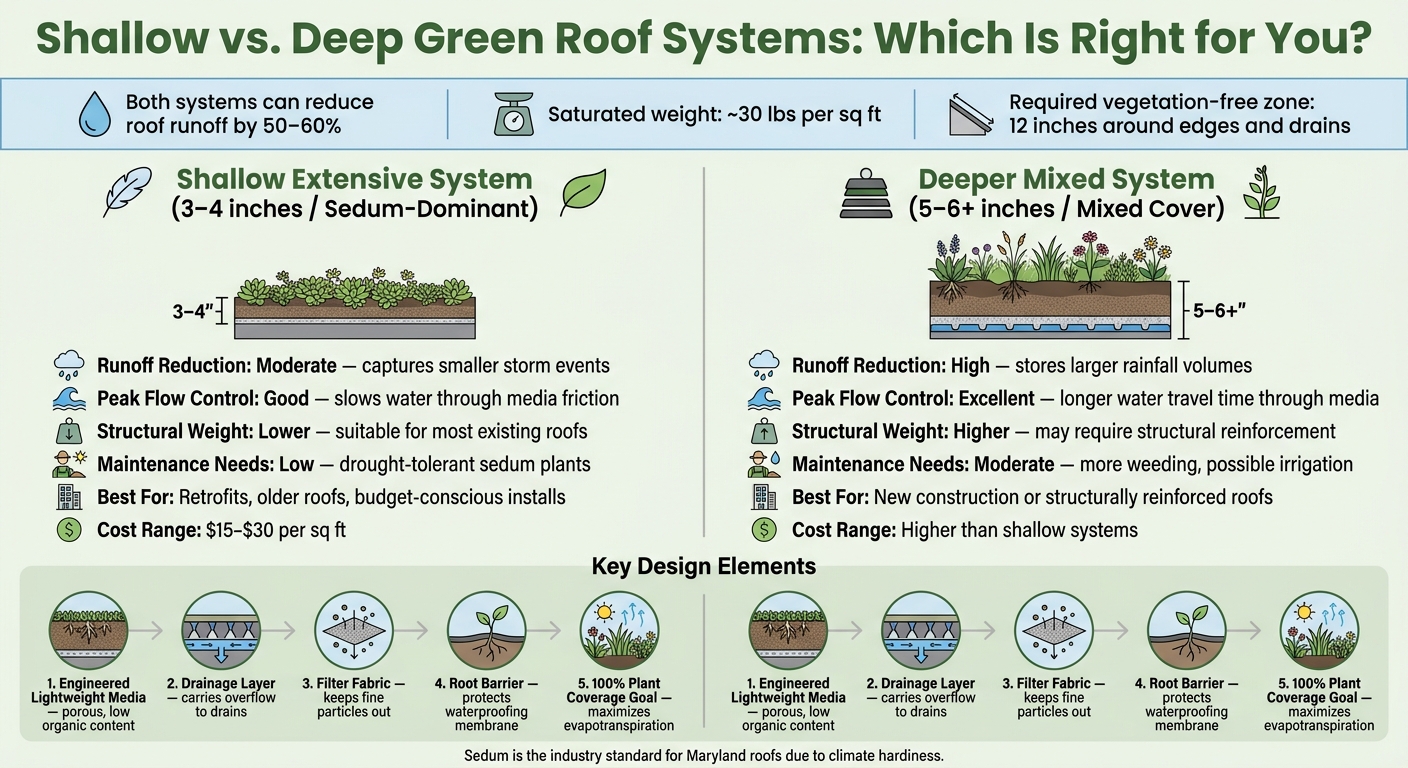
Shallow vs. Deep Green Roof Systems: Runoff Control Comparison
Once you know your roof can carry the load and your overflow path is set up the right way, the next step is the roof build itself. At this stage, three design choices do most of the work: growing media depth, plant coverage, and drainage layer setup. Together, these layers shape how much rain the roof can hold and how slowly extra water moves off the roof.
Soil depth and engineered growing media
Standard garden soil has no place on a roof. When it gets wet, it becomes too heavy and it doesn’t drain well. Green roofs use engineered lightweight media instead. This is a porous mix made to hold water like a sponge while keeping weight down enough for the roof structure.
Engineered media is lightweight, low in organic soil, and highly porous, which helps reduce stormwater runoff.
For most residential shallow, or extensive, systems, media depth is usually 3 to 6 inches. More depth means more rainwater storage and a slower release of overflow. But there’s a tradeoff: added depth also means added weight. In simple terms, deeper media increases water storage, while plant cover affects how much of that storage is open before the next storm.
Plant cover and seasonal performance
Plant coverage plays a big role between rain events. Plants pull stored water out of the media through evapotranspiration. If coverage is thin or patchy, the media stays wetter before the next storm. That means less open storage when new rain arrives.
Sedums are the industry standard for Maryland roofs because they handle harsh conditions and strong seasonal temperature swings. Hardy grasses and low-growing native perennials can work well in deeper media and may increase evapotranspiration. The goal is simple: keep coverage as close to 100% as you can. Bare spots cut performance right away.
Drainage layers and protection
After storage capacity is set, the drainage assembly controls how water leaves the system. A drainage layer carries extra water to the drains, filter fabric keeps fine particles out of that layer, and a root barrier protects the membrane [1].
Many modern drainage layers also include small built-in reservoirs that hold back part of the water for plant use [1].
| Feature | Shallow Media (3–4") / Sedum-Dominant | Deeper Media (5–6"+) / Mixed Cover |
|---|---|---|
| Runoff Reduction | Moderate; captures smaller storm events | High; stores larger rainfall volumes |
| Peak Flow Control | Good; slows water through media friction | Excellent; longer travel time through media |
| Structural Weight | Lower | Higher; may require structural reinforcement |
| Maintenance Needs | Low; drought-tolerant plants | Moderate; more weeding and possible irrigation |
Shallower sedum systems are lighter and simpler. Deeper mixed systems can hold more water, but they ask more from the structure.
Install and Maintain the System for Reliable Runoff Control
A green roof can look well planned on paper and still fall short if no one keeps it clear, planted, and draining the way it should. Maintenance is what keeps storage, drainage, and plant cover working as one system. When drains clog or plant cover starts to thin, runoff volume goes up and peak flow rises with it.
Protect drains, edges, and inspection zones
Keep the perimeter, parapets, and drain areas clear so plants never block access for inspection. Start with corners and edges during checks. That’s where leaks usually show up first [1].
Also look at filter layers for sediment buildup that could clog drainage [1]. A blocked drain isn’t just a water issue. It can add extra weight and damage roof parts.
Seasonal upkeep that affects runoff volume and peak flow
Inspect the roof several times during the first year, then at least once a year after the planting is established [1]. After heavy rain, check for standing water [1]. If water sits there for hours, the drainage layer or growing media likely needs attention [1].
Bare spots need quick repair too. Replant them fast to help stop erosion and protect runoff control [1]. And if the roof goes through dry periods, set up a plan for supplemental irrigation [1].
If the same problems keep showing up, you’re probably dealing with more than routine upkeep.
When to call a professional for drainage or roof issues
Bring in a professional if you notice repeated standing water, leaks at corners or edges, large or recurring bare areas, or media movement on steep slopes [1]. Older roofs should also get a structural review before any retrofit.
| Issue Type | Sign to Call a Professional | Potential Risk |
|---|---|---|
| Structural load | Older building or retrofit | Roof collapse or structural damage |
| Membrane leaks | Leaks at corners or edges | Damage to roof deck |
| Clogged drains | Standing water or blocked drains | Excessive weight load and system failure |
| Bare areas | Large bare areas or total die-off | Reduced runoff capture and media erosion |
| Media shift | Media moving on steep slopes | Loss of growing media and drain clogging |
Once the roof stays clear and stable, it can keep slowing runoff the way it was meant to.
Conclusion: Build a Green Roof That Slows Water and Protects Your Property
Taken together, these layers shape both how much water leaves the roof and how fast it moves. A green roof holds rain in its media, lets plants send some of that moisture back into the air, and drains the rest at a slower rate. In many cases, that means stormwater runoff drops by 50–60% [1].
The small design choices matter. So does upkeep. A roof like this works well when it’s built the right way and looked after over time. Before installation, check that the structure can handle the load. A saturated extensive roof can weigh about 30 pounds per square foot [1]. It also helps to map out a clear overflow path that sends water away from the foundation.
For most Maryland retrofits, shallow extensive roofs give you the best mix of load, cost, and runoff control. Deeper systems make sense only when the roof can support the extra weight. The aim is straightforward: slow runoff before it hits the gutter and keep the roof assembly protected.
FAQs
Will my roof need reinforcement first?
Yes. Have a structural engineer check your roof before you install a green roof.
A green roof adds extra load from soil, plants, and water. In some cases, that can be more than 50 pounds per square foot. Even lighter setups can still put stress on the structure, especially in older homes.
A professional assessment tells you if the roof can handle that weight as-is or if it needs reinforcement first.
How much maintenance does a green roof need?
Green roofs need regular upkeep to keep working well. The first year matters most, because that’s when the roof usually needs the most hands-on care. After that, plan to inspect it at least once a year.
A few jobs matter more than the rest:
- Check drainage and make sure water moves off the roof as it should
- Clear gutters and roof drains
- Look for leaks
- Keep an eye on plant health
- Remove invasive species
- Trim overgrowth in spring and fall
- Water during long summer dry spells if needed
It’s pretty simple: a green roof can’t just be installed and ignored. A little routine care helps it keep doing its job.
What happens when the roof fills during heavy rain?
During heavy rain, a green roof’s drainage layer is built to catch, slow, and move extra water to roof drains or gutters. The growing medium helps too. It filters the water and holds onto part of the rainfall instead of letting it all rush off at once.
That only works if the drainage path stays clear. If drains or drainage parts get clogged or aren’t maintained, water can pond on the roof. That adds extra weight and can lead to damage. Cleaning gutters and drains keeps the system working the way it should.
Chat with Us