









- bhavya gada
- No Comments
If your slope is washing out, I’d use both: plant ground covers for root hold, then add 2–3 inches of wood mulch for early soil cover. Mulch helps right away. Ground covers do the long job. If heavy rain keeps pushing mulch downhill, the main problem is often water flow, not mulch depth.
Here’s the short version:
- Mulch = short-term cover
- Covers bare soil fast
- Helps soil stay damp
- Cuts weed growth
- Ground covers = long-term hold
- Roots help keep soil in place
- Low-growing plants fit slopes better than turf in many cases
- A better pick where grass is thin, shaded, or hard to mow
- Use both on many Maryland slopes
- Plant first
- Then spread 2–3 inches of wood mulch between plants
- Weed until plants fill in
- If mulch keeps washing away
- Water is likely moving too fast
- You may need grading, a French drain, a dry creek bed, or a retaining wall
My main takeaway: mulch helps buy time, but it does not solve repeat erosion by itself.
| Option | What it does best | Where it falls short | Best use |
|---|---|---|---|
| Mulch | Fast soil cover and moisture hold | Can slide on steep slopes or in hard rain | Bare soil while plants get started |
| Ground covers | Root hold and living cover over time | Need time, mulch, and weeding at first | Slopes with repeat erosion or poor turf |
| Drainage/grading work | Slows or redirects runoff | More work and cost up front | Slopes with washouts, channels, or heavy runoff |
For many yards in central Maryland, that’s the whole answer: cover the soil now, grow roots for later, and fix runoff if water keeps cutting through the slope.
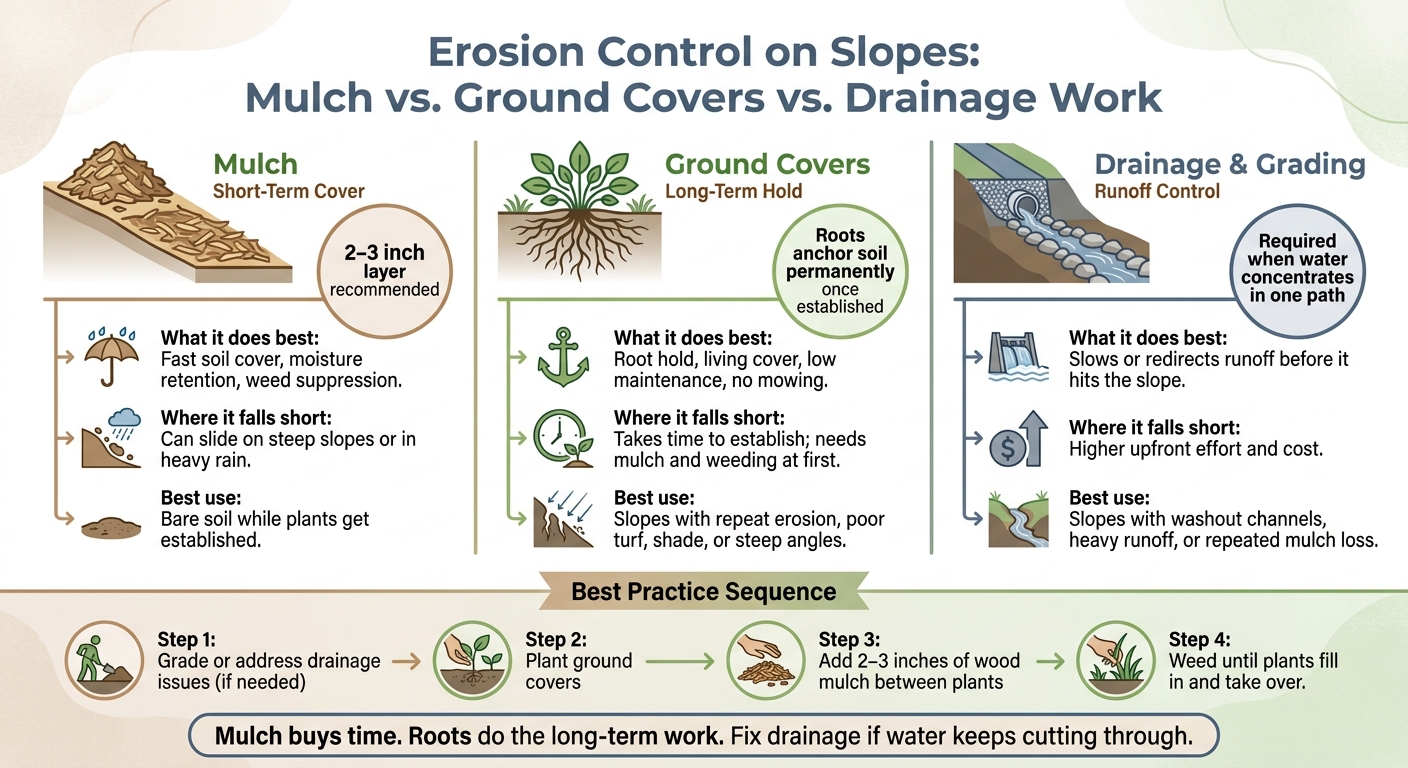
Mulch vs. Ground Covers vs. Drainage: Erosion Control on Slopes
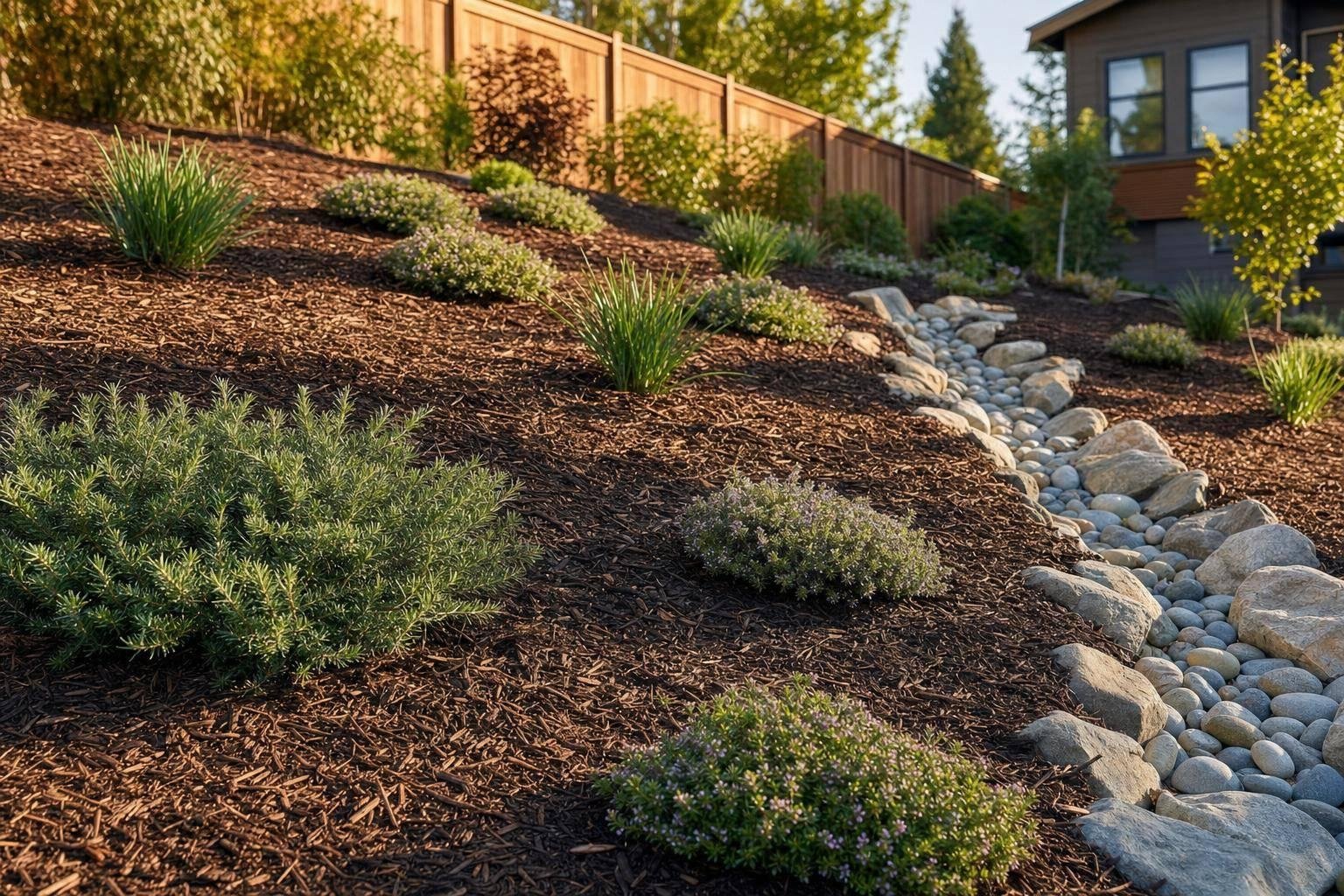
Preserve Soil on Sloped Landscapes by Planting Groundcover.
sbb-itb-843f8be
When Mulch Works on an Erosion-Prone Slope
Newly exposed soil needs cover while plants get established. A 2- to 3-inch layer of wood mulch helps shield the soil during that stretch.[1]
What Mulch Does Well
Mulch gives you fast soil cover, helps the ground hold moisture, and cuts down weed competition. That can make a big difference on steep, shady, or thin-soil slopes where grass often has a hard time getting started.[1]
Where Mulch Falls Short
Mulch can slow erosion, but it won’t keep a slope in place for the long haul. On very steep areas, it works best as backup for plants until ground covers spread and help hold the soil with their roots.
As those plants fill in, they take over the job mulch started. The mulch covers bare ground at first. The roots then provide the long-term support that keeps the slope more stable. In that sense, mulch is a starter layer, not the finish line, on an erosion-prone slope.
When Ground Covers Are the Better Long-Term Choice
When mulch keeps washing away, ground covers are often the better long-term fix. They make sense on slopes that keep eroding, are too steep to mow safely, or have thin soil where grass just won’t hold. The big win is simple: once they spread, they turn bare, exposed ground into living cover that helps protect the soil.
How Ground Covers Control Erosion Over Time
As ground covers fill in, their roots help hold soil in place, while the top growth covers bare spots and slows water as it moves across the slope. Together, that helps cut down on repeat washouts.
They also stay low and need little mowing, which makes them a good fit for steep slopes, sharp angles, and narrow strips.[1]
In Maryland yards, native shade-tolerant ground covers like wild ginger, alumroot, and green-and-gold do well on protected slopes. On sunny slopes, native grasses such as switchgrass and little bluestem help anchor the soil. In damp, shady spots, moss can also work as an erosion barrier.[1]
One thing to avoid: invasive plants such as periwinkle and Japanese spurge. They can spread far beyond the slope and create new problems.[1]
Why New Plantings Still Need Early Protection
Ground covers take time to establish. They don’t fill in overnight.
That’s why newly planted slopes usually still need mulch and weeding at the start. Until the plants spread enough to handle erosion control on their own, mulch helps shield the bare soil.[1]
Using Mulch and Ground Covers Together
The practical choice usually isn’t mulch or ground cover. It’s which one goes down first. On most slopes, the best move is to use both: mulch for fast surface cover, and ground covers for longer-term hold.
A Simple Installation Order That Works
After any needed grading or drainage work, plant the ground covers first. Then add 2–3 inches of wood mulch between the plants to help the soil hold moisture and cut down on weeds. [1]
"You will need to weed and mulch until your groundcover is established." – University of Maryland Extension [1]
That order works for a simple reason: mulch helps right away, while the plants need time to spread. As they fill in, they take on more of the erosion control job. On a mild slope, that shift may happen with little extra help. On a tougher slope, water can move with a lot more force, so the setup may need more support.
Matching the Approach to Slope Severity
Gentle slopes may hold with mulch alone in the short term. Moderate slopes usually do best with both mulch and ground covers. Steep slopes, or slopes with heavy runoff, often need drainage or grading first before planting even starts.
How to Keep Mulch from Washing Away in Heavy Rain
Maryland summers often bring hard rain and runoff. On a slope, that can send mulch sliding downhill fast.
Mulch Depth, Material, and Anchoring Basics
Use wood mulch in a 2–3 inch layer on slopes that need short-term protection.[1] That depth is usually enough to cover soil without making the mulch bed too loose.
If mulch keeps shifting during heavy rain, the main issue is often runoff, not just depth. In plain terms: the water is moving too fast across the slope, and mulch alone can’t hold its ground.
When Drainage or Retaining Work Is Also Needed
Once water starts concentrating in one path, surface mulch won’t fix the problem by itself. It may help for a bit, but it won’t stop repeated washout.
If mulch keeps washing out even when depth and setup are right, the slope is likely dealing with concentrated runoff cutting across it. At that point, the fix usually means dealing with the water before it hits the slope. That can include grading, French drains, dry riverbeds, or retaining walls.
Conclusion: The Right Fix Depends on How Fast Water Moves and How Steep the Slope Is
Mulch is a short-term fix. Groundcovers are the long-term answer on slopes that keep eroding.
For erosion-prone slopes, mulch helps while the site is still exposed, but drainage work is what stops the same washout from happening again. If a slope keeps eroding, the real answer is usually to fix drainage or grading, not just pile on more mulch.
FAQs
How steep is too steep for mulch alone?
On slopes with a grade above 30%, mulch by itself usually won’t do enough to stop soil from shifting. Once the incline gets that steep, it helps to add physical erosion control measures like biodegradable geotextile mats, terracing, or rock barriers while new plants get established.
Heavy Maryland rain can also wash mulch downhill in a hurry. To cut down on that, use shredded hardwood or pine straw. It also helps to pair mulch with deep-rooted native plants, which do a better job of holding soil in place.
What ground covers work best on Maryland slopes?
For Maryland slopes, good ground covers include native grasses like switchgrass, sedges such as Eastern star or Wood’s sedge, plus creeping phlox, golden ragwort, and butterfly milkweed. These plants tend to do their best when you pair them with shrubs and trees. That mix creates a dense root network that helps hold soil in place and slow runoff.
Use 2 to 3 inches of shredded hardwood mulch or pine straw, and keep it 6 inches away from plant stems to help prevent washout during heavy rain.
When do I need drainage work instead of more mulch?
Mulch helps the soil hold moisture and keeps weeds down. But it has limits. It can’t manage heavy water flow, and it won’t fix a slope that’s unstable underneath.
You likely need drainage work from a pro, either instead of mulch or along with it, if:
- Water collects and sits in one area
- The soil stays soaked for more than 24 hours after rain
- You notice gully erosion forming on the slope
Chat with Us