









- bhavya gada
- No Comments
Your yard isn’t just a space for relaxation – it’s an ecosystem that supports wildlife and improves your surroundings. Regular monitoring helps ensure your habitat provides the basics: food, water, shelter, and space. Here’s how to stay on top of it:
- Plant Variety: Use native plants and maintain layers (trees, shrubs, ground cover). Remove unwanted species.
- Wildlife Activity: Look for signs like chewed leaves, tunnels, or pollinator visits.
- Water Management: Check for pooling, monitor water flow, and maintain features like ponds or rain gardens.
- Soil Health: Avoid compacted soil, prevent erosion, and maintain organic matter.
- Seasonal Monitoring: Assess your habitat four times a year and keep detailed records to track progress.
With consistent checks, you can maintain a thriving yard for both wildlife and yourself. Tools like checklists and templates make the process easier. Ready to get started? Let’s dive into the details.
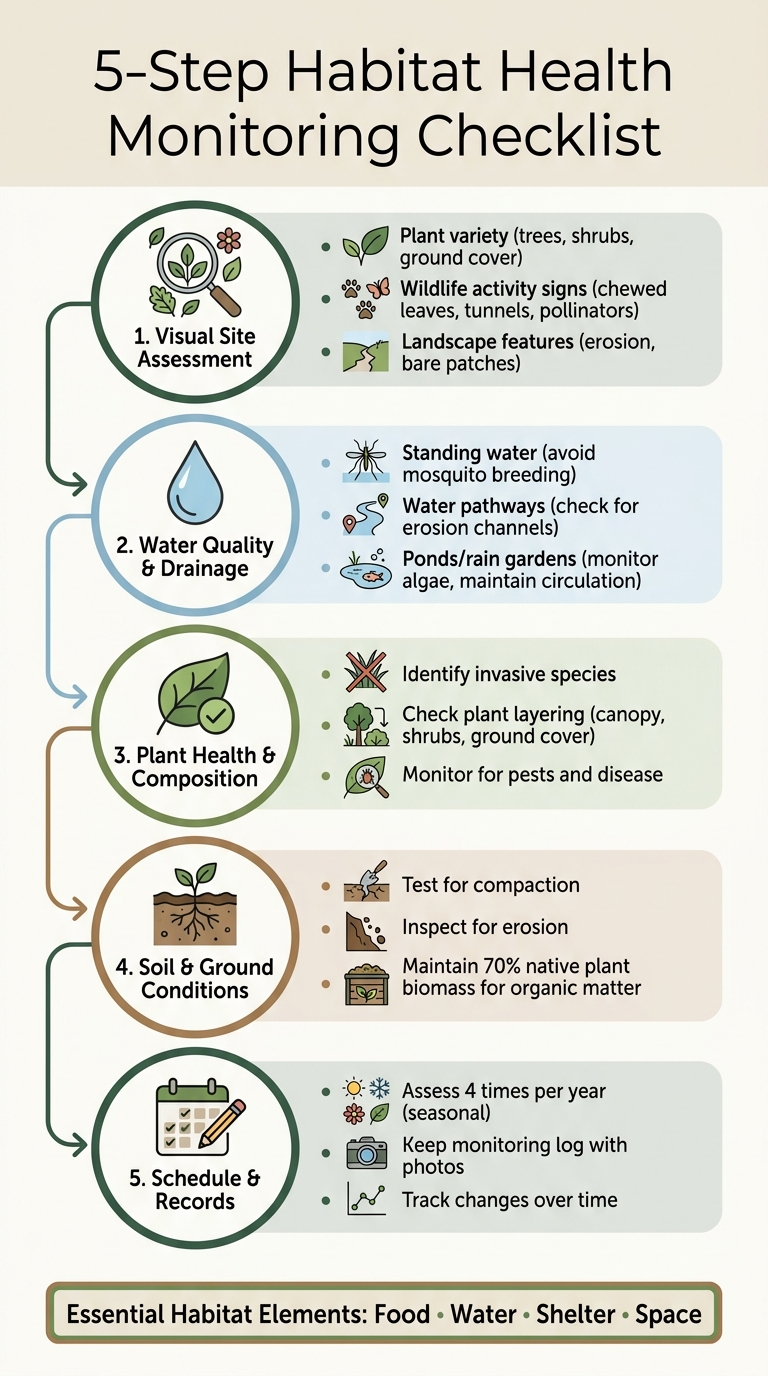
5-Step Habitat Health Monitoring Checklist for Backyard Wildlife
Create a Wildlife Habitat Garden (NWF)
sbb-itb-843f8be
Visual Site Assessment
Start with a walk-through of your property to see if it supports local wildlife and a thriving plant community. Pay attention to plant diversity, wildlife presence, and the overall stability of the landscape.
Check Plant Variety
Take a good look at the variety of plants in your yard. Aim for layers of vegetation – ground cover, shrubs, and trees – to create a more diverse structure for wildlife to use [1]. Make sure native plants are part of the mix, as they provide critical support for pollinators [4]. Keep an eye out for invasive species that might be taking over large areas. If you notice them, the Woodland Health Assessment Checklist can help guide your next steps [1].
Look for Wildlife Activity
Signs of animal activity can reveal whether your habitat is being used effectively. Examine trees and shrubs for evidence of browsing – like stripped bark or chewed leaves – which could indicate deer activity [4]. On your lawn, check for tunnels or mounds, signs of moles or voles. Around vegetable gardens, nibbled produce could point to rabbits or groundhogs. If you have a pollinator garden, spend a few minutes observing it. Are bees, butterflies, or other insects visiting? Their presence is a good sign that your plant choices are attracting the right visitors [4].
Review Landscape Features
Once you’ve assessed plants and wildlife, shift your focus to the condition of your landscape. Check for signs of stress, like erosion or bare patches, in trees, shrubs, and ground cover. Healthy, well-maintained natural features not only enhance the habitat but also provide critical shelter and food sources for wildlife. A balanced landscape supports a thriving ecosystem and strengthens your habitat’s overall health.
Water Quality and Drainage
Water plays a crucial role in maintaining a thriving backyard habitat. Proper water flow helps prevent erosion and avoids stagnant pools, which can cause stress to plants and attract mosquitoes. As the National Wildlife Federation explains, "Wildlife needs clean drinking water to survive. Birds need to bathe to keep their feathers in good working order, while other species including some amphibians, insects, and other wildlife lay their eggs and/or live in water full time" [3]. To create a balanced environment, it’s important to ensure water flows naturally across your property. Start by observing how water behaves in your yard to identify any problem areas.
Check for Standing Water
Seasonal water features like vernal pools are critical for breeding certain species and should be left intact. However, unintended pooling in areas with poor drainage can harm plants and provide a perfect breeding ground for mosquitoes. After a rainstorm, take note of any areas where water lingers for too long. If you spot persistent pooling in places where it’s not welcome, consider solutions like installing a rain garden to naturally filter and absorb runoff. You can also replace hard, impermeable surfaces with permeable materials to improve water absorption [3].
Monitor Water Pathways and Erosion
Once you’ve addressed standing water, take a closer look at how water flows through your yard. Look for visible signs like channels or gullies where water has carved pathways – this often means water is moving too quickly and could be damaging vegetation. Hard surfaces like driveways and patios often worsen runoff by preventing water from soaking into the ground. If you notice significant erosion or pooling issues, it might be time to consult a professional. Services like Pro Landscapes MD offer drainage solutions such as French drains, grading adjustments, and stormwater management systems to protect your landscape from further damage.
Inspect Ponds and Rain Gardens
Keeping your water features in good health is key to maintaining a balanced habitat. Regularly check for signs like excessive algae or murky water, which indicate an imbalance in the aquatic system. For example, in March 2026, Gaurav Kapoor, MBCP Board President in Montgomery County, Maryland, transformed 1,000 square feet of turf into a native pollinator garden. He added a multi-tiered water feature using pots layered with stones and a pump to keep water circulating. Moisture-loving plants like swamp sunflower, rushes, and lizard’s tail were integrated, and during winter, a heater kept water flowing, attracting birds like Northern Cardinals and Dark-eyed Juncos [5].
To prevent stagnation in your own water features, use a solar-powered bubbler or small pump to maintain circulation [5]. Additionally, clean birdbaths and shallow water dishes regularly to ensure they provide safe drinking water for wildlife [3]. Well-maintained water features not only enhance water quality but also contribute to the overall health of your backyard habitat.
Plant Health and Composition
Creating a thriving backyard habitat depends on native plants, a variety of vegetation layers, and managing invasive species effectively to support local wildlife.
Identify Unwanted Species
Invasive plants, such as purple loosestrife, can quickly dominate and outcompete native species that wildlife depends on [2]. To tackle this, start by using a Woodland Health Assessment checklist to systematically assess your yard [1]. A field guide can help you identify invasive plants on the spot. Once you’ve pinpointed problem areas, use the free Land Care Plan Template to document where these invasive species are located and to track your progress as you work to remove them [1].
Check Plant Layering
With invasive species under control, take a closer look at the vertical structure of your yard’s vegetation. A well-layered landscape includes a mix of tall canopy trees, mid-height shrubs, and low-growing ground cover [2]. If your yard lacks this variety, it may not be as inviting to wildlife. To enhance the habitat, group plants into clumps or hedgerows and leave open spaces to create edges that many wildlife species prefer [2]. This strategic planting not only supports more species but also boosts the overall environmental quality of your space [1].
Monitor Plant Health
Keep an eye on the health of your plants. For woody plants, remove any dead or damaged branches as soon as you spot them, and check for signs of deer browsing or pests that could upset the ecosystem’s balance [2][4]. For perennials, clear out last year’s flower stalks when new growth begins, but leave seed heads intact during the fall to provide food for birds over winter [2]. Often, poor plant health stems from issues like poor drainage, lack of sunlight, or low soil fertility. Addressing these root causes is key to maintaining a healthy landscape rather than just treating surface symptoms [2]. Regular plant care forms the foundation of a successful habitat management plan.
Soil and Ground Conditions
The health of your soil is crucial for creating a thriving backyard habitat. Start by evaluating its condition, including how well it drains and how workable it is [2].
Check for Soil Compaction
Compacted soil can block water absorption and hinder root growth. To test for this, dig in several spots around your yard during the planning stage. If the soil feels extremely hard and resists your shovel, it’s likely compacted. Another clue is water pooling on the surface after rain instead of soaking in. To fix this, mix compost into the soil to improve its structure and fertility. You might also want to replace high-maintenance grass areas with native ground covers, which are better suited to tough conditions [2].
Inspect for Erosion
Take a walk around your yard to spot signs of erosion. Look for bare patches where topsoil is missing, exposed tree roots, or small channels carved by water. You might also see soil collecting at the bottom of slopes or on sidewalks and driveways [6][7]. To address these issues, plant native species with strong roots to stabilize the soil. On slopes steeper than a 3:1 grade, switch to low-maintenance ground covers instead of traditional grass. For immediate fixes, cover bare areas with mulch or compost blankets and use downspout extensions or splashguards to redirect water. On steep hills, building terraces with stone or wood can help manage erosion [6].
Check Organic Matter Levels
A natural layer of fallen leaves and plant debris is essential for enriching the soil and supporting the local ecosystem. Aim to maintain 70% native plant biomass to naturally replenish organic matter. Avoid using pesticides and herbicides, as they can harm the soil’s health and the wildlife that depends on it. For a systematic approach, use a Woodland Health Assessment checklist to evaluate your ground conditions and track improvements over time [1][3]. Document your observations to monitor progress effectively.
Monitoring Schedule and Records
Keeping a regular monitoring schedule and maintaining detailed records can transform unpredictable outcomes into measurable progress. Without consistent documentation, it’s hard to know what’s working and what needs tweaking. Earlier assessments have shown that thorough records are essential for refining your habitat management efforts.
Set Up a Seasonal Routine
Plan to assess your habitat four times a year to account for seasonal changes. In the initial years after establishing the habitat, more frequent monitoring and maintenance – like weeding – will be necessary until native plants take root and stabilize[2]. Document these seasonal observations to create a reliable record of your habitat’s development.
Keep a Monitoring Log
After each seasonal check, log your observations systematically. A written or digital record acts as a health history for your habitat. Include details like the date, time, and key findings, and consider adding photos to visually track changes over time[2]. The Washington State Department of Ecology emphasizes that "consistent procedures and methodologies" are crucial for identifying trends and patterns over time[8]. Record physical indicators such as signs of erosion, the state of riparian zones, and any human impacts. Also, note any corrective actions you take, like applying mulch to exposed areas or removing invasive plants.
Track Changes Over Time
Use your records to compare current observations with past ones. Are certain plant species thriving while others are struggling? Has wildlife diversity increased since introducing native plants? Pay close attention to "edge" areas where different habitats meet – like where a shrub thicket transitions to open space – as these zones often attract wildlife. Summarize your findings and monitor progress using tools like a Land Care Plan Template[1]. This ongoing comparison helps you evaluate whether your management strategies are hitting the mark or need adjustment.
Equipment and Preparation
Getting ready for habitat monitoring doesn’t have to be overwhelming or costly. With a few essential tools and some thoughtful preparation, you can make the process efficient and productive.
Tools You’ll Need
Start with either the Woodland Health Assessment Checklist or the National Wildlife Federation Habitat Checklist, both available as downloadable PDFs. These checklists help you stay organized and systematic during your evaluation. A compact field guide is also handy for identifying invasive species, insects, or signs of woodland health issues. For documentation, bring a smartphone or camera to capture photos and a notebook with a pen for jotting down observations. You can also download a fillable Land Care Plan Template to turn your notes into actionable steps later. Don’t forget practical items like gardening gloves and weather-appropriate clothing to protect yourself from the elements and thorny plants. Once you have your tools ready, it’s time to focus on preparation.
Prepare Before You Start
Before heading out, review your checklist and make sure devices like your phone or camera are fully charged. Having printed copies of your checklist and templates can make note-taking easier in the field. Understand your geographic region – whether it’s the Coastal Plain, Piedmont Plateau, or Mountain area – to anticipate the native plants and wildlife you’re likely to encounter. If you’re new to habitat monitoring, reach out to local experts, such as nurseries or master gardeners, for guidance on what to look for. Clearly define your goals, whether it’s tracking plant diversity, monitoring erosion, or observing wildlife activity. This focus will help you stay on track during your session.
Plan Your Time
Set aside 30–60 minutes for each monitoring session to ensure a thorough assessment. Keep in mind that new habitats often need more frequent attention in their early stages, so plan for additional weeding or maintenance beyond just observing. Schedule your sessions during daylight hours when wildlife is more active and plant details are easier to spot. Over time, as you gain experience, your sessions will become quicker and more intuitive. Proper preparation not only makes the process smoother but also ensures you gather meaningful insights to enhance your habitat monitoring efforts.
Conclusion
Keeping a close eye on your backyard habitat is key to its long-term health. Regular assessments help you stay on top of current conditions, catch potential issues like invasive species early, and ensure that essential habitat features are maintained throughout the year[3]. As the University of Maryland Extension explains:
The Woodland Health Assessment assists professionals and landowners in evaluating a variety of natural area conditions and in identifying potential areas for management, based on individual objectives[1].
This thoughtful approach transforms observations into actionable steps.
The benefits go beyond supporting local wildlife. For example, planting strategically can lower energy bills by providing shade in the summer and allowing sunlight to warm your home in the winter[2]. The National Wildlife Federation highlights this broader impact:
Maintaining your landscape in a sustainable, environmentally friendly way ensures that the soil, air, and water that native wildlife (and people) rely upon stay clean and healthy[3].
If you encounter bigger challenges – like erosion, drainage issues, or the need for significant habitat changes – Pro Landscapes MD is a great resource. They offer a range of services across central Maryland, including native plant installations and solutions like French drains and rain gardens. Their team can also create a detailed Land Care Plan that organizes your monitoring findings and prioritizes projects to boost habitat health[1].
Your monitoring checklist is an invaluable tool for staying on track. Whether you’re nurturing a small pollinator garden or transforming a lawn into a thriving native plant area, consistent monitoring lays the groundwork for progress. Keep your records up to date, address problems as they arise, and don’t hesitate to seek professional advice when needed. With time and care, your backyard habitat will thrive – offering a haven for wildlife, healthier plants, and an outdoor space that enriches both nature and your home.
FAQs
How do I know if my habitat is actually improving?
You can gauge the progress of your habitat by watching for signs of ecological health. Keep an eye out for an increase in native birds, pollinators, or other helpful species. Notice if there’s greater diversity in plants and animals, robust vegetation, and readily available water sources. Make it a habit to monitor and document these aspects regularly. Tools like habitat checklists can help you track these changes and measure how your environment is thriving over time.
What should I do first if I find invasive plants?
If you spot invasive plants in your backyard, the first step is figuring out exactly what you’re dealing with. Knowing the species is crucial for tackling them the right way. Once you’ve identified them, you can take action to remove or manage these plants. Doing so helps preserve the health of your backyard ecosystem and prevents these invaders from spreading further. Taking these steps not only protects your space but also supports the well-being of nearby woodlands.
When should I call Pro Landscapes MD for drainage or erosion issues?
If you’re dealing with water issues like poor drainage, pooling water, or soil erosion, it’s time to reach out to Pro Landscapes MD. These problems can harm the health and stability of your landscape, so taking quick action is crucial to safeguard your outdoor space.
Chat with Us