









- bhavya gada
- No Comments
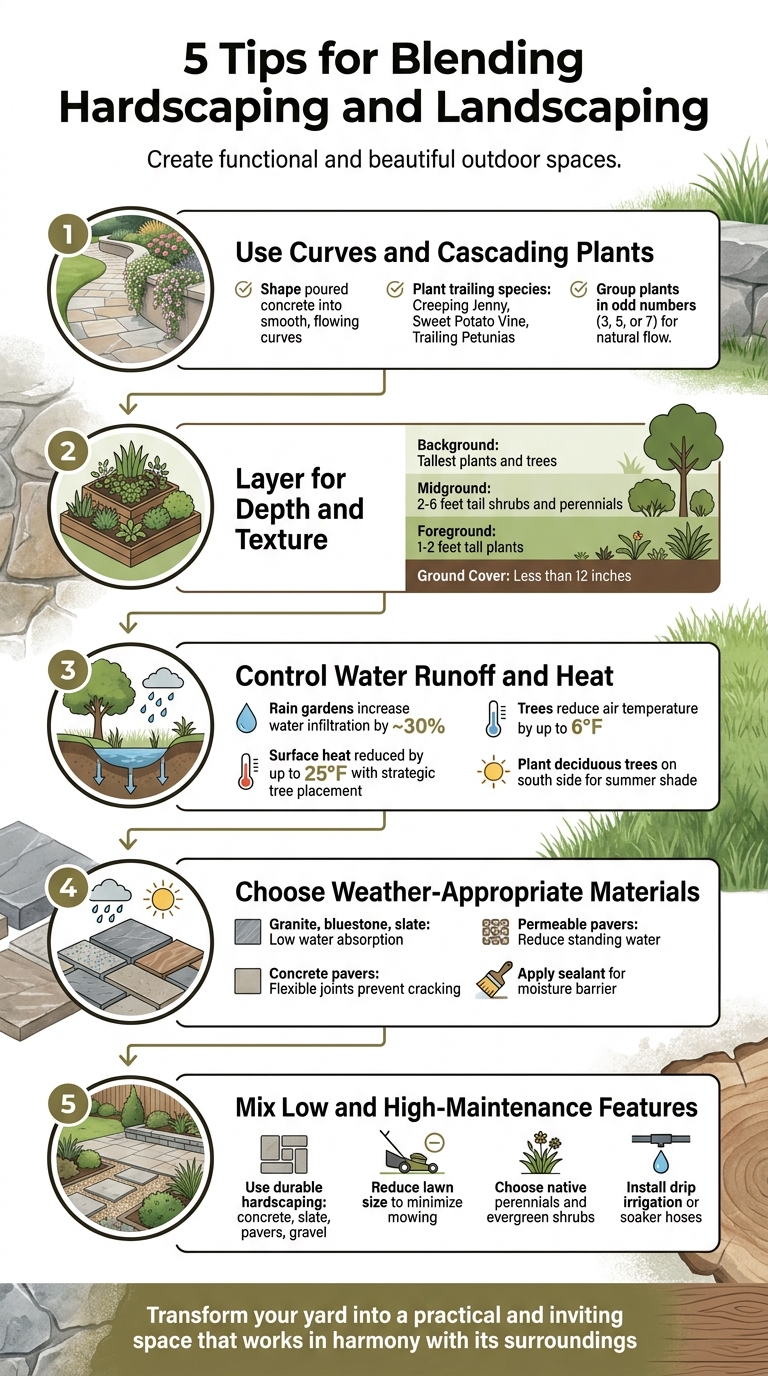
Blending hardscaping (non-living elements like patios or walkways) with landscaping (plants, trees, and greenery) creates outdoor spaces that are both functional and visually appealing. Here’s a quick summary of the five key tips to achieve this:
- Soften Hard Edges with Curves and Cascading Plants: Use curved designs and trailing plants like Creeping Jenny or Sweet Potato Vine to make harsh lines more inviting.
- Layer Plants for Depth and Texture: Arrange plants in layers (tall in the back, shorter in the front) to create a balanced look that integrates well with hardscape features.
- Plant Strategically for Water Runoff and Heat: Use rain gardens, deep-rooted plants, and trees for shade and water management.
- Choose Weather-Suitable Materials: Opt for durable materials like granite or permeable pavers to handle local climate challenges like freeze-thaw cycles and heavy rain.
- Combine Low- and High-Maintenance Features: Balance durable hardscaping with easy-care plants and smart irrigation to reduce upkeep.
These strategies help transform your yard into a practical and inviting space that works in harmony with its surroundings.
5 Essential Tips for Blending Hardscaping and Landscaping
4 Tips for Using Hardscape CORRECTLY in Your Garden! 🪴 Solving Problems in the Landscape
sbb-itb-843f8be
1. Use Curves and Cascading Plants to Soften Hard Edges
Straight lines and sharp corners in hardscaping – like concrete patios or stone walls – can feel a bit harsh. But by incorporating curved designs and cascading plants, you can create a more welcoming outdoor space that blends hardscape and greenery seamlessly.
Curved hardscapes are easier to achieve with poured concrete. Unlike pre-cut materials that limit you to straight edges, poured concrete can be shaped into smooth, flowing curves, making it perfect for rounded patios or winding pathways. To further enhance its look, you can stamp, stain, or paint the surface to complement the tones of nearby plants and soil [1].
Once your hardscape is in place, use trailing plants to soften the edges and add texture. Here are some great options to consider:
- Creeping Jenny (Lysimachia nummularia): Perfect for garden walls or slopes, its rounded green leaves also help with erosion control.
- Dichondra ‘Silver Falls’: Known for its silvery-green foliage, it grows quickly and cascades beautifully over edges.
- Sweet Potato Vine: Offers bold colors like green, purple, or copper for a dramatic touch.
- Trailing Petunias or Calibrachoa: Ideal for sunny areas (at least six hours of direct light), they provide continuous blooms.
- Ivy (Hedera helix) or Creeping Jenny: Better suited for shadier spots where sunlight is limited.
When planting near hardscape edges, group plants in odd numbers (like 3, 5, or 7) to create a more natural, flowing look. This approach avoids the stiffness of symmetrical arrangements and gives the area a more organic feel [2].
To maintain the lush look, prune trailing plants regularly to encourage dense growth. This not only keeps them from looking sparse but also enhances their ability to hide hard edges. And don’t forget – plants near concrete may dry out faster, so you’ll need to adjust your watering routine accordingly.
2. Layer Plants for Better Proportion and Texture
Creating layers in your garden – tall trees in the back, mid-sized plants in the middle, and low ground covers up front – adds depth and a sense of fullness. This method helps blend plants with hardscape features, like pathways or walls, for a cohesive look.
To make this work, divide your plants into four categories: Background (the tallest plants), Midground (plants around 2–6 feet tall), Foreground (1–2 feet tall), and Ground Cover (less than 12 inches). Garden designer Sharon Nyenhuis explains it well:
Build a compelling backbone, add a diverse midsection, then finish with ground covers. [3]
Start with anchor plants, such as evergreens or structural shrubs, to provide a strong year-round framework. Fill the middle layer with upright plants like lilies or sea holly, along with mounded perennials for added variety. Finally, use ground covers like bearberry cotoneaster or bloody geranium to create smooth transitions between layers.
Mix textures for a more dynamic design – pair delicate, lacy foliage with bold, broad leaves, and combine upright spikes with rounded, mounded forms. This creates a three-dimensional effect that works seamlessly with hardscaping.
For practicality, place mid-sized shrubs near foundations but keep them clear of windows. If your yard is flat, consider using retaining walls to build terraces, which naturally enhance the layered effect. Layering doesn’t just make your garden more visually appealing – it also ties together the natural and built elements of your outdoor space.
3. Plant Strategically to Control Water Runoff and Heat
Building on the concept of plant layering, strategic planting tackles challenges like water runoff and heat retention caused by hardscape surfaces. These surfaces block water absorption and trap heat, but with careful planting, you can address both issues while maintaining a cohesive landscape design.
Rain gardens are a great option for managing runoff. These are shallow depressions designed to collect and filter rainwater naturally. Place them at least 10 feet away from your home’s foundation. Fill them with deep-rooted plants like River Birch, Cardinal Flower, or Switch Grass – species that excel at absorbing excess water. Rain gardens can increase water infiltration by about 30% compared to traditional lawns, and when properly designed, they drain quickly, avoiding standing water issues [5][8].
Strategic tree placement is another effective way to manage heat. Trees can reduce the surrounding air temperature by up to 6°F and lower surface heat by as much as 25°F [7]. For maximum impact, plant deciduous trees with wide, high-spreading crowns on the south side of hardscape areas to provide summer shade. Shorter trees on the west side can block the intense late-afternoon sun [7].
For properties with significant runoff, combine planting with drainage solutions. Use gutters, downspouts, or rain chains to direct water from roofs and driveways into planted depressions. Stabilize erosion-prone spots with rocks and stones, which slow water flow and protect plant roots [8]. For homeowners in Maryland, Pro Landscapes MD offers tailored solutions, integrating stormwater management systems like French drains with thoughtful landscaping.
When choosing plants, consider your local climate and the unique conditions created by hardscaping. Areas with reflected heat from pavement benefit from drought-tolerant native plants that thrive in warmer microclimates [7]. Turf-type grasses like Tall Fescue help stabilize soil and slow water flow, while trees and shrubs provide shade that helps lower water temperatures, reducing the risk of algal blooms in collected water [6].
4. Choose Materials That Fit Your Local Climate
After tackling water management with smart planting strategies, the next step is to pick materials that can handle your local weather conditions. This ensures your outdoor space stays durable and looks great over time.
In Maryland, the climate presents a mix of freeze-thaw cycles, heavy rain, and muddy seasonal transitions – all of which can wreak havoc on hardscape materials. The freeze-thaw cycle is particularly tough on porous materials; as water seeps in and freezes, it expands, causing cracks and damage [9]. To combat this, opt for dense, non-porous stones like granite, bluestone, or slate. These materials absorb less water, making them more resistant to cracking.
For areas prone to heavy rainfall, permeable pavers are an excellent choice. They allow water to seep into the soil, reducing puddles and minimizing ice formation [4][9]. If your property has a slope, retaining walls with built-in drainage channels can help prevent water from washing out flowerbeds and eroding soil during wet weather [4]. Companies like Pro Landscapes MD specialize in creating functional designs that blend seamlessly with your yard.
If you’re considering brick, make sure it’s kiln-fired and rated for outdoor use. These bricks are dense enough to withstand weathering [9]. For colder climates, concrete pavers are a better option than solid concrete slabs. The joints between pavers allow the ground to shift naturally during freeze-thaw cycles without cracking the surface [9]. To further protect porous materials, apply a sealant to create a moisture barrier. And when winter rolls around, skip traditional rock salt, which can pit concrete surfaces. Instead, opt for calcium chloride or magnesium chloride, which are gentler on hardscapes [9].
To tie everything together, choose materials that complement the colors and textures of your plants. This creates a unified look. Make sure to leave enough space around hardscape features for roots to grow – this prevents future damage, like pavers being lifted by expanding roots [4]. Adding edging is another smart move. It keeps mulch and soil in place during weather changes, protecting your lawn from erosion and overgrowth [4].
| Material | Best For | Key Benefit |
|---|---|---|
| Granite | Cold/wet climates | High density; very low water absorption [9] |
| Concrete Pavers | Freeze-thaw zones | Flexible joints prevent cracking [9] |
| Permeable Pavers | Heavy rainfall areas | Reduces standing water and ice buildup [9][4] |
| Bluestone | Temperature shifts | Non-porous; handles seasonal changes well [9] |
5. Mix Low-Maintenance and High-Maintenance Elements
Strike a balance in your yard by combining low-maintenance and high-maintenance features. This way, you can enjoy your outdoor space without dedicating every weekend to upkeep.
Start with a strong base of low-maintenance hardscaping. Materials like concrete, slate, pavers, and gravel are excellent for patios, walkways, and seating areas since they require little care. Concrete stands out for its versatility – you can stamp or stain it to mimic pricier finishes. Gravel, on the other hand, not only looks natural but also improves drainage thanks to its permeable surface [1].
For added visual appeal, focus on high-impact focal points. Instead of spreading elaborate gardens across the yard, strategically place colorful annuals or striking plants near entryways, patios, or along stone walls where they’ll draw the most attention. Design experts suggest using odd-numbered groupings – like three matching pots on a ledge – to create a sense of harmony and polish [2].
To cut down on maintenance even further, reduce the size of your lawn. Expanding patios, decks, or stone pathways means less mowing, fertilizing, and watering. When it comes to plants, go for native perennials and evergreen shrubs that thrive with minimal care. A thick layer of mulch in flower beds helps suppress weeds and improves moisture retention, while raised beds with stone edging enhance drainage and keep things tidy [10].
Pair these plant choices with smart irrigation solutions to save even more time. Drip irrigation systems or soaker hoses connected to automatic controllers deliver water directly to plant roots, cutting down on manual watering. For high-traffic areas like poolside spots or pet zones, artificial turf can be a game-changer. It stays lush and green all year without the hassle of mowing [10].
Conclusion
Blending hardscaping with landscaping strikes the perfect balance between functionality and beauty, creating an outdoor space that’s both practical and visually appealing. By incorporating curves to soften harsh lines, layering plants for depth, managing water runoff effectively, selecting materials suited to your climate, and mixing maintenance levels, you can achieve a seamless, unified yard design. Each of these strategies works together to ensure your outdoor space feels cohesive rather than pieced together.
Hardscaping provides the foundation – think patios, walkways, and retaining walls – while landscaping brings life, color, and ecological benefits. As Environmental Designs explains, "Hardscape elements should complement your home’s architecture to create a cohesive design scheme, enhancing the overall aesthetic appeal of your outdoor space" [11]. Together, these elements not only address practical needs but also help define distinct zones, enhancing your yard’s usability and charm.
For homeowners in central Maryland, where sloped terrain, heavy rainfall, or tricky soil conditions can pose challenges, professional expertise can be a game-changer. Thoughtful planning – like positioning hardscape features to allow for future plant growth and root expansion – can prevent costly repairs down the road.
Pro Landscapes MD specializes in this integrated approach, serving communities across Howard County, Montgomery County, Carroll County, Frederick County, Prince George’s County, and Baltimore County. Their team handles everything from flagstone patios to retaining walls and drainage solutions, ensuring that hardscaping complements the health and design of your landscaping. With their horticultural expertise, they can match materials to your plant selections and design features like seat walls that double as both functional structures and stylish seating.
Whether you’re dealing with a sloped yard, managing water runoff, or dreaming of an outdoor kitchen, the right combination of hardscaping and landscaping transforms your space into something beautiful and enduring. These techniques ensure that outdoor areas across central Maryland are not only stunning but also built to last with minimal upkeep.
FAQs
How do I choose plants that won’t damage my patio or pavers?
When selecting plants for your outdoor space, go for options that thrive in containers and can handle dry conditions. Succulents, cacti, and ornamental grasses are excellent choices – they’re hardy and less likely to cause root-related problems. Steer clear of plants with aggressive root systems, like certain trees or large shrubs, as these can damage or lift pavers over time.
It’s also important to choose plants that align with your local climate. This reduces maintenance needs and helps protect your hardscaping from potential harm caused by unsuitable vegetation.
What’s the best way to fix water runoff from hardscaped areas?
To manage water runoff from paved or hardscaped areas, you can take several practical steps. Start with proper grading to ensure water flows away from your property. Installing drainage systems like French drains or channel drains can also direct excess water effectively. Another option is to capture runoff using rain barrels or cisterns, allowing you to reuse the water or let it absorb back into the soil. By combining these approaches, you can minimize pooling, prevent erosion, and reduce the risk of water-related damage.
What hardscape materials are best for Maryland winters?
Durable materials such as natural stone, concrete pavers, and brick are excellent choices for Maryland winters. Their resistance to freeze-thaw cycles makes them well-suited to handle the region’s temperature swings and tough weather conditions.
Chat with Us