









- bhavya gada
- No Comments
In Harford County, stormwater permits are required for projects that significantly impact drainage or increase impervious surfaces. This applies to both residential and commercial properties. Common examples include patios, retaining walls, and driveway expansions. Without proper permits, you risk stop-work orders, costly fixes, and legal issues during property transactions.
Key Steps:
- Determine Permit Need: Required for projects disturbing 5,000+ sq. ft. or moving 100+ cubic yards of earth.
- Gather Site Info: Assess drainage, slopes, and impervious surfaces.
- Check Regulations: Review county and state rules, especially for floodplains or sensitive areas.
- Submit Documents: Include engineered plans, transmittal forms, and maintenance agreements.
- Inspections: Schedule site checks to ensure compliance.
- Final Approval: Provide as-built plans and maintain the stormwater system.
Proper planning and compliance save time, money, and potential legal headaches. Partnering with professionals can simplify the process and ensure your project meets all requirements.
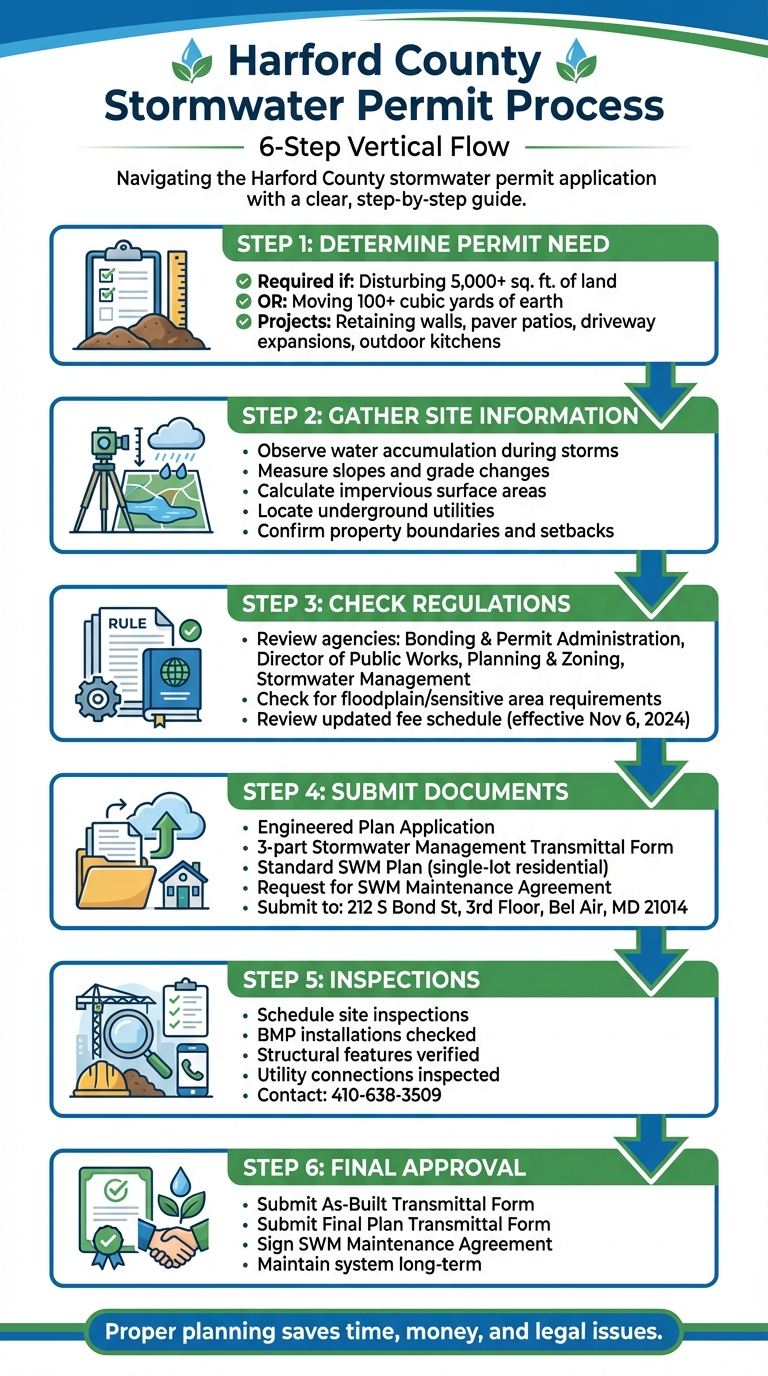
Harford County Stormwater Permit Application Process: 6-Step Guide
Steps Before Applying for a Permit
Check If Your Project Needs a Permit
In Harford County, you’ll need a stormwater permit if your project disturbs 5,000 square feet or more of land or involves moving at least 100 cubic yards of earth [2]. The type of project also plays a role. For instance, retaining walls that support heavy soil loads or exceed specific height limits (measured from base to top) require review. Similarly, paver patios and walkways that significantly increase impervious surfaces or alter drainage patterns will need permits. Projects like outdoor kitchens, fire pits, and roofed structures (e.g., pavilions) with electrical, plumbing, or gas connections are subject to additional evaluations [2].
Other projects, such as driveway expansions or relocations that impact public right-of-way or runoff patterns, also fall under permit requirements. If your property lies near floodplains, easements, or sensitive areas, you’ll need to account for additional considerations [2]. For single-lot residential projects, you might qualify for a Standard Stormwater Management Plan [1]. If your property is within town boundaries – like Bel Air, Aberdeen, or Havre de Grace – check for any extra local regulations [2].
Gather Site Information
Once you’ve confirmed that your project requires a permit, the next step is to collect detailed site information. Start by observing how water accumulates on your property during heavy storms. This helps identify areas where runoff might need to be redirected, especially to protect foundations [2]. Keep in mind that Harford County’s clay-heavy soils can influence drainage. Also, take note of slopes and grade changes, as these factors affect water flow and the stability of your hardscape over time [2].
Measure any planned retaining walls carefully, from base to top, since certain heights classify them as structural elements requiring permits. Calculate the current and proposed impervious surface areas – like patios, walkways, or driveways – as significant increases often trigger permitting requirements [2]. Lastly, locate underground utilities such as gas, electric, and plumbing lines, especially if your project involves outdoor kitchens or fire features. Confirm property boundaries and setbacks to avoid legal issues later, particularly during resale [2].
Check State and County Rules
With your site details in hand, it’s time to review Harford County and state regulations. Your permit application will be evaluated by several departments, including Bonding and Permit Administration, the Director of Public Works, Planning and Zoning, and the Stormwater Management division [1]. If your project is near floodplains, easements, or sensitive areas, additional documentation may be required, so double-check local ordinances [2].
It’s worth noting that the Department of Public Works updated its fee schedule effective November 6, 2024, so make sure you account for the latest costs when planning your budget [1]. Depending on your project stage, you’ll need to submit specific forms, such as a Concept Plan, Site Development Plan, or Final Plan [1]. Additionally, a "Request To Prepare a SWM Maintenance Agreement" is necessary to ensure your stormwater system remains functional in the long term. For projects involving gas lines, electricity, or plumbing, separate permits and inspections will be required [2].
Taking these steps beforehand helps ensure your application meets Harford County’s standards and avoids unnecessary delays.
sbb-itb-843f8be
A Quick Guide to Stormwater Permits and Compliance
Documents You Need to Submit
Getting your paperwork in order is key. You’ll need to submit an Engineered Plan Stormwater Permit Application along with a fully completed three-part Stormwater Management Transmittal Form [1]. If you’re working on a single-lot residential project, you can use a Standard Stormwater Management Plan [1].
To keep things moving smoothly, make sure all three parts of the Stormwater Management Transmittal Form are included. Additionally, you’ll need to fill out a Request To Prepare a SWM Maintenance Agreement, which establishes the long-term care plan for your stormwater system [1].
Below are checklists that outline the specific documents required for each stage of your application.
Stormwater Management Concept Plan Checklist
This stage focuses on the initial planning and basic calculations. You’ll need to submit a Concept Plan Transmittal Form along with Part 1 of the Stormwater Management Transmittal Form [1]. The concept plan should include preliminary Environmental Site Design (ESD) calculations, showing how you plan to handle runoff and where stormwater features will be placed on your property. If your project involves retaining walls or major changes in elevation, be sure to include additional documents addressing soil pressure and drainage design, as these are common triggers for permits [2].
Stormwater Management Site Development Plan Checklist
The Site Development Plan stage dives into more detailed engineering and design work. You’ll submit a Site Development Transmittal Form and Part 2 of the Stormwater Management Transmittal Form [1]. This plan needs to include an ESD to Maximum Extent Practicable (MEP) narrative, volume calculations, and precise designs to prove your stormwater solution will work effectively. At this stage, you’ll demonstrate that your design complies with Harford County’s runoff management standards, especially if your project alters water flow or increases impervious surfaces [2].
Erosion and Sediment Control Checklist
Erosion and sediment control is governed by COMAR 26.17.01 standards. Your plan should detail how you’ll stabilize disturbed soil, manage runoff during construction, and protect existing vegetation. This is particularly important in Harford County, where clay-heavy soils can make drainage tricky [2]. All physical applications and required documents should be sent to Bonding & Permit Administration, located at 212 S Bond Street, 3rd Floor, Bel Air, MD 21014 [1].
How to Submit and Track Your Application
Submit Your Plans to Harford County
To submit your application, head to Bonding & Permit Administration at 212 S Bond St, 3rd Floor, Bel Air, MD 21014. The office operates Monday through Friday, 8:00 a.m. to 5:00 p.m., except on holidays. Make sure to review the DPW Fee Changes Letter (dated November 6, 2024) to confirm you’re paying the correct fees. Missing or incorrect payments can slow down the review process.
Once submitted, your permit will go through reviews by four agencies: Bonding and Permit Administration, the Director of Public Works, Planning and Zoning, and the Stormwater Management Division. Each agency focuses on different aspects of your plan, from technical specifications to zoning requirements. To track your application, create an account on the Harford County government portal for automated updates. If you prefer, you can call 410-638-3509 or visit the office during business hours to check on your progress.
Afterward, determine whether state-level approvals are necessary for your project.
Get State Approvals When Required
If your project is located near floodplains, wetlands, or other environmentally sensitive areas, you may need approval from the Maryland Department of the Environment (MDE). It’s a good idea to connect with MDE early in your planning process to avoid unexpected delays. Keep in mind that state reviews can take additional time, so plan your schedule accordingly.
Once you’ve obtained all required state approvals, move on to the next step in the process.
Sign Stormwater Management Agreements
Before your permit is finalized, you’ll need to complete and sign a Request To Prepare a SWM Maintenance Agreement. This document outlines your responsibility for maintaining the stormwater system, ensuring that drainage features, retention areas, and other infrastructure stay functional long after the project is completed. A signed agreement is mandatory for permit approval.
Inspections and Getting Final Approval
For scheduling inspections or if you have questions, contact Bonding & Permit Administration at 410-638-3509.
Construction Site Inspections
Harford County inspectors play a key role during construction, ensuring everything is built correctly. They check BMP (Best Management Practice) installations, structural features, and utility connections. Specific areas of focus include drainage adjustments, retaining walls, and outdoor elements. Inspectors also ensure setbacks are followed, grading is accurate, and runoff is managed effectively.
The timing of these inspections depends on the project. For example, utility installations like electrical, plumbing, or gas often require separate inspections in addition to structural reviews. Projects involving large retaining walls that support heavy soil loads will also undergo structural evaluations. Missing an inspection can lead to stop-work orders and delays, so it’s crucial to schedule them ahead of time with the Bonding and Permit Administration office.
Once inspections are complete, the next step is to certify the work through as-built documentation.
Submit As-Built Plans and Final Documents
After finishing construction, you’ll need to provide an As-Built Transmittal Form and a Final Plan Transmittal Form to Harford County. These documents confirm that your stormwater system was built as designed in the approved plans. The as-built process ensures that drainage systems, retention areas, and grading align with the original engineering.
Submit these forms to the Bonding & Permit Administration office (use the contact information above). Final approval involves reviews from several departments, including the Director of Public Works, Planning and Zoning, and the Stormwater Management division. If your project includes utilities, make sure all inspections for gas, electric, and plumbing are completed before submitting your final paperwork.
Once your final documentation is approved, the focus shifts to maintaining the system over the long term.
Maintain Your Stormwater System
Final approval isn’t the end – it’s the beginning of ongoing maintenance. The SWM Maintenance Agreement you signed earlier legally binds you to keep your stormwater system in working order. This involves monitoring how water flows during heavy rain and ensuring runoff patterns stay consistent. Redirected water can cause damage to foundations, patios, and even neighboring properties, leading to potential liability issues.
If you plan to add hardscapes like walkways or retaining walls in the future, check first to ensure these additions won’t affect your approved impervious surface calculations or alter drainage flows. Skipping maintenance or ignoring these requirements can result in fines and expensive repairs.
Pro Landscapes MD: Stormwater Compliance Services

Navigating Harford County’s stormwater permit process can feel overwhelming, especially when you’re unsure if your backyard project requires approval. Pro Landscapes MD works with property owners across Harford County to clarify when permits are necessary and how to meet the standards set by the Department of Public Works and Bonding and Permit Administration. By building on the permit process, they provide expert advice to simplify compliance and create solutions tailored to your property’s specific requirements.
Drainage and Stormwater Management
Pro Landscapes MD begins with detailed site evaluations, examining property slopes, soil conditions (including Harford County’s clay-heavy soils), and existing drainage patterns. This initial step helps determine if a project – such as expanding impervious surfaces, redirecting stormwater flow, or constructing retaining walls above certain heights – needs formal approval. Their drainage solutions include options like French drains, regrading, and erosion control measures, all aimed at managing runoff effectively. These systems are designed to protect foundations, patios, and neighboring properties from water damage, reducing the risk of liability and expensive repairs.
Environmentally Friendly Solutions
Pro Landscapes MD goes beyond traditional drainage methods by incorporating sustainable practices into their designs. They use eco-friendly pavers and green infrastructure in hardscape projects, allowing water to soak into the ground instead of contributing to runoff. This approach helps property owners stay within the impervious surface limits outlined in stormwater management agreements. By combining visually appealing upgrades, such as paver patios, with functional drainage systems, they address both compliance needs and the challenges posed by Maryland’s frequent heavy rains.
Custom Solutions for Your Property
No two properties are the same, and Pro Landscapes MD takes a personalized approach to address each property’s specific drainage issues. They design solutions that account for grade changes, soil conditions, and utility locations, ensuring compliance with permit requirements from the outset. This careful planning helps avoid future compliance problems and keeps projects aligned with Harford County’s stormwater regulations. Their proactive strategies ensure your project meets all necessary standards while addressing your property’s unique needs.
Conclusion
Getting a stormwater permit in Harford County requires working with multiple agencies and submitting several essential documents, including Concept, Site Development, and Final Plans, along with maintenance and as-built agreements. Knowing what triggers permit requirements – like taller retaining walls, large expansions of impervious surfaces, or changes to drainage patterns – can save you from stop-work orders or issues during property transactions. By carefully following the required steps, you can reduce risks and navigate the approval process more smoothly. Partnering with experienced professionals can make this process far less overwhelming.
Pro Landscapes MD takes the guesswork out of compliance by evaluating site conditions early in the process. Their in-depth knowledge of Harford County’s approval system ensures your project aligns with local regulations while addressing specific challenges, such as clay-heavy soils or the frequent heavy rain Maryland experiences.
Planning for proper drainage and confirming setbacks early can save you from expensive corrections down the line. Fixing an unapproved or poorly executed installation often costs significantly more than doing it right the first time.
FAQs
Do I need a stormwater permit for my patio or driveway?
In Harford County, Maryland, you usually don’t need a stormwater permit to build a patio or driveway. However, if the project involves major land disturbance or requires specific stormwater management efforts, a permit might be necessary. It’s always a good idea to check local regulations to stay compliant.
What documents are required for each plan stage?
Documents needed at each stage of the plan process typically include permit applications, transmittal forms (like the Concept Plan, Final Plan, and Revisions), and detailed stormwater management plans. The specific documents required will vary depending on the project’s scope and its current phase.
How long does the Harford County review and inspection process take?
The review and inspection process in Harford County typically involves obtaining approval from the Department of Public Works and other relevant agencies. While specific timelines aren’t outlined, you can get updates on project status or approval timelines by reaching out directly to the appropriate office. For additional help, you can contact Harford County’s stormwater management or plans review departments.
Chat with Us