









- bhavya gada
- No Comments
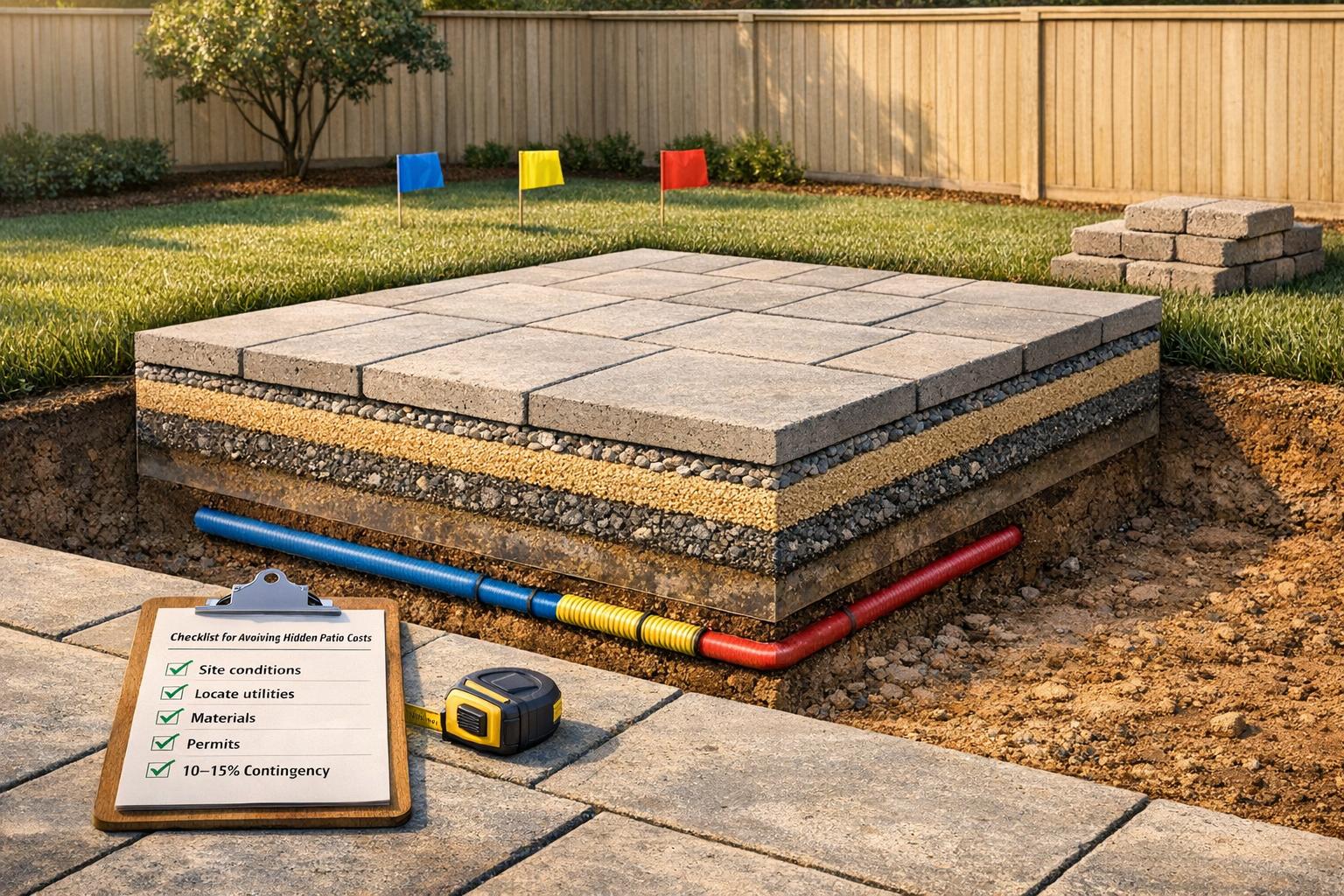
Hidden costs can derail your patio project if you’re not prepared. From soil disposal to permit fees, these expenses aren’t always obvious but can quickly add up. Here’s how to stay on budget:
- Site Conditions: Clay-heavy soils or sloped yards can increase grading costs by $500–$1,000. Drainage fixes like French drains may cost $1,000–$4,000.
- Utility Lines: Hitting underground utilities during excavation can lead to costly repairs. Locate lines for free via local utility services.
- Material Costs: Concrete is the cheapest ($5–$15/sq. ft.), while natural stone is the priciest ($15–$40/sq. ft.). Factor in long-term maintenance costs.
- Permits: Fees range from $50–$300 depending on your location and project size.
- Weather Delays: Budget 10–15% extra for potential weather-related setbacks, especially in rainy seasons.
Planning ahead with accurate measurements, proper drainage, and a contingency fund will help you avoid surprises. Whether you choose basic concrete or high-end natural stone, careful preparation ensures your patio lasts for years.
Pre-Design Planning Checklist
Before you dive into designing your patio, it’s crucial to understand the ground beneath you. Ignoring your property’s physical characteristics can lead to unexpected expenses, sometimes adding thousands to your project. Taking the time to assess these factors now can save you from headaches and costly surprises later.
Check Your Property’s Site Conditions
Start by evaluating your property’s site conditions. Soil type and yard slope play a big role in determining project costs. For example, clay-heavy soils – common in Maryland – require extra base preparation to prevent settling. Sloped yards may need grading, which can cost between $0.04 and $2.00 per square foot [3]. If you notice drainage issues, like standing water after rain or runoff toward your home’s foundation, you might need solutions like French drains or regrading, which can add $1,000 to $4,000 to your budget [3].
A gravel base foundation typically costs $2 to $5 per square foot [3]. If your yard has limited access for heavy equipment, be prepared for a $200 to $500 surcharge for manual excavation [1]. To identify potential issues, inspect your property after a rainstorm to spot slopes or drainage problems early.
Once you’ve assessed the site, the next step is to confirm the location of underground utilities.
Find Underground Utility Lines
After checking your site conditions, it’s essential to locate underground utility lines. Accidentally hitting a gas line, electrical conduit, or water pipe during excavation isn’t just dangerous – it’s expensive. Repairing damaged lines or relocating utilities can delay your project and cost thousands in emergency repairs. Additionally, if your patio includes features like outdoor kitchens or fire pits that require gas lines, you may need permits, which range from $50 to $300 [1].
To avoid these problems, contact your local utility locating service before any digging begins. This free service will mark underground lines, helping you plan your design around them. Knowing where utilities are located ensures a safer, smoother project and smarter design decisions.
Take Accurate Measurements
Accurate measurements are key to staying on budget and avoiding unnecessary costs. Calculate your patio’s size in square feet to estimate material and labor expenses. Keep in mind that labor typically accounts for 40% to 50% of total installation costs [1]. If your design includes intricate layouts or custom paver cuts, labor expenses could increase by 10%–20% [1].
For reference, a standard 300-square-foot patio costs between $3,000 and $10,500, depending on the materials you choose [1]. A larger 400-square-foot patio could range from $4,000 to $14,000 [1]. Precise measurements help streamline material orders and keep labor costs manageable. If your calculations show the project exceeds your budget, consider breaking it into phases – start with the base patio and add features like seating walls or lighting later [1].
sbb-itb-843f8be
Material Selection Checklist
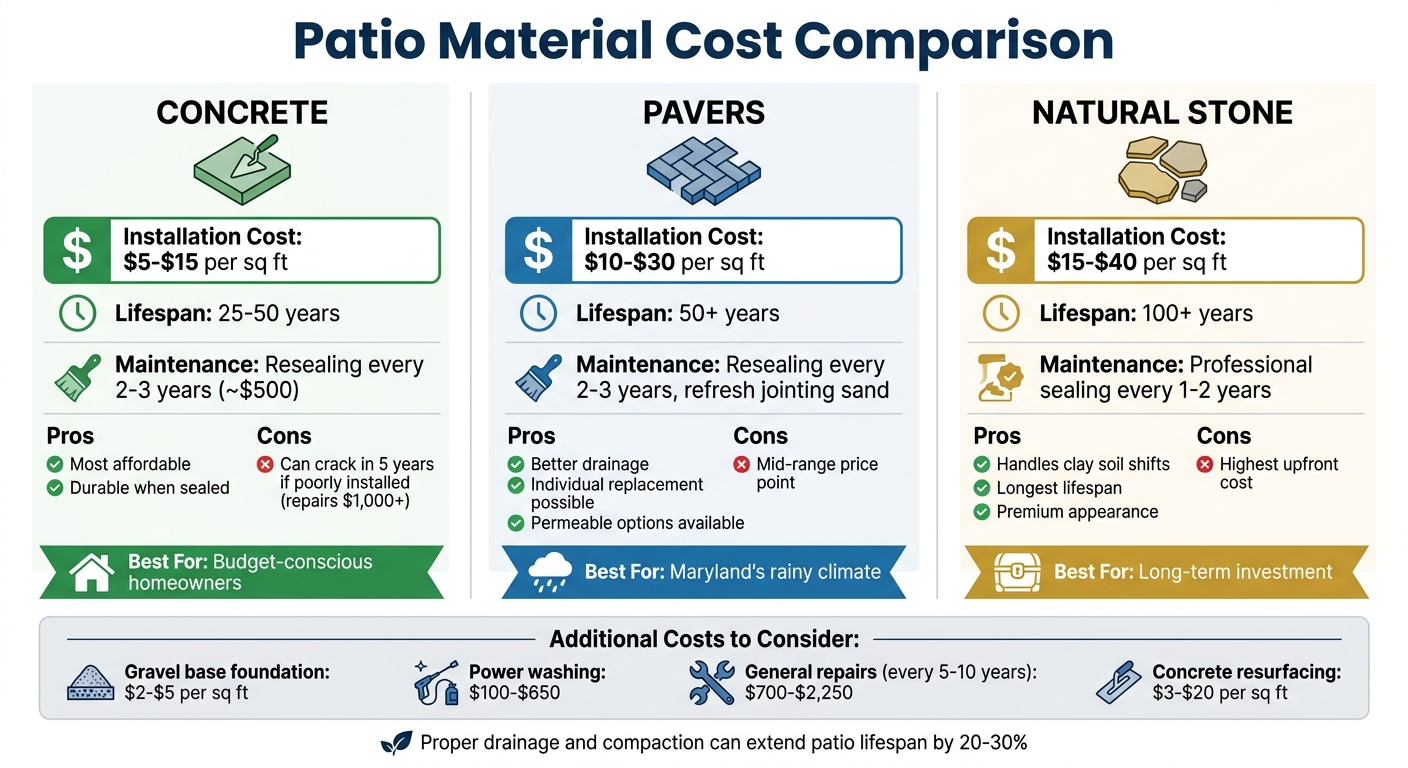
Patio Material Cost Comparison: Concrete vs Pavers vs Natural Stone
Your choice of patio material directly affects both initial expenses and long-term costs. Maryland’s climate – with its humid summers, freeze-thaw winters, and heavy rainfall – requires materials that can withstand moisture and temperature fluctuations. Picking the wrong material could lead to issues like cracking, shifting, or expensive repairs within a few years.
Compare Different Material Costs
Material selection is one of the largest factors influencing overall patio costs. Concrete offers the most affordable option, costing $5 to $15 per square foot installed. This makes it a popular choice for budget-conscious homeowners [4][1]. When sealed properly, concrete can last 25 to 50 years, enduring Maryland’s wet springs [1]. However, improper installation could result in cracking within five years, with repairs costing over $1,000 [1].
Pavers, priced between $10 to $30 per square foot, provide better drainage due to their permeable designs. This feature is especially useful during Maryland’s rainy seasons. Additionally, individual pavers can be replaced if damaged, unlike large concrete slabs [1]. Natural stone options like flagstone or bluestone are the most expensive, ranging from $15 to $40 per square foot. These materials handle clay soil shifts effectively and boast a lifespan exceeding 100 years [1].
To truly understand the value of each material, factor in both upfront costs and long-term maintenance.
Plan for Ongoing Maintenance
After estimating installation costs, consider the regular upkeep required to extend your patio’s life and avoid unexpected repairs. Most materials, aside from gravel, need resealing every 2 to 3 years to protect against weather damage [4]. Professional cleaning and resealing typically cost around $500 [4]. Power washing, necessary to combat mold and stains from Maryland’s humidity, ranges between $100 and $650 [4]. Neglecting maintenance often leads to more expensive repairs, with general repair costs falling between $700 and $2,250 every 5 to 10 years [4]. If the surface deteriorates, concrete resurfacing can cost $3 to $20 per square foot [4]. Prioritizing routine maintenance now can help you avoid replacing the entire patio later.
Look at Eco-Friendly Options
Permeable pavers are a smart option for those seeking environmentally conscious solutions. These pavers allow water to drain through, reducing puddles and runoff during heavy rains [1]. They also improve stormwater management and help prevent erosion, which is particularly useful for properties with drainage issues. While they may come with slightly higher upfront costs than standard materials, their ability to handle drainage effectively can reduce the need for additional drainage systems, keeping overall project expenses in check.
Permitting and Site Preparation Checklist
Planning your site preparation carefully can help you avoid unexpected costs and setbacks. This step is just as critical as earlier tasks like measuring your property and locating utilities. Before starting any construction, make sure to understand and comply with local regulations. Skipping permits or ignoring codes can result in fines, delays, or even having to redo your patio to meet requirements.
Research Local Permit Rules
In Maryland, permits are often required for patios larger than 500 square feet or those involving gas lines [1]. Permit fees vary widely depending on the county. For example, in Howard County, the fee is around $50, while in Baltimore County, it can reach $300 [1]. To avoid surprises, contact your county’s permitting office early in the process to confirm the specific rules for your project. Once you know what’s required, you can move forward with detailed site preparation.
Budget for Excavation and Base Work
Excavation and base preparation costs typically range from $3 to $8 per square foot, covering both labor and materials. In areas with clay-heavy soil, such as Prince George’s County, additional grading or stabilization work could add between $500 and $1,000. If your project is in a tight urban area like Bethesda, manual excavation might increase costs by $200 to $500 [1]. Be sure to check if your contractor’s estimate includes fees for disposing of soil and rocks [2]. Proper compaction using a plate compactor is essential to avoid future issues like settling or poor drainage [2]. Once the base is ready, focus on stormwater management to protect your patio.
Include Stormwater Management
Maryland’s frequent rain and freeze-thaw cycles make effective drainage planning a must. Grading your patio correctly ensures water flows away from your home instead of pooling. Slope correction and leveling typically cost $500 to $1,000 [1]. Using permeable pavers is a practical option – they allow water to pass through the joints, reducing runoff during heavy rain. Additionally, proper drainage and soil compaction can extend the life of your patio by 20% to 30% [1]. Check with your county office to see if specific drainage features are required for your area.
Installation and Post-Installation Checklist
Once your permits are secured and the site is prepped, it’s time to turn your attention to installation expenses and ongoing maintenance. These are key steps to ensure your project stays on track and within budget.
Calculate Labor and Extra Features
Labor costs can fluctuate depending on the complexity of your design and the conditions of your site. For example, curved layouts or multi-level patios often require precise cutting and leveling, which can increase labor costs by 10–20% [1]. If you’re working with Maryland’s clay-heavy soils, you may need additional stabilization during installation, which can add $500 to $1,000 to your budget [1]. In urban areas like Bethesda or Silver Spring, limited access might prevent the use of machinery, forcing manual excavation that could cost an extra $200 to $500 [1].
To better manage upfront expenses, think about breaking your project into phases. Start with the base patio, then add features like fire pits, retaining walls, or lighting later on [1]. Also, double-check that your contractor’s estimate includes debris disposal fees – this is a cost that’s often overlooked [2].
Once you’ve factored in labor and additional features, it’s smart to prepare for potential weather-related delays.
Set Aside a Weather Delay Budget
Maryland’s rainy spring season can stretch project timelines and increase costs. Equipment rentals, like plate compactors, may rack up daily charges, and extended labor hours can add to your expenses when crews are delayed by wet conditions [2].
To prepare for these setbacks, set aside a contingency fund of 10–15%. A standard 200-square-foot patio typically takes 2 to 4 days to build, but site preparation can extend the timeline to a week or more [3]. If you’re pouring concrete, remember that it requires 7 to 10 days to cure before it’s ready for use [3]. Check your contract carefully to see how it defines extreme weather, as routine spring rain may not qualify for extensions in some agreements [5].
With your weather budget in place, it’s important to monitor your patio over time to catch any settling or maintenance issues early.
Watch for Settling and Maintenance Issues
After heavy rain, inspect your patio for standing water or soft spots in the base, as these could signal drainage or compaction problems. Refresh jointing sand periodically to keep the structure stable and prevent shifting. Proper compaction and drainage can extend your patio’s lifespan by 20–30% [1]. Without these precautions, Maryland’s freeze-thaw cycles can crack poorly installed concrete in as little as five years, leading to repairs that cost $1,000 or more [1]. Settling issues left unresolved could result in rework expenses ranging from $500 to $2,000 [1].
Surfaces like concrete and natural stone need professional sealing every year or two to withstand Maryland’s damp climate [1]. Also, check that edge restraints remain secure, as loose ones can create gaps between pavers. Addressing these maintenance tasks early can save you from costly structural repairs down the road.
Pro Landscapes MD‘s Expertise in Cost-Saving Solutions
Pro Landscapes MD turns the complex planning of outdoor projects into a process that saves homeowners money. By focusing on site assessments, material selection, and permitting, they help clients avoid surprise costs. For example, in areas like Ellicott City and Bethesda, where clay-heavy soils and steep slopes are common, they tackle issues like slope correction and grading early on. This prevents drainage problems that could cost thousands to fix later [2]. Their approach combines thorough site evaluations with efficient installation techniques to keep costs under control.
Drainage is another area where Pro Landscapes MD excels. They implement advanced water management solutions to protect patios and other outdoor features from water damage. These measures not only prevent costly repairs but can also extend the life of a patio by 20–30% compared to projects that overlook such details [1].
To avoid unexpected expenses, they also account for permitting and access challenges right from the start. This forward-thinking approach ensures homeowners won’t face midproject budget surprises [2]. Their attention to detail during installation – using professional-grade compaction, geotextile fabrics, proper edge restraints, and durable jointing sand – further eliminates the need for costly rework later on [2].
Benjamin Franklin’s timeless advice perfectly captures their philosophy:
"An ounce of prevention is worth a pound of cure" [2]
This mindset drives their meticulous preparation and high standards.
Operating in Ellicott City, Bethesda, Columbia, Silver Spring, and nearby areas, Pro Landscapes MD combines local knowledge with transparent pricing. They design patios to handle Maryland’s freeze-thaw cycles and humid summers, reducing the likelihood of repairs and unexpected costs [1].
Conclusion
Hidden costs don’t have to throw off your patio project. By following a detailed checklist that includes site preparation, material choices, permitting, and installation, you can keep expenses under control and avoid unexpected surprises. Planning ahead for essentials can save homeowners from rework costs that often range between $500 and $2,000 [1].
Tackling potential issues early – like proper compaction, drainage grading, and accounting for Maryland’s freeze-thaw cycles – can prevent expensive repairs down the line. For example, in areas with harsh weather, poorly installed concrete may crack within just five years, leading to steep repair bills [1]. Opting for professional installation, along with high-quality materials and a well-prepared base, reduces these risks and keeps your project running smoothly.
Stay organized by using a clear checklist, phasing your project if necessary, and budgeting a contingency buffer for weather delays or other unexpected site conditions. Whether you’re installing a basic concrete patio at $5–$15 per square foot or upgrading to natural stone at $20–$35 per square foot, thoughtful planning ensures your investment stands the test of time [1].
Pro Landscapes MD offers homeowners in central Maryland the expertise to navigate these challenges with ease. Their transparent pricing and expert guidance – from initial site assessments to final installation – remove uncertainty and help keep your project on budget. Visit Pro Landscapes MD to begin planning your patio with confidence.
FAQs
What hidden patio costs should I ask my contractor about upfront?
To keep your budget in check, make sure to ask your contractor about any potential hidden costs, such as:
- Permit and inspection fees that your local government may require.
- Soil removal and debris disposal resulting from excavation work.
- Site grading and slope correction if your yard has uneven terrain.
- Weather-related delays that might increase labor or equipment rental costs.
Talking about these details ahead of time can help you manage your expenses more effectively.
How do I know if my yard needs drainage work before a patio?
If you’re planning to install a patio, it’s important to check if your yard has any drainage issues. Watch for signs like standing water after it rains, persistently soggy spots, or water pooling near the proposed patio area. These problems can cause soil erosion or even make your patio settle unevenly over time.
A simple test can help: pour water in different spots around the area and observe how it drains. If you notice water pooling or draining too slowly, you might need to address the drainage first. Options like regrading the yard or installing French drains can help manage water and prevent future issues.
How much contingency money should I set aside for surprises?
When planning your patio project, it’s a good idea to reserve 10% to 20% of your total budget as a contingency fund. This extra cushion can help cover unforeseen expenses, such as soil complications, permit costs, additional excavation needs, or delays caused by bad weather.
Chat with Us