









- bhavya gada
- No Comments
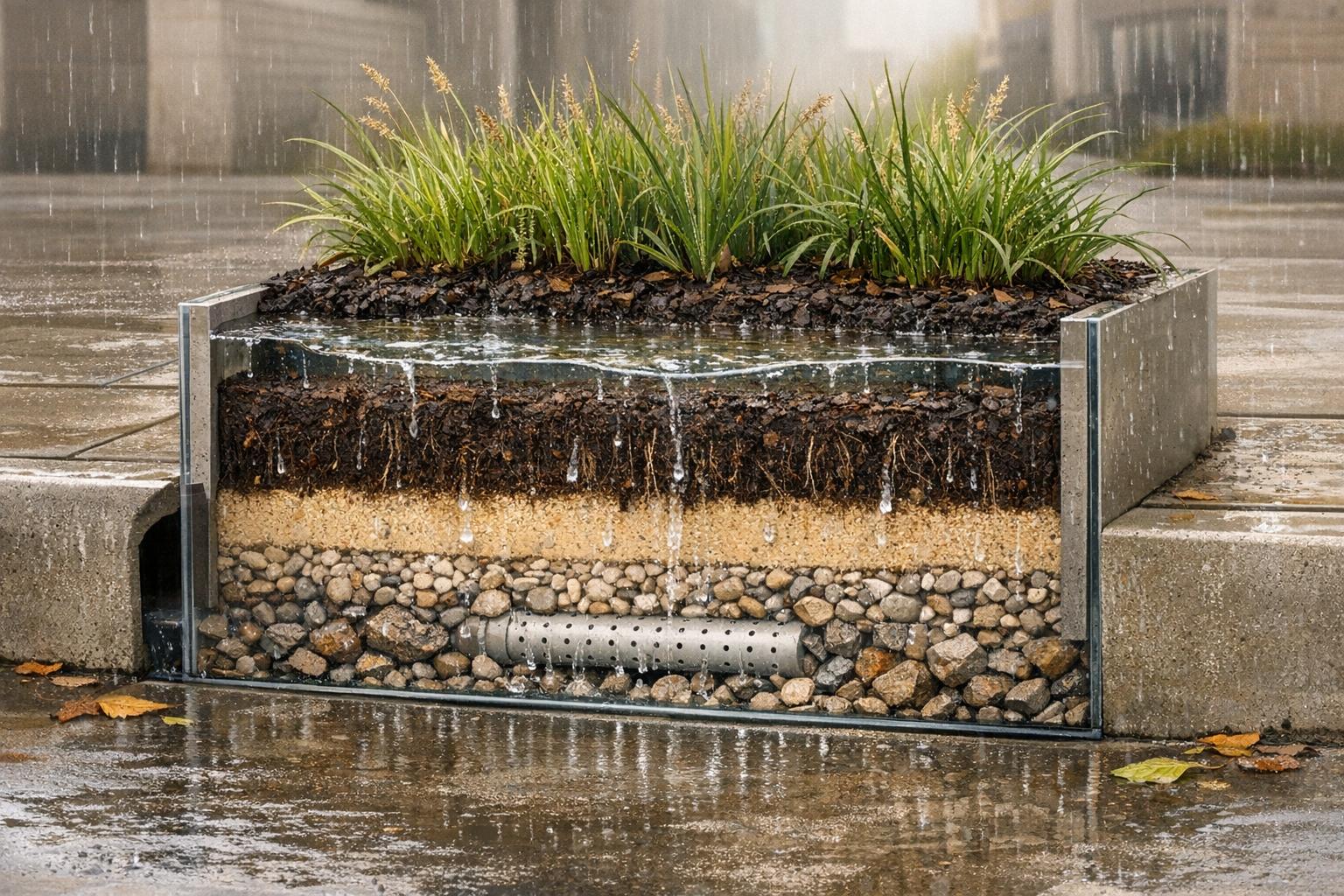
Biofilters clean stormwater by trapping and breaking down harmful pathogens like bacteria, viruses, and protozoa. These systems use engineered soil, sand, and plant roots to filter water and remove contaminants before they reach waterways. Here’s how they work:
- Pathogen Sources: Runoff from pet waste, wildlife, and contaminated surfaces carries pathogens like E. coli, norovirus, and Cryptosporidium into storm drains or streams.
- Key Components: Biofilters consist of layers like mulch, engineered soil, and sand, which trap particles and support beneficial microbes that neutralize pathogens.
- Microbial Action: Microbes in biofilms compete with and consume harmful organisms, reducing pathogen levels by up to 99.9%.
- Design Factors: Effective biofilters are 2.5–4 feet deep, drain within 24–48 hours, and use specific soil mixes to balance filtration and water flow.
- Maintenance Needs: Regular upkeep, like clearing debris, refreshing mulch, and checking drainage, ensures long-term performance.
Biofilters not only improve water quality but also help manage stormwater in residential areas, especially in regions like Maryland with heavy rains and clay-rich soils. Proper design and maintenance are key to their success.
Stormwater Fundamentals Series – Bioretention
sbb-itb-843f8be
Key Components of a Pathogen-Removing Biofilter
A biofilter is a carefully constructed system designed to slow, trap, and neutralize harmful pathogens as water flows through it.
Structural Parts of a Biofilter
A well-functioning biofilter consists of three main zones working in sequence. First, the inlet zone is where stormwater enters the system. This part is crucial for controlling the flow. Whether it’s a curb cut, pipe, or level spreader, the inlet’s job is to slow the water and spread it evenly across the surface. If this step fails, fast-moving water can create channels through the filter media, bypassing the treatment process entirely.
Next comes the filter media layer, which is the heart of the system. This layer traps particles and allows biological processes to break down pathogens. Finally, the underdrain or infiltration zone manages the water as it exits the system. In areas like Maryland, where clay-heavy soils are common, a perforated pipe in a gravel trench is often used to ensure water drains properly within 24–48 hours. This prevents waterlogging, which could otherwise harm the beneficial microbes within the filter.
The effectiveness of these zones depends heavily on the design and composition of the filter media.
Filter Media Types and Their Functions
The media in a biofilter is layered strategically, each layer serving a specific purpose. From top to bottom, the typical setup includes a surface mulch layer, an engineered soil mix, a transition layer, and a coarse drainage layer. Here’s a breakdown of their roles:
| Media Layer | Primary Function | Pathogen Removal Role |
|---|---|---|
| Surface mulch (3 in) | Prevents erosion, retains moisture | Encourages microbial activity at the surface |
| Engineered soil mix (18–36 in) | Primary filtration zone | Traps particles, supports biofilm growth |
| Coarse sand/gravel drainage layer | Provides structure, aids drainage | Transfers treated water to the underdrain |
The engineered soil mix is the key player here. Made up of fine-textured sand with 5–15% fines and 5–15% compost, it strikes a delicate balance: fine enough to catch pathogen-laden particles but open enough to maintain water flow at rates of 1–4 inches per hour. If the media is too coarse, pathogens can slip through; if too fine, it clogs and causes water to pool on the surface.
For areas with higher contamination risks – like backyards with frequent pet activity or nearby wildlife – adding iron-oxide coated sand or biochar can improve performance dramatically. Research shows that iron-oxide coated sand can boost virus removal from around 99% (2 log₁₀) to over 99.97% (more than 3.5 log₁₀). Similarly, biochar can enhance E. coli removal by an additional 1–2 log₁₀ compared to standard sand and soil setups.
Beyond the media itself, the biofilm layer plays a critical role in pathogen removal.
How Biofilm Layers Aid Filtration
Biofilm is a thin, sticky layer of microorganisms that grows on the surfaces of media particles and plant roots. Far from being a problem, this layer is one of the most effective components of a biofilter. These microbial communities work by:
- Predation: Native microbes consume harmful pathogens.
- Competition: Beneficial microbes outcompete pathogens for nutrients.
- Adsorption: Pathogens stick to the biofilm’s extracellular polymers.
For biofilm to work effectively, the filter must maintain the right conditions – adequate moisture, oxygen, and sufficient contact time between water and the media. Interestingly, studies show that most microbial removal happens in the upper 4–8 inches of the media, making surface maintenance essential. Regularly topping the surface with fresh mulch and preventing sediment buildup can significantly improve performance. While extended dry periods can reduce biofilm activity, alternating wet and dry cycles tend to strengthen the microbial community over time.
How Biofilters Remove Pathogens
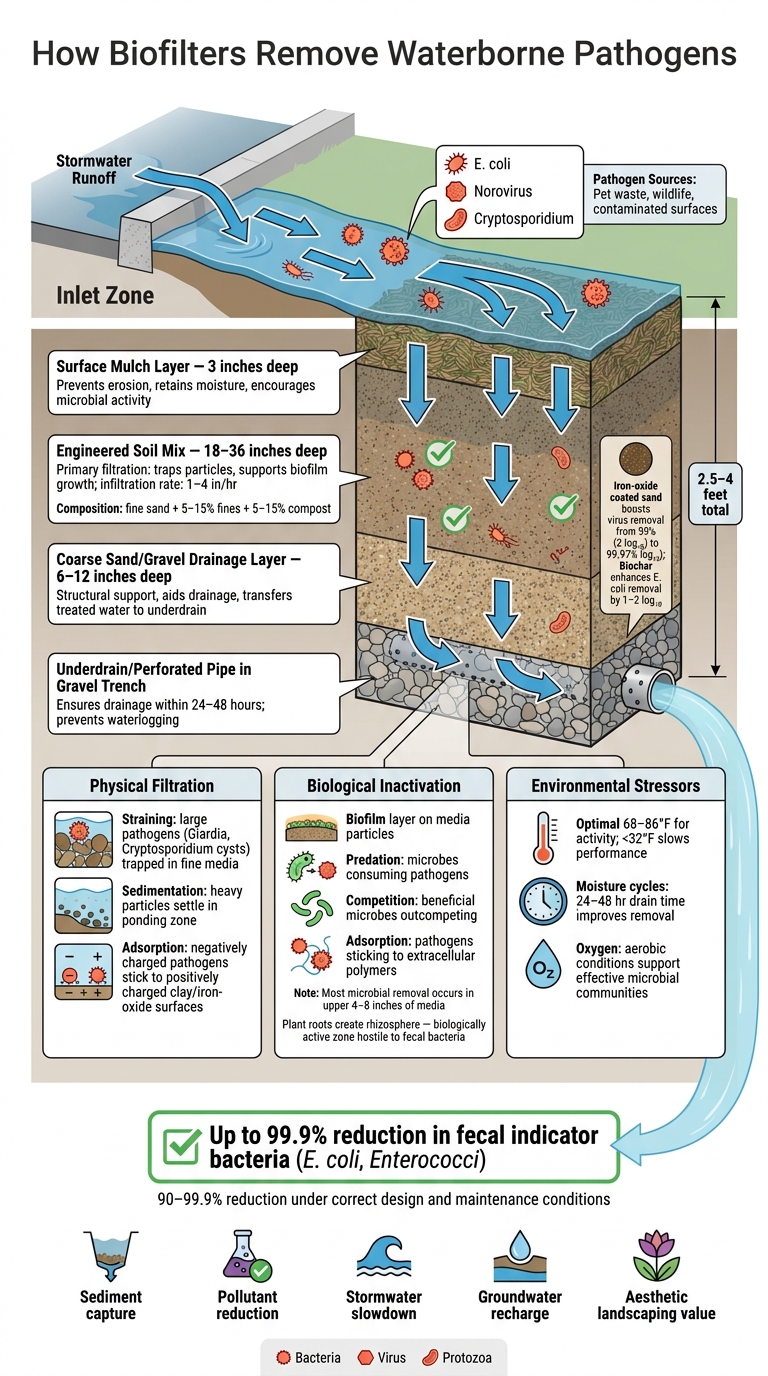
How Biofilters Remove Waterborne Pathogens: Layers, Mechanisms & Performance
Biofilters tackle pathogens using a combination of physical trapping, biological inactivation, and environmental stressors working in tandem.
Physical Filtration Processes
When stormwater enters a biofilter, it undergoes three main physical processes: straining, sedimentation, and adsorption.
- Straining serves as the first line of defense. As water flows through fine filtration media, larger organisms and particle-bound bacteria get trapped. This process effectively captures protozoan cysts like Giardia and Cryptosporidium, along with bacteria attached to suspended solids. While the coarse gravel layers below provide structural support, the finer upper layers are where most pathogen removal occurs.
- Sedimentation happens in surface ponding zones or forebays, where water slows down enough for heavier particles – those carrying pathogens – to settle out. These pretreatment areas help reduce the pathogen load before the water reaches the main filter bed.
- Adsorption occurs when pathogens, which typically carry a slight negative charge, stick to positively charged surfaces like clay, organic matter, or specially treated media such as iron-oxide coated sand.
These physical processes effectively reduce the initial pathogen concentration, setting the stage for biological inactivation to further neutralize threats.
Biological Inactivation of Pathogens
After being trapped, pathogens are biologically inactivated by native microbes. These microbes outcompete pathogens for resources and produce compounds that inhibit their growth. Additionally, protozoa, nematodes, and bacteriophages can directly consume or infect harmful bacteria. Over time – ranging from days to weeks – this combination of competition and predation steadily lowers pathogen populations. Even if some pathogens survive the initial filtration, their ability to cause harm usually diminishes before they reach downstream areas.
Vegetated biofilters are especially effective for removing bacteria because plant roots create a dense rhizosphere – a biologically active zone teeming with diverse microbes. These microbes release enzymes and compounds that are hostile to fecal bacteria. For this reason, biofilter designs often favor native, deep-rooted plants.
Environmental Factors That Affect Performance
Environmental conditions like temperature, moisture, and oxygen availability play a big role in how well biofilters work.
- Temperature: Warmer temperatures (around 68–86°F) boost microbial metabolism, leading to faster predation and pathogen die-off. However, colder temperatures – common in Maryland winters when it drops below 32°F – slow biological activity, allowing pathogens to survive longer.
- Moisture cycles: Alternating wet and dry periods improve pathogen removal. Dry conditions between storms can stress aquatic pathogens while encouraging aerobic microbes that suppress fecal bacteria. Biofilters that drain within 24–48 hours after a storm tend to perform better than those that remain waterlogged.
- Oxygen levels: Proper drainage is critical for maintaining aerobic conditions, which support effective microbial communities. Filters that become compacted or clogged can turn anaerobic, reducing their biological effectiveness. This highlights the importance of maintaining well-drained, porous media.
Designing and Maintaining Biofilters for Residential Use
Design Factors That Improve Filtration
A well-thought-out design is key to boosting a biofilter’s ability to remove pathogens. Four key factors to focus on are media selection, bed depth, surface area, and hydraulic retention time.
Start with a top layer of sandy loam mixed with 5–10% compost, followed by a 12–24-inch loamy sand filtration layer, and finish with a 6–12-inch gravel drainage layer. Altogether, aim for a total depth of 2.5–4 feet. In areas with heavy clay soils, consider adding a perforated underdrain to improve drainage.
The biofilter should cover about 5–10% of the impervious area that drains into it. For example, if you have a 2,000-square-foot roof, a rain garden of 100–200 square feet would be ideal. To balance water treatment and drainage, aim for a media infiltration rate of 1–3 inches per hour. This helps avoid prolonged standing water while ensuring enough time for filtration.
Keep the biofilter’s surface nearly level, with a slope of no more than 1–2%, to ensure water spreads evenly instead of channeling. Adding rock splash pads or energy dissipators at inlets can also prevent erosion caused by water entering from downspouts or yard drains.
A solid design lays the groundwork for effective and lasting performance.
Routine Maintenance to Keep Biofilters Working
Even the most carefully designed biofilters need regular maintenance to stay effective. One common problem is sediment buildup near inlets, which can block infiltration and cause water to bypass the filter bed.
After heavy rainfall, check for standing water that lingers for more than 48 hours – this could signal clogging. Inspect inlets for debris, sediment, or displaced mulch, and clear any obstructions. Look out for erosion channels, which indicate water is flowing through the filter unevenly.
Seasonal maintenance is critical. In spring and fall, remove sediment buildup around inlets, refresh the mulch layer to a 2–3-inch depth (but keep it away from plant stems), and clear out any dead vegetation. Replant bare spots quickly to prevent erosion and keep the biofilter functioning biologically. Once a year, perform a basic water infiltration test to check if the media is still draining properly. If infiltration rates drop, you may need to replace part of the media or consult a professional.
For Maryland homeowners, winter brings extra challenges. Avoid piling snow on the biofilter, and keep road salt or de-icing sand from washing into it, as these can damage the soil structure and harm the plants that contribute to filtration.
Applying Biofilter Principles in Maryland Landscapes
The design and maintenance principles outlined here can easily be adapted for Maryland landscapes. Features like rain gardens, bioswales, and dry riverbeds apply these concepts effectively. For instance, dry riverbeds can handle overflow and slow down water flow when paired with planted or mulched filtration areas.
Place biofilters 5–10 feet downslope from building foundations to prevent water seepage, especially in areas with higher groundwater tables. Make sure overflow paths direct water to a stable outlet, such as a swale or storm drain, rather than toward neighboring properties or septic systems.
For those in Maryland communities like Columbia, Ellicott City, Gaithersburg, or Bethesda, Pro Landscapes MD offers professional services. They specialize in drainage solutions, grading, French drains, dry riverbeds, and stormwater management. Their expertise ensures that your biofilter is designed and installed with the right grading, media, and plants from the start.
Conclusion: Why Biofilters Matter for Water Quality and Landscaping
Biofilters tackle pathogens through a combination of physical straining, adsorption onto filter media and biofilm, and biological inactivation as water flows through the system. When designed and maintained correctly, these systems can reduce fecal indicator bacteria like E. coli and Enterococci by 90–99.9%, provided the conditions are right. This layered approach is key to the stormwater management strategies discussed earlier.
But biofilters do more than just remove pathogens. They capture sediment, cut down pollutant levels, slow water runoff, and recharge groundwater. At the same time, they bring visual appeal by blending seamlessly into landscaped areas. This ability to combine water treatment with aesthetic value is what makes biofilters an asset for residential properties.
However, success isn’t automatic. A biofilter that’s too small, improperly graded, or planted with unsuitable vegetation won’t perform as intended. Factors like site grading, media type, plant selection, and overflow controls can make or break the system’s ability to manage runoff effectively. Properties with challenges like heavy clay soil, frequent pooling, or intricate drainage patterns often benefit from a professional evaluation before installation.
"Drainage problems are complex and require a custom approach for each project. These issues can cause long-term damage to your property if not handled correctly, which is why hiring an experienced team is critical." – Pro Landscapes MD [1]
This highlights the need for careful design and ongoing maintenance in every biofilter setup. For homeowners in Maryland, the stakes are even higher. The state actively supports bioretention and biofiltration to help meet Chesapeake Bay pollution-reduction goals, and poorly managed residential runoff has been linked to indicator bacteria in local waterways. As noted earlier, proper design and regular upkeep are essential to meet Maryland’s stringent water quality standards. Pro Landscapes MD offers expert solutions for drainage, grading, and stormwater management, seamlessly incorporating biofilter principles into projects like new drainage systems, yard regrading, or full-scale landscape renovations.
FAQs
Do biofilters remove viruses as well as bacteria?
Biofilters’ ability to remove viruses isn’t explicitly confirmed in the search results. However, biofiltration chambers are known to handle pollutants like nutrients, metals, suspended solids, and hydrocarbons effectively. They achieve this through a combination of physical, chemical, and biological processes. For those dealing with water quality and drainage issues, Pro Landscapes MD provides stormwater management solutions. Their services include biofiltration systems, drainage installations, and eco-friendly landscaping, available across Maryland and Washington, DC.
Will a biofilter still work in clay-heavy Maryland soils?
Biofilters can perform well even in Maryland’s clay-heavy soils. Although the dense composition of clay limits natural water infiltration, Pro Landscapes MD employs engineered systems designed to overcome this challenge. One example is flow-through planters, which feature an impermeable base. These systems filter runoff through a specialized soil layer and direct it into an underdrain system for effective management.
For properties with more intricate drainage needs, Pro Landscapes MD offers tailored evaluations. They can design and implement sustainable filtration solutions that align with the unique characteristics of your landscape.
How do I know if my biofilter is clogged?
A clogged biofilter can lead to water pooling in areas where it should drain, like driveways, walkways, or near your home. This issue occurs when debris or sediment builds up and blocks the filtration layers, making it harder for the system to manage runoff effectively. If you’re dealing with persistent flooding or poor drainage, it’s likely time to call in a professional to get the system back in working order.
Chat with Us