









- bhavya gada
- No Comments
Organic gardening is one of the best ways to support pollinators like bees, butterflies, and hummingbirds, which are essential for plant reproduction and food production. By avoiding synthetic pesticides, planting native species, and improving soil health with compost, you can create a safe and thriving habitat for these vital creatures. Key takeaways include:
- Avoid synthetic chemicals: Neonicotinoids and other pesticides harm pollinators by disrupting navigation, reproduction, and colony health.
- Plant native species: Flowers like Black-eyed Susans, Bee Balm, and Milkweed provide food and shelter.
- Use compost: Enrich soil naturally to grow healthier plants with more nectar and pollen.
- Create habitats: Leave bare soil, logs, and water sources for nesting and hydration.
- Manage water runoff: Rain gardens and vegetated swales support pollinator-friendly plants while controlling drainage.
These simple steps can transform your yard into a haven for pollinators, boosting biodiversity and protecting ecosystems.
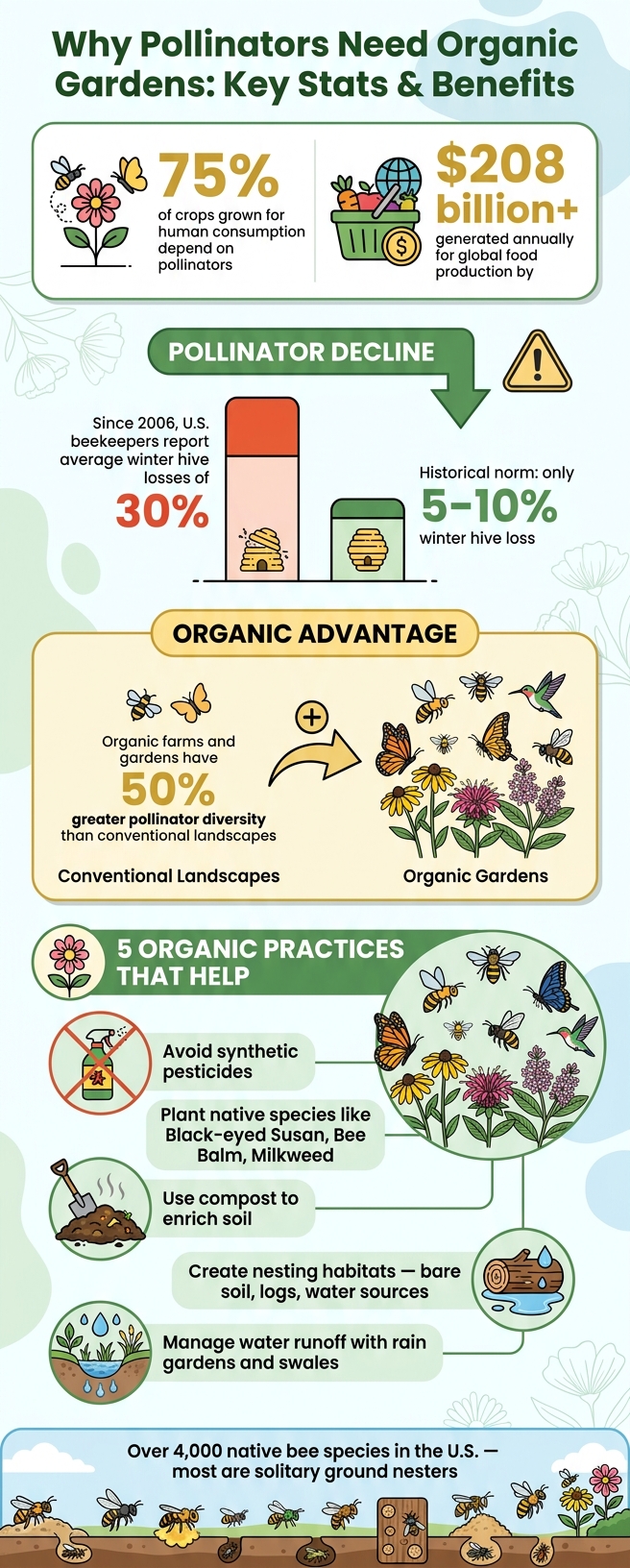
Why Pollinators Need Organic Gardens: Key Stats & Benefits
How to Attract Pollinators to Your Organic Garden
sbb-itb-843f8be
How Avoiding Synthetic Pesticides Protects Pollinators
Steering clear of synthetic pesticides is a cornerstone of organic gardening. This choice not only shields pollinators but also helps maintain a thriving, balanced ecosystem. These chemicals often harm more than their intended targets, causing ripple effects throughout your garden. Below, we’ll explore the damage synthetic pesticides inflict on pollinators and share practical, chemical-free pest control methods.
The Harm Caused by Synthetic Pesticides
Synthetic pesticides do more than eliminate pests – they disrupt the entire ecosystem. Take neonicotinoids, for example. These widely-used insecticides are systemic, meaning they spread throughout the plant, including its pollen and nectar. This exposure can harm bees and other pollinators long after the pesticide has been applied.
"Many synthetic pesticides and herbicides, especially neonicotinoids, are directly linked to pollinator decline." – Coast of Maine Organic Products [4]
Even small doses can wreak havoc on pollinators. Bees exposed to these chemicals may lose their ability to navigate back to their hives, struggle with reproduction, and face weakened colonies over time. Broad-spectrum pesticides are particularly destructive, as they harm a wide range of insects, including beetles – key pollinators for over 80% of flowering plants [5]. Herbicides compound the problem by wiping out wildflowers and native plants that pollinators rely on for survival.
Practical Ways to Manage Pests Without Pesticides
You don’t need synthetic chemicals to keep pests in check. Here are some effective alternatives:
- Manual pest removal: Hand-pick visible pests from plants.
- Physical barriers: Use floating row covers to protect crops.
- Companion planting: Strategically pair plants to repel pests while drawing in pollinators.
- Beneficial insects: Introduce natural predators like ladybugs and lacewings, available from garden suppliers, to control pests naturally.
If treatment becomes unavoidable, timing is key. Apply treatments in the late evening when pollinators are less active, and avoid spraying during bloom periods to minimize risks.
Integrated Pest Management (IPM) for Homeowners
For a more structured approach, consider Integrated Pest Management (IPM). This method emphasizes physical and biological solutions over chemicals, helping to protect pollinators while managing pests effectively. IPM involves monitoring your garden closely, identifying specific pest issues, and using the least toxic solutions available.
"Integrated pest management can maintain balance without disrupting pollinator activity." – The Royal Gardener, Huckle Bee Farms [6]
Here’s how IPM works in practice:
| IPM Method | Practical Application | Pollinator Benefit |
|---|---|---|
| Physical | Hand-picking, row covers, sticky traps | No chemical exposure; immediate pest control |
| Biological | Releasing ladybugs or lacewings | Natural pest management; supports biodiversity |
| Cultural | Companion planting, soil improvement | Boosts plant health; reduces pest attraction |
| Chemical (Last Resort) | Organic soaps or oils only | Low toxicity; breaks down quickly |
Healthy soil is another key factor. Plants grown in nutrient-rich, organic soil are naturally more resilient to pests, reducing the need for intervention. By combining IPM with practices like composting and planting native species, you can create a garden that supports pollinators and thrives without synthetic chemicals. IPM isn’t complicated – it’s about observing, understanding, and acting with care.
How Compost Builds Healthier Soil for Pollinator Gardens
Beyond managing pests, compost plays a key role in creating healthy soil that supports a flourishing pollinator garden.
The Link Between Soil Health and Pollinator Nutrition
Healthy, organic soil does more than just anchor plants – it helps them thrive. When soil is rich in nutrients, plants develop stronger roots and experience less stress. This allows them to focus energy on reproduction, resulting in more flowers packed with nectar and pollen for pollinators. Compost also improves how soil handles water, helping it retain moisture during dry spells and drain effectively in heavy clay. Plus, it feeds essential microbes that deliver nutrients directly to plant roots. The result? Fuller, longer-lasting blooms that provide a consistent food source for pollinators all season long.
How to Use Compost in Your Garden
The way you use compost depends on the area you’re treating:
- Established Beds: In early spring and late fall, spread 1–2 inches of finished compost over the soil. Gently work it into the top inch, then reapply mulch. Be careful not to cover plant crowns, as this can harm them.
- Tree and Shrub Rings: Spread a 1-inch layer of compost starting a few inches from the trunk and extending to the drip line. Top it with 2–3 inches of wood chips or shredded bark, but avoid piling compost against the trunk to prevent rot.
- New Plantings: When planting pollinator-friendly species, mix 25–30% compost by volume into the backfill soil. Avoid using pure compost, as this can discourage roots from spreading into the surrounding soil.
For areas with heavy clay, like central Maryland, adding 2–3 inches of compost to new beds improves drainage and keeps plants like coneflowers, goldenrod, and asters thriving, even through hot, humid summers and heavy rains [7].
By relying less on synthetic fertilizers, compost not only feeds plants but also protects water quality, ensuring pollinators have a reliable food source.
Cutting Back on Synthetic Fertilizers
Compost offers plants a slow, steady release of nutrients, which is exactly what pollinator plants need. Synthetic fertilizers, on the other hand, deliver a quick nutrient boost but often leach into nearby waterways. This runoff can cause algal blooms, harm aquatic insects, and disrupt the delicate food web that pollinators rely on [2].
Over time, compost improves the soil’s ability to hold nutrients, reducing the need for frequent applications. Many gardeners find they can stop using synthetic fertilizers entirely after a few years of consistent composting. This shift not only supports pollinators but also simplifies gardening and cuts costs. Combining compost with organic mulch creates a gardening system that’s better for pollinators and the environment [7].
How to Design a Planting Plan That Attracts Pollinators
After focusing on organic pest control and soil health, the next step is to create a planting plan that supports pollinators. A well-designed pollinator garden uses layers of native plants to provide a steady supply of nectar and pollen from early spring to late fall.
Choosing Native and Pollinator-Friendly Plants
Native plants are naturally suited to local pollinators, making them an excellent choice. For those in Maryland and the Mid-Atlantic region, some standout options include:
- Black-eyed Susan (Rudbeckia hirta), Maryland’s state flower
- Purple coneflower (Echinacea purpurea)
- Bee balm (Monarda didyma)
- Milkweed (Asclepias spp.), a critical host for monarch butterfly larvae
- Goldenrod (Solidago spp.)
Herbs like oregano, thyme, lavender, and basil can also be beneficial. When allowed to flower, these plants not only attract pollinators but also double as a practical herb garden.
Once you’ve selected your plants, the next step is to plan for consistent blooms throughout the year.
Planning for Blooms Across All Seasons
To keep pollinators coming back, ensure there’s always something in bloom. Divide your plant list into three key blooming periods:
| Season | Bloom Window | Example Plants |
|---|---|---|
| Spring | March–May | Wild columbine, creeping phlox, serviceberry |
| Summer | June–August | Bee balm, coneflower, oregano, black-eyed Susan |
| Fall | September–October | Goldenrod, New England aster, Joe-Pye weed |
Plant in clusters of 3–7 to make it easier for pollinators to forage efficiently.
With a year-round bloom schedule in place, it’s essential to care for your garden organically to maintain a safe and thriving environment.
Organic Care Tips for Pollinator Gardens
Organic practices are key to creating a welcoming habitat. Spread 2–3 inches of organic mulch – like shredded leaves, wood chips, or composted bark – around your plants to retain moisture and control weeds. However, leave a few small, sunny patches of bare soil for native ground-nesting bees to build their nests.
Watering is another critical factor. Aim for about 1 inch of water per week during the growing season. Use soaker hoses or drip irrigation to direct water to the roots, and water slowly in the morning to minimize evaporation and reduce the risk of fungal issues. Healthy, well-watered plants are naturally more resistant to pests, reducing the need for sprays or chemicals.
Habitat Features That Support Pollinators in Your Yard
A thriving garden isn’t just about the plants – it’s also about creating a space where pollinators can nest, find shelter in winter, and access clean water. By adding a few thoughtful features, your yard can become a year-round sanctuary for bees, butterflies, and other helpful insects.
Creating Nesting and Overwintering Sites
Did you know there are over 4,000 native bee species in the U.S.?[10] Most of them are solitary, meaning they don’t live in hives. Instead, they nest in the ground or in natural cavities like hollow stems and dead wood. Unfortunately, overly tidy yards often eliminate these vital nesting spots.
To help ground-nesting bees, leave small patches of bare, undisturbed soil in sunny areas where they can dig tunnels and lay eggs. For cavity-nesting bees, keep a pile of dead wood, hollow logs, or bundled twigs near your garden beds. These simple additions can make a huge difference.
When fall rolls around, resist the urge to clear away all plant material. Many pollinators, including bumble bees, rely on leaf litter, tall grass, and woody debris to survive the winter. As Al Shay, a Landscape Instructor at Oregon State University, advises:
"Just start small. Instead of doing 43,560 square feet, do 200 or 400 square feet, and really take a peek at what is going on."
Even a small, intentionally "messy" area in your yard can provide vital winter shelter for pollinators.
Adding Clean Water Sources for Pollinators
Pollinators need water not just for drinking but also for tasks like nest building. A shallow birdbath or dish filled with stones can give them safe access to water. If your yard has an area with naturally moist loam or clay soil, consider leaving it undisturbed – bees that use mud for their nests will thank you.
These water sources, combined with nesting areas, can seamlessly fit into your garden design to create a welcoming space for pollinators.
Combining Hardscaping with Pollinator-Friendly Landscaping
Hardscaping can actually help protect pollinator habitats when done thoughtfully. For example, stone or flagstone walkways can prevent soil compaction near ground-nesting sites, while retaining walls can support raised beds filled with native plants. Permeable pavers and channel drains are excellent choices to ensure rainwater nourishes nearby vegetation. Choosing natural, non-chemical materials for your hardscaping aligns perfectly with the goal of supporting pollinators and the environment.
The Xerces Society emphasizes the importance of even small structural additions:
"A small log, rock pile, or stack of twigs and branches near your plants provide shelter, and a place for many bugs to nest and reproduce."
If you’re planning to add a patio, walkway, or retaining wall in Maryland, Pro Landscapes MD offers hardscaping features like natural stone steps, garden walls, and environmental pavers that can integrate beautifully with pollinator-friendly planting zones.
Water and Drainage Management That Benefits Pollinators
How water moves through your yard plays a bigger role in pollinator health than you might think. Poor drainage can lead to erosion, root damage, and standing water, which attracts pests harmful to bees and butterflies. But with natural drainage solutions, you can manage water effectively while creating a haven for pollinators.
Using Rain Gardens and Vegetated Swales
One way to manage stormwater naturally is by adding features like rain gardens and vegetated swales. A rain garden is a shallow, planted area designed to collect and slowly absorb stormwater runoff. Plant it with native, moisture-loving species like Bee Balm or Black-eyed Susans, and it becomes a feeding station for pollinators. These plants can handle wet conditions and bounce back quickly when things dry out.
Vegetated swales are another great option. These gently sloped channels, lined with grasses or flowering plants, slow water flow, filter pollutants, and direct runoff to places where it can soak into the ground. Pairing a swale with a berm can help redirect water away from your home’s foundation and into a pollinator-friendly zone like a rain garden. As Pro Landscapes MD explains:
"A rain garden can handle [water runoff], and it looks great doing it." [1]
Dry Riverbeds and Chemical-Free Drainage Options
Another effective solution is a dry riverbed, which mimics a natural stream using rocks and gravel to guide water during heavy rains. When you line it with native plants, it not only manages water but also provides shelter and food for pollinators – even when the channel is dry.
What’s especially helpful about these designs is that they don’t rely on synthetic chemicals. No herbicides or other treatments are needed, keeping your soil and plants free from harmful residues[9].
How Pro Landscapes MD Can Help
For those committed to organic practices, Pro Landscapes MD offers drainage and stormwater solutions that fit seamlessly into pollinator-friendly landscapes. Their expertise is especially valuable in Maryland, where heavy spring rains and clay-heavy soils present unique challenges. By combining effective water management with thoughtful planting, they create spaces that benefit both homeowners and pollinators[3][9].
With a team that includes a licensed Maryland forester and a college-trained horticulturist, Pro Landscapes MD ensures every project supports plant health and local ecosystems[8]. Whether you’re dealing with runoff issues or just want to encourage more bees and butterflies, they’ve got you covered.
Conclusion: Why Organic Practices Are Good for Pollinators Long-Term
Choosing organic practices goes beyond just improving your garden – it plays a critical role in supporting global food systems. Pollinators are vital, contributing to 75% of crops grown for human consumption and generating over $208 billion annually for global food production [11]. However, the challenges they face are stark. Since 2006, U.S. beekeepers have reported average winter hive losses of 30%, a sharp contrast to the historical norm of 5–10% [11]. These numbers highlight the significant impact of how we manage our outdoor spaces.
As discussed earlier, organic gardening does more than protect pollinators – it strengthens the broader ecosystem. By avoiding synthetic pesticides and enriching soil with compost, organic methods create an environment where native plants can flourish. This, in turn, provides pollinators with essential food and shelter. Planting native species such as Coneflowers, Bee Balm, and Black-eyed Susans ensures a steady supply of nourishment throughout the year. Additionally, leaving areas undisturbed – like patches of soil, log piles, or shallow water sources – offers native bees and overwintering insects much-needed habitats.
The benefits are clear. Organic farms and gardens boast 50% greater pollinator diversity compared to conventional landscapes [11]. Experts emphasize the importance of these practices:
"Organic farming practices can provide critical solutions that not only decrease risks to pollinators, but actively support the growth and health of our pollinator populations." – The Organic Center [11]
By adopting these methods, you ensure your garden remains a haven for pollinators for years to come.
Looking to make the change? Pro Landscapes MD specializes in organic garden transformations. They offer services like native plant installations, organic lawn care, rain gardens, and drainage solutions across central Maryland and Washington, DC. With a licensed Maryland forester and a college-trained horticulturist on their team, they design projects that prioritize both plant health and the local ecosystem. Contact them for a free proposal and start creating a garden that works in harmony with nature [8].
FAQs
Which organic products can still harm pollinators?
While organic products are often considered safer, they can still pose risks to pollinators if not used properly. Broad-spectrum pesticides, even those made from natural ingredients, may harm beneficial insects like bees and butterflies. Pro Landscapes MD emphasizes the need to minimize pesticide use and incorporate native plants to promote pollinator well-being. For guidance on designing a landscape that’s eco-friendly, the team at Pro Landscapes MD is ready to help.
How fast will pollinators return after I stop using pesticides?
When you stop using pesticides, there’s no set timeline for pollinators to come back. However, making changes like reducing pesticide use, composting, and planting native species can create a more welcoming and healthier environment for them. With time, these efforts can help attract pollinators again.
What’s the easiest way to create nesting spots in a small yard?
Planting native species is one of the simplest ways to create nesting spots in a small yard. These plants play a crucial role in supporting local pollinators by offering much-needed habitat. Companies like Pro Landscapes MD specialize in custom garden designs that integrate native plants, transforming outdoor spaces into thriving ecosystems. To take it a step further, incorporating structured elements like garden beds can make your yard even more inviting for pollinators.
Chat with Us