









- bhavya gada
- No Comments
If your yard stays wet after rain, a permeable patio can help only when the water problem starts at the patio surface. It lets rain soak through the joints and stone base instead of spilling into the lawn. But if your soil drains at less than 1 inch per hour, or water runs in from the roof, driveway, or a low spot, the patio alone will not fix the yard.
Here’s the short version:
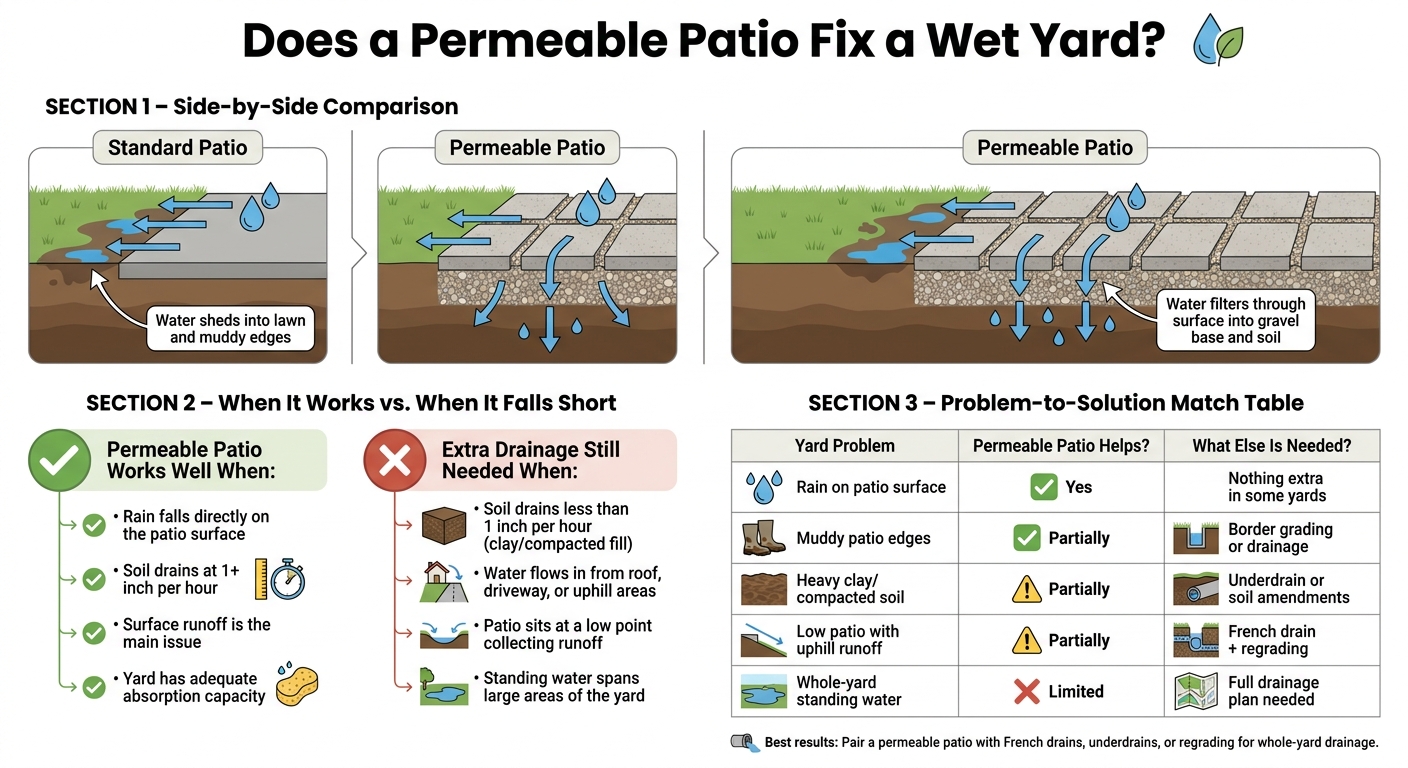
- Standard patios shed water into grass beds and muddy edges.
- Permeable patios let water pass through the surface and into a gravel base.
- They work best for surface runoff, not full-yard drainage trouble.
- Clay soil, compacted fill, and low areas can still hold water.
- French drains, underdrains, downspout work, or regrading may still be needed.
I’d look at it this way: a permeable patio helps stop runoff at the source, but it does not solve every wet-yard problem around it. If water is pooling across large parts of the yard, washing out mulch, or showing up near the foundation, the fix usually needs to go beyond the patio footprint.
| Problem | What a permeable patio can do | What may still be needed |
|---|---|---|
| Rain falling on the patio | Soak it through the surface and base | Nothing else in some yards |
| Muddy patio edges | Cut runoff leaving the patio | Border drainage or grading |
| Heavy clay or compacted soil | Help slow surface runoff | Underdrain, soil work, or drain pipe |
| Low patio with uphill runoff | Hold some water for a short time | French drain and grading change |
| Whole-yard standing water | Help one area | Larger drainage plan |
So the main point is simple: permeable patios help wet yards by reducing runoff from the patio itself, but they work best as one part of a drainage plan.
Permeable Patio vs. Standard Patio: Wet Yard Drainage Comparison
Learn about why Permeable Pavers are the Best for drainage
sbb-itb-843f8be
How Permeable Patios Cut Down on Standing Water
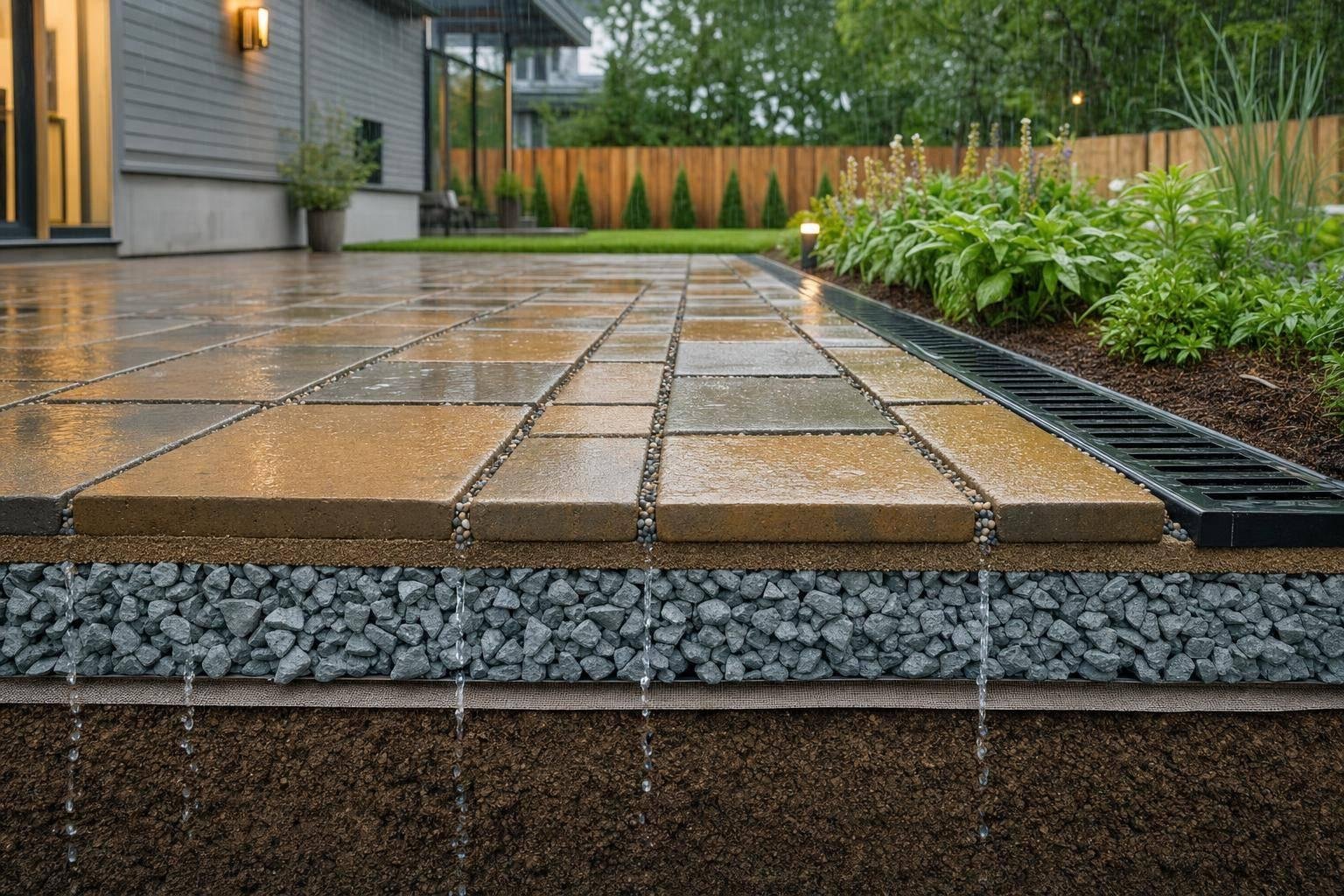
A permeable patio lets rainwater move through the surface instead of sitting on top. Open-joint pavers or porous stone rest on a gravel base, so water drops into that base and then filters into the soil below. That makes a big difference when the main issue is surface water, not just wet, heavy soil.
Permeable Patio Materials That Help with Wet Yards
Permeable interlocking pavers, porous flagstone, and similar materials allow water to pass through open joints or porous surfaces. In plain terms, they don’t create the same hard barrier that pushes water into nearby grass or planting beds.
These materials work well in yards that deal with frequent surface pooling and don’t have many places for runoff to go. Still, open joints by themselves won’t fix every drainage issue.
How the Layered Patio System Handles Rainwater
The gravel base holds stormwater for a short time, then lets it filter into the soil. That temporary storage is what sets a permeable patio apart from a standard surface. Instead of forcing water to run off right away, the patio gives it a place to go before it spreads across the yard.
Where Permeable Patios Work Best
Permeable patios do best when the yard can absorb water at a steady pace. They tend to work well where the soil can take in water and the patio has enough space to drain out between storms.
If runoff is heavier or the soil drains slowly, the patio may still need drains to help manage the water.
When a Permeable Patio Still Needs Drains
A permeable patio can handle rain that falls right on the patio. But in a wet yard, that’s only part of the story.
Water from a roof, driveway, or other uphill areas can still flow toward the patio. And if the soil around it drains slowly, the patio base may fill up faster than it can drain out. When that happens, extra drainage steps need to do the heavy lifting.
Site Conditions Where Infiltration Alone Falls Short
Heavy clay soil can slow infiltration so much that water sits in the patio base instead of moving down into the ground. That can lead to standing water, pooling along the edges, and runoff spilling into nearby planting beds.
Placement matters just as much. If the patio sits at the low point of the yard, it can collect water from roofs, driveways, and other uphill surfaces. At that point, the patio isn’t just dealing with rainfall on its own surface. It’s taking on runoff from the rest of the property too.
Drainage Add-Ons That Support Permeable Patios
When the patio base fills faster than it can empty, open joints and porous surfaces still need a way to let extra water escape. In most cases, that means adding an underdrain, a French drain, or a grading correction.
These features give excess water a path out before it backs up into the yard. Think of it like this: the patio can absorb water, but it still needs somewhere to send the overflow.
Picking the Right Combination for Your Yard
The best setup depends on the part of the site that drains worst. Use the table below as a starting point.
| Yard Condition | Recommended Approach |
|---|---|
| Heavy clay soil or slow-draining subsoil | Permeable patio + underdrain or soil amendments |
| Low-lying patio or large uphill roof or driveway runoff area | Permeable patio + French drain and grading correction |
Pro Landscapes MD pairs permeable patio installation with French drains, drain pipe placement, and grading when a wet yard needs more than infiltration alone.
Yard Problems That Need More Than a New Patio
A permeable patio can help manage water on the patio itself. But it won’t solve flooding caused by poor grading, roof runoff, or heavy clay or compacted soil that drains slowly. If water trouble goes past the patio footprint, the fix needs to cover the whole yard.
Warning Signs of a Bigger Drainage Problem
Large areas of standing water, moisture near the foundation, and erosion in more than one part of the yard usually point to a property-wide drainage issue. That’s a sign the problem isn’t just the patio surface. It’s spreading across the lot.
Whole-Yard Solutions That Pair Well with a Permeable Patio
In most cases, a permeable patio works best as part of the fix, not the entire fix.
The most common add-ons are grading, drain piping, and runoff features that slow down or hold water. Regrading and drain piping help correct slope problems and carry roof runoff away from the house. Rain gardens use soil and native plants to filter and absorb runoff before it reaches low spots or storm drains. Dry wells and cisterns can also store extra runoff.
Pro Landscapes MD pairs permeable patios with grading, drain pipe placement, French drains, dry wells, and stormwater management across central Maryland.
Match the Fix to the Problem
A small runoff issue may only need a permeable patio. Repeated standing water often means added drainage is needed. Chronic flooding usually calls for regrading and a full-yard drainage redesign. The right fix depends on how far the drainage problem reaches.
Conclusion: Permeable Patios Work Best as Part of a Drainage Plan
A permeable patio helps cut down on pooling because rain moves through the surface and into the drainage base below. But that setup works best when the rest of the yard can also move that water away.
If your soil drains slowly, the base can still end up holding water. In that case, you may need added drainage work, like French drains, drain pipe placement, or regrading, to move extra water away from the area. Once the base stops draining as it should, the fix usually has to go beyond the patio itself.
The right fix depends on the size of the problem. Small runoff issues may only need a permeable patio. But repeated standing water or flooding across the yard usually calls for added drainage too.
For wet yards that need both hardscape and drainage work, Pro Landscapes MD can match the patio to the site.
Pro Landscapes MD installs permeable patios, grading improvements, French drains, drain pipe placement, and stormwater solutions across central Maryland.
FAQs
Will a permeable patio fix my whole wet yard?
No. A permeable patio can cut runoff by letting water sink into the ground, but it’s not a cure-all.
How well it works depends on your soil and site conditions. If your yard has heavy clay, shallow bedrock, or a high water table, you may need added drainage, such as pipes, French drains, or dry riverbeds. A professional assessment can show whether full infiltration is possible.
How do I know if my soil drains too slowly?
Your soil probably drains too slowly if water still hasn’t soaked into the ground within 24 to 48 hours after rain. In most yards, that’s a clear sign something’s off.
Clay soil tends to soak up the least water, while sandy soil takes in the most.
If your yard stays soggy longer than that, or you notice standing water and runoff that doesn’t let up, the soil may be too compact or too heavy to drain on its own.
When does a permeable patio need a French drain?
A permeable patio may need a French drain or similar subsurface drainage if the soil below it can’t soak up water within 24 to 48 hours.
This often happens in clay-heavy soil or places with a high groundwater table, where the ground stays wet for long stretches. When that’s the case, a drainage pipe helps move extra water away from the aggregate base and out to a proper discharge point.
Chat with Us