









- bhavya gada
- No Comments
A rain barrel can cut the first surge of roof runoff, but it won’t handle all of it. On many homes, 0.25 inches of rain can fill a 55-gallon barrel, while 1 inch of rain can send 600+ gallons off a roof. So the barrel helps most during small storms, and the overflow route decides whether water stays out of trouble.
If I wanted the short version, it would be this:
- Rain barrels store roof water before it hits the ground
- They can help with pooling, mulch washout, and erosion near downspouts
- A standard barrel usually holds 50 to 60 gallons
- A full 55-gallon barrel weighs 400+ pounds
- The overflow must drain to soil, not a driveway, sidewalk, or foundation
- If water still collects near the house, I may need grading, a French drain, a swale, or a rain garden
The main point: a rain barrel is a good first step for yard drainage, but it works best as part of a bigger runoff plan.
This article explains where barrels help, where they fall short, how to set one up, and how to keep it working.
How Rain Barrels Reduce Runoff, Pooling, and Erosion
How a Rain Barrel System Works
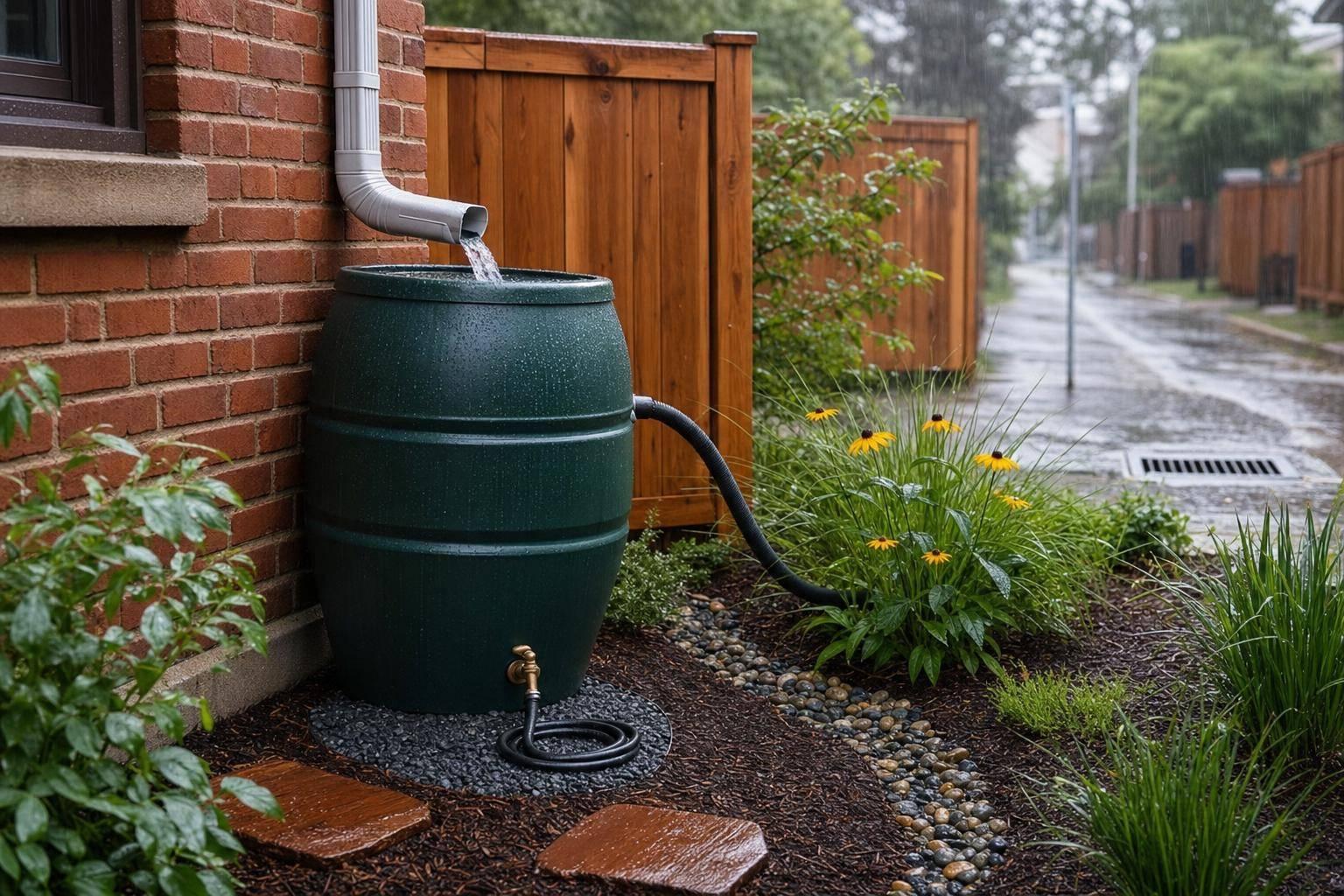
A rain barrel sits under a downspout and catches roof water before it hits the ground. Water from the gutter flows into the barrel through a screened inlet, which helps block leaves, debris, and mosquitoes. The barrel then holds that water until you need it. A spigot near the bottom lets you use it later for things like watering flower beds or rinsing off garden tools.
That simple setup cuts down the first rush of runoff. And that’s the part that often does the most damage near a downspout, especially when water keeps hitting the same spot over and over.
The part that matters most? The overflow outlet. Once the barrel is full, extra water needs to drain to a permeable area or a rain garden, not onto a driveway or sidewalk.
Direct Benefits for Residential Drainage Problems
The biggest change happens right where the downspout meets the ground. Without a barrel, water pours out in one concentrated stream. Over time, that can wash away soil, push mulch out of place, and wear down planting beds.
A rain barrel softens that first hit by holding back the initial flow. That helps reduce erosion at the downspout base.
The same idea applies near foundations, patios, and walkways. When roof water gets captured first, it’s less likely to collect in problem spots or pour into one area hard enough to cause pooling.
Where Rain Barrels Help Most and Where They Fall Short
Rain barrels help the most before they fill up, which is why storage size and overflow setup matter so much.
A typical rain barrel holds about 50 to 60 gallons [1][2]. That means it makes the biggest difference during smaller rain events. But there’s a catch: a single inch of rain on a typical roof can produce more than 600 gallons of runoff [4]. So a standard barrel fills fast.
As Maryland Sea Grant Extension specialist Claire Cambardella puts it:
"The rain barrel itself is really a drop in the bucket… but it’s a simple and often cost-effective way for a single person to make a positive impact in managing stormwater." – Claire Cambardella, Maryland Sea Grant Extension specialist [2]
In plain terms, a 50- to 60-gallon barrel does its best work during light rain and when connected to one downspout. During heavier storms, it reaches capacity fast. At that point, the result depends on where the overflow goes. You can add more barrels to hold more water, but even then, a rain barrel works best as one part of a larger drainage plan.
sbb-itb-843f8be
Rain Barrels Are Great. Until They Overflow…So Be Prepared
Choosing the Right Rain Barrel Setup for Your Property
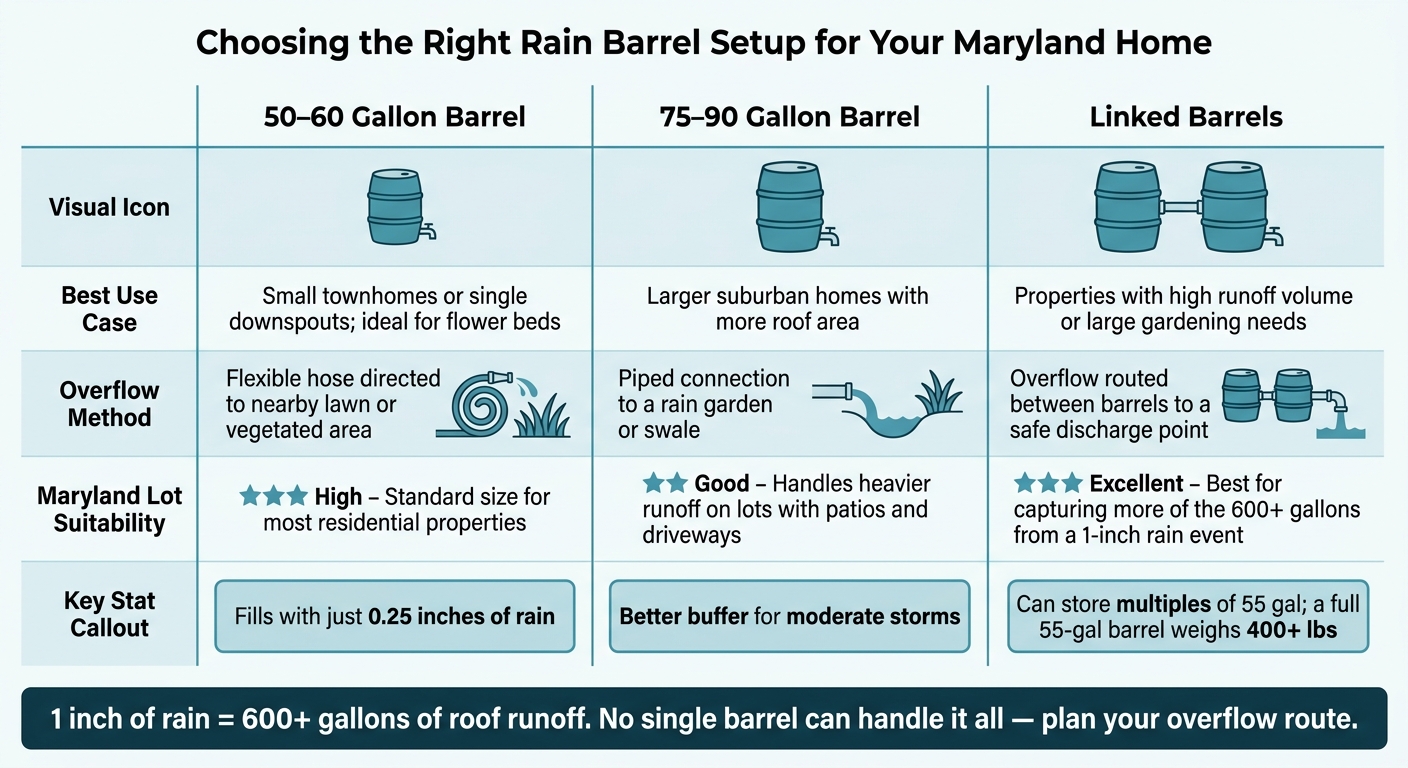
Rain Barrel Size Comparison: Capacity, Use Case & Overflow Options
Core Parts and Proper Placement
Every rain barrel system needs four main parts: a screened lid or inlet, a spigot near the base, an overflow outlet, and a stable, level platform. Each one plays a direct role in how well the system works.
The screen helps keep out mosquitoes and debris. The spigot lets you use stored water for irrigation. The overflow outlet sends extra water away once the barrel is full. And the base matters more than many people think. Use pavers, stones, or blocks to create a level surface that can hold the load safely. A full 55-gallon barrel weighs more than 400 pounds [3].
Placement is where the setup either works well or falls short. If you want to catch a useful amount of runoff, the barrel needs to connect directly to a downspout, especially one that already causes trouble near hard surfaces or pooling spots [5]. It also helps to place the barrel near planting beds or lawn areas so the water is easy to use. A shady spot can slow algae growth [5]. Point the overflow away from your foundation and away from neighboring properties.
That base and location aren’t small details. If the barrel fills and the extra water has nowhere safe to go, you’ve just moved the problem a few feet over.
Overflow Routing and Yard Drainage Integration
When the barrel fills, the overflow path takes over. That path decides whether the system cuts runoff or creates a mess.
The aim is simple: send extra water into soil that can soak it in, not onto concrete and not toward the house. Good discharge spots include a lawn, planting bed, rain garden, swale, or dry riverbed. If your property has a lot of hardscape – patios, paver driveways, and walkways – map out that route before you install anything. Trenching and burying the overflow pipe can cut down on tripping risks when you’re moving water to a rain garden or another discharge point [4]. If the overflow has to travel more than a few feet, a piped connection to a swale or rain garden is often the cleaner choice.
Once the barrel is full, that overflow route does most of the heavy lifting.
Common Barrel Sizes and Overflow Options for Maryland Homes
Choosing barrel size depends on three things: your roof area, how much runoff you get, and how you want to use the stored water. For many Maryland homes, the most common setups look like this:
| Barrel Size | Best Use Case | Overflow Method | Suitability for Maryland Lots |
|---|---|---|---|
| 50–60 Gallons | Small townhomes or single downspouts for flower beds | Flexible hose directed to a nearby lawn or vegetated area | High; standard size for most residential properties [1][2] |
| 75–90 Gallons | Larger suburban homes with much more roof area | Piped connection to a rain garden or swale | Good for handling heavier runoff on lots with patios, driveways, and walkways [5] |
| Linked Barrels | Properties with high runoff volume or large gardening needs | Linked overflow between barrels to a safe discharge point | Excellent for storing more of the 600+ gallons produced in a 1-inch rain event [4] |
After installation, the system still needs routine cleaning and seasonal care to keep it working well.
Maintenance and Seasonal Use for Reliable Performance
A rain barrel does its job only when it stays clean, level, and set for the next storm. If you let it slide, debris can block the flow and push overflow right back into the yard. The goal is simple: keep runoff going into the barrel, not back where it started.
Routine Cleaning and Inspection
Start with the intake screen. After heavy rain or during leaf fall, that’s the first place to look. When the screen clogs, water can skip the barrel altogether.
A good routine is pretty simple:
- Clean the intake screen after storms and during leaf fall
- Drain stored water every 5 to 7 days
- Check for leaks
- Make sure the base hasn’t shifted
That quick check can save you from a barrel that leans, leaks, or stops filling when you need it most.
Mosquito Prevention and Winter Preparation
Once the barrel is clean and steady, the next step is pest control and cold-weather prep.
Warm weather plus standing water is an open invitation for mosquitoes. Keep the lid tight and all screens in place so they can’t get in. If there’s a gap, seal it.
Before the first hard freeze, drain the barrel, open the spigot, disconnect it from the downspout, and store it indoors or upside down outside.
Even a well-maintained barrel only handles part of a property’s runoff.
Using Rain Barrels as Part of a Larger Drainage Plan
Rain barrels help, but they don’t solve the whole runoff problem.
Once the barrel fills up, extra water still has to go somewhere. That means every rain barrel setup needs a safe overflow path, especially during heavy storms. The barrel cuts down some runoff, not all of it.
When a Property Needs More Than a Barrel
A rain barrel is a good first move for stormwater control. But it isn’t a complete fix.
If overflow still ends up near the foundation or keeps cutting through the yard, storage alone won’t be enough. In that case, the property may need other drainage work, such as:
- grading
- French drains
- dry riverbeds
- permeable pavers
- native plantings
Persistent pooling, erosion, or runoff near the house are common signs that a bigger plan is needed.
Professional Drainage Planning in Central Maryland
If overflow keeps causing pooling or erosion, it’s time for a drainage plan built for the site.
Pro Landscapes MD provides drainage installation, French drains, dry riverbeds, grading, stormwater management, and yard leveling across central Maryland and Washington, DC. They can also work rain barrels into a larger drainage plan, so overflow is routed away from the home instead of back toward it.
Conclusion: How Rain Barrels Fit Into a Runoff Reduction Strategy
Rain barrels intercept roof runoff before it hits the ground. That means less water rushing across driveways and lawns, which can help cut down on surface flow.
As Maryland Sea Grant Extension specialist Claire Cambardella notes:
"The rain barrel itself is really a drop in the bucket… but it’s a simple and often cost-effective way for a single person to make a positive impact." [2]
That’s the right way to think about it: the barrel is the first step, and the drainage plan is what makes that step pay off.
FAQs
How many rain barrels do I need?
The number of rain barrels you need comes down to two things: how much roof runoff reaches one downspout and how much rain you want to store.
Use this formula:
roof area (sq. ft.) × rainfall (ft.) × 0.90 × 7.5 gallons
That gives you a solid estimate of how many gallons you can collect. The 0.90 factor accounts for runoff loss, and 7.5 gallons converts cubic feet of water into gallons.
Standard rain barrels usually hold 40 to 60 gallons, so they can fill up fast during a good storm. If you want more storage, you can connect more than one barrel in a daisy chain.
Where should barrel overflow go?
When a rain barrel fills up during heavy rain, the overflow needs to move away from the building. That helps lower the chance of water pooling near the base of your home and causing foundation damage.
Use a hose or pipe to send extra water to a safe, designated spot on your property that’s away from your home’s foundation. And make sure the overflow setup is large enough to handle heavy rainfall.
When is a rain barrel not enough?
Rain barrels do a good job of collecting the first wave of runoff. But there’s a catch: they don’t hold much water, and during a normal downpour, they can fill up in just minutes.
After that, they stop helping with stormwater unless you’ve planned for overflow. That extra step matters if you want to help protect your foundation.
If you’re dealing with more than a small amount of water, Pro Landscapes MD suggests pairing rain barrels with other drainage options, such as rain gardens or permeable pavers.
Chat with Us