









- bhavya gada
- No Comments
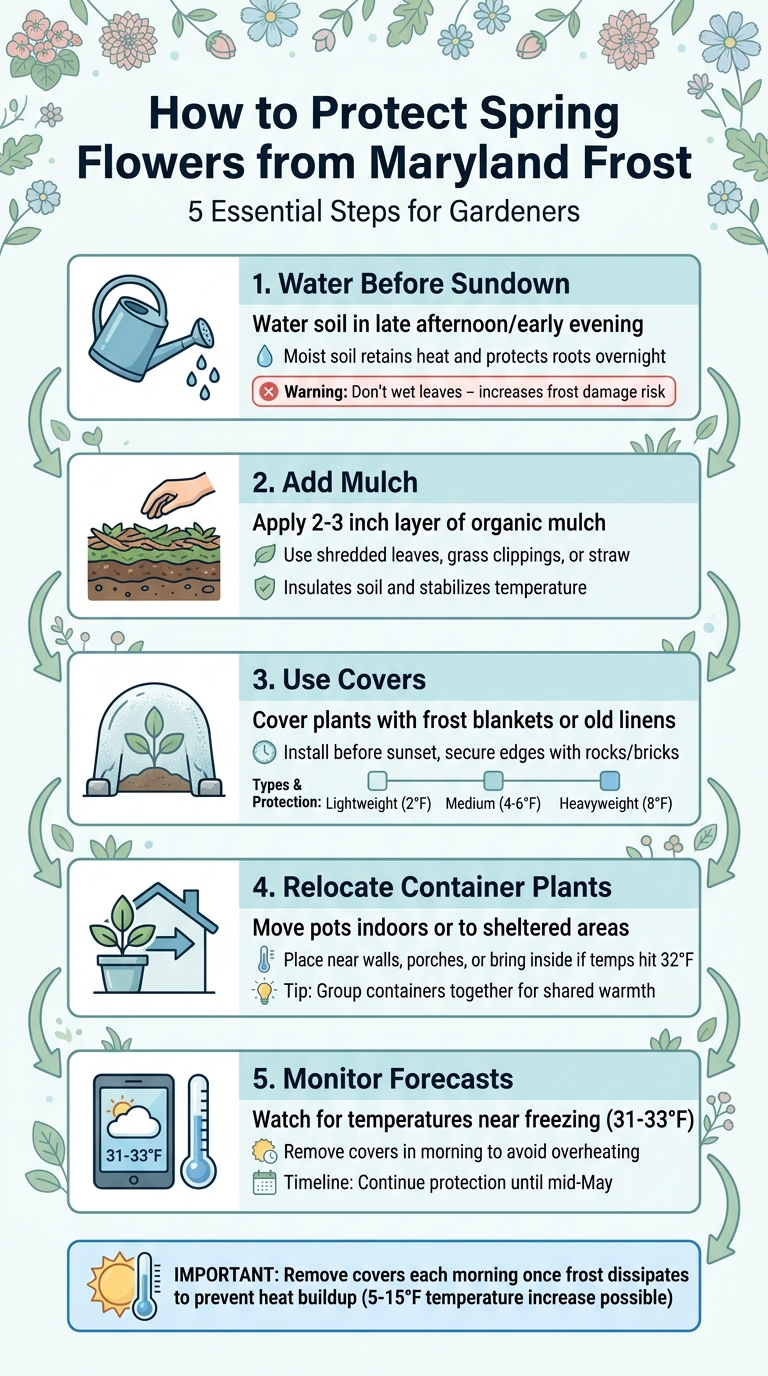
Spring frost in Maryland can damage delicate flowers like begonias, dahlias, and cosmos. Protecting your plants requires simple steps:
- Water before sundown: Moist soil retains heat and protects roots.
- Add mulch: A 2–3 inch layer insulates soil and stabilizes temperature.
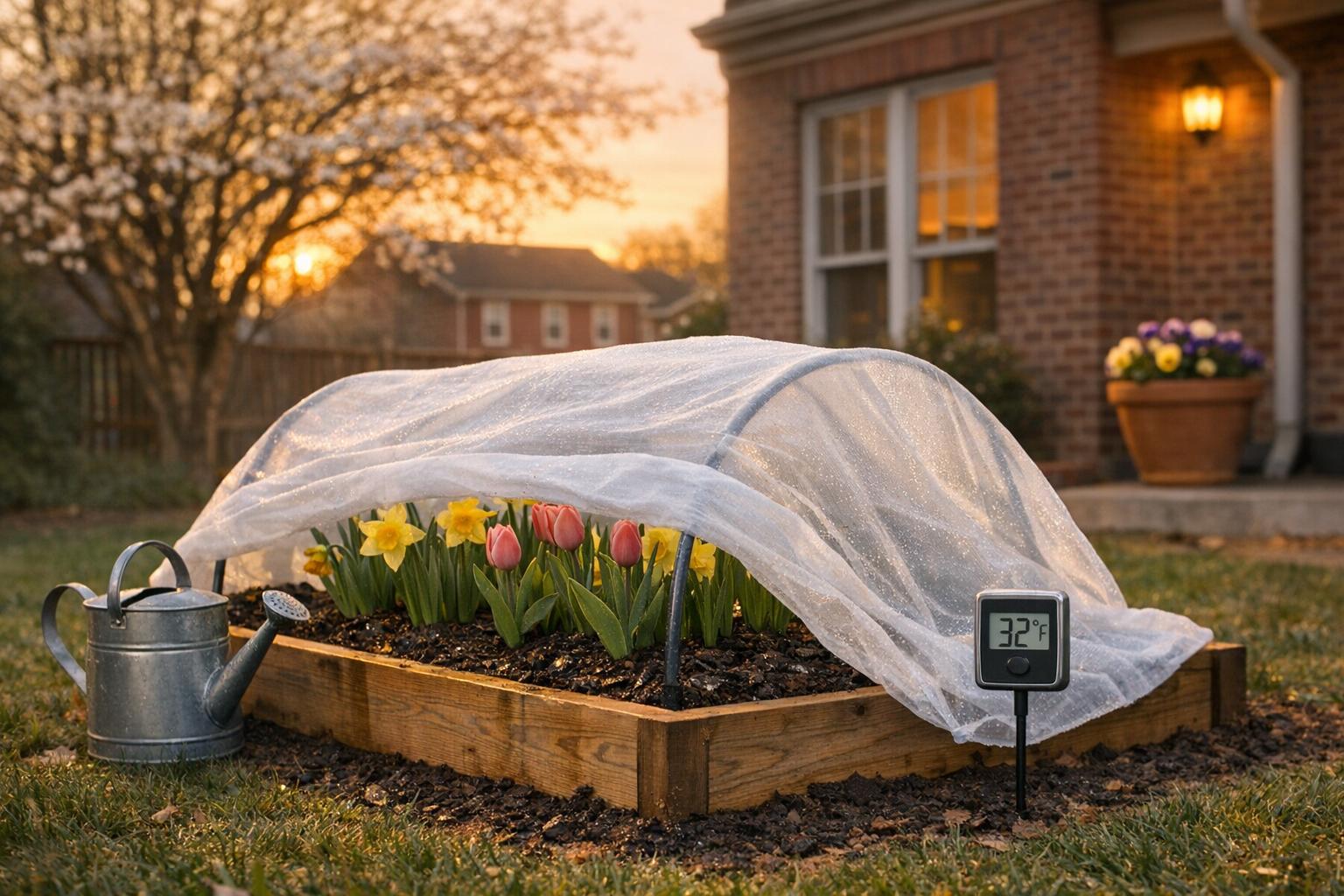
- Use covers: Old linens, frost blankets, or DIY cloches trap soil warmth. Secure edges to prevent wind exposure.
- Relocate container plants: Move pots indoors or to sheltered spots near walls or porches.
- Monitor forecasts: Watch for temperatures near freezing (31°F–33°F) and act accordingly.
Remove covers in the morning to avoid overheating, and wait until mid-May to plant sensitive flowers. With these precautions, your spring blooms can thrive despite unpredictable weather.
5 Steps to Protect Spring Flowers from Maryland Frost
Understanding Spring Frost in Maryland
What Causes Spring Frost?
Spring frost forms under specific atmospheric conditions: clear skies, calm air, and low temperatures. Without cloud cover to trap warmth, heat escapes rapidly from the ground after sunset, creating the perfect environment for frost to develop overnight.
The shape and features of your yard can greatly influence where frost hits the hardest. Cold air, being denser than warm air, tends to flow downhill and settle in low areas, creating "frost pockets." For instance, a flower bed in a dip might suffer significant frost damage, while plants higher up on a slope might escape unscathed. As Lynne Holland, a Horticulture Professional with the University of Maine Cooperative Extension, explains:
"The hill can also drive the cold down onto level or depressed areas and create ‘frost pockets.’" [3]
Understanding how frost forms and behaves is key to protecting your garden, which is a core part of our professional landscaping services. This knowledge also helps when considering how Maryland’s seasonal patterns add to the risks.
Frost Dates and Patterns in Maryland
Maryland’s diverse geography means frost timing varies across the state. Coastal areas, central regions, and the western mountains all have different average last frost dates [6]. However, these averages are just historical trends, not guarantees. Charlotte Weidner, a writer for Nature Hills, highlights the importance of staying vigilant:
"First frost dates in the fall and last frost dates in the spring are based on recorded historical data – but remember – everyone will need to watch that ten-day forecast!" [1]
Spring weather in Maryland is famously unpredictable. Early warm spells often coax plants into blooming prematurely, only to be followed by sudden temperature drops [1]. For example, in April 2017, a Freeze Watch was issued for Central Maryland, including areas like Baltimore, Frederick, Rockville, and Gaithersburg, after several warm days [7].
To protect your garden, monitoring daily forecasts is critical. Even a slight temperature shift can determine whether your plants thrive or suffer damage [1]. Use ZIP code–specific tools to track frost predictions, and consider waiting at least a week after the predicted last frost date before planting delicate flowers. Late-season frosts often linger beyond historical averages [6].
sbb-itb-843f8be
How to Protect Plants from a Late Spring Frost
Preparing Your Garden Before Frost Arrives
Understanding frost risks is just the first step. Taking action with a couple of straightforward methods – watering and mulching – can make all the difference in protecting your spring flowers from the chill of an unexpected frost.
Watering to Retain Soil Heat
Watering your garden just before sundown on the eve of a predicted frost can help your soil lock in warmth. Here’s how it works: moist soil absorbs sunlight during the day and releases that stored heat gradually overnight. To get the best results, thoroughly water the soil in the late afternoon or early evening, but be careful not to wet the leaves. Why? Wet foliage is more prone to frost damage [4]. Plus, as the water evaporates during the night, it creates a slightly warmer microclimate around your plants.
For an extra layer of warmth, try placing gallon jugs of water in sunny areas during the day. Painting these jugs black can enhance their ability to absorb heat. At night, move them close to your more delicate plants so they can act as small heat sources [4].
Pair this technique with insulation to retain even more warmth in the soil.
Applying Mulch for Insulation
Mulch is like a cozy blanket for your garden. A thick layer helps trap the warmth retained in the soil from watering and slows down temperature fluctuations. Emily Scott, Owner of Scott Farm, offers this tip:
"Apply two to three inches of mulch to insulate your flowers from frost’s dangers. This will allow the warmth to remain in the soil." [3]
For the best results, use organic materials such as shredded leaves, grass clippings, or straw [3][5]. Spread the mulch evenly around the base of your plants, but leave a small gap around the stems. This prevents excess moisture from building up, which could lead to rot.
Using Covers to Protect Spring Flowers
After insulating the soil, the next step to safeguard your spring flowers is using covers. Covers help trap the heat stored in the soil, adding an extra layer of frost protection. When combined with earlier measures, this approach creates a more comprehensive defense for your blooms.
Selecting Cover Materials
Fabric covers like old linens, towels, and blankets are excellent for shielding plants from light frosts. These materials allow air circulation while insulating your flowers. As Emily Scott, Owner of Scott Farm, explains:
"To cover your plants, you can use old bed linens, towels, or frost blankets" [3].
While these materials work well, they can become heavy when wet and might need support to avoid damaging delicate plants.
For more effective protection, specialized row covers made of spun-bonded polyester or polypropylene (such as Agribon or Remay) are a great choice. These covers come in different weights, each offering varying levels of frost protection:
- Lightweight covers (0.45 oz./sq. yard): Protect against frost by 2°F and allow 90%–95% sunlight through.
- Medium-weight covers (0.5–1.0 oz./sq. yard): Provide 4°F–6°F of protection.
- Heavyweight covers (1.5–2.2 oz./sq. yard): Offer up to 8°F of protection and can increase the temperature underneath by 5°F to 15°F.
For individual plants, rigid covers like inverted baskets, coolers, or milk jugs work well. A simple DIY option is cutting the bottom off a gallon milk jug to create a cloche. However, avoid using plastic tarps, as they can trap moisture and transfer cold to the plant’s surface [3].
Installing Covers Correctly
Proper installation of covers is crucial for retaining soil warmth. Place covers in the late afternoon to capture the heat accumulated during the day. Ensure the covers extend to the ground to seal in the warmth [4][5]. Use heavy items like rocks, bricks, or sod pins to secure the edges and prevent wind from lifting the material. Emily Scott emphasizes:
"Make sure the entire plant is covered loosely, and secure the edges so the material doesn’t blow in the wind" [3].
Keep the covers elevated above the foliage to avoid cold transfer and potential damage during windy conditions. You can use stakes, PVC pipes, or bent #9 wire to support the fabric. For larger garden beds, bend 7-foot #9 wire into 2-foot bows or use PVC pipes over rebar stakes, securing the fabric with plastic snap clamps to keep it in place [5].
Rigid covers should be removed in the morning once the frost has melted to prevent overheating. Lightweight row covers can stay on longer but should be pulled back occasionally for watering and plant inspection [4][5].
Moving Container Plants to Sheltered Areas
Container plants offer a unique advantage when it comes to frost protection – they can be moved! Unlike in-ground plants, potted ones are portable, making them easier to shield from Maryland’s unpredictable spring frosts. By combining relocation with soil insulation and protective covers, you can create a solid defense for your garden.
Indoor and Outdoor Relocation Options
When frost is on the horizon, moving container plants to a safer location is key. If temperatures are expected to hit freezing (32°F or below), bring them indoors or into a heated space like a greenhouse. Professional gardener SJ McShane emphasizes this point:
"Move potted flowers indoors or into a garage to keep them safe from frost."
If bringing them inside isn’t feasible, there are still outdoor options. Position your containers close to your house or against south-facing walls to take advantage of the warmth radiating from the building. Covered porches, areas under decks, or similar sheltered spots also work well. During the daytime, place your plants in sunny areas to warm the soil, then move them to protected locations as the temperature drops in the evening.
To further reduce frost exposure, elevate containers using pot feet or bricks and place them on higher ground or slopes, where frost is less likely to settle. Once relocated, additional coverings can provide even more protection.
Grouping Plants Together for Warmth
Another effective strategy is grouping containers together. This creates a mini microclimate, allowing the plants to share warmth. Arrange your pots tightly near your house and cover the cluster with a blanket or row cover to trap heat. Lee Warren from Organic Growers School suggests:
"Cluster container plants together nearest the house and cover them with plastic or blankets, taking care not to crush them."
To amplify this effect, place water-filled gallon jugs among the pots. These jugs absorb and release heat, helping to maintain a warmer environment. Watering your plants thoroughly on frost-prone days is another smart move – moist soil holds heat better than dry soil. Finally, be sure to remove any covers the next morning once the frost has cleared to avoid overheating from the sun.
For tailored advice on frost protection for your container plants and garden, you can consult Pro Landscapes MD, a trusted landscaping expert in Maryland.
When to Apply and Remove Frost Protection
Applying Protection at the Right Time
To protect your plants from frost, make sure to cover them in the late afternoon, ideally before sunset. This timing helps trap the warmth the soil has absorbed during the day. Gardening instructor Meg Austin explains:
"You want to trap the warmth the soil absorbed during the day, so plants need to be covered before the temperatures drop" [2].
If you wait too long, you risk losing that valuable stored heat.
Another useful tip is to water your soil thoroughly before sundown. This helps the soil retain heat, which can then radiate upward to protect your plants. Horticulture expert Lynne Holland highlights:
"Watering the plant the day of the frost will allow the water to hold the heat in the soil and radiate it back up" [3].
Keep a close eye on your local weather forecast, especially when temperatures are predicted to drop near 32–33°F. Seedlings and delicate spring flowers are particularly vulnerable at these temperatures [4].
Removing Covers in the Morning
Once the morning temperatures rise above freezing, remove your plant covers to avoid overheating. Solid covers can trap heat, causing temperatures underneath to climb by 5°F–15°F [4][5]. As Bioadvanced advises:
"In the morning, remove coverings when temperatures rise and frost dissipates. Heat from the sun can build beneath solid coverings, and plants can die from high temperatures" [4].
The type of cover you use matters, too. Lightweight row covers are more forgiving, allowing 90%–95% of light to pass through while offering about 2°F of frost protection. Heavyweight covers, on the other hand, block more light (only 30%–50% transmittance) but provide up to 8°F of protection [5]. Even breathable fabrics need to be removed daily to prevent humidity buildup. If you’re using vented containers, like "hot caps" with built-in holes, they can stay on a bit longer since they allow for heat exchange [4].
Frost protection can usually be phased out when nighttime temperatures consistently stay above 32°F for at least 10 days [1]. Many gardeners in the mid-Atlantic region follow the "Mother’s Day rule", waiting until mid-to-late May to stop covering sensitive annuals. Until then, stay vigilant, check the forecast daily, and be ready to protect your plants during those unpredictable spring nights in Maryland.
Conclusion
Shielding your spring flowers from Maryland’s unpredictable frost doesn’t have to be complicated. Simple steps like using frost blankets or old bed linens can trap the soil’s warmth, while a 2-to-3-inch layer of mulch helps insulate roots and regulate soil temperature [3][8]. Watering your garden before a frost can also help the soil retain and release heat overnight. For potted plants, moving them to a sheltered spot can prevent their soil from freezing [3][8].
Timing is everything with these methods. Place protective covers before sunset to preserve heat and remove them in the morning to prevent overheating [4]. Keep an eye on local weather updates, as tender seedlings and delicate flowers are especially at risk when temperatures dip near freezing [4]. By following these steps, you can give your garden the protection it needs to thrive.
For personalized advice and professional landscaping services in Maryland, reach out to Pro Landscapes MD.
FAQs
Will a light frost kill my spring flowers?
A light frost usually won’t damage your spring flowers if they’re properly shielded. You can use frost blankets or add a layer of mulch to help protect them. However, when temperatures drop significantly or frosts occur repeatedly, delicate plants may suffer serious damage – or even die. Be extra cautious on colder nights to keep your blooms safe.
What’s the safest cover to use on flowers during frost?
The best way to shield flowers from frost is by using old bed linens, towels, or frost blankets. These materials are soft enough to avoid damaging the plants while offering effective insulation. To give your flowers even more protection, spread 2–3 inches of mulch around the base of the plants to help insulate their roots. Steer clear of plastic or non-breathable covers, as they can trap moisture and potentially harm the plants.
How can I tell when it’s safe to stop protecting plants?
When overnight temperatures consistently remain above freezing (32°F) for several nights, it’s safe to stop protecting your plants. Keep an eye on local weather forecasts for frost advisories, which are usually issued when temperatures range from 33–36°F. In Maryland, late spring frosts often occur until around Mother’s Day. Using this date as a benchmark is helpful, but always double-check your local conditions to ensure your plants are safe.
Chat with Us