









- bhavya gada
- No Comments
If you want help paying for a stormwater project in Howard County, you have five main paths to check. They split by property type, project type, and whether you want reimbursement, a grant, or a fee credit on your annual Watershed Protection Fee.
Here’s the short version:
- Homeowners usually look at Residential CleanScapes
- Commercial property owners usually use the commercial reimbursement path
- Residential, commercial, and nonprofit owners may also qualify for a Watershed Protection Fee credit
- Nonprofits may have a separate partnership program
- Community-scale projects may fit the Community Stormwater Partnership Grant, but county details should be checked before applying
In plain English: if your project helps slow runoff, soak water into the ground, clean stormwater on-site, or cut impervious area, it may fit one of these county programs.
A few numbers stand out right away:
- The residential CleanScapes program can cover 75% of approved costs
- On a $3,000 to $4,000 project, that can leave about $800 to $1,000 for the homeowner
- Many programs require pre-approval before work starts
- Some projects may lower your annual fee, not just give a one-time payment
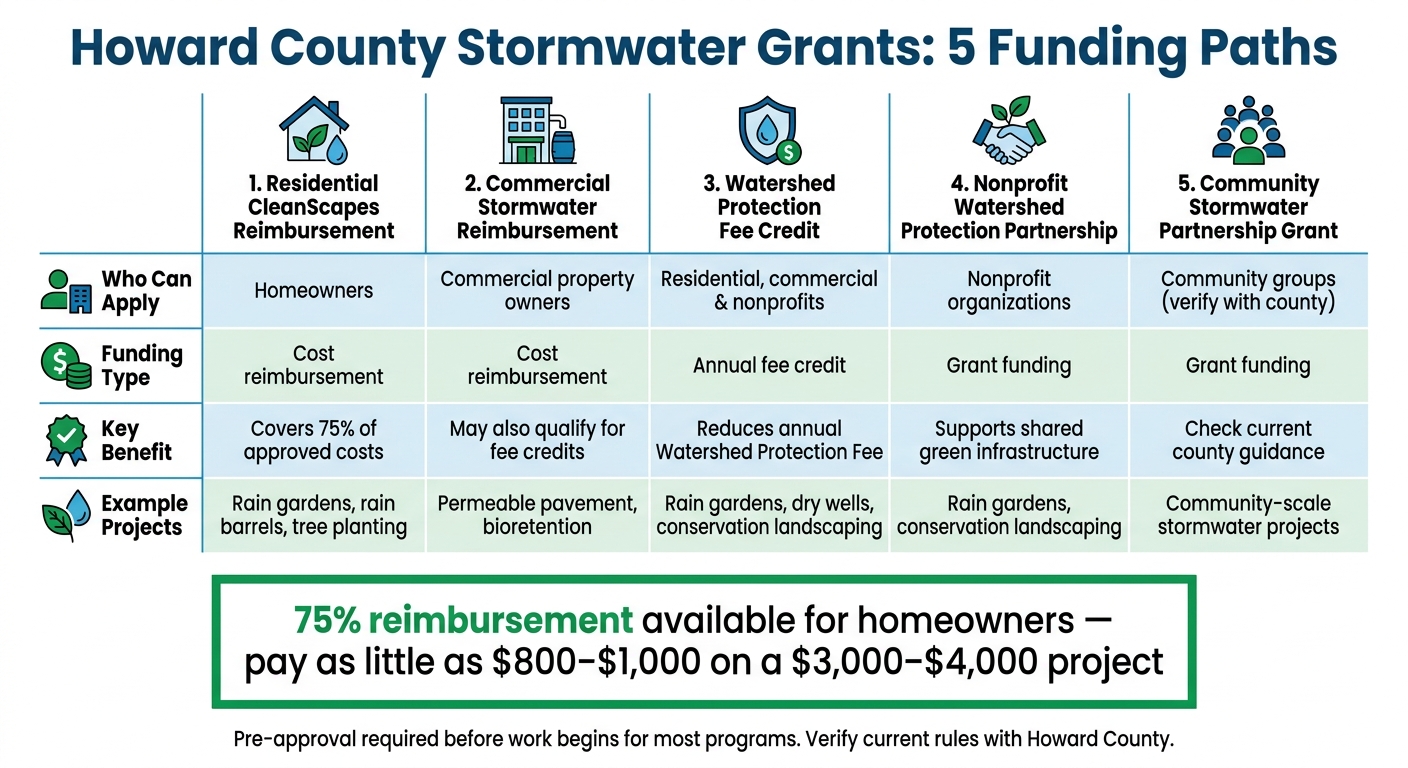
Howard County Stormwater Grants: 5 Funding Paths Compared
Quick Comparison
| Program | Best fit for | Main support |
|---|---|---|
| Residential CleanScapes Reimbursement | Homeowners | Cost reimbursement |
| Commercial Stormwater Reimbursement | Commercial properties | Cost reimbursement |
| Watershed Protection Fee Credit Program | Residential, commercial, and nonprofit owners | Annual fee reduction |
| Nonprofit Watershed Protection Partnership Program | Nonprofits | Grant-style support |
| Community Stormwater Partnership Grant Program | Community projects | Check county rules |
If I were reviewing these options, I’d first match the project to the property type, then confirm pre-approval rules, then check whether I could get both project funding and a fee credit.
What Counts as a Stormwater or Runoff Project in Howard County?
Howard County’s funding programs focus on projects that capture or treat runoff where it falls.
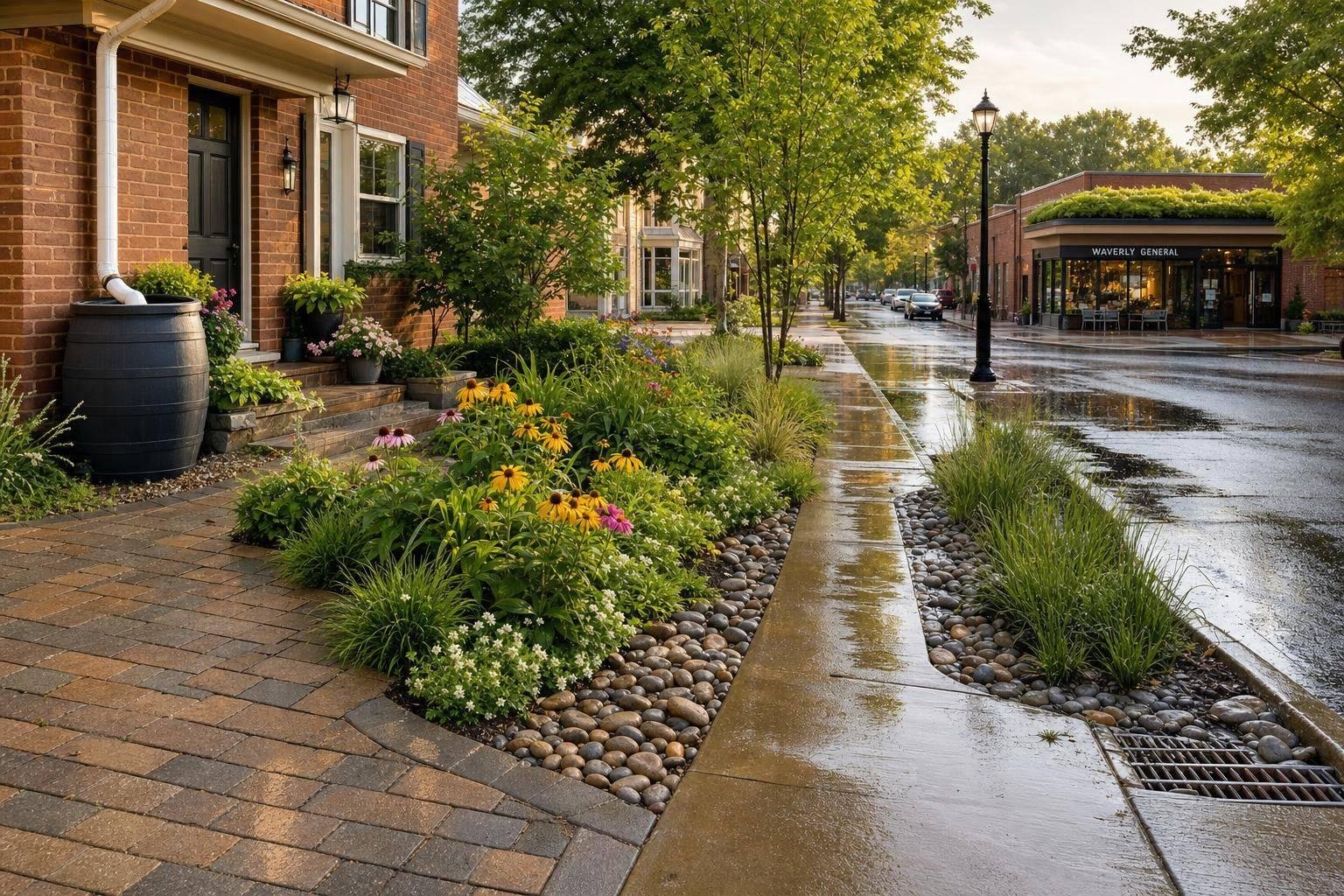
That usually means things like rain gardens, rain barrels, conservation landscaping, permeable pavers, tree planting, and other BMPs. Projects that cut down on impervious surface also often qualify. In plain English: if a project helps soak in, slow down, or clean up stormwater on site, it’s usually the kind of work these programs are set up to support.
Use that filter when reviewing the five programs below.
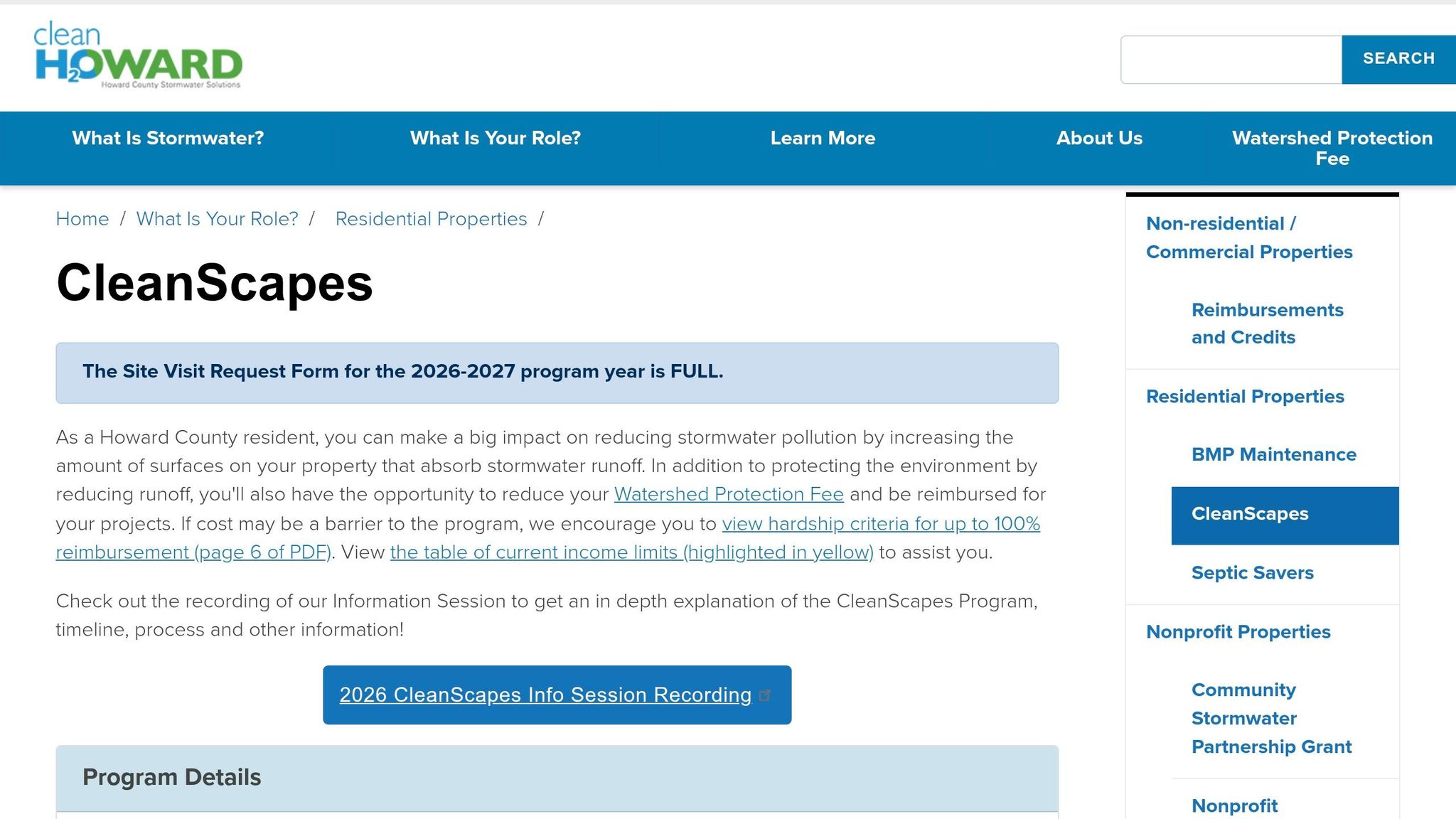
1. Residential CleanScapes Reimbursement Program
Eligible Applicant Type
This program is for residential property owners in Howard County [1].
Covered Project Types
It helps pay for stormwater BMPs installed on residential lots, such as rain gardens, conservation landscaping, dry wells, and tree planting [1][2].
Funding Amount
The program reimburses 75% of approved costs [2]. On a project that costs $3,000 to $4,000, that often means homeowners pay about $800 to $1,000 out of pocket [2].
Fee Credit Potential
Participants may also get a credit toward their annual Watershed Protection Fee [1].
Basic County Eligibility Requirements
Applications usually open on April 1 [2]. It’s smart to apply early, since first-time projects may get priority [2].
There are a few steps to watch for:
- Get CleanScapes pre-approval before any work starts [2]
- Request a site visit before gathering estimates [2]
The next programs cover commercial, nonprofit, and community projects.
2. Commercial Stormwater Reimbursement Program
Eligible Applicant Type
Howard County gives commercial property owners their own reimbursement route. It’s one of the county’s five funding paths for runoff work.
Covered Project Types
This program covers approved BMPs, including rain gardens, native plantings, and other approved drainage improvements.
Funding Amount or Fee Credit Potential
If your project meets the rules, it may also qualify for Watershed Protection Fee credits.
Basic County Eligibility Requirements
The project must be on commercial property in Howard County and use approved BMPs. You also need to work with the Howard County Office of Community Sustainability before installation. If you want to apply for the fee credit, make sure the BMP is documented.
Put simply, this is the business-side match to the residential program.
3. Watershed Protection Fee Credit Program
Eligible Applicant Type
Howard County doesn’t just offer reimbursement. It also gives fee credits for approved stormwater projects.
This credit is open to residential, commercial, and nonprofit property owners. In most cases, residential owners claim it through CleanScapes, while commercial and nonprofit owners apply through the Office of Community Sustainability or the Soil Conservation District [1].
Covered Project Types
The credit applies to stormwater BMPs that help capture or slow runoff [1].
That can include projects like:
- rain gardens
- rain barrels
- conservation landscaping
- dry wells [1]
Fee Credit
If your project qualifies, the credit reduces your annual Watershed Protection Fee [1].
Basic County Eligibility Requirements
A few county rules apply. The property must be in Howard County [1]. The project also needs pre-approval before installation. After that, you have to maintain the BMP and keep it working if you want to keep the credit [1].
Next up are nonprofit and community-focused programs that offer grant-style support for larger shared projects.
4. Nonprofit Watershed Protection Partnership Program
This nonprofit partnership path helps support shared stormwater work in Howard County.
Eligible Applicant Type
Nonprofit watershed partners in Howard County.
Covered Project Types
It supports green infrastructure that cuts runoff, including rain gardens, conservation landscaping, and tree planting.
Funding Amount or Fee Credit Potential
There’s no set funding amount listed.
Basic County Eligibility Requirements
The project must be in Howard County and must reduce stormwater runoff.
The next county path takes that same idea and opens it up through a broader community grant program.
sbb-itb-843f8be
5. Community Stormwater Partnership Grant Program
Howard County’s public sources don’t confirm who can apply, which projects qualify, how much funding is available, or the exact rules for eligibility. Before you apply, check the county’s current program page.
If you’re trying to get a feel for what might fit, the project ideas below can help point you in the right direction.
Project Ideas That May Fit These Programs
Use these examples to line up your project with the right Howard County funding path.
Homeowners are usually the best fit for the Residential CleanScapes Reimbursement Program. Common projects include putting in a rain garden in a low area of the yard, adding a rain barrel to collect roof runoff, or swapping turf grass for conservation landscaping.
For commercial properties, the best fit is often the Commercial Stormwater Reimbursement Program or the fee-credit path. Common projects include replacing standard impervious pavement with permeable pavement or installing a bioretention facility that collects and filters stormwater on-site.
For site-built projects, approval often comes down to two things: installation quality and documentation. Pro Landscapes MD handles stormwater site work in Howard County and can prepare the documentation needed for reimbursement or fee credits.
Side-by-Side Look at All 5 Programs
Here’s a simple way to compare the five programs by who can apply and how the money works.
| Program | Eligible Applicants | Funding Type |
|---|---|---|
| Residential CleanScapes Reimbursement | Individual homeowners | Reimbursement |
| Commercial Stormwater Reimbursement | Business owners, commercial property managers | Reimbursement |
| Watershed Protection Fee Credit | Property owners who pay the Watershed Protection and Restoration Fee | Ongoing fee credit |
| Nonprofit Watershed Protection Partnership | Nonprofit organizations | Grant funding |
| Community Stormwater Partnership Grant | Check current county guidance | Grant funding |
The residential and commercial reimbursement programs pay after the project is done. That means applicants pay the costs upfront, then submit their materials for reimbursement.
The Watershed Protection Fee Credit Program works in a different way. Instead of a one-time payment, it lowers the annual fee for eligible properties.
The nonprofit and community partnership options use grant funding, which fits shared or group-based projects.
Before you apply, review the pre-approval steps, required documents, and maintenance rules.
What to Check Before You Apply
Each funding path comes with its own rules. So before you apply, check the current deadlines, eligibility, and paperwork with the county office that runs the program.
If you’re applying for a reimbursement, partnership, or fee-credit project, make sure you know exactly which documents the county wants and whether you need approval before any work begins. That part matters.
One more thing: the same project may fit under more than one funding path. But that doesn’t mean the process is the same. Each path has its own approval steps and documentation rules.
Conclusion
Howard County offers a few stormwater funding paths, and each one lines up with a different kind of property and project. That means residents, commercial property owners, nonprofits, and HOAs don’t all use the same route.
The key is to match your property type and your project scope to the right option – whether that’s direct reimbursement, grant support, or fee credits over time. Before you apply, double-check the basics: eligibility, pre-approval, and the documents you’ll need.
FAQs
Can I combine reimbursement with a fee credit?
Yes. Through Howard County’s CleanScapes program, eligible residential property owners can get two types of financial help:
- A one-time reimbursement for part of a project’s cost
- An annual credit toward the Watershed Protection Fee
That means approved stormwater projects, like rain gardens or permeable pavers, can lower your upfront cost and trim your yearly fee at the same time.
What happens if I start work before pre-approval?
Starting work before official pre-approval can make your project ineligible for reimbursement or grant funding.
A lot of programs require site pre-approval before any construction or installation starts. Skip that step, and you could lose access to cost-sharing benefits or fee credits. Get the requirements in writing and make sure approval is in place before you break ground.
Which program fits HOA or community projects?
HOAs and community associations in Howard County may qualify for the PREP grant program. The program specifically names them as eligible applicants for climate and sustainability projects.
They may also use the Maryland Stormwater Pollution Control Cost-Share Program. This program can cover up to 75% of project costs, with funding up to $500,000, for stormwater system upgrades and modern management practices.
Chat with Us