









- bhavya gada
- No Comments
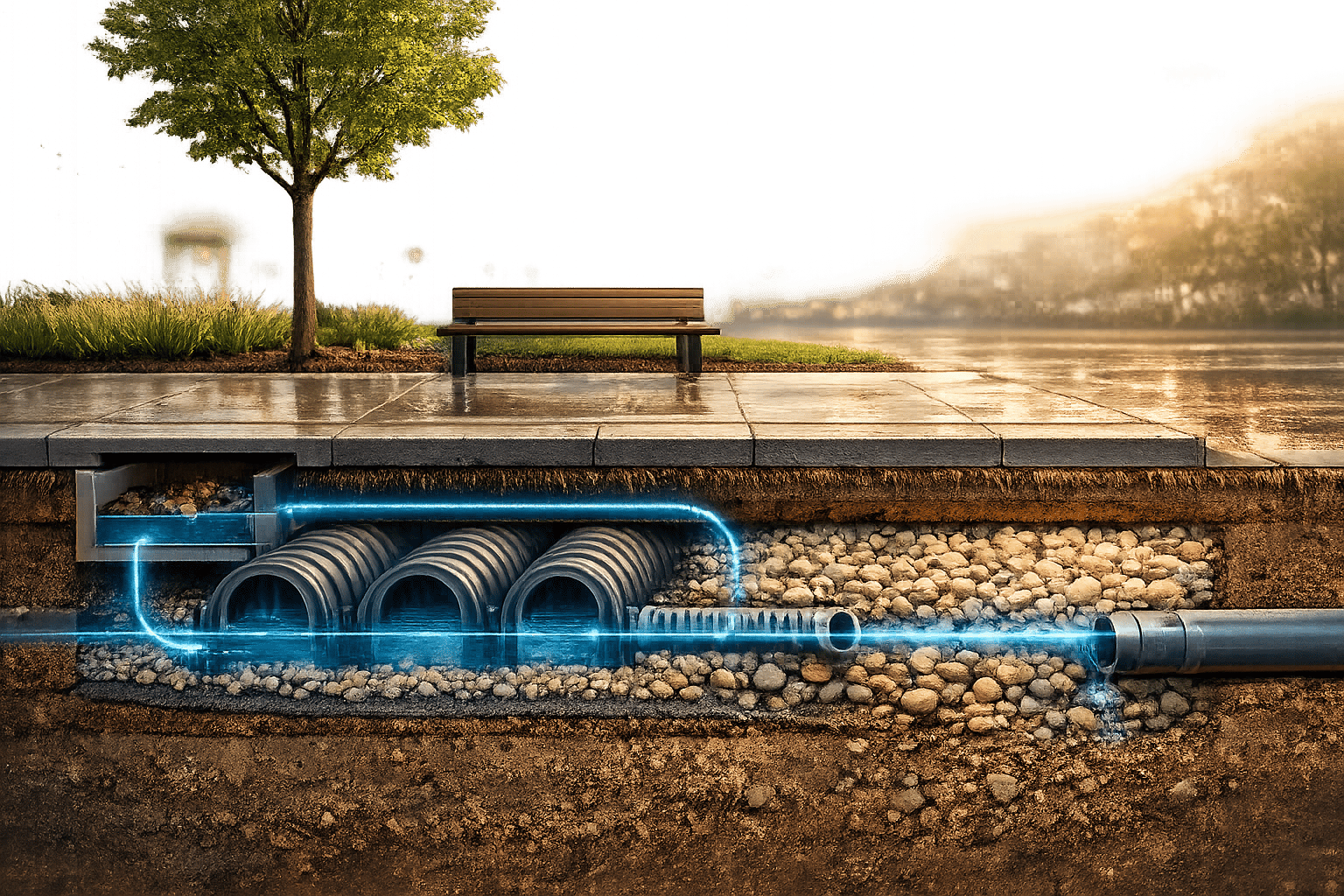
Hybrid stormwater systems combine detention and retention methods underground to manage water flow and quality. These systems temporarily store water to prevent flooding (detention) while allowing for natural absorption into the soil (retention). By placing them underground, they save surface space for other uses, like parking or landscaping, and protect the system from weather damage.
Key Points:
- Detention: Temporarily holds water in underground chambers, releasing it gradually to prevent flooding.
- Retention: Permanently holds water to infiltrate soil, improving runoff quality and recharging groundwater.
- Underground Benefits: Frees up surface space, shields the system from weather, and aligns with local water management goals.
These systems are particularly useful in urban areas like Maryland, where space is limited and managing stormwater effectively is a priority. Proper design, materials, and maintenance ensure long-term functionality and compliance with local regulations.
Pipe Retention and Detention Systems Explained
sbb-itb-843f8be
How Detention and Retention Work Together
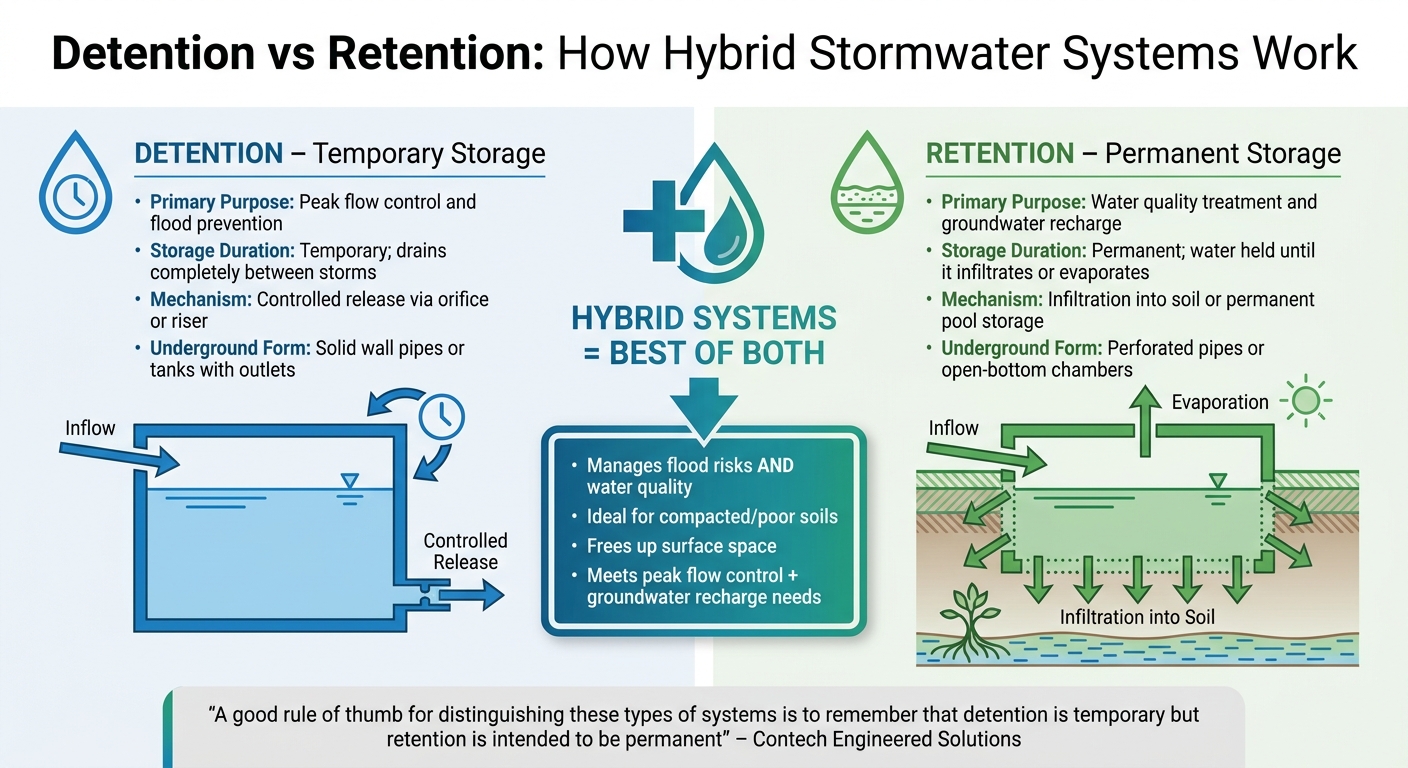
Detention vs Retention Stormwater Systems Comparison
Understanding how detention and retention systems complement each other is key to seeing why hybrid designs are so effective at managing both the quantity and quality of stormwater. Each system addresses a specific aspect of stormwater control, and when used together – especially in underground setups – they form a well-rounded solution.
Detention Explained
Detention systems are designed to temporarily hold stormwater in underground chambers or pipes. Instead of allowing water to flood the drainage network all at once – which can overwhelm infrastructure and lead to downstream flooding – these systems release water gradually through a controlled outlet, like a low-flow orifice or a riser structure [1][2]. The goal here is to slow things down. A critical design feature is that the inlet should be no more than 15% higher than the outlet to ensure the proper flow rate through the system [1]. Once the storm passes, the detention area drains completely, so it’s ready for the next rainfall.
"Handling the stormwater near its source can save millions in costly repairs that would otherwise be directed at correcting erosion or controlling flooding." – Bill Leber, Wessler Engineering [1]
Retention Explained
Retention systems, on the other hand, focus on permanently holding water and allowing it to infiltrate into the surrounding soil. These systems often use perforated pipes or open-bottom chambers in underground setups, enabling controlled infiltration [1][2]. This process naturally filters out pollutants and sediment while also helping to recharge groundwater supplies. Unlike detention systems, retention isn’t about controlling flow rates but rather about improving water quality and reducing the volume of runoff leaving the site [1][2].
Why Combining Both Functions Works Better
When detention and retention are combined in a single underground system, they can manage both flood risks and water quality at the same time. This is particularly helpful in areas with poor or compacted soils – like many parts of Maryland – where it’s not possible to infiltrate all the stormwater. A hybrid system addresses this by retaining the water the soil can absorb while detaining and slowly releasing the extra volume [2]. This approach meets both peak flow control and groundwater recharge needs, all while freeing up surface space for other uses like parking lots, buildings, or landscaping [2][3].
Contech Engineered Solutions puts it simply: "A good rule of thumb for distinguishing these types of systems is to remember that detention is temporary but retention is intended to be permanent" [2].
Here’s a quick comparison of how these systems differ and work together:
| Feature | Detention | Retention |
|---|---|---|
| Primary Purpose | Peak flow control and flood prevention | Water quality treatment and groundwater recharge |
| Storage Duration | Temporary; drains completely between storms | Permanent; water held until it infiltrates or evaporates |
| Mechanism | Controlled release via orifice or riser | Infiltration into soil or permanent pool storage |
| Underground Form | Solid wall pipes or tanks with outlets | Perforated pipes or open-bottom chambers |
System Design and Components
After understanding detention and retention methods, the next step is optimizing water management through underground hybrid systems. These systems use modular chambers or large-diameter pipes to create underground storage spaces. They are designed to handle both detention (temporary storage) and infiltration (allowing water to seep into the ground), making them adaptable to various water management needs.
Chamber Configuration
Hybrid systems typically use a multi-chamber setup to separate different stages of water treatment. The first chamber, often referred to as the "Isolator Row", captures the initial runoff, which is usually the most polluted. This stage allows sediment and debris to settle before the water flows into the main storage chambers. These larger, arched chambers provide most of the storage capacity, temporarily holding stormwater until it can either infiltrate into the soil or be released in a controlled manner. The chambers can be configured to work around underground obstacles and are designed with multiple inlets and outlets to fit diverse urban settings.
For instance, at Francisco Park in San Francisco, a system installed in 2022 utilized 72 StormTech MC-3500 and MC-4500 chambers. This created a storage capacity of 2,000 cubic meters within a compact 1,682-square-meter area. Designed by Sherwood Design Engineers, the system captures runoff from a 4.5-acre site and stores it in a 1.9-million-liter cistern for reuse [5]. This setup ensures smooth water flow between stages, maximizing treatment efficiency.
Water Flow Process
Water enters the system through catch basins or inlets and flows into the Isolator Row, where the first flush – carrying the highest concentration of pollutants – is trapped. Sediment settles in this stage before the water moves into the arched storage chambers. Here, the water is either released at a controlled rate or allowed to infiltrate the surrounding soil through perforated chamber walls. For systems designed to reuse water, the flow may be diverted to a filtration and disinfection facility before being stored for non-potable uses like irrigation.
"All captured runoff flows through the screening filtration and into the chambers for storage and later use."
- Cody Anderson, P.E., Principal, Sherwood Design Engineers [5]
The Francisco Park system demonstrates this process in action, saving 5.7 million liters of potable water annually. Treated stormwater is reused for irrigation and toilet flushing, with flow managed by a network of pipe manifolds, manholes, and control structures. The system’s success hinges on both its hydraulic design and the durability of its materials.
Construction Materials
The choice of materials depends on the site’s storage needs and load requirements. For example:
- Corrugated Metal Pipe: Ideal for detention and infiltration pipes due to its flexibility and customization options for large-scale projects [4].
- Concrete: Used for storage tanks and surfaces, offering high load-bearing capacity, especially in urban areas [4][6].
- HDPE Plastic: Lightweight and easy to install, making it suitable for modular chambers [4].
- Crushed Stone: Commonly used in subsurface reservoirs to create voids for water storage while filtering out pollutants [6].
- Pervious Concrete: Functions as a permeable surface layer, allowing water to infiltrate directly into underground chambers. Depending on the mix, it can absorb stormwater at rates between 120 and 1,200 inches per hour [6].
| Material | Application | Key Benefit |
|---|---|---|
| Corrugated Metal Pipe | Detention/Infiltration Pipes | Flexible and customizable for large projects [4] |
| Concrete | Storage Tanks & Surfaces | High load-bearing capacity for urban sites [4][6] |
| HDPE Plastic | Modular Chambers | Lightweight and easy to install [4] |
| Crushed Stone | Subsurface Reservoir | Creates storage voids and filters pollutants [6] |
| Pervious Concrete | Permeable Surface Layer | Infiltrates 120–1,200 inches/hour [6] |
Installation Requirements and Site Planning
Ensuring the success of underground hybrid systems starts with a detailed site evaluation and compliance with Maryland’s regulatory guidelines. A carefully planned installation not only boosts system performance but also helps avoid expensive fixes down the road.
Site Evaluation
When evaluating a site, several factors come into play, including soil type, drainage patterns, and groundwater levels. In Maryland’s urban areas, underground systems are particularly valuable because they save surface space. It’s also important to confirm that the subsurface conditions support infiltration, which helps recharge groundwater and cuts down on runoff [4]. However, high groundwater tables can pose a problem. For example, plastic pipes may float if they’re not properly anchored [10]. Additionally, the system must be designed to handle runoff effectively while promoting the health of the local watershed [4].
Maryland Regulations and Permits
The Maryland Department of the Environment (MDE) regulates underground installations through its Stormwater Management Program [7]. Every project must follow the Maryland Stormwater Design Manual, which provides the technical guidelines for compliance [7]. These standards ensure that both detention and retention functions are up to date. For instance, changes introduced under SB 227 have updated system designs to better handle current precipitation levels. Reviewing these requirements during the planning phase ensures the system can manage Maryland’s modern weather patterns [8]. Since the English version of the manual is the official source, developers should always use it to avoid issues caused by mistranslations [7].
Once the necessary permits are in place, the focus shifts to designing a system that’s easy to maintain over time.
Designing for Access and Maintenance
To keep the system running smoothly for years, access points need to be thoughtfully placed. Manholes should be located at both the intake and outlet ends, and gravity drainage should be included via a pipe and valve in the control structure’s weir wall to simplify inspections and repairs [9][10]. Systems should also feature a minimum pipe diameter of 72 inches to allow for maintenance access [10]. Pretreatment measures, such as debris traps, can prevent blockages in the main storage chambers [9][10]. Perforated standpipes, which run from the bottom of the excavation to just below the surface, allow for regular monitoring of groundwater levels [9]. Additionally, no permanent structures should be built over these systems, as they are designed to last for 50 years or more and may require excavation in the future [10]. In colder parts of Maryland, systems must be installed below the maximum frost penetration depth to ensure functionality throughout the year [9].
These steps – starting from site evaluation to long-term maintenance planning – are crucial for a successful installation.
For tailored advice and professional implementation of underground hybrid stormwater systems, Pro Landscapes MD offers expert services designed to meet Maryland’s specific regulatory and environmental needs.
Maintenance and System Performance
Once your underground hybrid stormwater system is in place, keeping it in good working order means committing to regular maintenance. In Maryland, agencies like the Department of the Environment (MDE) and the National Pollutant Discharge Elimination System (NPDES) enforce strict guidelines aimed at preventing flooding and safeguarding local watersheds. Counties such as Anne Arundel, Montgomery, and Howard require formal inspection reports to ensure compliance [14]. Below are the key maintenance tasks that help extend the system’s lifespan and keep it functioning effectively.
Sediment and Debris Removal
Clearing out sediment and debris is essential for maintaining the system’s performance. Vacuum trucks are often used to remove trash, sediment, and water from deeper sections of the system [12][13]. Many systems include hydrodynamic separators upstream, which trap pollutants in a smaller, easy-to-access device. According to Contech Engineered Solutions:
"By capturing the majority of sediment, hydrocarbons and trash and debris upstream of the storage system, maintenance becomes much easier as material is congregated into a smaller device with clear access for cleanout" [13].
To ensure everything runs smoothly, pre-screening devices and first-flush diverters should be inspected and cleaned quarterly [11]. Filters also need attention at least three times a year or after any storm that exceeds the system’s design capacity [11]. In urban areas with higher levels of trash, maintenance may need to happen more frequently to avoid system bypass. Devices like catch basin inserts and screens act as the first line of defense, preventing debris from entering the main chambers [12].
When to Replace Filter Media
The lifespan of filter media depends on the type of filter and how heavily the system is used. Cartridge and reverse osmosis filters should be replaced following the manufacturer’s recommendations. Cartridge filters generally cost between $20 and $60 per year, while reverse osmosis systems can range from $400 to $1,500 annually [11]. If you notice an odor in the water, this could point to algae or microbial growth, signaling the need to drain and clean the tank, as well as backwash or replace the filters [11]. For systems with UV light disinfection, bulbs need replacing approximately every 10,000 hours (about 14 months). Maintenance costs for these components typically range from $350 to $1,000, with bulbs costing an additional $80 [11]. With consistent upkeep, underground systems can last anywhere from 20 to 50 years [11].
Maryland Climate Considerations
Maryland’s distinct four-season climate calls for specific maintenance schedules. Semiannual inspections – one in spring and one in fall – are critical [14]. Fall maintenance should focus on removing leaves from storm drains and chambers before winter storms arrive. Spring inspections are necessary to check for damage caused by freezing temperatures and salt application during winter, paying close attention to catch basins and drainage lines [14]. If your system isn’t designed to withstand freezing, it should be winterized in late fall [11]. After heavy rains, check erosion-prone areas and system inlets for pooling or structural damage. Keeping a digital log of all inspections and repairs is essential for compliance with local authority audits [14].
For professional services that align with Maryland’s regulations, Pro Landscapes MD (https://prolandscapesmd.com) offers expert care for stormwater systems across central Maryland.
Conclusion
Underground hybrid stormwater systems provide more than just water management – they combine detention and retention to optimize land use while adhering to Maryland’s environmental standards. The surface area above these systems can be repurposed for parking lots, green spaces, or additional structures, which is a game-changer in urban areas where every square foot counts. This dual-purpose approach not only improves functionality but also aligns with sustainable urban growth strategies.
These systems help reduce runoff, recharge groundwater, and align with Low-Impact Development (LID) goals, promoting healthier local watersheds. By moving stormwater storage below ground, they also eliminate the risks associated with open detention ponds. Plus, their adaptable designs – using materials like corrugated metal, concrete, or plastic – allow for customization to meet specific site needs and comply with regulations.
To keep these systems running smoothly, proper planning and routine maintenance are essential. Evaluating the site’s subsurface infiltration potential ensures maximum groundwater recharge, while regular cleaning of sediment and debris helps maintain compliance with regulatory standards.
For property owners and developers in central Maryland, Pro Landscapes MD (https://prolandscapesmd.com) offers expert guidance in designing, installing, and maintaining hybrid stormwater solutions. Serving areas like Howard County, Montgomery County, Carroll County, Frederick County, Prince George’s County, and Baltimore County, they provide tailored services to protect your property and the environment.
With the right design, installation, and care, underground hybrid stormwater systems deliver reliable water management while preserving the value and usability of your property.
FAQs
How do I know if my site’s soil can support infiltration?
To figure out if your soil is suitable for infiltration, you’ll need to evaluate its permeability and overall traits. A simple way to do this is by performing a percolation or infiltration test. Just fill a hole with water and see how quickly it drains. Soils like sandy or loamy types usually have good permeability and are ideal for infiltration. On the other hand, clay-heavy soils might require extra work to improve their performance. For the best results, consider consulting a stormwater expert or conducting a detailed soil analysis to ensure your underground hybrid system operates efficiently.
What happens if groundwater is too high for an underground system?
If the groundwater level rises excessively, it can overwhelm the underground system, leading to potential failures or water seepage. This could hinder the hybrid stormwater system’s capacity to properly carry out its detention and retention roles.
How often does an underground hybrid system need maintenance?
Underground hybrid stormwater systems typically need maintenance twice a year. This involves clearing out trash, sediment, debris, oil, and grease to keep the system functioning properly. However, some systems might require more frequent attention – like quarterly inspections – depending on factors such as how heavily they’re used and the surrounding environmental conditions.
Chat with Us