









- bhavya gada
- No Comments
If your site has bare soil, hydroseeding can help slow washouts and start grass growth at the same time. On Maryland construction sites, that matters because exposed ground may need stabilization within days, not weeks.
Here’s the short version:
- Hydroseeding sprays water, seed, mulch, fertilizer, and tackifier in one pass
- Mulch helps shield soil from rain impact and limits splash erosion
- Tackifier helps the mix stay in place, especially on slopes and drainage paths
- Seed and fertilizer help start ground cover before runoff moves soil
- Timing matters most: apply after final grading, before heavy rain, crusting, or compaction
- Steeper slopes need more mulch and often stronger erosion-control products
- Watering is a must, especially in hot weather; some sites may need water 3 times per day
- In central Maryland, hydroseeding often works best from February through late October, while winter seed may stay dormant until spring
If I were reviewing a Maryland site, I’d look at four things first: slope, drainage, idle time, and season. A flat yard, a utility trench, and a 3:1 embankment do not need the same mix or the same mulch rate.
A few numbers from the article make that clear:
- Gentle areas often use 1,000–2,000 lb/acre of hydromulch
- Moderate slopes may need about 2,500–3,000 lb/acre
- Steep slopes may need about 3,500–4,500 lb/acre
- Winter applications from November through January can be done, but growth may wait until warmer weather
| Site area | What I’d expect |
|---|---|
| Flat or gentle ground | Standard hydromulch may be enough |
| Moderate slope | More mulch and stronger hold may be needed |
| Steep slope or embankment | Reinforced products are often the safer choice |
| Utility trench or backfill | Fast cover helps limit sediment movement |
| Poor drainage area | Drainage should be fixed before seeding |
Bottom line: hydroseeding is not just “spraying grass seed.” It’s a soil cover step first, and a grow-in step second. If the ground is graded, drainage is handled, and watering starts right away, it can do a solid job of holding soil while vegetation gets started.
Below, I’ll walk through where hydroseeding fits, how the slurry works, and what Maryland property owners should check before work begins.
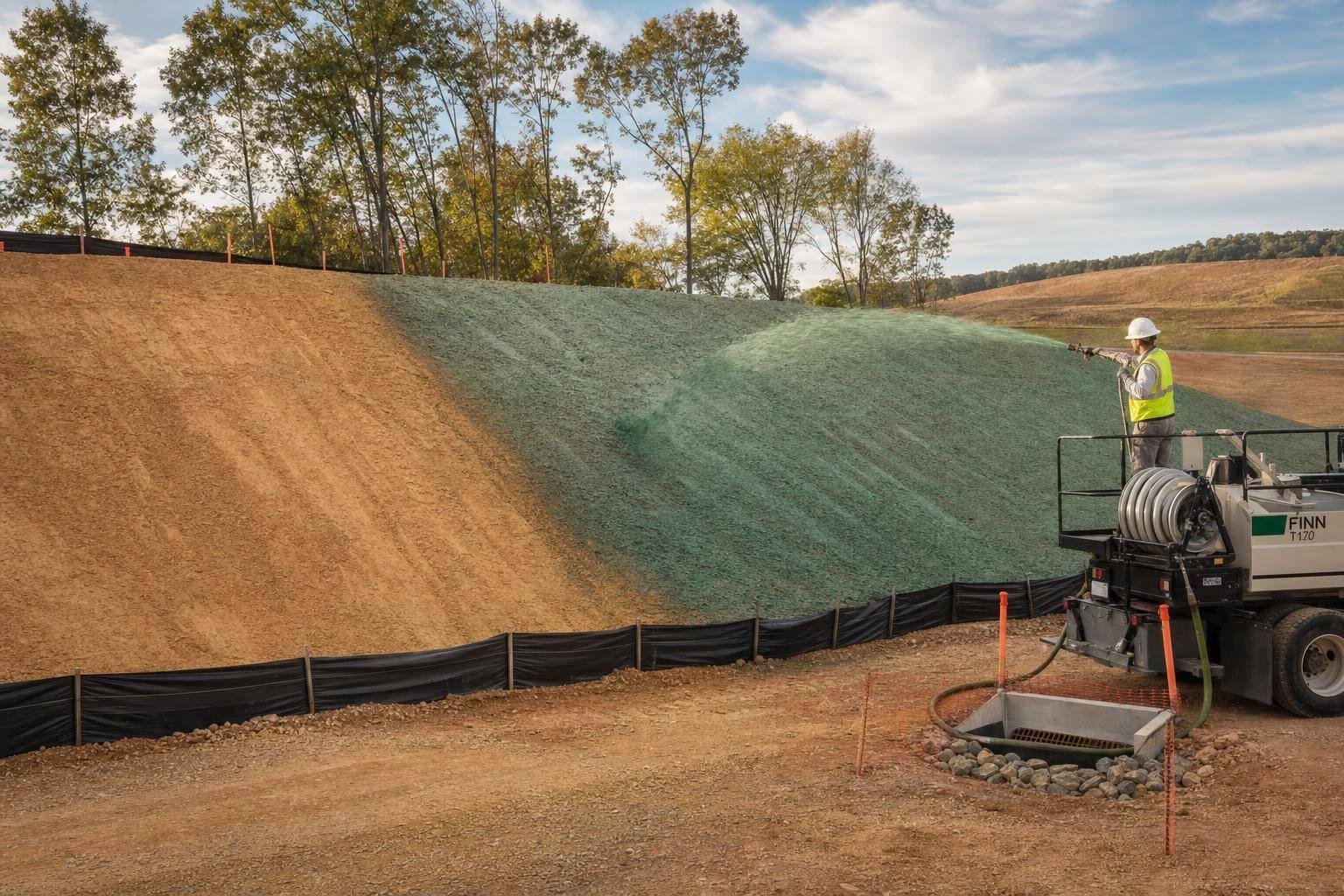
Hydroseeding extreme slopes. Steep cut bank.
sbb-itb-843f8be
What Hydroseeding Means on a Construction Site
Hydroseeding, also called hydraulic mulch seeding, is a way to spray a seed-and-mulch slurry over disturbed soil in a single pass. That slurry usually contains seed, mulch, fertilizer, tackifier, and water. On Maryland construction sites, it’s often the first move crews make to stabilize exposed ground. And each part of the mix has a clear job, especially when erosion control is the goal.
The mulch helps soften the impact of rain and cuts down on splash erosion. As it dries, it forms a layer over the soil while the seed starts to germinate underneath. Tackifier helps the mulch cling to the ground, so water moving across the surface is less likely to wash material away. Compared with dry seeding, hydroseeding tends to leave fewer thin spots. That matters because bare patches are often where rills and gullies start.
How Hydroseeding Is Applied to Disturbed Soil
A truck-mounted tank pumps the slurry through a hose and nozzle, and a crew sprays it across the soil. This setup lets crews treat steep slopes and embankments from a distance, which can make work safer on active job sites.
Hydroseeding should go down right after final grading, before the soil surface gets compacted or forms a natural crust. Timing is a big deal here. The soil needs to be covered before rain or crusting reduces seed contact.
When Construction Crews Choose Hydroseeding
Crews turn to hydroseeding when bare soil needs fast stabilization. In Maryland, disturbed soil must be stabilized quickly if it’s going to stay idle. Common uses include:
- Large regraded areas
- Embankments
- Utility trench restoration
- Idle stockpiles
It works best when a site needs quick cover before runoff has a chance to move soil.
How Mulch, Seed, Tackifier, and Fertilizer Work Together
Hydroseeding Mulch Rates by Slope: Maryland Construction Guide
Hydroseeding slurry is more than seed mixed with water. Each part of the mix has a job, and the results depend on how well that mix fits the site. Done right, it gives bare soil short-term cover while roots start to take hold.
How Seed and Fertilizer Build Vegetative Cover
Seed selection matters more than people think. The best choice depends on sun exposure, soil conditions, and the time of year. A seed blend that fills in well on one disturbed site can fall flat on another if the conditions change.
Fertilizer helps with germination and early growth. That early push gives seedlings a better shot at getting established before rain or runoff strips soil away.
How Mulch and Tackifier Hold Moisture and Reduce Wash-Off
Mulch works like a surface shield. It softens rain impact, slows evaporation, and helps keep seed from getting exposed or washed off before it sprouts. On bare ground, that extra moisture can make the surface a lot more stable for germination.
Tackifier helps the slurry stay put, especially on slopes and along drainage paths. It matters most in places that may catch rain or wind before the seed has time to germinate. Without that extra bonding, the mix can move when you least want it to.
How the Mix Changes for Flat Ground vs. Steep Slopes
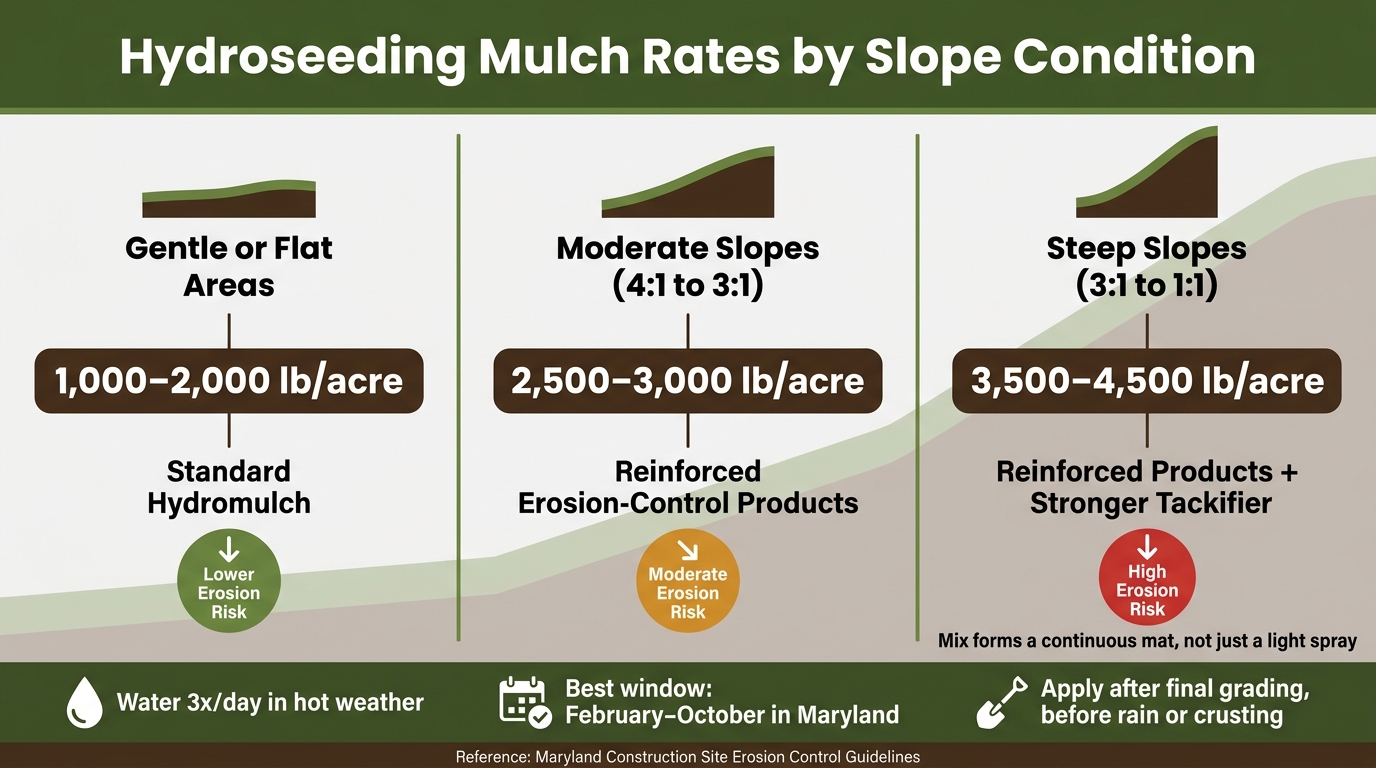
Slope changes the plan. Flat or gently sloped ground with moderate erosion risk can often use standard hydromulch at 1,000–2,000 lb/acre. As the slope gets steeper, the mix usually needs more mulch, a stronger tackifier, or reinforced erosion-control products to help resist runoff and keep the soil covered.
| Slope Condition | Typical Approach | Approximate Mulch Rate |
|---|---|---|
| Gentle or flat areas | Standard hydromulch | 1,000–2,000 lb/acre [3][5][6] |
| Moderate slopes (4:1 to 3:1) | Reinforced erosion-control products | About 2,500–3,000 lb/acre [1][2][7] |
| Steep slopes (3:1 to 1:1) | Reinforced erosion-control products | About 3,500–4,500 lb/acre [1][2][4][6][7] |
On steep embankments, a higher mulch rate and a stronger tackifier help the slurry form a continuous surface matrix – closer to a mat than a light spray. That extra coverage and bonding help the mix stand up to runoff on sharper grades.
Where Hydroseeding Is Used on Slopes and Bare Soil
Once the slurry mix is ready, the next step is figuring out where it will stay in place best. That comes down to a few simple things: slope, runoff, and how long the soil will sit bare. In plain terms, hydroseeding tends to work best in spots where water moves hard and exposed soil needs cover fast.
Slopes, Embankments, and Regraded Areas
On steep grades, how the material is applied matters just as much as the mix. On 2:1 or 3:1 slopes, hydroseeding is often a strong fit because steep ground needs better surface contact and faster cover. The slurry forms a continuous layer against the soil, which helps cut down on slumping.
Before spraying, crews often track-walk the slope to roughen the surface. That step gives the slurry more texture to grab onto. Regraded residential yards and other embankments are also common places for hydroseeding when crews need to stabilize bare soil.
Bare Soil Around Homes, Additions, and Utility Work
Even flat ground or gentle slopes can erode fast before permanent cover is in place. Newly graded yards, home additions, utility trenches, and foundation backfill can all shed sediment in a hurry.
Hydroseeding gives these areas temporary cover until permanent landscaping goes in. The main job is to get cover established fast and help keep sediment from moving toward structures or neighboring properties. In many cases, that timing matters most when grading work is about to sit exposed for a while.
What Maryland Property Owners Should Know Before Work Starts
Once you’ve picked the right areas, two things can make or break the job: timing and drainage. They decide whether hydroseeding stays put and takes root, or ends up washing away in the first hard rain. That means choices about timing, soil prep, permits, and drainage matter before any seed goes down.
Site Preparation, Timing, and Early Maintenance
Preparation comes first. Before application, the site should be cleared of debris, finish-graded, and loosened if the soil is compacted so the slurry can make solid contact with the ground. Any drainage issues should be fixed before hydroseeding begins.[8]
That prep only pays off if watering starts right away. In central Maryland, the usual window for hydroseeding runs from February through late October. Spring and fall tend to offer the best germination conditions. Summer can still work, but it takes a lot more attention because the area will need more frequent watering. In hot, dry weather, newly hydroseeded ground should be watered at least three times a day. Winter applications from November through January are also possible, but the seed will stay dormant until temperatures warm up in spring.[8]
Permits can also come into play. Many Maryland jurisdictions require inspections before and after the work. Before the project starts, make sure permit applications and inspection scheduling are included in the contractor’s scope.[8]
How Hydroseeding Fits Into a Broader Erosion Control and Drainage Plan
If runoff is still a problem, deal with that first. Hydroseeding works best after grading and drainage fixes are done. In most cases, it comes after rough grading and utility work, once heavy equipment is no longer moving through the area.
If the project also calls for grading or drainage work, Pro Landscapes MD handles grading, yard repair, stormwater management, French drains, and dry riverbeds across central Maryland.
Key Points to Remember
Hydroseeding tends to go well when three basics are in place:
- Proper site preparation
- The right season
- Steady watering after application
When those pieces line up, hydroseeding can be a practical way to stabilize exposed soil during construction.
FAQs
How long does hydroseeding take to grow?
Hydroseeded grasses and legumes usually start to emerge within 4 to 28 days after application. For erosion control, plan on about 6 to 8 weeks of growth during the active season before the cover does its job well.
That said, a stand isn’t considered fully established until it has been maintained for one year. The exact timing can shift based on soil quality, seasonal conditions, and whether supplemental irrigation is available.
When should I choose reinforced mulch?
Choose reinforced mulch for areas that are prone to runoff or washout, like steep slopes, channels, or weak, erodible soil. It works especially well on slopes steeper than 3:1.
The main job of reinforced mulch is simple: it helps keep seed and fertilizer where you put them, even during heavy rain. That matters a lot in the early days, when a site is most likely to shift, erode, or lose cover before vegetation takes hold.
In Maryland, disturbed areas should be stabilized within 7–14 days of activity.
What happens if it rains right after hydroseeding?
Rain right after hydroseeding can be a problem. At that point, the slurry hasn’t had time to stick to the soil, so the risk of washout is much higher. A hard rain can cut rills or gullies into the ground and carry off the seed, mulch, and fertilizer.
After any heavy rainfall, check the area closely. If you spot washouts, erosion, or thin coverage, regrade, reseed, and remulch those sections as soon as you can to keep the site stable.
Chat with Us