









- bhavya gada
- No Comments
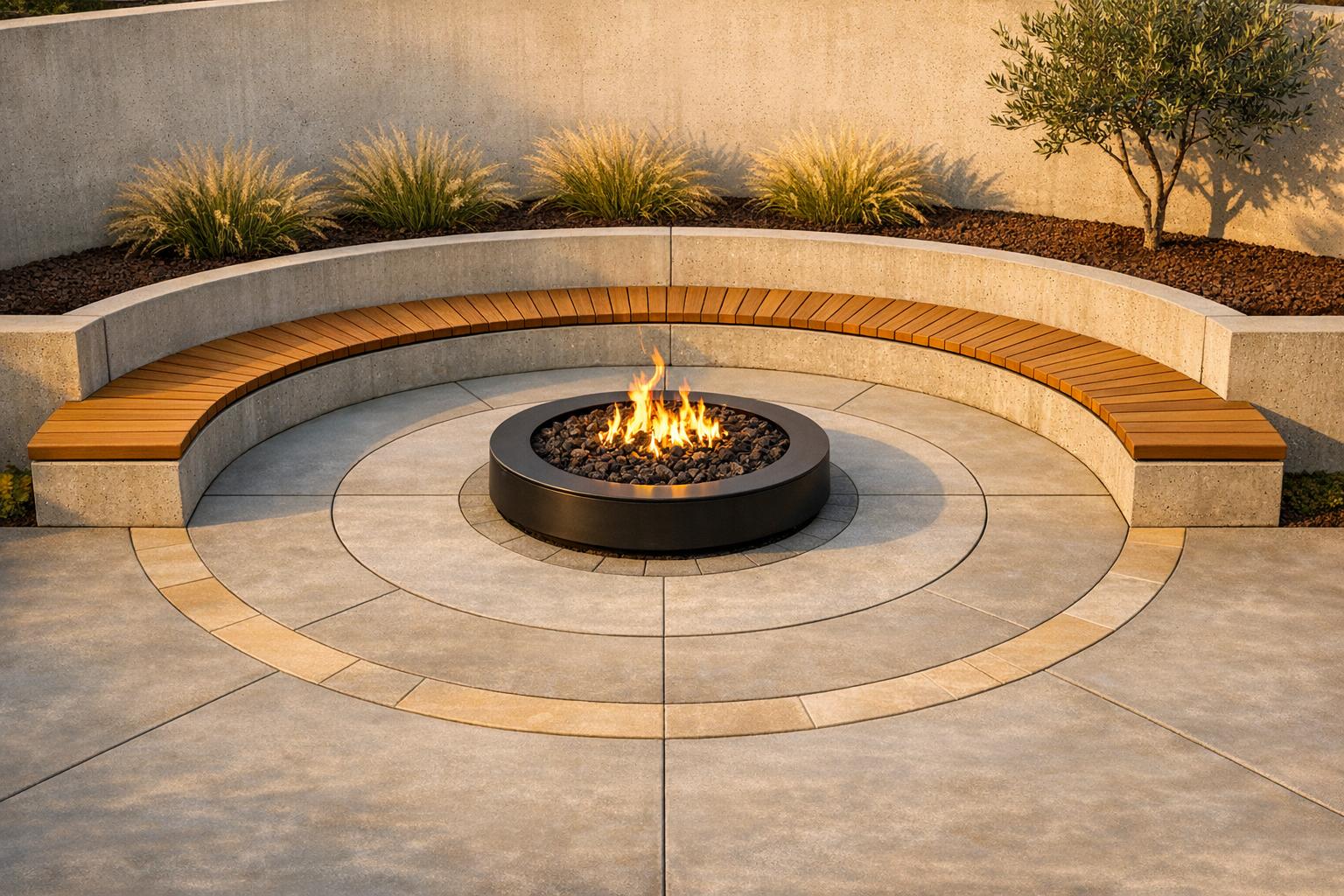
Integrated seating around fire pits transforms your backyard into a functional and inviting space. By using built-in benches, seat walls, or sunken seating, you can create a permanent and stylish gathering area that enhances comfort and usability. Whether you prefer circular, U-shaped, or modern designs, proper layout and material choices are essential for safety, durability, and aesthetics – especially in areas like Maryland with challenging weather conditions.
Key Takeaways:
- Seating Layouts: Circular, U-shaped, L-shaped, and sunken designs cater to different yard sizes and styles.
- Material Options: Stone, brick, and concrete offer durability and a polished look, while pavers provide a cost-effective alternative.
- Safety Guidelines: Maintain proper spacing – 3 feet for wood-burning fire pits and 15 inches for gas-fueled ones. Ensure 10+ feet of clearance from structures.
- Installation Tips: Use a solid foundation, proper drainage, and weather-resistant materials to handle Maryland’s climate.
Pro Tip:
Test your layout with temporary seating and a sample flame to ensure comfort, spacing, and smoke direction before finalizing your design.
With thoughtful planning and professional installation, your fire pit seating can become the centerpiece of your outdoor space, perfect for gatherings year-round.
26 Fire Pit Seating Ideas That Will Transform Your Backyard
sbb-itb-843f8be
Common Fire Pit Seating Layouts
The way you arrange seating around a fire pit can shape both the atmosphere and functionality of your outdoor space. A thoughtful layout strikes a balance between comfort, conversation flow, and accessibility while complementing your yard’s unique dimensions. Different configurations cater to various needs, from small gatherings to expansive landscapes.
Circular and Semi-Circular Arrangements
Circular seating creates an inviting "amphitheater effect", naturally drawing guests toward the central flame and making face-to-face interaction easy [2]. It also ensures that everyone enjoys even heat distribution.
For spaces with scenic views, semi-circular or arched seating works beautifully. These layouts let guests take in the surrounding landscape while keeping the fire pit as a secondary focal point [1]. If you’re working with a smaller yard, movable Adirondack chairs arranged in a circle can create a similar cozy vibe while offering flexibility [1]. Just make sure to choose a fire pit size that fits your space – too large, and it might feel overwhelming; too small, and it could lose its visual impact [3].
For larger or more uniquely shaped spaces, U-shaped or L-shaped seating provides practical and stylish alternatives.
U-Shape and L-Shape Configurations
U-shaped seating offers a welcoming layout that centers the fire pit as the main attraction, making it a great option for bigger gatherings or family hangouts [3]. The open side allows for easy entry and exit while maintaining an inclusive feel.
"A U-shaped sectional creates an inclusive circle where the fire becomes the focal point." – Outer [3]
L-shaped arrangements are perfect for corners or compact areas. They maximize space while serving as subtle room dividers, separating lounging zones from dining areas without blocking views [1][2]. Both U- and L-shaped setups leave room for side tables or decorative accents, adding to their practicality. For Maryland properties, using durable materials like stone, brick, or concrete ensures that built-in seating withstands seasonal weather changes [5].
For a more dramatic effect, consider sunken seating areas that create a striking and intimate gathering spot.
Sunken Seating Areas
Lowering both the fire pit and seating below ground level creates a cozy, enclosed atmosphere that encourages deeper connections and conversation [2]. Typically, these areas feature built-in stone benches or seat walls that define the perimeter [2]. However, this design requires professional site preparation to ensure proper drainage and a solid foundation – especially important in Maryland, where terrain and weather can vary significantly [5]. When done right, sunken seating transforms your outdoor space into a timeless retreat.
If you’re considering these layouts for your Maryland property, consulting with experts like Pro Landscapes MD (https://prolandscapesmd.com) can help you achieve a design that combines durability with visual appeal.
Materials for Built-In Seating
Selecting the right material for your fire pit seating is crucial. It not only ensures the seating can handle Maryland’s unpredictable weather but also sets the tone for your outdoor aesthetic, whether you’re aiming for a rustic charm or a sleek, modern vibe.
Stone and Masonry Options
If you’re looking for seating that stands the test of time while adding style to your outdoor area, natural stone, brick, and concrete are excellent options. Natural stone is a standout choice for permanent seating because of its durability, classic appeal, and ability to contain fire effectively. It also creates a strong focal point for your outdoor space [6]. Brick, on the other hand, brings a more traditional feel with its long-lasting quality, while concrete offers a modern edge with customizable shapes and a clean, minimalist design [5].
"Natural stone fire pits are the top choice for properties seeking a timeless, luxurious, and architectural feel, as they provide excellent fire containment and a sense of permanence." – Cooke Furniture [6]
All these materials need professional sealing to handle the effects of Maryland’s moisture and temperature fluctuations [6]. While concrete is a durable pick for high-traffic areas, it can develop cracks without proper upkeep [6]. For those seeking a polished look with less maintenance, sintered stone is a great option. It resists stains and is easy to clean [3]. Pro Landscapes MD specializes in installing natural stone, brick, and concrete seating throughout Howard County, Montgomery County, and nearby areas, ensuring structures that can handle all four seasons [5].
If you’re looking for something more cost-effective and adaptable, paver-based designs are worth considering.
Paver-Based Designs
Pavers provide a budget-friendly and versatile solution for custom-built seating. Depending on the design’s complexity, custom paver or masonry seating can cost thousands of dollars [7]. For a durable but lightweight option, materials like Supercast – a fiberglass and concrete composite – are a practical choice [8]. However, like stone and masonry, pavers also require regular sealing to protect against moisture, especially in Maryland’s weather conditions [6]. Proper installation by professionals is key to ensuring a solid foundation and long-lasting results [5].
Design Guidelines and Installation Process
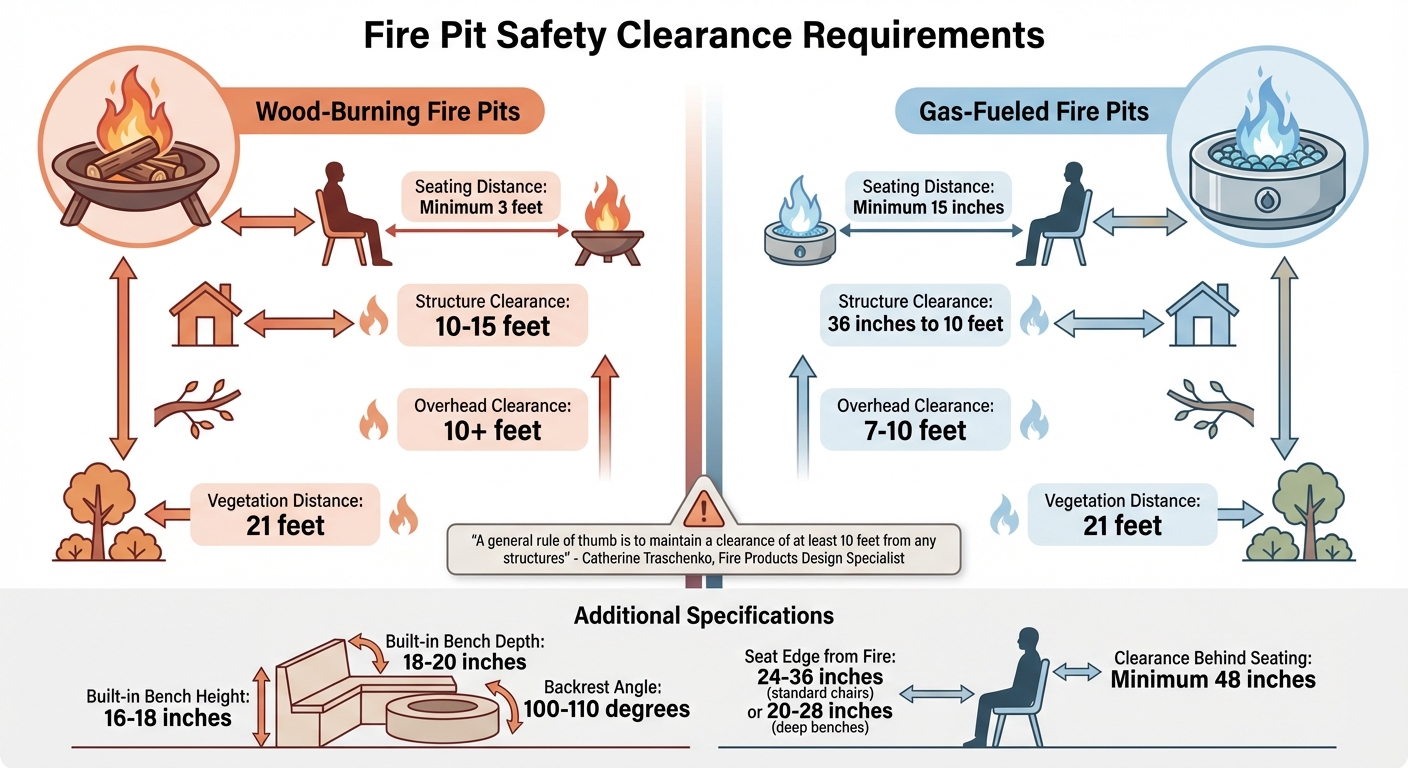
Fire Pit Safety Clearance Requirements: Wood-Burning vs Gas-Fueled
Clearance and Dimensions
Creating a safe and comfortable space around your fire pit starts with proper spacing. For wood-burning fire pits, you’ll need at least 10 feet of clearance from permanent structures like your house, garage, or any low-hanging features [4]. Gas-fueled fire pits can be placed closer, with some manufacturers recommending a minimum clearance of 36 inches [9]. To avoid fire hazards, keep vegetation at least 21 feet away to prevent accidental ignition [9].
Seating placement also depends on the type of fire pit. For wood-burning models, maintain at least 3 feet between the seating and the fire pit [9]. With gas-fueled fire pits, you can place seating as close as 15 inches [9].
"A general rule of thumb is to maintain a clearance of at least 10 feet from any structures such as your house, shed, or garage" – Catherine Traschenko, Fire Products Design Specialist at DreamCast [9].
| Fire Pit Type | Seating Distance | Structure Clearance | Overhead Clearance |
|---|---|---|---|
| Wood-Burning | Minimum 3 feet [9] | 10–15 feet [9] | 10+ feet [9] |
| Gas-Fueled | Minimum 15 inches [9] | 36 inches to 10 feet [9] | 7–10 feet [9] |
Overhead clearance is another key factor: wood-burning fire pits need at least 10 feet of vertical space, while gas-fueled models require 7 to 10 feet to allow heat and smoke to disperse properly [9].
When it comes to built-in benches, aim for a height of 16 to 18 inches and a depth of 18 to 20 inches [4]. For backrests, an angle of 100 to 110 degrees provides optimal comfort [4]. For standard chairs, position the seat edge 24 to 36 inches from the fire’s edge. Deeper benches with reclined backs can be placed closer, at 20 to 28 inches [4]. Ensure there’s at least 48 inches of clearance behind seating for easy movement [4].
Once your spacing is sorted, you can move on to installation, keeping Maryland’s unique soil and weather conditions in mind.
Installation Steps for Maryland Properties
Maryland’s clay-heavy soil and freeze-thaw cycles require careful preparation to ensure a durable fire pit and seating area. Before starting, call 811 to have underground utilities marked, especially for projects involving gas line installations [4]. For the foundation, use an open-graded base: lay down 6–8 inches of compacted #57 stone over geotextile fabric, then add a 1-inch layer of #8 or #9 stone [4]. This setup minimizes shifting and frost heave, which are common in Maryland’s climate, while supporting the weight of integrated seating.
Pro Landscapes MD has developed a reliable process for installations across Howard County, Montgomery County, and nearby areas. Their approach includes:
- Site preparation to address slopes and drainage.
- Layering the foundation with compacted materials to handle soil expansion.
- Masonry construction with ventilation gaps and secure joints [4].
Always install fire pits on stable, non-combustible surfaces like concrete, stone, or gravel to maintain fire safety [9]. Drainage is critical – ensure water outlets direct runoff away from the seating area, especially on Maryland’s sloped lots, where pooling can become an issue [4].
Before you finalize your setup, test the layout with temporary seating and a sample flame. This helps you evaluate knee clearance, smoke drift, and how the setup interacts with wind patterns [4]. In Maryland, evening winds often come from the northwest, so consider adding a low stone wall on the downwind side to guide smoke upward and away from guests [4]. For gas fire pits, hire licensed professionals to install gas lines and electrical circuits. Make sure these include automatic shut-off valves and comply with local safety codes [10].
Design Styles for Fire Pit Seating
Fire pit seating should harmonize with your outdoor surroundings, whether you’re creating a cozy woodland escape or a sleek modern patio. By combining functionality with thoughtful design, your seating area can become a true centerpiece.
Rustic and Natural Style
Using natural materials brings an earthy charm that fits perfectly into Maryland’s wooded landscapes. Materials like flagstone, river rock, and classic brick are popular choices, especially in areas like Anne Arundel and Howard Counties. Pair these with wooden seating – teak or cedar benches work wonderfully – to capture that classic campfire atmosphere. As The Landscape Design Center puts it, "Elegant and timeless, natural stone fire pits blend beautifully with any landscape."
For groundcover, skip smooth pavers and opt for gravel, decomposed granite, or river rock. These materials add a crunchy, natural texture that feels more like a woodland clearing. Surround the space with ornamental grasses, evergreens, and mature trees to create a private, enclosed feel – what some might call a "green hug." A design featuring a paver patio bordered by evergreens and maples strikes the perfect balance between rustic charm and refined elegance.
Modern and Minimalist Designs
If you prefer a contemporary look, modern fire pit seating leans on materials like concrete, metal, and sintered stone for a clean, polished appearance. Board-form concrete introduces subtle texture, while black steel or corten metal frames add a striking contrast. Gas fire pits are a practical choice here – they eliminate the need for wood storage and keep the area smoke-free, maintaining a tidy aesthetic.
Built-in seating, such as cantilevered benches or U-shaped concrete designs, maximizes space while keeping the look streamlined. These permanent fixtures create a structured, architectural vibe and are especially useful in compact yards where every inch matters. To soften the modern edges, add low-profile outdoor furniture, neutral rugs, and a touch of greenery. As Outer explains, "Modern design is less about bold gestures and more about considered details. Clean lines, balanced proportions, and finishes that complement surrounding furniture all define fire pit designs today."
For Maryland properties with scenic views – whether it’s a lake or a wooded backdrop – use a low-profile fire pit paired with matching stone materials to preserve the vista. Aligning the fire pit and seating along a shared axis parallel to your home ensures the layout feels cohesive and intentional, blending beauty with practicality.
Conclusion
Integrated seating can completely elevate your fire pit area, offering both functionality and a touch of style. But to get it right, you’ll need to put some thought into the design and materials. Start by considering how you’ll use the space – whether it’s cozy evenings with a few friends or lively gatherings of a dozen or more. Before committing to a layout, test it with temporary seating for at least an hour. This helps you spot potential issues like awkward spacing, smoke drift, or blocked views, saving you from expensive mistakes later on [4].
Material choice is equally important, especially with Maryland’s challenging climate. Natural stone, brick, and concrete are excellent options because they handle freeze-thaw cycles and clay-heavy soils far better than less durable alternatives. Proper installation is key, too – it prevents shifting, frost heave, and other problems. Don’t forget to plan for drainage, especially on sloped lots, so water doesn’t pool around your seating area.
Comfort and safety are all about getting the dimensions right. Built-in benches should be 16–18 inches high and 18–20 inches deep. Keep them 20–28 inches from the fire’s edge, and make sure there’s at least 48 inches of clearance behind the seating [4].
Pro Landscapes MD has years of experience creating custom fire pit solutions across central Maryland, including areas like Howard, Montgomery, and Carroll counties. Their team handles every step – from consultation and material selection to expert installation and final inspection. They’re well-versed in local challenges like clay soils, freeze-thaw cycles, and HOA rules, ensuring your fire pit seating is built to last. Whether you prefer rustic flagstone or modern concrete designs, their approach balances style, comfort, and durability, turning your fire pit into a lasting focal point for your outdoor space.
FAQs
Do I need a permit for a fire pit with built-in seating in Maryland?
In Maryland, you generally don’t need a permit for a residential fire pit with built-in seating. However, it’s essential to follow local regulations and safety measures. This includes maintaining a proper fire break and adhering to fire prevention codes. Always double-check the specific rules in your area to make sure you’re in compliance.
How do I choose between a wood-burning and gas fire pit for my seating layout?
When deciding between a wood-burning and gas fire pit, think about ambiance, maintenance, and safety.
Wood-burning fire pits bring a classic, rustic vibe with the comforting crackle of burning wood. However, they demand more effort, like cleaning out ashes and dealing with smoke.
On the other hand, gas fire pits are low-maintenance and cleaner. They ignite instantly, produce minimal smoke, and are generally safer to use.
Ultimately, your decision should depend on the atmosphere you’re aiming for and how much upkeep you’re prepared to manage.
What’s the best way to prevent water pooling in a sunken fire pit seating area?
To avoid water pooling in a sunken fire pit seating area, consider using a free-draining base made from materials like permeable paving or decking. These materials allow rainwater to flow evenly across the area, rather than depending on a single drain, which could clog and lead to standing water. A well-thought-out drainage system is essential for keeping the seating area dry and safe for use.
Chat with Us