









- bhavya gada
- No Comments
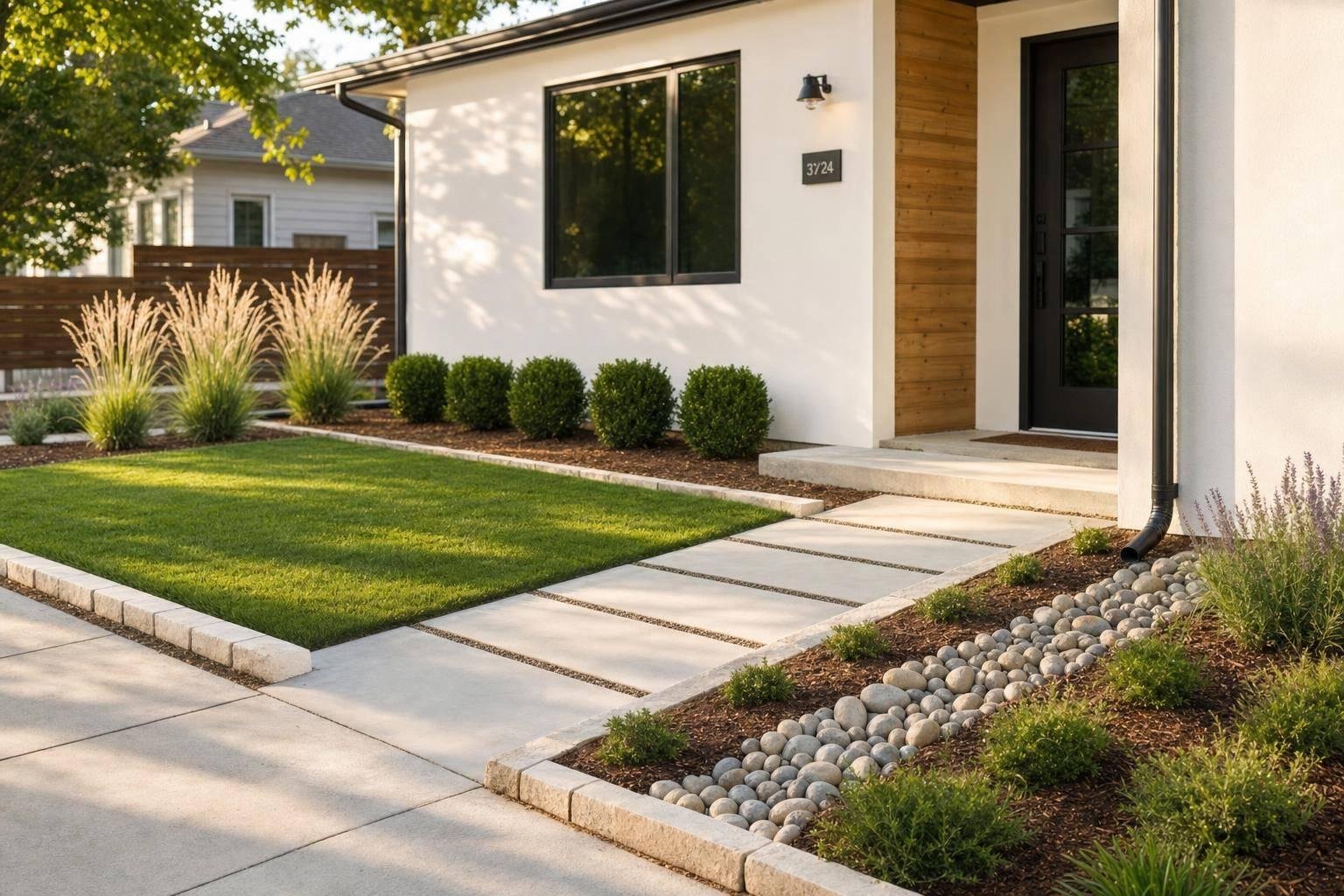
If I want a front yard that looks neat without eating up my weekends, I need to cut lawn space, keep the layout simple, and use plants and materials that hold their shape with less work.
For Maryland homes, that usually means a few clear moves:
- Replace extra grass with mulch beds in hard-to-mow spots
- Repeat a small set of shrubs instead of mixing many plant types
- Use stone edging to keep bed lines clean
- Plant ground covers in shade, slopes, and narrow strips
- Add small ornamental trees and grasses for shape without much pruning
- Fix drainage early so mulch, plants, and stone do not wash out
- Match plants to sun, shade, and soil so they need less water and less replacement
A few details matter more than most. A 2- to 3-inch mulch layer can help hold moisture and reduce weeds. Hardscape areas need almost no watering. And lawn is still the biggest weekly time drain because it often means mowing during the growing season.
Here’s the short version: less turf, fewer plant types, sharper edges, and better drainage. That’s the formula I’d use to make a front yard easier to keep up in Maryland’s hot summers, cold winters, and clay-heavy soil.
| Area or Choice | What I’d Use | Main Time-Saving Reason |
|---|---|---|
| Hard-to-mow lawn edges | Mulch beds | Less mowing |
| Foundation planting | Repeating evergreen shrubs | Less pruning guesswork |
| Walkway borders | Liriope or similar edging plants | Cleaner edges |
| Wet spots | Dry riverbed or drainage fix | Less washout and cleanup |
| Shade or slopes | Ground covers | Less mowing and fewer bare spots |
| Entry path | Paver or flagstone walkway | Low routine upkeep |
If I’m busy and still want curb appeal, I’d start with the layout first, then choose low-work materials and plantings that fit the site.
EASY Low-Maintenance Front Yard Landscaping
sbb-itb-843f8be
What Makes a Front Yard Truly Low-Maintenance?
The short answer is simple: less lawn, fewer plant types, and cleaner edges. Most front yards end up stealing weekend time for the same reasons. There’s too much grass to mow, too many plants to care for, and too many borders that need constant tidying.
Shrinking your turf area can save a lot of time. Less lawn means less mowing, which matters even more during Maryland’s wet growing season. Swapping parts of the lawn for mulch beds, ground covers, or hardscaping cuts back on weekly upkeep. [2]
After that, focus on simple plant selection. Repeating two or three dependable shrubs gives the yard a cleaner look and makes care easier. In Maryland, Japanese holly can stand in for boxwood, and a small dogwood can add height without the size of a large tree. [2]
Clean edges make a big difference. Ground covers like liriope can line long sidewalks and help the border stay neat with little upkeep. That also makes mowing and weekly cleanup faster. [2]
That simple formula sets up the layout choices below.
1. Start With a Simple Front Yard Plan From Pro Landscapes MD
A low-maintenance front yard begins with a simple plan built for Maryland sun, soil, drainage, and weather. Pro Landscapes MD can design a front yard that’s easier to care for from day one, using plant picks and bed shapes that match the site.
One smart first step is soil testing. If you know your soil’s pH, it gets a lot easier to choose plants that are more likely to do well. [1] It also helps to buy from local nurseries, since those plants are often better suited to Maryland conditions. [1]
Timing matters too. Handle painting or power washing before you plant, so new shrubs and flowers don’t get hit by ladders, hoses, or equipment. For the layout itself, stick with a small group of plants and repeat them across the yard. That keeps the look neat and cuts down on guesswork.
It’s also worth skipping aggressive vines like English ivy and sweet autumn clematis. They spread fast and can damage masonry. [2]
Once the layout is set, one of the fastest ways to cut upkeep is to replace part of the turf with mulch beds.
2. Replace Extra Lawn With Mulch Beds
Once your layout is in place, one of the simplest ways to cut yard work and make the front yard look better is to swap unused grass for mulch beds along the foundation, sidewalk, and other awkward mowing spots.
The best areas for this change are along the foundation, next to the sidewalk, and in front of large blank walls or garage fronts. [2] These spots are often a pain to mow and don’t always grow well anyway. A mulch bed with a few shrubs can make the space look more polished while cutting down on maintenance.
A 2- to 3-inch layer of mulch helps slow weed growth and hold moisture during Maryland’s hot summers. [2] In plain terms, that means less watering and fewer weeds once summer hits. Inside the beds, liriope works well along walkway edges because it creates a clear border and helps keep mulch where it belongs. [2] For structure through the year, Japanese holly is a lower-maintenance pick than boxwood, while Annabelle or Limelight hydrangeas bring color with only light pruning. [2]
Stone edging also helps keep mulch in place and gives the bed line a crisp look. That sharp edge does a lot of work. It makes the whole front yard look neater and easier to care for.
3. Use Repeating Shrubs Instead of Mixed Plantings
Once you’ve set the bed shape, repeating the same shrubs is one of the easiest ways to keep a front yard neat without piling on more work. Mixing too many shrub types can make the space feel busy. It also makes upkeep more of a chore.
When you repeat just two or three dependable shrubs, the whole bed looks cleaner and more put-together. Pruning gets easier too. Instead of dealing with a different schedule for every plant, you can usually handle the whole bed in one session.
Inkberry holly and compact viburnums are a good fit for repeating beds in foundation plantings, entry beds, and walkway borders. Japanese holly works well here too. If you want a bit more color and texture without much upkeep, abelia and dwarf nandina are solid picks.
Try to pair shrubs with the same sun and water needs. That keeps watering simpler and makes seasonal cleanup less of a headache.
| Shrub | Best Use |
|---|---|
| Inkberry Holly | Foundation beds and simple repeating layouts |
| Compact Viburnum | Entry beds with multi-season interest |
| Japanese Holly | Walkway borders and foundation plantings |
| Dwarf Nandina | Compact accent in repeating beds |
| Abelia | Long-season color along entry and walkway beds |
4. Add Stone Edging for Cleaner Bed Lines
Clean bed lines can sharpen curb appeal in a hurry. When the line between the lawn and the mulch bed looks crisp, the whole front yard feels more planned and cared for. And once that edge is in place, keeping the bed neat gets a lot easier.
On long beds and curved borders, a stone edge helps keep grass from creeping into planting areas. That means less string trimming, less hand-weeding along the edge, and less time spent fixing messy lines. It also cuts down on hand-edging around lawn borders and curves, which can save busy homeowners real time week after week.
After the border is set, ground covers can take over problem spots with even less upkeep.
5. Plant Ground Covers in Problem Areas
Some front-yard areas just don’t do well with grass. Think steep slopes, deep shade, or those skinny strips next to walkways. That’s where ground covers can make life a lot easier.
Once they’re established, ground covers spread into a dense mat that helps block weeds, hold soil in place, and cut down on mowing. In Maryland, native and locally adapted plants tend to work best because they handle local soil and seasonal weather with little extra care.[1]
A few solid picks:
- For shady spots under trees, Lenten Rose (Helleborus) does well in Maryland shade and blooms early in the season.
- For sunny, dry areas, Catmint handles heat and asks for very little care.
- Along front walkways, Liriope (lilyturf) creates a neat edge with low upkeep.[2]
- On slopes, native sedges (Carex) help keep soil in place and need little supplemental care once established.
Once the ground layer fills in, small ornamental trees can add height without adding much weekly work.
6. Choose Small Ornamental Trees for Year-Round Structure
Ground covers handle the lower layer. Small trees take care of the vertical one.
That extra height does a lot of work in a front yard. A small tree can frame the house, give the space better balance, and add shape without making the lot feel crowded. Put one near the entry, at a corner, or at the end of a planting bed to make the layout feel finished.
For year-round structure, go with evergreen trees or small flowering trees. The goal is simple: pick compact trees that keep their form without much pruning. That way, the yard still looks neat even when other plants fade back.
It also helps to buy trees grown for your area. Locally grown trees tend to adjust more easily to Maryland weather and temperature swings.[1] Before you plant, make sure the tree fits your site’s light and soil conditions.
7. Use Ornamental Grasses for Easy Texture and Height
Ornamental grasses bring in motion, texture, and height without asking for much in return. Once your shrubs and ground covers are in place, grasses do a nice job of filling open spots without piling on pruning work. They tend to shine as the middle layer between mulch beds and small trees.
Most grasses need just one cutback in late winter or early spring, before fresh shoots start to come up.
Switchgrass (Panicum virgatum) is a solid pick for sunny Maryland front yards. It handles summer heat and the occasional dry stretch well. Maryland’s USDA Hardiness Zones 6a–7 make heat-tolerant grasses like switchgrass a good match. [2]
Grasses can also shape sidewalk edges and make a front walk look more polished. For a simple planting mix, pair switchgrass with Black-eyed Susans for color and liriope for a clean border. It also helps to group grasses by light and water needs, so each planting area stays easy to manage.
Before you plant, skip invasive grass varieties. Native grasses and nativars are the safer route if you want to support local pollinators and birds. [2]
8. Define Planting Zones Along the Foundation and Walkway
Once you’ve picked simple beds and edging, split the front yard into two clear planting zones: a foundation bed and a walkway border. That small move makes mowing, edging, and weekly cleanup a lot easier. It also creates a clean buffer between the lawn, the hardscaping, and the house.[2]
Use liriope along both sides of the sidewalk to outline the path without much upkeep.[2]
For the foundation bed, repeat the same evergreen shrub, such as Japanese holly, to create a low, even border that keeps its shape year-round.[2]
Leave mulch gaps between plants. The bed will look tidier, weeds will be easier to spot, and the plants will have space to grow.[2]
Once the beds are defined, a paver or flagstone walkway can sharpen the layout even more. With the planting zones set, the next move is choosing a walkway surface that supports that layout.
9. Upgrade to a Paver or Flagstone Walkway
Once your planting zones are set, the walkway is the next smart place to trim yard work. Swapping out a worn grass path for pavers or flagstone gives your entry a cleaner look and cuts back on upkeep.
In Maryland, proper grading and a compacted base help the walkway stay level through freeze-thaw cycles. If water tends to collect in that area, handle drainage as part of the same job.
Liriope works well along the edges. It softens the border and keeps the walkway framed without much trimming.
Most of the time, upkeep comes down to occasional sweeping and pulling a few weeds from the joints. If your current concrete path looks dated but is still structurally sound, a thin brick or stone overlay can update the surface without tearing out the slab. Pro Landscapes MD installs flagstone and paver walkways with drainage-aware construction to help them stay level. And if the path sits in a low spot, fix drainage first before moving on to wet-area solutions.
10. Fix Wet Spots With a Dry Riverbed or Basic Drainage Improvement
A soggy front yard can become a maintenance headache in no time. When water keeps pooling, mulch washes away, turf starts thinning into bare spots, and plants that hate wet feet begin to struggle.
If water is collecting near the foundation, regrading and underground drainage pipes can help move it away from the house. For low areas in the yard, a dry riverbed can guide runoff, while stone helps slow the flow and cut down on erosion. Once the drainage issue is under control, the rest of the front yard is usually much easier to keep clean and in good shape.
Handle drainage first. If you don’t, mulch, plants, and hardscape can keep washing out after every heavy rain. Fixing the problem early also helps stop repeat mulch loss, bare patches, and the extra cleanup that can chip away at all your other yard work [2].
Pro Landscapes MD handles drainage installation, French drains, dry riverbeds, and grading across central Maryland. With wet areas addressed, the next step is choosing plants that fit the site.
Plant Choices for Sun, Shade, and Typical Maryland Conditions
Most suburban Maryland yards sit in USDA zones 6a–7b. That means low-upkeep planting usually comes down to one simple thing: put the right plant in the right spot.
If a plant needs full sun but ends up in shade, or likes dry soil but sits in a damp bed, you’ll likely deal with weak growth and constant replacements. A better move is to match each plant to the light and moisture conditions in each area of the yard.
For full sun beds, coneflowers (Echinacea), black-eyed Susans, and catmint are solid picks. They handle Maryland heat well and come back each season with little fuss. Lavender also does well with Maryland heat and humidity.
Shaded areas call for plants that don’t mind low light. Lenten Rose (Helleborus) is a dependable choice because it blooms early, handles shade, and deer usually leave it alone. In part shade, native ferns or sedges (Carex) work well, especially if you haven’t already used them along walkway edges.
For foundation borders, Japanese Holly and Inkberry Holly are easy to work with. They hold their shape through the year and usually need very little pruning. Before planting, check Maryland’s restricted species list so you don’t end up paying for removals later.[2]
Once you’ve settled on a plant list, the next time-saving move is to group those plants into simple, repeatable zones.
Use this quick reference to narrow your choices by light condition.
| Light Condition | Recommended Plants | Why They Work |
|---|---|---|
| Full Sun | Coneflowers, Black-eyed Susan, Catmint, Lavender | Heat-tolerant, long bloom times, low upkeep |
| Part Shade | Mountain Laurel, Pagoda Dogwood, Hydrangea ‘Annabelle’ | Adds structure and seasonal color in partial shade |
| Full Shade | Lenten Rose, Sedges, Ferns | Low-light tolerant, low upkeep |
| Foundation & Borders | Inkberry Holly, Japanese Holly, Liriope | Year-round structure, clear bed lines |
Layout Tips That Save Time Every Week
The biggest time sink in front yards is usually the layout. When beds have odd shapes, materials are mixed all over the place, and plants are scattered, routine work turns into a chore. Mowing takes longer. Edging gets fussy. Even spreading mulch feels like stop-and-go traffic.
A simpler setup saves time week after week. Break the yard into a few easy, repeatable zones: one foundation bed, one walkable border, and one small lawn area with clean edges. That means fewer lines to mow, trim, and fix later.
Liriope planted along both sides of a walkway can cut down on trimming and help the edge look neat. The same idea works in the foundation bed too: repeat the same plant groupings and stick with simple shapes.
Inside the foundation bed, use one or two plants again and again so pruning, mulching, and replacing plants stay easy. Add a single accent plant only when you need to fill a gap. That kind of simple layout also makes plant picking easier in sunny spots, shady areas, and wet parts of the yard.
Lawn vs. Mulch Beds vs. Ground Covers vs. Hardscaping: A Quick Comparison
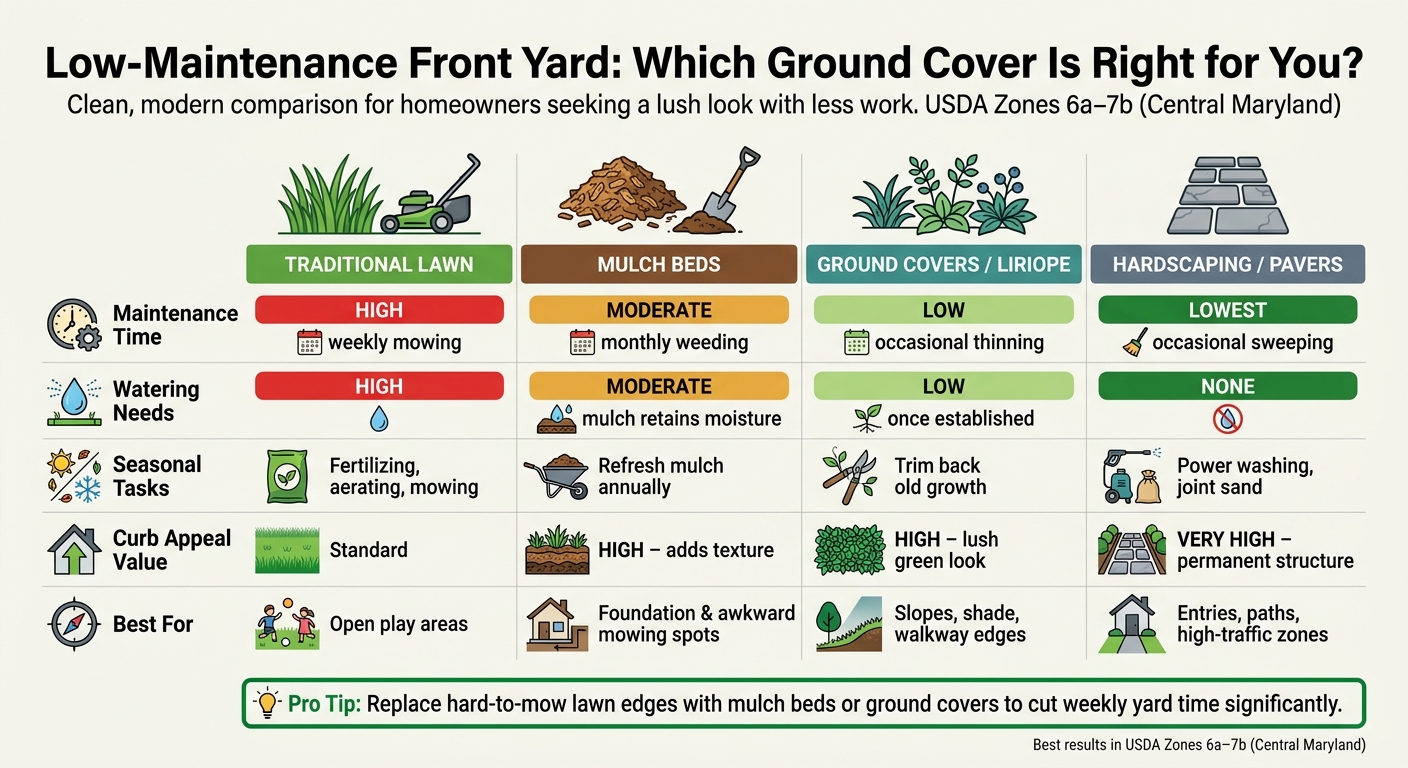
Lawn vs. Mulch Beds vs. Ground Covers vs. Hardscaping: Low-Maintenance Front Yard Comparison
Once you’ve broken the yard into clean zones, the next step is simple: decide what belongs in each one. The chart below helps you choose the option that asks for the least work while still making sense for the space.
| Feature | Traditional Lawn | Mulch Beds | Ground Covers (e.g., Liriope) | Hardscaping (Pavers/Stone) |
|---|---|---|---|---|
| Maintenance Time | High (weekly mowing) | Moderate (monthly weeding) | Low (occasional thinning) | Lowest (occasional sweeping) |
| Watering Needs | High | Moderate (mulch retains moisture) | Low (once established) | None |
| Seasonal Tasks | Fertilizing, aerating, mowing | Refreshing mulch annually | Trimming back old growth | Power washing, joint sand |
| Curb Appeal Value | Standard | High (adds texture) | High (lush, green look) | Very High (permanent structure) |
Use this chart to match each area with the material that will ask the least from you.
The biggest contrast is between lawn and hardscaping. One needs weekly mowing and regular seasonal work. The other mostly needs the occasional sweep and some power washing now and then.
Ground covers fall in the middle. They soften edges, help block weeds, and usually need less attention than turf.
Mulch beds remove mowing from the picture altogether, which is a big win. But they still need fresh mulch once a year and the occasional weed pulled. That choice shapes the seasonal upkeep plan in the next section.
Seasonal Upkeep Checklist for Busy Maryland Homeowners
Once the layout is set, seasonal upkeep is pretty simple. This checklist helps you keep mulch, shrubs, and drainage in check without turning yard work into a second job.
| Season | Key Tasks |
|---|---|
| Late Winter / Early Spring | Cut back ornamental grasses; trim and weed early |
| Spring | Refresh mulch; check boxwoods for leafminer damage |
| Fall | Recheck boxwoods; inspect drainage before freeze |
| Winter | Protect evergreen shrubs from winter burn; prune dormant trees |
After major storms, clear debris from drainage areas and reset any shifted stone edging.
Conclusion
The front yards that tend to hold up best have a few simple traits in common: less lawn to mow, materials that don’t need constant upkeep, and plants that fit Maryland’s climate. Replace patchy, hard-to-keep turf with mulch beds, frame the space with stone edging, and use shrubs like boxwood or Japanese holly that keep a neat shape through the seasons.
Plant choice matters just as much. The right plant in the right spot usually needs less trimming, watering, and general work. For a low-maintenance yard, the best option is often a plant that already fits Maryland’s climate and soil.
If you want help turning these ideas into a finished front yard, Pro Landscapes MD can handle the design and installation. If you need help with design, planting, hardscaping, or drainage, Pro Landscapes MD serves homeowners across central Maryland.
FAQs
How much lawn should I remove first?
Remove as much turf as your planting plan or hardscape needs. Take it out all the way. Turf has dense, shallow roots that compete with new plants and can make seeding or early growth much harder.
Scalp off the turf in the marked area and set it aside. If you’re working with heavy clay soil, you may need to loosen the ground to a depth of up to 9 inches before you mix the chopped turf back into the soil.
Which low-maintenance plants work best in Maryland?
For a low-maintenance Maryland landscape, put native plants at the center of your plan. They already fit local conditions, so they usually need less water, less fertilizer, and less hands-on care. On top of that, they help support the local ecosystem.
Some strong picks include Maryland Golden Aster, Black-eyed Susan, Orange Coneflower, Little Bluestem, and Purple Lovegrass. If you want to mix in other easy-care favorites, Peonies, Coneflowers, Lenten Rose, and Catmint can work well too. For shape and structure with very little upkeep, Pagoda Dogwood is a smart choice.
Should I fix drainage before redoing my front yard?
Yes. Fix drainage before any other front yard renovations.
Good water control protects your home’s foundation. It also gives new plants, mulch, pavers, and other landscape features a much better shot at lasting.
If you leave issues like standing water or runoff flowing toward your home, those problems can lead to erosion, property damage, and failed landscaping. That’s why grading, leveling, and systems like French drains should come first.
Think of it this way: if the base is wrong, everything you add on top is at risk.
Chat with Us