









- bhavya gada
- No Comments
Native landscaping is a smart choice for Maryland homeowners seeking a low-maintenance, eco-friendly yard. By using plants native to Maryland and the southeastern U.S., you can reduce upkeep, conserve water, and support local wildlife. These plants are naturally suited to Maryland’s climate, requiring less watering, fertilization, and pest control than non-native species. Plus, Maryland law protects your right to implement eco-friendly landscaping options.
Key Takeaways:
- Why Native Plants? They thrive in local conditions, save water, and require minimal care.
- Benefits: Improved soil health, natural pest control, and reduced yard maintenance and landscape projects.
- Best Picks: Trees like River Birch and Eastern Redbud; shrubs like Winterberry Holly and Virginia Sweetspire.
- Tips for Success: Group plants by water and light needs, test soil, and mulch properly.
Switching to native landscaping means less work, lower costs, and a healthier yard. Whether you’re starting fresh or replacing an existing lawn, this guide covers everything you need to know to create a thriving, easy-to-maintain outdoor space.
Benefits of Native Plants for Maryland Landscapes
Support for Local Wildlife and Soil Health
Native plants play a crucial role in maintaining a thriving local ecosystem. Their deep root systems are excellent for improving soil structure and aiding stormwater absorption, making them a natural fit for Maryland’s unique hydrology [2]. These plants are naturally resistant to local pests and diseases, which reduces the need for chemical interventions. They also provide vital food and shelter for beneficial insects, which, in turn, support bird populations and help control pests naturally – minimizing reliance on synthetic pesticides [1]. Maryland’s diverse landscapes, from the sandy Coastal Plain to the clay-rich Piedmont and rocky Mountain regions, make it important to choose native plants that align with your specific area for the best results [2]. On top of these ecological advantages, native plants are inherently water-efficient.
Water Conservation Benefits
Once established – usually within two to three years – native plants require very little supplemental irrigation [2]. Since they are naturally adapted to the local rainfall patterns, they become largely self-sufficient. This water efficiency not only helps conserve a critical resource but also reduces the time and effort needed for yard maintenance. In contrast, non-native species often require constant care to withstand Maryland’s humid summers and fluctuating rainfall. By choosing native plants, you can significantly cut down on water usage and ongoing maintenance costs.
Lower Long-Term Costs
Using native plants in landscaping services can lead to significant savings over time. Unlike non-native species, native plants generally don’t need regular fertilization, heavy pesticide use, or constant watering, which means lower maintenance expenses overall [2]. As native groundcovers grow and mature, they naturally spread, covering larger areas without additional investment [1].
"Simple landscape designs using native plants can reduce the amount of lawn to maintain and produce climate-resilient, diverse landscapes in townhome and single-family home communities." – University of Maryland Extension [1]
Reducing the size of your lawn not only decreases mowing time and costs but also allows native plantings to establish themselves and suppress weeds naturally. These combined advantages make native landscaping an ideal choice for Maryland homeowners seeking a resilient, low-maintenance solution.
sbb-itb-843f8be
Let’s Transform this Maryland Landscape with 100’s of Native Plants!
Best Native Trees and Shrubs for Maryland Yards
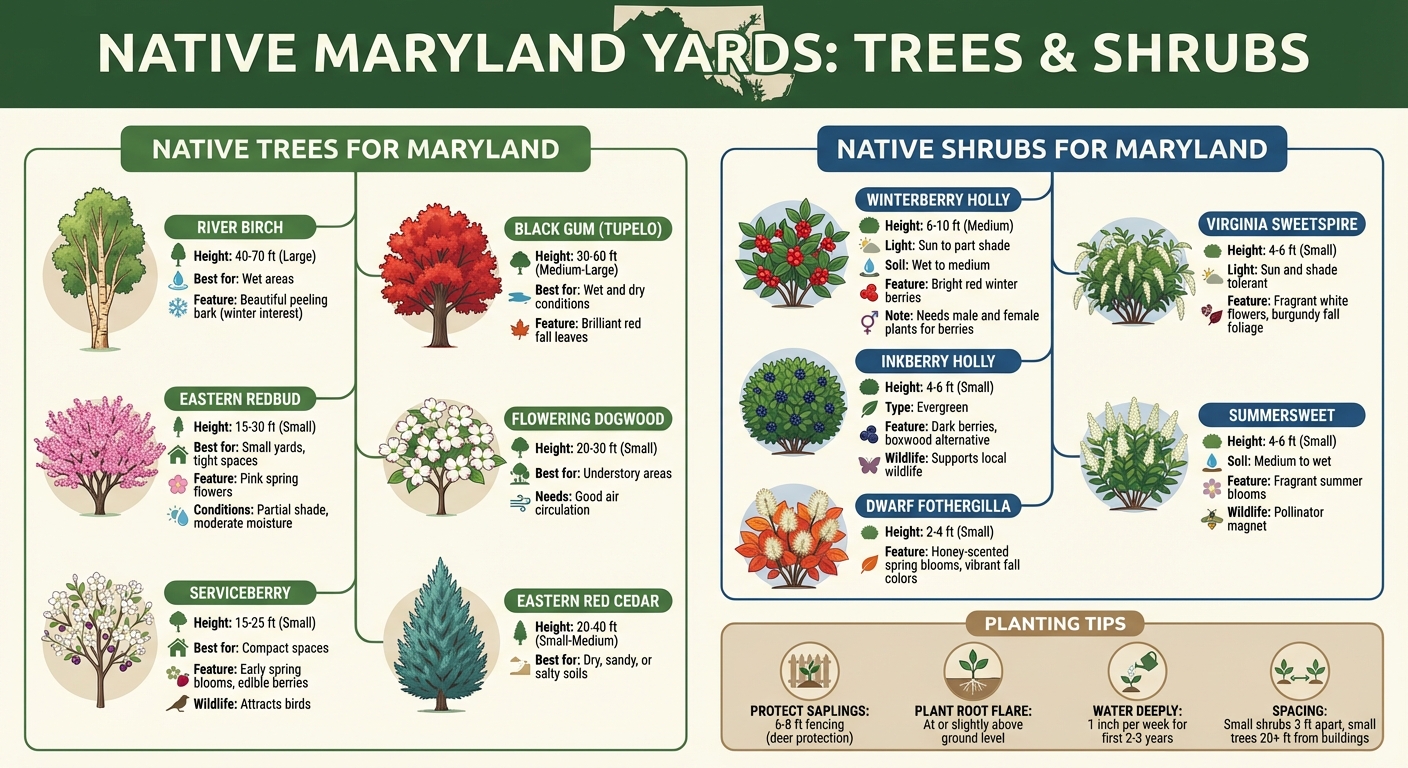
Best Native Trees and Shrubs for Maryland Landscapes
Picking the right native plants for your yard starts with knowing your soil and site conditions. Maryland’s geography is incredibly diverse, ranging from sandy Coastal Plain soils to the clay-heavy Piedmont and the rocky, cooler Western Mountains [2]. A simple percolation test can help you figure out your yard’s drainage, making it easier to match plants to the environment. By choosing plants that naturally thrive in your conditions, you’ll save time on maintenance and create a healthier, low-maintenance landscape. Here are some native trees and shrubs that work well in different Maryland settings.
Native Trees for Maryland
River Birch is perfect for wet areas, growing to 40–70 feet tall and showcasing beautiful peeling bark that stands out in winter [2]. If you have a smaller yard or need a tree for tight spaces, Eastern Redbud (15–30 feet) is an excellent choice. Its pink spring flowers are stunning, and it thrives in partial shade with moderate moisture. Another compact option is Serviceberry (15–25 feet), which blooms early in spring and produces edible berries that birds love [2].
For a tree that can handle both wet and dry conditions, Black Gum (or Tupelo) is a great pick. It’s tough, grows 30–60 feet tall, and lights up the fall with brilliant red leaves [2]. Flowering Dogwood (20–30 feet) works well in understory areas with good air circulation, while Eastern Red Cedar (20–40 feet) thrives in dry, sandy, or even salty soils [2]. If deer are a concern, protect young saplings with 6–8-foot fencing until they grow tall enough to avoid browsing [2].
Pair these trees with native shrubs and modern landscaping trends to create a balanced and resilient yard.
Native Shrubs for Maryland
Winterberry Holly adds a pop of color in winter with its bright red berries, which stick around after the leaves fall. It grows 6–10 feet tall in sun to part shade and needs wet to medium soil. Keep in mind, you’ll need both male and female plants for berries to form [1]. For a year-round evergreen option, Inkberry Holly (4–6 feet) makes a great alternative to boxwood and offers wildlife-friendly dark berries [1].
Dwarf Fothergilla (2–4 feet) is a standout with its honey-scented blooms in spring and vibrant fall colors. Virginia Sweetspire (4–6 feet) is another versatile pick, thriving in both sun and shade while producing fragrant white flowers and rich burgundy fall foliage [1]. If you’re looking for summer interest, Summersweet (4–6 feet) is a pollinator magnet with its fragrant blooms and does well in medium to wet soils [1].
When planting shrubs, make sure the root flare is at or slightly above ground level, and water deeply (about 1 inch per week) during the first 2–3 years to help them establish [2].
Designing a Low-Maintenance Native Landscape
Creating a native landscape that’s easy to care for starts with hydrozoning – grouping plants with similar water, light, and soil needs in the same areas. This approach simplifies watering and keeps maintenance straightforward. Plus, when you choose plants that naturally thrive together, you’re reinforcing their ability to sustain themselves and adapt over time. Once hydrozoning is in place, you can refine your design with a few key principles to achieve a well-organized and low-maintenance layout.
Basic Design Principles
To maintain a clean and intentional look, include one representative from each plant category – groundcover, perennial, shrub, and tree. This avoids a cluttered appearance and keeps the design cohesive [1]. Start your landscaping efforts close to your home. This protects young plants and minimizes soil compaction during the process. Also, make sure to space plants according to their mature size – small shrubs should be about 3 feet apart, while small trees should be planted at least 20 feet away from buildings [1].
Before planting, test your soil and enrich it with organic matter as needed. Add mulch, but keep it no deeper than 3 inches to shield roots without harming the plants [1]. To keep your yard visually appealing all year, mix plants that peak in different seasons. For example, Eastern Redbud and Serviceberry add beauty in spring, Black-Eyed Susan brightens up summer, native Asters bring fall color, and Winterberry Holly ensures a vibrant winter display [1].
Adding Hardscaping Elements
Hardscaping works beautifully alongside native plants, cutting down on maintenance while adding structure and visual interest. Features like patios, walkways, and retaining walls reduce the amount of lawn you need to care for – less mowing, weeding, and watering [5]. Stone paths and patios also provide a consistent framework during the winter months when native perennials die back, keeping your yard visually appealing year-round [5][6].
"Proper hardscaping keeps your outdoor area beautiful all year without the heavy maintenance or careful plant selection necessary when your property is more reliant on landscaping alone." – Chesapeake Landscape Group [6]
When planning your hardscaping, think about natural walking paths. Position walkways to protect delicate plants from heavy foot traffic and to prevent soil compaction [4]. Keep in mind that hard surfaces reflect heat and light, which can create sunnier conditions for nearby plants. This makes patios or walls ideal spots for sun-loving native species [1]. Choose materials like natural stone, pavers, or gravel based on both their look and function. For example, permeable pavers are a smart choice for areas like native rain gardens, as they help with drainage [4][6].
Planting and Maintenance Best Practices
Getting the planting process right is key to creating a thriving, low-maintenance native landscape that requires minimal upkeep over time.
How to Plant Native Species
Start by revisiting soil testing guidelines and mix organic matter throughout the entire planting area – not just in the individual holes. This helps roots spread across your yard rather than staying confined to one spot [1][2]. When digging, make each hole 2 to 3 times wider than the root ball, and ensure the root flare is positioned at or slightly above the soil line. Avoid planting deeper than the nursery root ball [2].
Spacing matters. Small shrubs need about 3 feet between them, medium shrubs require 4 feet, and large shrubs need 5 feet. For small trees, plant them at least 20 feet away from structures or other trees [1]. Proper spacing prevents overcrowding and minimizes the need for corrective pruning later on. It’s a good idea to plant larger specimens first, closer to the home, and work outward. This method protects smaller plants from being stepped on and helps avoid compacting the soil [1].
Watering is critical for new plants. If there’s no rainfall, provide 1 inch of water per week for the first 2–3 years [2]. During this time, plants focus on root development, so visible growth above ground may be minimal – that’s completely normal [1]. Apply a 2–3 inch layer of mulch around each plant, leaving a 2–3 inch gap around the trunks to prevent rot [1][2].
Once your plants are spaced correctly, watered, and mulched, you’ll be set up for long-term success.
Simple Maintenance Strategies
After planting, follow these steps to keep your native landscape healthy with minimal effort.
Dense planting is the best way to combat weeds. When plants grow to cover the entire area, there’s little room left for weeds to take root. This reduces the need for ongoing mulching [1]. For newer beds, maintain a 2–3 inch mulch layer to suppress weeds until the plants fill in [1]. Plus, this technique helps conserve water, as mature plantings rarely need irrigation.
Pruning should focus on structure, not size. During a tree’s first decade, formative pruning is essential to establish a strong central leader and prevent problematic growth patterns. This reduces maintenance needs later on [2]. For species like Flowering Dogwood, which are prone to disease, plant them in areas with good light and airflow to minimize fungal issues [2]. Also, leave native grasses and certain perennials standing through winter – they provide shelter for birds and beneficial insects that naturally manage pests in the spring [3].
Native gardens require far less upkeep than traditional landscapes. In Maryland, for example, established native gardens demand about 70% less maintenance time compared to conventional yards [3]. Investing time in these strategies early on will pay off in the long run, which is why many homeowners choose us to design and install their native gardens.
How Pro Landscapes MD Can Help
Creating a thriving native landscape in Maryland isn’t just about planting the right species – it’s about understanding the local climate, soil, and ecosystem. Pro Landscapes MD brings expertise to every project, combining thoughtful design with practical maintenance and hardscaping solutions to ensure your landscape not only looks great but is also easy to care for.
Professional Design and Installation
Pro Landscapes MD’s team includes skilled horticulturists, landscape designers, and licensed Maryland foresters who specialize in crafting native landscapes tailored to your property. The process starts with a site visit and a detailed proposal, which outlines specific plant choices and includes drawings of the proposed design [7][9].
For example, in Germantown, they transformed a "mud pit" into a beautiful garden in just days, thanks to a well-planned proposal and an efficient installation crew [9]. Each design focuses on sustainability and water efficiency, incorporating features like drip irrigation systems that are perfectly suited to Maryland’s climate [1][8]. A recent project in Columbia, completed in October 2024, replaced a high-maintenance front yard lawn with a sustainable, native landscape [8].
"The proposal was a meticulous, professional, step-by-step outline of everything his team would do and how they would do it" – Tracy K. [9]
Ongoing Maintenance Services
Once the plants are in the ground, keeping them healthy is key. Pro Landscapes MD offers clear, step-by-step care instructions after installation and provides maintenance plans to ensure the long-term success of your native landscape [8][9]. These plans include monitoring moisture levels during the critical first year, maintaining mulch at a maximum depth of 3 inches, and dividing plants as they grow to improve ground coverage [1].
Beyond plant care, their maintenance services extend to hardscaping, ensuring that every element of your landscape stays functional and visually appealing.
Hardscaping for Native Landscapes
Hardscaping is an essential part of low-maintenance outdoor spaces, and Pro Landscapes MD excels in integrating features like patios, walkways, and retaining walls with native plantings. Using materials such as Techo-Bloc and natural stone, they create durable, elegant designs [7].
For instance, in Wheaton, they addressed a water seepage issue by installing a flagstone stepping stone path over a hazardous ditch [9]. They also specialize in drainage solutions, such as French drains, dry riverbeds, and rain gardens, to protect native plants from erosion and water pooling [7][8]. In October 2024, a project in Columbia combined a riverbed and stepping stone path to manage water flow effectively [8]. These features not only enhance the landscape’s appearance but also simplify maintenance, making them a practical and attractive addition to any yard.
Conclusion
Switching to a low-maintenance native landscape offers more than just a break from constant mowing – it helps support local wildlife and creates a healthier environment. Native trees and shrubs naturally thrive in Maryland’s climate, needing less water, fewer chemicals, and minimal upkeep. By replacing traditional turf with native plants, you’re creating a landscape that adapts better to environmental changes and naturally suppresses weeds as it matures.
Focusing on a high percentage of native plants amplifies these benefits. Maryland law even protects homeowners’ rights to install eco-friendly features like pollinator gardens and rain gardens, making it easier to embrace sustainable landscaping[1].
Achieving these benefits takes thoughtful planning. Practices like soil testing and proper mulching are essential for long-term success[1].
For homeowners in Howard County, Montgomery County, and nearby areas, Pro Landscapes MD offers the expertise needed to bring these principles to life. Their team of horticulturists and landscape designers knows which native species will thrive in specific conditions and how to seamlessly incorporate features like patios and drainage systems. They also provide ongoing support to ensure your landscape remains vibrant year after year. With their guidance, you can transform your yard into a sustainable, nature-friendly space that thrives on its own.
FAQs
How do I find my yard’s soil and drainage type?
To figure out your yard’s soil type, you can use the "Feel Method" or a "Jar Test". These simple techniques help determine whether your soil is sandy, clay, or loamy – important characteristics that affect drainage and plant health.
For checking drainage, dig a small hole, fill it with water, and observe how quickly it empties. If the water drains quickly, your soil has good drainage. Slow drainage, on the other hand, points to poor water flow. These quick tests can provide valuable insights for planning landscaping and managing water effectively.
What native plants are best for shade or wet areas?
For areas with shade, try planting Virginia bluebells, woodland phlox, or foamflower. If you’re dealing with wet spots, consider buttonbush, spicebush, or winterberry. These plants naturally thrive in these conditions and can add beauty to your landscape while requiring little upkeep.
How long does it take for a native landscape to become low-maintenance?
Once a native landscape in Maryland is fully established – a process that can take a few years depending on the specific plants and design – it becomes much easier to maintain. At that point, it can require up to 80% less water, fertilizer, and regular upkeep. This makes it not only a smart choice for the environment but also a time-saver for homeowners looking for a low-effort solution.
Chat with Us