









- bhavya gada
- No Comments
If your Maryland yard project disturbs 5,000 square feet of land or 100 cubic yards of earth, you may need an approved erosion and sediment control plan before work starts. And if the job hits 1 acre, you may also need NPDES Construction General Permit coverage.
If I were planning a patio, retaining wall, drainage fix, or yard regrade, I’d check three things first:
- How much land will be disturbed
- Whether my county has stricter permit rules
- Whether the site is near a storm drain, stream, wetland, or buffer
That’s the core issue. Maryland’s rules are about keeping soil on the property, keeping mud out of inlets and roads, and keeping controls in place until <u>final stabilization</u>.
Here’s the short version:
- BMPs are the measures used to keep soil in place and stop sediment from leaving the site.
- Erosion prevention means stopping soil loss before it starts.
- Sediment control means trapping loosened soil before it reaches drains, streets, or nearby lots.
- Residential jobs often need site plans, grading limits, stabilization details, BMP details, and a work sequence.
- BMPs must be installed as approved, checked during the job, and repaired after rain or damage.
- Areas near streams, wetlands, buffers, and storm drains often get added review.
A few numbers matter most here: 5,000 sq. ft., 100 cubic yards, and 1 acre. If I know where my project falls, I can usually tell whether I’m looking at a simple job, a county review, or state permit coverage too.
This article boils down the rules into plain English so you can see what triggers review, what gets filed, what gets inspected, and what has to stay in place until the job is done.
MDE Guidance For Protecting Stormwater Best Management Practices During Construction November 2023
sbb-itb-843f8be
When Maryland Requires Permits and Approved Plans
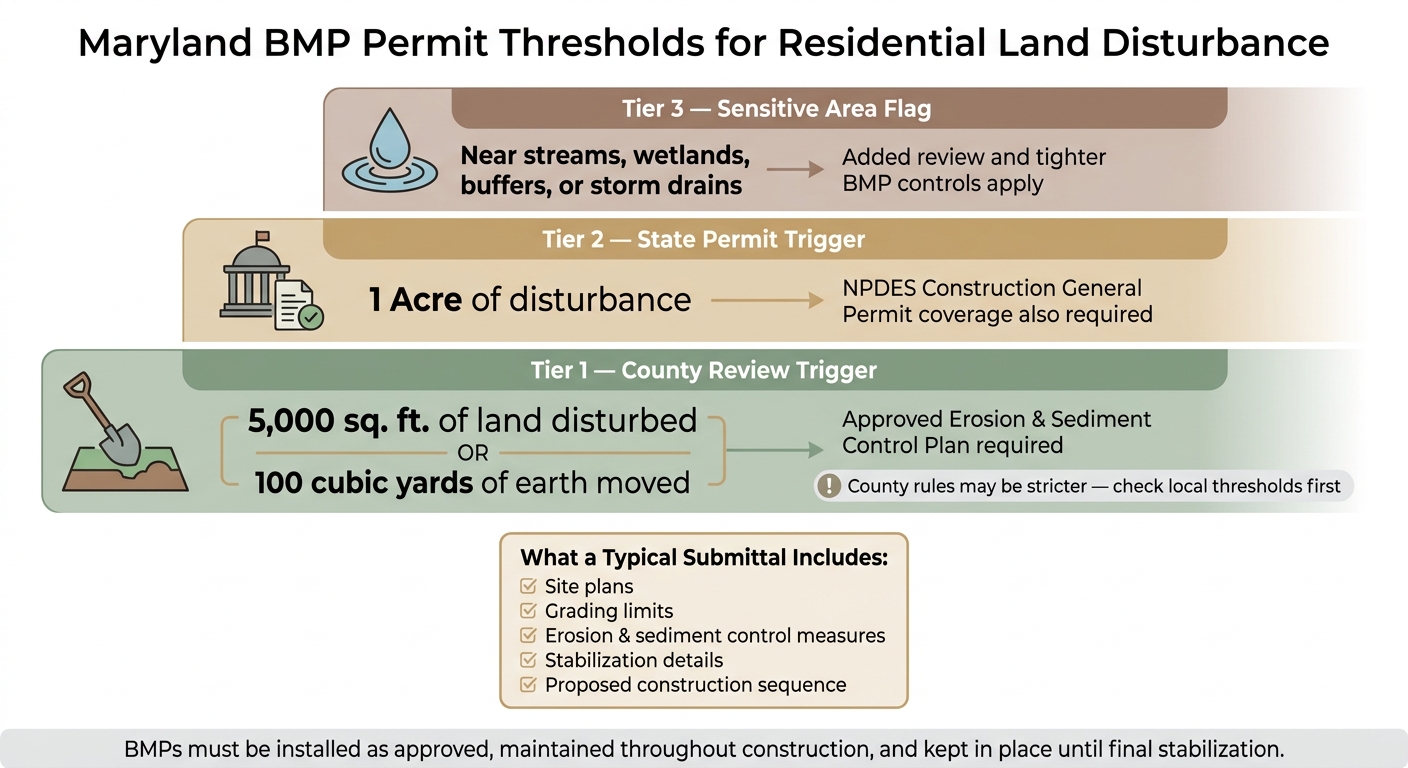
Maryland Erosion & Sediment Control: Key Permit Thresholds at a Glance
Before Maryland reviews BMPs for a residential site, it first looks at one basic issue: does the project need a permit and an approved erosion and sediment control plan?
For residential work in Maryland, an approved erosion and sediment control plan is required when land disturbance reaches 5,000 square feet or earth disturbance reaches 100 cubic yards. If disturbance reaches 1 acre, the project also needs NPDES Construction General Permit coverage. Work like regrading, slope reshaping, and drainage repairs can often cross those lines.
Those thresholds matter because they decide when Maryland expects formal BMP plans, not just good intentions on-site.
County Permit Thresholds Homeowners Should Check Before Starting Work
Homeowners should check county rules before any work begins. Local permit thresholds can be stricter than the state minimums, and that can change what the project needs from day one.
That local review sets the BMPs, inspections, and approvals that apply before excavation starts.
What a Grading or Sediment Control Submittal Typically Includes
A grading or sediment control submittal usually includes:
- Site plans
- Grading limits
- Erosion and sediment control measures
- Stabilization details
- The proposed construction sequence
These details show which BMPs will be used on-site to keep soil in place and trap sediment.
Approved BMPs for Soil Retention and Sediment Control on Residential Sites
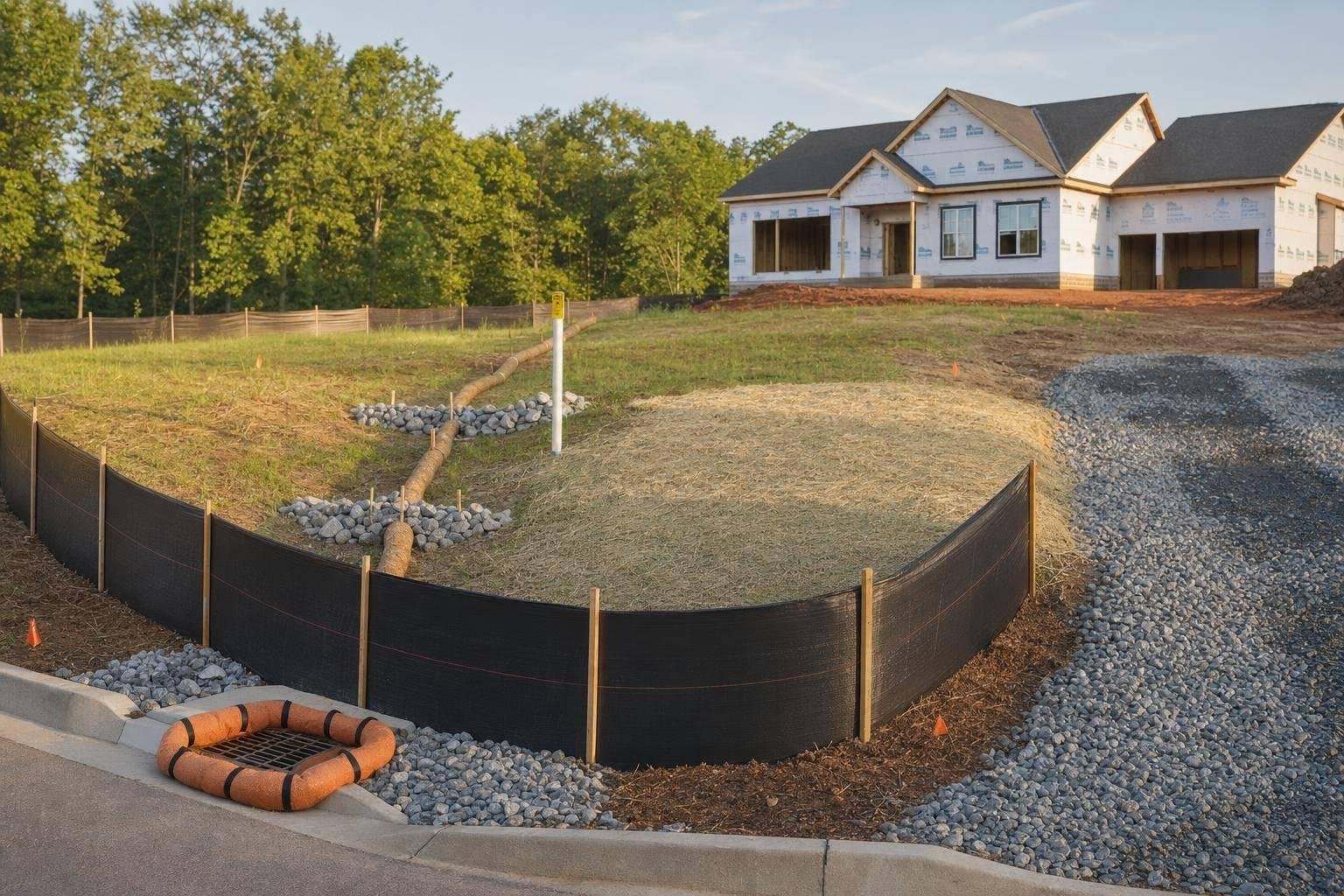
Once BMPs are approved, they need to be installed exactly as shown and kept in working order until the site is stable. On residential projects, the main job is simple: keep exposed soil covered and stop sediment from leaving the property. In practice, that usually comes down to a mix of stabilization, perimeter controls, and drainage features that fit the site.
BMPs That Keep Soil in Place During Grading and Construction
During grading, keep the amount of exposed soil as limited as possible and restore cover as soon as work in an area is done. Use the measures shown on the approved plan, and match them to the slope, soil type, and area of disturbance.
BMPs That Trap Sediment Before It Reaches Streets, Drains, or Neighboring Property
Controls placed at property edges and drainage inlets help stop loosened sediment from leaving the site, especially where runoff can reach pavement, storm drains, or nearby lots. Protect access points and downslope areas so mud is not tracked or washed off site. These controls must remain in place and working through inspections and until final stabilization is complete.
Post-Construction Features That Support Compliance and Drainage Control
After construction, permanent landscaping and drainage features help control erosion and stabilize the site. Final grading and drainage must match the approved plan and local requirements before closeout.
Inspections, Maintenance, and Work Near Drains or Streams
Once BMPs are in the ground, the job shifts from installation to upkeep. A control that looked fine on day one can fail fast after rain, equipment traffic, or routine site activity. That’s why compliance doesn’t stop at setup. It depends on steady inspections, prompt repairs, and clear field records.
What Inspectors and Project Teams Check on Active Residential Sites
Inspectors check that installed BMPs match the approved plan and still do their job. If a control is damaged, moved, or no longer working as intended, it needs to be fixed right away. Project teams also need to keep these measures working through active construction, inspection periods, and closeout so the site stays in line with Maryland’s erosion control rules.
Added Requirements for Work Near Storm Drains, Streams, Wetlands, and Buffers
Work near storm drains, streams, wetlands, and buffers can bring added review and tighter control measures before any land disturbance starts. In plain terms, these areas often get more scrutiny because sediment can move off-site fast if protections are weak. Before work begins, confirm with your county whether any part of the project falls within a regulated buffer or drainage setback.
Maintenance and Documentation Until Final Stabilization
Keep BMPs in place until the site is fully stabilized and approved for closeout. That means maintenance continues until the site is done, not just until the rough grading or building work wraps up.
Document inspections, repairs, and any changes to installed controls throughout the project. Those regular checks, plus a paper trail that shows what was done and when, are what keep a residential project aligned with Maryland’s erosion control rules.
Conclusion: Key Maryland BMP Rules Homeowners Should Know
In Maryland, residential landscape and hardscape projects have to follow erosion and sediment control rules once land disturbance passes state or county limits. That means you need to check the disturbance threshold first and confirm the county permit path before any work starts.
Then, once the project is approved, install the required BMPs before grading begins. After that, keep those measures in place, maintain them, and document them until the site reaches final stabilization.
FAQs
How do I measure disturbed area?
Before construction starts, identify every part of the site the project will affect. That includes any area where soil will be exposed, like dirt stockpiles, borrow sites, and fill areas.
Map those boundaries or measure them on-site, and leave out any vegetation that’s marked for preservation. An exact total square footage count matters because more than 5,000 square feet will usually trigger sediment control permitting in Maryland.
Who approves the sediment control plan?
MDE approves sediment control plans for state, federal, and local government projects. County agencies handle approvals for private development.
Who approves a plan depends on the jurisdiction. For example, Prince George’s County works through the Soil Conservation District. Other counties may route approvals through Planning and Zoning or Public Works.
Plans are submitted through the local government’s designated portal.
What counts as final stabilization?
In Maryland, final stabilization means all disturbed soil has been permanently secured so it won’t keep eroding. In most cases, that means reaching at least 70% vegetation density compared to nearby undisturbed areas. It can also mean using an approved permanent option, such as finished paving.
For drainage or grading projects, any required as-built plans must be approved too. Before you submit a Notice of Termination, document the site with dated photos from multiple angles, along with a short summary of the stabilization measures.
Chat with Us