









- bhavya gada
- No Comments
If you use a cistern at home in Maryland, the rule is simple: keep that water non-potable, keep it separate from drinking water lines, and get county approval before you install or change anything.
I’d boil the article down to this:
- Outdoor use is usually allowed, such as irrigation and stormwater control
- Drinking water cross-connections are not allowed
- Potable makeup water needs protection, often with an air gap
- Non-potable pipes should be purple and marked: “CAUTION: NONPOTABLE WATER, DO NOT DRINK”
- Local county review matters, because permit and inspection steps can change by county
- Overflow planning matters too, so water does not pool near the house or drain onto nearby property
A few points stand out right away. The article centers on 100% separation between cistern water and potable plumbing. It also points to 12 inches as a common spacing baseline in many places, though the county plumbing office may set a different distance. And if your project includes a tank, pump, underground piping, or potable top-off line, there is a good chance permits and inspection will come into play.
This means a cistern project is not just about storing rainwater. I need to think about plumbing code, labeling, backflow, grading, overflow routing, and county sign-off at the same time.
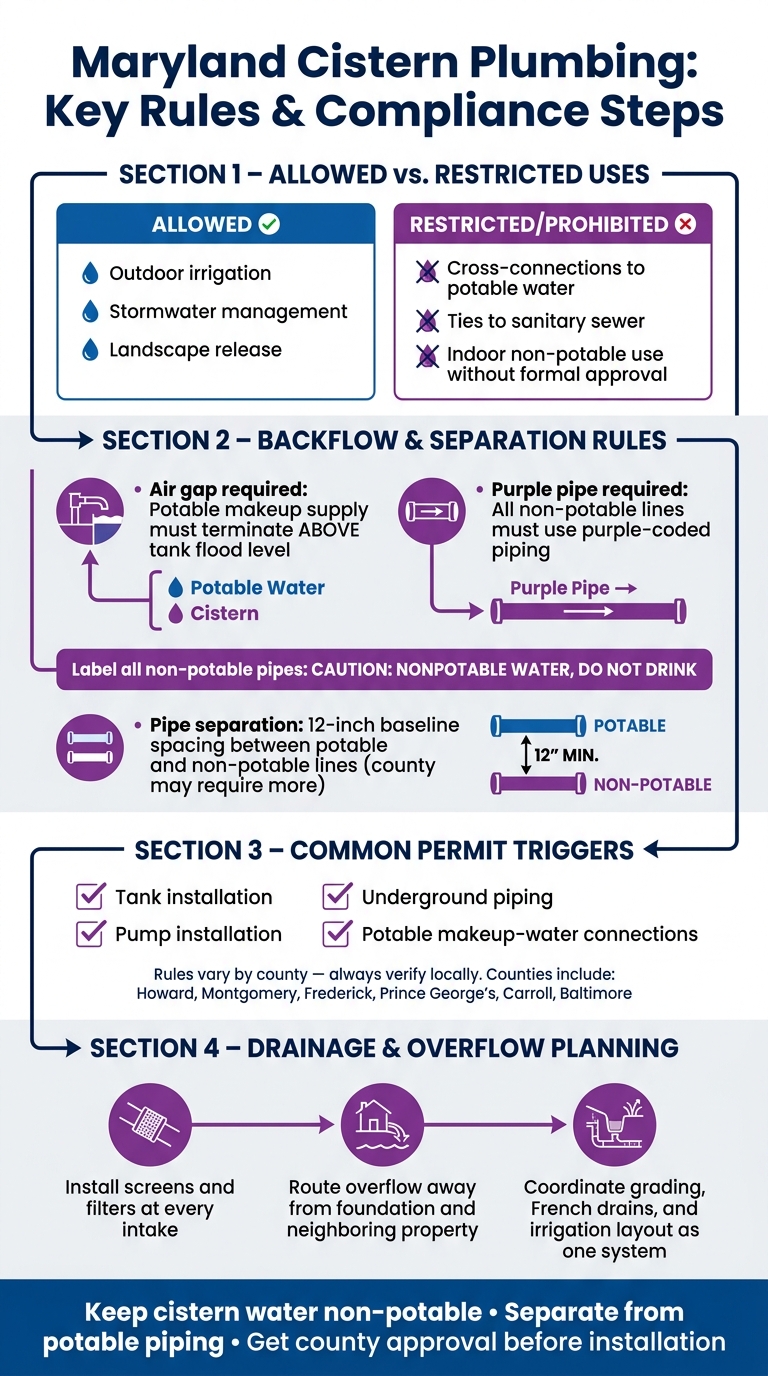
Maryland Cistern Plumbing: Key Rules & Compliance Steps
What Maryland Allows and Restricts for Cistern Plumbing
In Maryland, a residential cistern is treated as a non-potable system. For most homeowners, the big rule is straightforward: cistern water must stay out of the potable water system.
Allowed Non-Potable Uses for Landscape Systems
The main approved uses are outdoor irrigation and stormwater management. That means you can use cistern water to irrigate landscaping or release it to approved landscape areas.
This becomes a bigger deal once the cistern ties into pumps, valves, or any indoor piping. At that point, the plumbing details matter, and the line between non-potable and potable water has to stay clear.
Uses That Require Stricter Review or Are Often Restricted
Connections to household drinking water plumbing or sanitary drainage are prohibited unless a code-approved design gets formal approval. Indoor non-potable uses, along with any setup that could create a cross-connection, face strict review.
Put simply, anything beyond outdoor irrigation usually needs plumbing-code review. That strict separation is why backflow protection and pipe separation come next.
sbb-itb-843f8be
Backflow, Cross-Connection, and Pipe Separation Rules
For irrigation systems supplied by a cistern, the main code issue is keeping that water isolated from the drinking water system. A cross-connection between potable and non-potable lines is not allowed, so inspectors usually look next at backflow protection and pipe spacing.
Backflow Protection When Potable Makeup Water Is Added
Some cisterns have a potable water line that tops off the tank during dry spells. That can be allowed, but the connection needs protection.
Use an air gap. The potable supply should end above the tank’s flood level. In some areas, an approved backflow preventer can be used instead if local code allows it. Your local code official decides which option is allowed under local rules. After that connection point, inspectors move on to labeling and pipe color.
Pipe Color, Labeling, and Separation Requirements
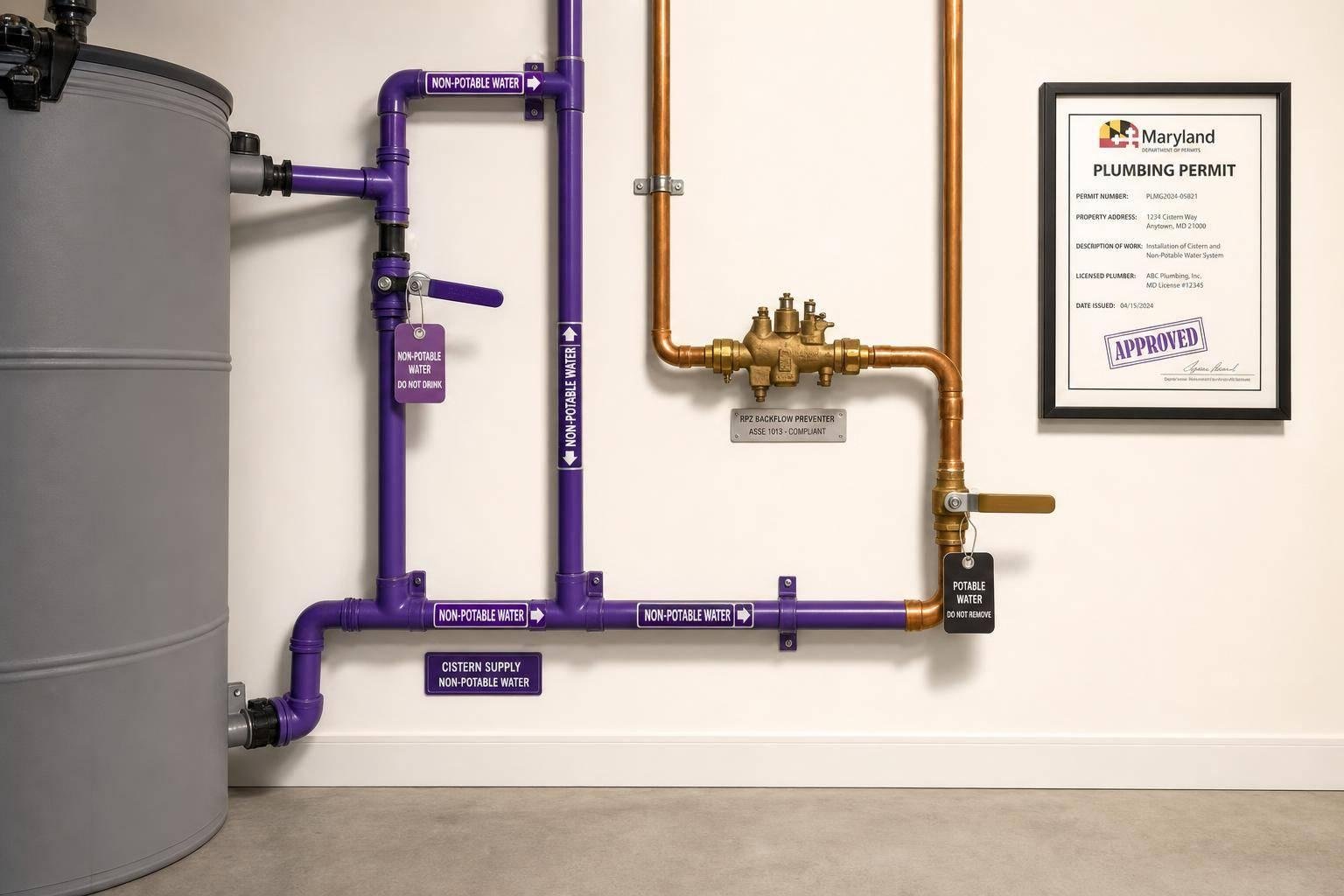
Use purple pipe and label it "CAUTION: NONPOTABLE WATER, DO NOT DRINK" at regular intervals and anywhere the lines pass through walls or floors.
Non-potable lines also need to stay separate from potable water piping and sanitary sewer piping. Many jurisdictions use 12 inches as a baseline, but your county plumbing office sets the final required distance.
Comparison Table: Permitted vs. Prohibited Connections
Here’s the day-to-day difference between what’s allowed and what isn’t:
| Connection or Practice | Permitted? | Key Requirement |
|---|---|---|
| Potable makeup line with air gap | ✅ Permitted | Supply pipe must terminate above the tank’s maximum water level |
| Potable makeup line with approved backflow preventer | ✅ Permitted | Device type must be approved by the local code official |
| Direct cross-connection (potable to non-potable) | ❌ Prohibited | Direct, unprotected ties are not allowed |
| Purple-coded non-potable distribution piping | ✅ Required | Must be used for non-potable distribution lines |
| Direct tie-in to sanitary sewer | ❌ Prohibited | Cistern systems must remain separate from sanitary sewer lines |
Permits, Inspections, and County Review
Once backflow protection and pipe separation are in place, the next step is county review. Permit and inspection rules can change from one county to the next, so homeowners should check local requirements before installation. In Maryland, local review matters just as much as the state plumbing code.
Common Permit Triggers for Tanks, Pumps, and Plumbing Work
Permits often apply to tanks, pumps, underground piping, and potable makeup-water connections. During permit review, counties usually look at a few key items:
- Tank placement
- Pumps
- Makeup-water connections
- Separation from potable plumbing
After permits are pulled, inspectors usually focus on those same safety checks.
What Counties Check During Inspection
Inspectors often check backflow protection, pipe labeling, and physical separation between potable and non-potable lines. Howard, Montgomery, Frederick, Prince George’s, Carroll, and Baltimore counties may each follow their own review steps.
With permits and inspections handled, the next step is safe landscape use and drainage and storm water management planning.
Safe Landscape Use, Drainage Planning, and Key Takeaways
Using Cistern Water Safely for Irrigation and Stormwater Management
Once the plumbing rules are settled, the next step is making sure the cistern works safely with the landscape. For most landscape projects, the big issue is simple: keep cistern water outside and away from potable plumbing.
Install screens and filters at every intake. Then send overflow away from the foundation, nearby property, and any spot where water might sit and collect.
That overflow route also needs to follow the site’s grading instead of working against it. On sloped or tight lots, grading, French drains, and irrigation layout need to work as one system so overflow doesn’t lead to erosion or nuisance drainage.
Comparison Table: Benefits and Limits of Cistern Irrigation
These are the practical tradeoffs homeowners usually weigh.
| Aspect | Practical Benefits | Limits and Requirements |
|---|---|---|
| Drought Support | Helps sustain irrigation during dry periods | Restricted to non-potable outdoor use only |
| Runoff Control | Captures stormwater and reduces runoff from the property | Requires precise grading and a planned overflow outlet |
| Plant Health | Provides rainwater that many plants respond well to | Requires screens and filters at intake points |
| Landscape Integration | Supports irrigation during dry spells | Requires coordination with grading and irrigation layout |
| Project Coordination | Can be part of a properly planned landscape project | Requires coordination of plumbing, grading, and overflow design |
Conclusion: Key Code Points Maryland Homeowners Should Remember
Keep cistern water non-potable, separate from potable piping, and approved through your county before installation. Plan overflow and grading ahead of time so the cistern doesn’t create erosion, standing water, or runoff problems.
Chat with Us