









- bhavya gada
- No Comments
If you disturb soil in Maryland in 2026, a small mistake can turn into a fine fast. I’d boil the article down to this: county enforcement is moving faster, fines can hit up to $10,000 per violation, and the people at risk are not just contractors. Homeowners, permit holders, and anyone controlling the site can get pulled in too.
Here’s the short version of what I’d want you to know before any yard, grading, drainage, patio, driveway, or retaining wall work starts:
- Do not break ground first and sort permits out later
- Check whether the project changes grading, drainage, runoff, or wall conditions
- Keep approved plans on-site
- Install erosion controls before soil disturbance
- Fix damaged controls after rain
- Do not skip inspections or ignore correction orders
Most fines start with the same chain reaction: bare soil, weak controls, missed paperwork, or open corrections that sit too long. And once sediment leaves the site, inspectors are more likely to act at once instead of giving extra time.
A few numbers stand out:
- 2026 is bringing tighter jobsite review
- $10,000 is the top fine noted per violation
- 3 main triggers show up again and again: permit issues, failed controls, and missed follow-up
If I were checking a project at my home, I’d keep the rule simple: confirm the job is regulated, get approval first, and make sure the site matches the approved plan from day one.
MDE Guidance For Protecting Stormwater Best Management Practices During Construction November 2023
sbb-itb-843f8be
Who can be fined on residential landscape and hardscape projects
In Maryland, enforcement usually begins with the people tied to the jobsite. On residential landscape and hardscape projects, homeowners, contractors, and site operators can all be cited under the state’s erosion and sediment control law.
The big point here is simple: liability follows who controls the site, not only the person listed on the permit.
That matters more than a lot of people think. A homeowner might assume the contractor carries all the risk. A contractor might assume the permit holder is on the hook. But Maryland looks at who had control over the work and the conditions at the site.
Once responsibility is clear, the next risk is the specific trigger that turns a project into a violation.
The most common 2026 violation triggers for yard, grading, and drainage work
Most residential erosion violations start the same way: rain hits bare soil, and that soil has nothing in place to hold it down.
In practice, most citations come back to three problems: unapproved disturbance, weak controls, and missed follow-up.
Starting grading or soil disturbance without permits or approved plans
Starting grading, trenching, or any soil disturbance before permits and approved plans are in place is one of the most direct paths to a citation.
That’s often the point where an inspector moves past a warning and issues a citation instead. Once ground is broken without approval, it can put the whole job under tighter review.
Missing, damaged, or poorly maintained erosion controls
If erosion controls are missing, damaged, or not maintained after rain, sediment is more likely to leave the site.
And that’s where small problems turn into code issues fast. A silt fence knocked down by weather, an inlet protection measure that wasn’t reset, or controls left unchecked after a storm can all draw attention during an inspection.
Missed inspections and ignored corrective orders
Missed inspections or ignored corrective orders keep violations open and can trigger more penalties.
Unclosed orders are a common reason fines grow. Even when the first issue seems minor, letting it sit can make the situation much more expensive.
Permit and inspection problems driving more penalties in 2026
In 2026, permit and inspection failures can turn routine residential work into a citation. A lot of these issues start the same way: the job begins before the review is done, and the compliance piece gets handled later.
Permit review is one of the main places where 2026 violations can be avoided. If the review gets skipped, even a pretty standard home project can end up drawing attention from the city or county.
Which residential projects commonly require permit review
Start with the projects most likely to trigger review. Focus first on work that changes:
- grading
- drainage
- retaining walls
- runoff
If a project affects how water moves through or off a property, it often needs review before work starts. That’s where many homeowners and contractors get tripped up.
What inspectors expect to see on-site
Once a project is approved, inspectors want proof that the work matches the plan. In plain terms, they’re checking that what was built on-site lines up with what was approved on paper.
That usually means keeping approved plans on-site, following the approved scope, and documenting any field changes or corrective work. If something changed during the job, write it down and keep the record ready. That small step can save a lot of hassle during an inspection.
What homeowners and contractors should review before work starts
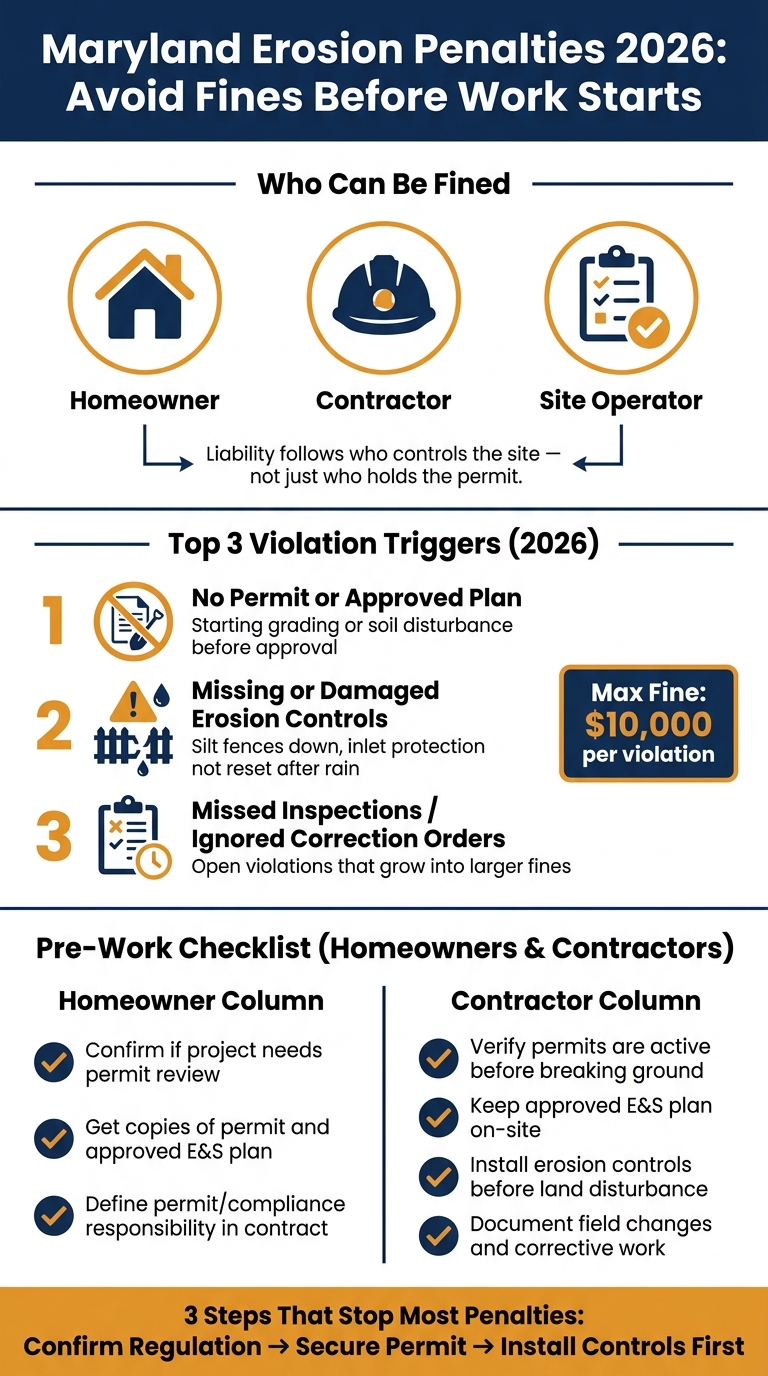
Maryland Erosion Penalties 2026: How to Avoid Fines Step by Step
Before work starts, confirm permits, approved plans, and inspection rules.
Homeowner checklist: permits, plans, and contract responsibility
Most citations start with the same problems: missing permits, missing controls, or confusion about who was supposed to handle them.
Before you sign a contract or break ground, check whether the project needs permit review. Then ask for copies of the permit and the approved erosion and sediment control plan. Your contract should also spell out who handles permits and who is responsible for erosion-control compliance. Get it in writing. A handshake isn’t enough when inspectors show up.
Contractor checklist: controls, documentation, and correction steps
Once responsibility is clear, the jobsite needs to match the approved plan.
Make sure the right permits are active, the approved erosion and sediment control plan is on-site, and erosion controls are installed before any land disturbance starts. If field conditions change, document those changes. Keep records of any corrective work ready for inspection too. That paper trail can save a lot of trouble.
Key steps that prevent 2026 erosion penalties
Three checks stop most residential erosion penalties in 2026:
- Confirm the project is regulated
- Secure permit approval
- Put erosion controls in place before work begins
FAQs
Do small backyard projects need erosion permits?
It depends on the project’s size and where the work happens.
In most cases, you’ll need a permit if the job disturbs 5,000 square feet or more or involves moving more than 100 cubic yards of fill.
That said, smaller jobs aren’t always off the hook. A permit may still be required in sensitive areas like floodplains, wetlands, or the Chesapeake Bay Critical Area. Some local jurisdictions, including Montgomery County, may also require permits for new residential construction or certain structural additions.
Can a homeowner be fined if a contractor caused the problem?
Yes. In Maryland, property owners and permit holders are responsible for erosion and sediment control compliance, even when a contractor caused the violation.
If you’re the permit holder, the responsibility lands on you. That includes proper installation, routine maintenance, and keeping the right records in place. If the site falls out of compliance, the result can be daily fines, stop-work orders, and possible legal action.
What must be on-site before soil disturbance begins?
Before any soil disturbance starts, set up an on-site pre-construction meeting with your assigned inspector. The goal is simple: confirm that the disturbance limits are clearly marked in the field.
You also need to have your initial sediment controls in place and approved before work begins. And make sure your approved sediment control plan and SWPPP are easy to access on-site during inspections.
Chat with Us