









- bhavya gada
- No Comments
If I want the short answer: a Maryland green roof can cut about 50% to 70% of annual roof runoff, but most homes will spend about $10 to $25 per sq. ft. for an extensive system and $25 to $50+ per sq. ft. for an intensive one. For many homeowners, the main payoff is less runoff, some fee savings, and fewer drainage problems over time.
Here’s the article in plain terms:
- Cost: about $5,000 to $30,000+ total, based on roof size, roof condition, and system type
- Best fit for most homes: extensive green roofs with shallow soil and lighter plants
- Big cost factors: membrane work, root barriers, drainage layers, soil depth, plant choice, and any framing repairs
- Main roof checks: load capacity, slope, and waterproofing condition
- Runoff payoff: slower water release, less stress on gutters and downspouts, and possible stormwater fee credits
- Upkeep: inspections, weeding, drain checks, patching bare spots, and some summer watering
- Lower-cost option: a 500-sq.-ft. partial roof can still cut runoff without the cost of a full-roof build
If I compare the two main system types, the tradeoff is simple: lower weight and lower cost vs. deeper planting and higher cost.
How much does a green roof cost?
sbb-itb-843f8be
Quick Comparison
| Type | Typical Cost | Weight | Planting Depth | Best Use | Runoff Value |
|---|---|---|---|---|---|
| Extensive | $10 to $25/sq. ft. | Lower | Shallow | Most homes, garages, rowhouses | Strong for cost |
| Intensive | $25 to $50+/sq. ft. | Higher | Deep | Roofs built for heavier loads | Can hold more, but costs more |
My takeaway: if your roof is sound and can handle the load, an extensive system is often the better fit for a Maryland home. A full roof is not always needed. In many cases, partial coverage plus steady maintenance is enough to get solid runoff control without the highest price tag.
Green Roof Types That Work on a Maryland Home
Not every green roof makes sense for every house. The best setup depends on your roof type, the way the home is framed, and how much weight that roof can handle.
Extensive vs. intensive systems
For most Maryland homes, extensive systems make the most sense. They use a shallow soil mix and tough plants like sedum, which makes them a good match for rowhouses and garages. Because they weigh less, they tend to fit more existing homes without major structural work.
Intensive systems are a different story. They use deeper growing media and heavier plantings, so they can support shrubs and small trees. But that added depth comes with more weight, more cost, and, in many cases, structural reinforcement. That’s one of the main reasons the price gap between the two systems can be so large.
Structure, slope, and load limits
Three things decide whether a green roof will work: framing, slope, and the condition of the waterproofing. Weight checks need to account for saturated weight, snow load, and drainage components. That’s not a small detail. A roof can look fine in dry weather and still run into trouble once water and snow are added to the equation.
Older wood-framed roofs are common in Maryland, and they need a close review before any system goes in. The same issues that shape whether a project is possible also affect what it will cost.
When a property-wide drainage plan matters
A green roof can cut roof runoff, but it doesn’t solve every drainage issue on the property. The remaining water still needs a safe path away from the home. So while roof retention helps reduce flow, the rest of the drainage system still plays a big part in both performance and cost.
Pro Landscapes MD ties roof runoff control into grading, drainage installation, French drains, and stormwater management across central Maryland. Those choices also affect installation cost, upkeep, and the long-term runoff payback.
Maryland Green Roof Cost Breakdown
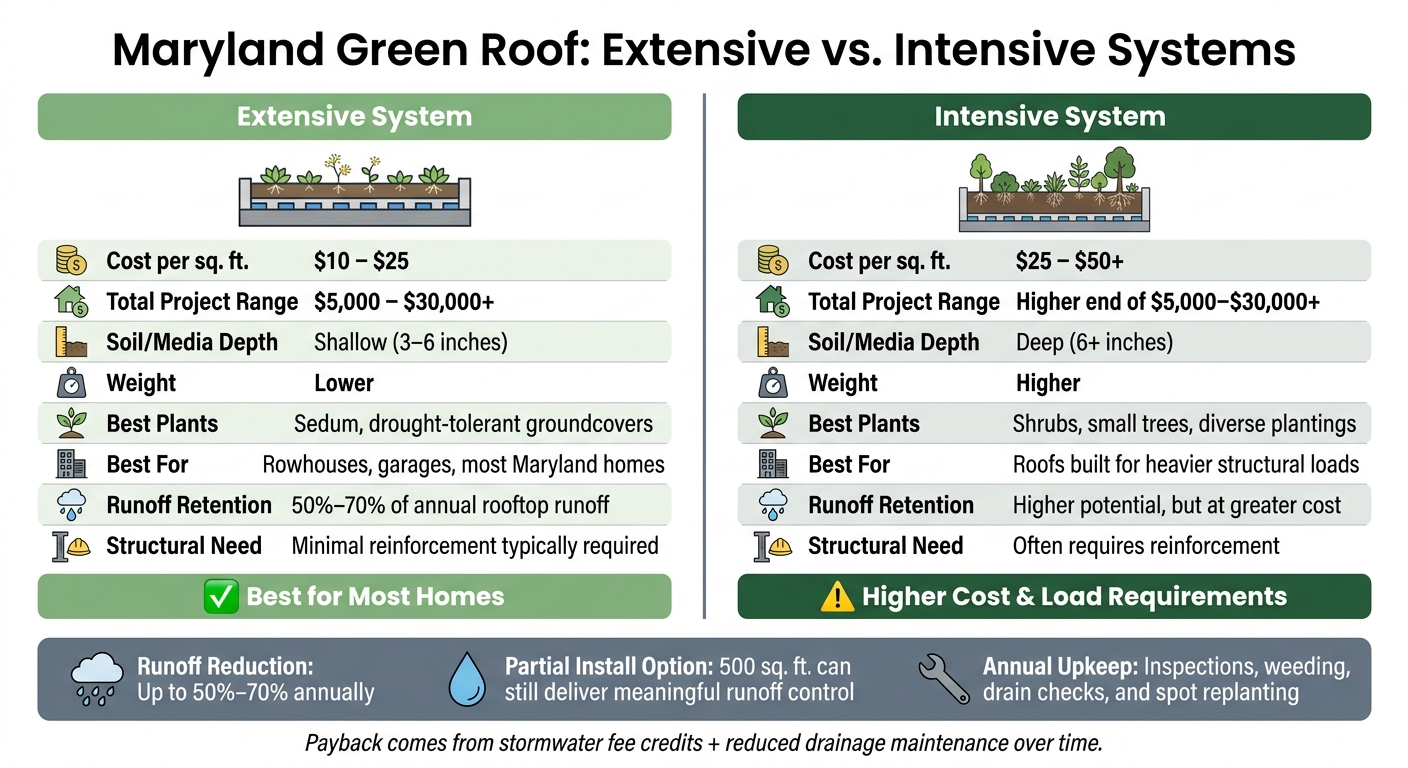
Maryland Green Roof Cost & Runoff Comparison: Extensive vs. Intensive Systems
Once your roof is a good fit for a green roof, the next step is simple: figure out the budget.
Installed cost per square foot and total project ranges
For most homes in Maryland, green roof pricing depends on the roof’s condition, the depth of the system, and how much prep work the project needs.
Extensive systems usually cost about $10 to $25 per square foot. Intensive systems often run $25 to $50+ per square foot. In many cases, total project costs land somewhere between $5,000 and $30,000+, based on roof size and job complexity.
That range can shift fast if the roof needs work before the green roof goes on. Waterproofing repairs or structural reinforcement can add a lot to the total.
Main cost drivers: roof prep, drainage parts, and plant mix
Most of the money goes into the layers under the plants, not just the plants you see at the top.
Membrane upgrades and root barriers are required parts of the system. Drainage and water-retention layers add material costs. Deeper growing media also adds cost, and it adds weight too. If the roof can’t handle the saturated load, structural reinforcement can turn into one of the biggest line items.
Plant choice also changes the price. Pre-grown sedum mats, individual plugs, and native plant mixes all come with different costs and labor needs.
Annual maintenance costs after installation
A green roof isn’t a set-it-and-forget-it system. You’ll want to budget for routine care to protect stormwater performance and help the roof last longer.
That usually includes:
- inspections
- weeding
- drainage checks
- spot replacement in thin or bare areas
During dry summer stretches in Maryland, some watering may also be needed. Those yearly costs should be weighed against the runoff reduction the roof can provide over time.
Runoff Reduction and Payback Over Time
How much runoff a green roof can retain
This is where a green roof starts to earn its keep.
Instead of sending rainwater straight off the roof, a green roof holds part of it in the growing media. Extensive systems with 3 to 6 inches of growing media can retain about 50% to 70% of annual rooftop runoff, depending on the design. Some of that rain gets absorbed, and the rest drains off more slowly.
That slower release matters. It can cut peak flow during heavy storms and take some pressure off gutters, downspouts, and nearby grading.
Where payback comes from in Maryland
Given the higher install and upkeep costs, runoff control is the main source of payback.
In Maryland, that payback usually comes from small savings that add up over time, mostly through stormwater fee credits and lower drainage-related upkeep. In places that offer stormwater utility credits, a green roof can reduce annual fees because it lowers runoff.
Put simply: the return usually doesn’t come from one big win. It comes from steady gains year after year.
That difference stands out more when you compare roof type, cost, and runoff performance side by side.
Best Uses, Long-Term Upkeep, and Final Takeaways
After looking at install cost next to runoff reduction, the next step is simple: figure out how much roof area you need and how long the system will keep doing its job.
Partial-Roof vs. Full-Roof Scenarios
Not every Maryland home needs a full green roof to get runoff benefits. A 500-sq.-ft. partial install can cut runoff on a garage or another small roof section when budget or load limits make a full-roof setup hard to justify.
That can be a smart middle ground. The project stays smaller, but you still keep much of the stormwater value.
Long-Term Maintenance That Protects Stormwater Performance
Maintenance matters here. If you want the roof to hold water well over time, you need to keep the system in shape.
That usually means:
- Keep drains clear
- Check plant cover
- Repair bare spots
Those basic steps help preserve water retention.
When a Maryland Green Roof Pays Back
With cost, coverage, and upkeep laid out, the last check is whether the roof can pay back over time.
For most Maryland homes, extensive systems offer a practical balance between cost and runoff reduction. Payback gets better when the roof is structurally sound, the membrane is in good condition, and the system is maintained.
Partial coverage lowers cost. Upkeep protects performance. And payback is strongest on sound roofs with steady maintenance.
FAQs
How do I know if my roof can support a green roof?
Have a structural engineer inspect your roof before you move forward. A green roof adds a lot more weight than a standard roof because you’re not just dealing with plants. You’re also adding soil and water, and that load can often go past 50 pounds per square foot, depending on the setup and soil depth.
A structural engineer can tell you if your current roof can handle that weight as-is or if it needs reinforcement. They can also help you figure out whether a lightweight system makes more sense or if your roof can support a deeper-soil option.
Is a partial green roof worth it for runoff control?
Yes. A partial green roof can help control runoff, and the amount of water it holds comes down to the depth of the growth media and how much water that media can store.
In this region, green roofs can hold about 50% to 60% of rainfall, even with lightweight systems. How well they work still depends on your roof’s structural capacity and local rainfall, so a professional site assessment is important.
How long does green roof payback usually take in Maryland?
In Maryland, the payback period for a green roof or water management system can vary a lot. It depends on the size of the project, the type of property, and any local incentives that help offset upfront costs.
For large commercial projects, the return can land in the 5 to 10 year range. Single-family residential systems, on the other hand, often take 20+ years to pay off if there are no rebates and water rates stay low.
A few other things can shift that timeline too. More complex systems usually cost more to install and maintain. Maintenance needs can add to the total cost over time. And if the project boosts property value, that can help shorten the payback period.
Chat with Us