









- bhavya gada
- No Comments
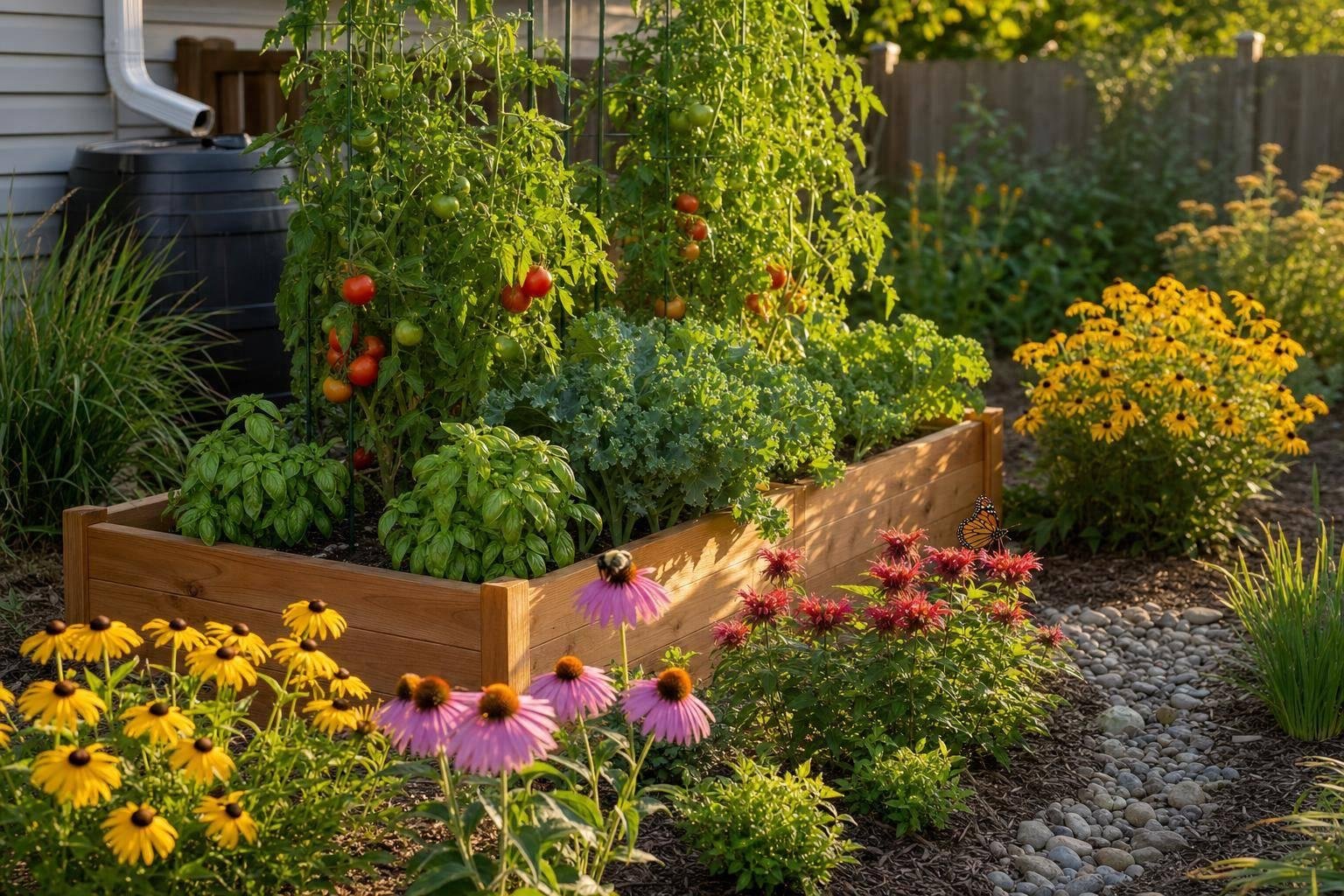
You do not have to choose between a wildlife yard and a food yard. In central Maryland, the best plan for most homes is a mixed layout: use native plants for structure, pollinators, and lower water use after setup, then place edibles in sunny, easy-to-reach spots where harvest and watering are simpler.
Here’s the short answer:
- Native plants fit Maryland’s climate and support bees, butterflies, birds, and other local species.
- Edible plants give you fruit, herbs, and other crops, but they often need more water, pruning, and hands-on care.
- Native edibles like serviceberry, elderberry, pawpaw, chokeberry, blueberry, persimmon, and hazelnut give you both.
- The strongest yards are built around 4 checks: pollinator support, water and soil fit, plant layers, and bloom/harvest timing.
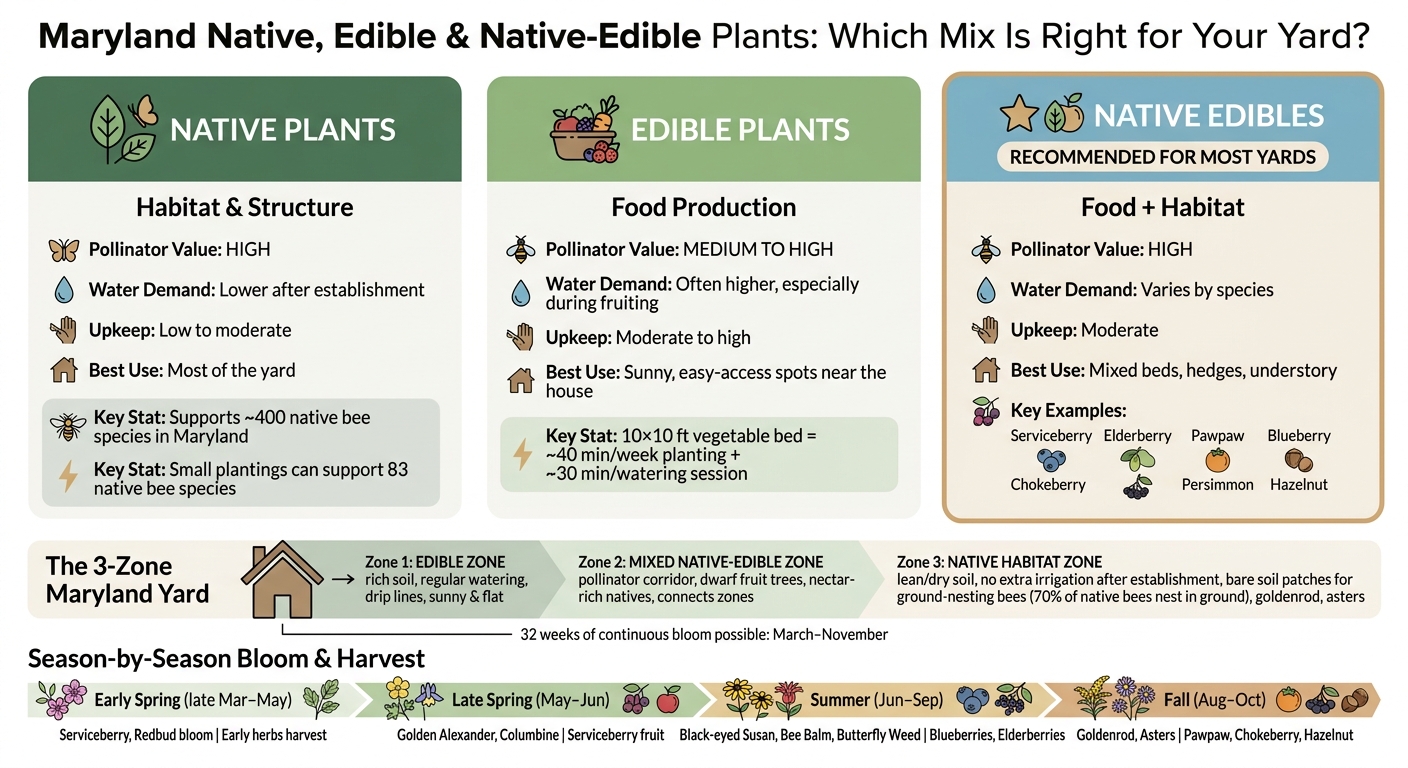
- A smart layout often uses 3 zones: edibles near the house, a mixed middle area, and a more native habitat area in the back.
- In Maryland, many yards fall in USDA Zones 6b–7b, and summer dry spells make water planning a top issue.
- Maryland has about 400 native bee species, and about 70% of native bees nest in the ground, so open soil and bloom timing matter.
If I had to sum up the whole article in one line, it would be this: let natives do most of the yard work, and keep edibles in smaller, well-placed pockets.
Maryland Native vs. Edible vs. Native-Edible Plants: Quick Comparison Guide
Best perennial crops for a small yard…fruits, vegetables, & more tour! (Maryland zone 7)
sbb-itb-843f8be
Quick Comparison
| Type | Main Goal | Pollinator Value | Water Demand | Upkeep | Best Use |
|---|---|---|---|---|---|
| Native plants | Habitat, structure, season-long support | High | Usually lower after setup if matched to site | Lower to moderate | Most of the yard |
| Edible plants | Food production | Medium to high, depending on plant | Often higher, especially during fruiting | Moderate to high | Sunny, easy-access spots |
| Native edibles | Food + habitat | High | Varies by species | Moderate | Mixed beds, hedges, understory areas |
What matters most
When I look at a Maryland yard, I’d keep the plan simple:
- Match plants to the site
- Wet spots: elderberry, winterberry, swamp milkweed
- Dry sunny spots: butterfly weed, little bluestem, thyme, sage
- Part shade: pawpaw, serviceberry
- Build in layers
- Trees
- Shrubs
- Perennials and herbs
- Groundcovers
- Spread out the season
- Early spring bloom
- Summer flowers and berries
- Fall fruit and late pollinator plants
- Separate water needs
- Edibles usually need more steady moisture
- Established natives often need less extra watering
For most central Maryland homes, that mix gives you the best balance of food, habitat, and a yard that still looks put together.
1. Native Plants
In central Maryland, native plants tend to do best when they match the conditions in your yard. Native to Maryland matters more than a broad “North American native” label. If a plant doesn’t fit the site’s light, drainage, and soil, it won’t do well.
Pollinator Support
Native plants help pollinators in a few different ways. They provide nectar, pollen, host plants, and shelter across the growing season. Maryland DNR lists butterfly weed, common milkweed, swamp milkweed, wild bergamot, bee balm, black-eyed Susan, Joe-Pye weed, goldenrod, and blazing star as high-value pollinator plants for Maryland landscapes.[4]
And this isn’t just true for big gardens. Small native plantings in Maryland have supported 68 native plant species and 83 native bee species.[6] So even a modest planting can add habitat. But there’s a catch: that habitat value depends on putting each plant in the right light and moisture conditions.
Water and Soil Needs
Native plants still need the right setting. Sun, soil moisture, texture, and drainage all matter.
Moisture-loving plants like swamp milkweed fit low areas or spots near downspouts. Dry-site plants like little bluestem and butterfly weed do better on sunny, well-drained slopes. For steeper grades, retaining walls can help manage drainage and create stable planting tiers. Put a native plant in the wrong place, and it can fail just as fast as anything else.[9]
Yard Structure
Native plants can fill every layer of a home landscape, from tall trees down to groundcovers. That layered setup does more than look good. It also gives birds and helpful insects more places to feed, nest, and shelter.
Here’s how that can look:
- Canopy trees like white oak add shade and long-term habitat.
- Understory trees like eastern redbud and flowering dogwood bring spring color and cover for birds.
- Shrubs like spicebush, inkberry holly, winterberry holly, and black chokeberry add screening and nesting space.
- Perennials and grasses like coneflower, switchgrass, and little bluestem bring texture at ground level.[2][1][11]
Once that structure is in place, timing starts to matter just as much as plant type.
Bloom and Fruit Timing
A good native plant mix can provide ecological value from early spring into late fall. Serviceberry and redbud bloom early, which helps feed the first pollinators of the season. Bee balm and black-eyed Susan keep that activity going through summer. Goldenrod and asters become key late-season food sources when most other blooms are gone.[5][8]
Fruit timing matters too. Serviceberry, chokeberry, viburnum, and native dogwood keep feeding birds later in the year, even into winter.[3][1] A smart rule is to keep at least three species blooming from early spring through late fall so there aren’t gaps in forage.[7]
These native plant traits set the benchmark for picking edible plants that suit the same site.
2. Edible Plants
In central Maryland, many edible plants fit neatly into mixed beds, borders, and small backyards. They do more than produce food. They also need to hold their place in the landscape, handle local conditions, and support pollinators just like native ornamentals. So the key question is simple: which edibles can do all of that without making the yard look messy or out of balance?
Pollinator Support
A good number of edible plants also pull their weight with pollinators. Serviceberry blooms early in spring, which gives native bees, hoverflies, and other helpful insects an early source of nectar and pollen.[19][21] Blueberries flower in spring, draw bees, and then set fruit for a mid-summer harvest.[12][17] Elderberry makes flat-topped flower clusters from late spring into early summer, and insects visit them heavily.[12][13]
Herbs can do a lot here too. Oregano, thyme, lavender, sage, and chives all offer flowers over a long stretch and bring in bees when allowed to bloom.[24] It also helps to plant these herbs in clumps instead of dropping single plants here and there. Bigger patches are easier for pollinators to spot and use.[24]
Water and Soil Needs
Getting the plant-site match right cuts back on extra work. Elderberry does well in low, wet spots, so it fits near swales or places with slow drainage.[12][13] Blueberries want acidic, well-drained soil. They also do best with organic mulch to hold moisture and with even watering during fruiting.[15][17] Pawpaw prefers rich, moist soil and does better with mulch and partial shade when young.[12][13]
On the drier side, dry-site herbs such as rosemary, lavender, and sage do well in well-drained soil or raised beds and need much less water once established.[14] Even so, most edible plants need steady moisture while they are getting established and while they are fruiting.
Yard Structure
Edible plants can fill every layer of a yard, which is part of what makes them so useful. Pawpaw, American persimmon, and serviceberry can serve as small canopy or understory trees, adding height along with seasonal fruit.[13][18] Blueberries, elderberry, chokeberry, and hazelnut work as mid-height shrubs that can screen a fence line or form a hedge along a property edge.[12][13][20]
Closer to the ground, strawberries and low-growing herbs such as oregano and thyme can spread along path edges or beneath taller plants. That helps cover bare soil and cut down on weeds.[22][23] In practice, this means edibles don’t have to sit off in a separate vegetable patch. They can slide right into beds, hedges, and borders.
Bloom and Fruit Timing
Edible plants can keep the yard active from early spring into fall. Serviceberry is one of the first to bloom in spring, and its fruit ripens by June.[19][21] Blueberries come next with mid-summer berries, while elderberry gives both early summer flowers and late summer fruit.[12][13] Pawpaw bears large, soft, sweet fruit in late summer to early fall, and American persimmon ripens in fall, often becoming sweeter after the first frost.[13][17]
Culinary herbs help stretch the flowering season even more, with lavender and sage blooming from late spring through summer.[14] The result is a steady handoff: spring flowers, summer berries, and fall fruit, all from plants that can still look at home in a Maryland landscape.
The strongest plants in a Maryland landscape are often the ones that are both edible and native.
3. Native Trees and Shrubs with Edible Value
The best overlap between native planting and edible use comes from fruiting trees and shrubs that also feed wildlife. In central Maryland, a handful of natives do both jobs well. They work in hedges, borders, and understory plantings while feeding pollinators, birds, and people. In plain terms, these are the plants that can make a Maryland yard more productive without pushing it out of step with its local ecology.
Pollinator Support
Each of these native fruiting plants helps pollinators in a slightly different way. Serviceberry (Amelanchier canadensis and related species) blooms from late March through May,[33] so it shows up early, right when food sources are still limited after winter. Pawpaw is a bit different. It depends on flies and beetles rather than bees for pollination,[31] which adds another type of insect support that many flowering natives don’t offer.
Black chokeberry blooms in April–May, and elderberry flowers in early to mid-summer,[2][27][29] so the bloom period stretches well past spring before the fruit starts to form.
Water and Soil Needs
These plants also cover a good range of site conditions.
Serviceberry likes moist, well-drained, slightly acidic soil with a pH of 5.5–7.5, but it also handles average garden conditions well.[32] Pawpaw grows best in moist, rich soil and does well with partial shade when young, which makes it a smart pick for a lower or more sheltered part of the yard.[27][13][28] Elderberry can handle different moisture levels, though it performs best in moist, fertile spots – near a downspout or swale, for example.[27][29]
Black chokeberry is flexible and fits mixed beds across a range of moisture levels.[13][29] Winterberry is the one to place in wet ground or areas that stay moist most of the time.[29]
Yard Structure
From a design point of view, these plants can fill different layers of the yard. Serviceberry and pawpaw work as small understory trees.[27][13][28][26] Elderberry, chokeberry, and hazelnut sit in the middle-shrub range, so they can line a fence, make an informal hedge, or hold down a corner planting.[13][29]
American hazelnut is especially handy on slopes or drier ground where other fruiting shrubs may not do as well.[13][28] Maryland DNR notes that downy serviceberry (Amelanchier arborea) is used by 58 wildlife species and 35 bird species, and its berries are edible for people too.[16]
Bloom and Fruit Timing
One of the biggest strengths of this group is timing. Bloom and harvest can be spread from spring into winter.
| Plant | Bloom Time | Fruit/Harvest Window |
|---|---|---|
| Serviceberry | Late March–May[33] | Early summer[26][29] |
| Black chokeberry | April–May[2] | Late summer to fall[2] |
| Pawpaw | Spring[31] | First–third weeks of September[34] |
| Elderberry | Early to mid-summer[27][29][30] | August–September[29][30] |
| American persimmon | – | Late fall, often after the first frost[13][28] |
| Winterberry | Spring[29] | August–February[29] |
American persimmon helps fill a late-fall harvest gap. Its fruit ripens after the first frost, which pushes the edible season past what serviceberry or elderberry can provide.[13][28] Winterberry holds berries from August into February,[29] which makes it one of the best winter food sources for wildlife.
That overlap gets even stronger when these native trees and shrubs are combined with herbs and perennials that like the same growing conditions.
4. Pollinator-Friendly Herbs and Fruiting Perennials
Herbs and fruiting perennials fill the middle and lower layers of a mixed landscape. They add food and pollinator support without crowding trees and shrubs. Under the shrub layer, they help keep the yard productive, compact, and friendly to pollinators.
Pollinator Support
Clustered mountain mint (Pycnanthemum muticum) blooms for about 10 weeks in summer.[35][44] That long bloom period makes it a busy stop for bees, wasps, and flies. Bee balm (Monarda fistulosa) is another strong pick. It supports at least seven native caterpillar species.[35][39] Its tubular flowers also draw bumble bees, solitary bees, butterflies, and hummingbirds.
Highbush blueberry pulls double duty, with spring flowers followed by summer fruit. Culinary herbs like oregano, thyme, and chives help too. Their blooms provide nectar and pollen for small native bees and helpful insects such as hoverflies and parasitic wasps.[37]
Water and Soil Needs
Most of these plants do well in normal suburban yard conditions. Bee balm and purple coneflower (Echinacea purpurea) handle medium to dry soils in full sun to part shade.[40] Butterfly weed (Asclepias tuberosa) likes well-drained, drier ground, which makes it a good fit for slopes or spots near driveways.
If you have a damp corner or a low area that stays wet, swamp milkweed (Asclepias incarnata) and Joe-Pye weed are better choices. Both grow well in wet to medium soils.[40][42] Highbush blueberries are a bit pickier. They need acidic, evenly moist, well-drained soil in full sun.[41]
Yard Structure
This is where layering pays off. Taller perennials like Joe-Pye weed, which can reach about 6 ft., work well at the back of a bed. Bee balm and mountain mint fill the middle. Low herbs such as thyme and chives fit nicely along path edges and the front of beds.
Highbush blueberries can also run along a fence as an informal hedge, giving you spring bloom and summer fruit from the same plant. It also helps to plant in dense groups instead of scattering single plants around. That makes the bed easier for pollinators to find and gives the planting a cleaner look.[8][43]
Bloom and Fruit Timing
| Plant | Bloom Window | Edible Harvest |
|---|---|---|
| Highbush blueberry | Late April–May[45] | June–mid-September[45] |
| Butterfly weed | May–June[38][40] | – |
| Bee balm | July–August[40] | – |
| Clustered mountain mint | About 10 weeks in summer[35][44] | – |
| Joe-Pye weed | Late summer | – |
Bloom and harvest can roll from spring through fall, which keeps the yard active and productive across the growing season.
Set up this way, these smaller plants become the backbone of mixed native-edible foundation beds.
5. Mixed Native-Edible Foundation Beds
Foundation beds along the front and sides of a central Maryland home are easy to notice, which means they have to do two jobs at once: look neat and handle a tricky site. These spaces are often narrow, get plenty of foot traffic, and soak up extra heat from masonry and siding. In most cases, they work best with plants that stay compact, take reflected heat well, and still look tidy from the street—a key goal of our landscaping services.
Pollinator Support
A foundation bed can support pollinators across the season if the bloom times are spread out in a simple sequence. Put early bloomers like chives and columbine near the front edge. Use midsummer plants like coneflower and bee balm in the middle row. Then weave in late-season herbs like oregano and thyme throughout the bed, so pollinators move through the planting over time instead of crowding one area.
Water and Soil Needs
Foundation beds often deal with compacted soil, roof runoff, and heat that builds up near the house. That’s why site matching matters more here than it does in an open planting bed. Place moisture-tolerant natives like inkberry holly near downspouts, where runoff tends to collect. Put drought-tolerant herbs like lavender, sage, and rosemary in the sunnier, drier corners, where masonry heat dries the soil faster.
Blueberries need a middle-ground spot. They do best in soil that drains well but still stays evenly moist, and they need acidic conditions. Pine fines or composted leaf mold can help get that soil mix into better shape.
Yard Structure
In a narrow foundation bed, the layout usually follows the line of the house. A simple setup works well:
- Compact fruiting shrubs like blueberries or dwarf serviceberries in the back row, kept below window sills
- Medium-height natives and herbs like coneflower and mountain mint in the middle
- Low edible groundcovers like strawberries, creeping thyme, and chives along the front edge
Keep mulch at no more than 3 inches deep, and pull it back from stems and house siding to help cut down on rot and pest problems.[47]
Bloom and Fruit Timing
In this kind of bed, the season should shift from spring flowers to summer fruit to fall color without making the front of the house look empty in between. Serviceberry blooms early and fruits by June. Blueberries carry the harvest into midsummer. Goldenrod and asters finish the season with late color. Stagger cultivars and bloom times to keep the bed producing across the full season.[46][10]
6. Zoned Native-Edible Backyard Gardens
Where foundation beds shape the front of the property, the backyard can do the heavy lifting for the full native-edible setup. For homes in central Maryland, it helps to split the space into three simple zones: edibles near the house, a mixed middle zone, and a native habitat area at the rear. That setup does more than organize the yard. It also keeps pollinators moving between food crops and habitat instead of bunching up in a single planting area.
Pollinator Support
Build a pollinator corridor through the mid-yard zone so pollinators can move back and forth between the edible beds and the rear habitat area. The idea is simple: put nectar-rich native plants in the middle band, and beneficial insects will travel more freely across the whole yard.
Maryland has about 400 native bee species[48], which is a good reminder that a backyard can support a lot more life than people expect. When you layer early-, mid-, and late-season plants, you can get 32 weeks of continuous bloom from March through November[10]. That long bloom window keeps food available across the growing season instead of giving pollinators one short burst and then nothing.
About 70% of native bees nest in the ground[25], so the rear native zone should include patches of bare soil or very light mulch. In plain terms: don’t smother every inch with landscape fabric.
Water and Soil Needs
Treat the edible beds and native areas like two different systems, because they are. Edible beds do best in rich soil with regular watering. Established native plantings usually prefer leaner, drier soil and need little to no extra water after the first season.
It’s smart to keep these zones on separate irrigation schedules:
- Use drip lines or soaker hoses for the edible beds.
- Give the rear native zone little to no extra irrigation once plants are established.
If your yard has clay soil or low areas that stay damp, use those spots on purpose. Put sweetbay magnolia, winterberry holly, and swamp milkweed in the wetter rear corners. Closer to the house, where drainage is often better, use raised beds or mounded rows for food crops.
Yard Structure
Put the edible zone in the sunniest, flattest part of the yard, close to the back door. That makes everyday harvests and watering much less of a chore. Place dwarf fruit trees in the middle zone, then move into shrubs and perennials at the rear. This creates a smooth shift from kitchen garden to habitat planting.
Mulched paths tying all three zones together help the yard feel like one connected space. They also protect the soil from compaction, which matters more than many people think.
Bloom and Fruit Timing
Stagger blooms and harvests across the three zones so the yard keeps producing from early spring into late fall. Serviceberry and redbud bloom early in the rear zone, offering nectar before most edible crops are even in the ground. Then mid-season native flowers hit their peak right when tomatoes and squash need pollination the most.
Later in the season, goldenrods and asters keep the native zone active through fall while cool-season crops like kale and root vegetables finish in the edible beds. You can also let basil and mint flower after harvest to stretch late-summer nectar near the edible zone.
With the yard zoned, the next step is choosing the best native-edible pairings for each site condition.
How to Design the Best Native-Edible Mix
The best mix fits plant layer, light, moisture, and access. It’s not about stuffing in a random mix of plants and hoping they sort themselves out. Once you divide the yard by those conditions, plant selection gets a lot easier.
Layer the Yard from Canopy to Ground Level
Think about the yard in vertical layers. Canopy trees at about 25–40 feet, like oaks, bring structure and shade. Sub-canopy trees in the 8–20-foot range, such as serviceberry or pawpaw, fill the understory and add edible fruit. Shrubs at roughly 3–8 feet, like highbush blueberry or American hazelnut, connect the tree layer to the ground. Under that, herbaceous perennials and herbs help pollinators and give you something to harvest, while low groundcovers shape paths and help hold back weeds.[54]
A simple way to think about it: put trees in the top layers, shrubs in the middle, and herbs and vegetables where sun and access are strongest. That sets up the next move – grouping plants by water and soil needs.
Group Plants by Water and Soil Needs
One irrigation schedule for the whole yard sounds neat on paper, but it usually wastes water and leaves plants struggling. Split the space into drought, average-moisture, and irrigated zones. Use irrigation where edible crops need it, and let the native habitat area depend on rainfall after establishment.
If parts of the yard have compacted clay or low spots that stay wet, work with that instead of fighting it. Send those areas toward moisture-tolerant natives. The best combinations usually come from plants that want the same site conditions in the first place.
Pick Native-Edible Pairings That Share Site Conditions
The strongest pairings share sun, moisture, and space needs – same site conditions, different jobs.[52][53][20][18]
| Native-Edible Pairing | Sun | Moisture | Native Value | Edible Yield | Best Yard Use |
|---|---|---|---|---|---|
| Serviceberry + shade-tolerant herbs | Full sun to part shade | Average | Early bloom and wildlife value | Blueberry-like fruit in June | Understory edge or rear zone |
| Elderberry + moisture-border native perennials | Full sun to part shade | Moist to wet | Wet-site wildlife value | Berries for syrup or jam in late summer | Wet rear corners |
| Highbush blueberry + other acid-loving edibles | Full sun | Well-drained, acidic | Native bee forage | Fresh berries in June and July | Sunny bed |
| Pawpaw + part-shade natives | Part shade | Average to moist | Sheltered understory structure | Tropical-flavored fruit in fall | Sheltered understory pocket |
| American hazelnut + pollinator perennials | Full sun to part shade | Average | Dense shrub structure and wildlife value | Edible nuts in fall | Mid-yard shrub layer |
Once those pairings are set, timing becomes the next thing to line up.
Align Bloom Times and Harvest Windows by Season
Stagger bloom and harvest so the yard doesn’t go quiet for half the year.[14][50][51]
| Season | Native Bloom Highlights | Edible Harvest | Design Task |
|---|---|---|---|
| Early spring (late Mar–May) | Redbud, serviceberry, Virginia bluebells | Early herbs | Bed cleanup, bare-soil patches for ground-nesting bees |
| Late spring (May–Jun) | Golden alexander, wild columbine, ninebark | Serviceberry fruit | Herb transplanting, mulching around fruiting shrubs |
| Summer (Jun–Sep) | Black-eyed Susan, bee balm, butterfly weed, wild bergamot | Blueberries, elderberries, vegetables, and herbs | Check irrigation and let some herbs bolt for nectar |
| Fall (Aug–Oct) | Goldenrod, New England aster | Pawpaw, chokeberry, hazelnut, and late berries | Site prep and leaf mulch over native beds |
If you let herbs and vegetables like basil, cilantro, arugula, broccoli, and radish flower, they can still pull double duty. You get food crops, and pollinators get nectar and pollen.[36][49] The last piece comes down to the physical limits of the lot.
Work Around Drainage, Grade, and Access Limits
Site conditions decide where plants go. Wet spots near downspouts or low corners usually make more sense for rain-garden-style native plantings than for raised vegetable beds. Maryland residential rain-garden guidance says these basins should sit at least 10 feet from foundations, work best on fairly flat slopes or stepped cells on grades up to 12%, and should aim for about 4 inches of ponding that drains within 24–48 hours.[55][56][57][58]
Slopes may need terracing, retaining walls, or graded planting pockets. Patio edges and foundation transitions need compact plants that won’t crowd hardscape or block movement. At that point, “same site conditions, different functions” works across the whole property: match each physical limit to the plant type that fits it best. For grading, drainage, and retaining-wall work that supports these layouts, Pro Landscapes MD serves central Maryland homes.
Pros and Cons
No single approach works for every central Maryland yard. The best pick comes down to your site, what you want from the space, and how much time you can give it. A simple way to think about it: put each plant where it will do well, then decide how much of the yard should feed wildlife and how much should feed you.
The table below sums up the trade-offs. The notes after it show how each setup tends to play out on actual Maryland lots.
| Landscape Approach | Main Benefits | Limits | Best Fit | Upkeep |
|---|---|---|---|---|
| Native-Heavy | Strong habitat support, drought resilience after establishment, lower long-term inputs, improved stormwater absorption | Less direct food production, a more naturalistic look that some homeowners read as messy, some species can self-seed aggressively | Homeowners who want a resilient, lower-maintenance yard that supports pollinators and wildlife | Watering during establishment, then lighter ongoing care |
| Edible-Heavy | Direct harvest value, fresh produce at home, control over soil, water, and treatments, can substitute for ornamentals with good design | High maintenance demands, stricter sun and drainage requirements, disease pressure on fruit trees in Maryland’s humid climate, possible HOA or municipal conflicts | Homeowners who want active gardening and can commit to regular care | Frequent watering and monitoring during the growing season, plus pruning, pest and disease management, soil amendment, and seasonal replanting |
| Mixed Native-Edible | Combines habitat function with food production, stays attractive outside harvest season, spreads interest across spring through fall | Requires more upfront planning for spacing, irrigation zones, and access; edibles and natives can conflict if grouped without thought | Most suburban central Maryland lots with distinct sunny and shaded zones | Moderate; natives handle structure with minimal input while edibles occupy smaller, more intensively managed pockets |
Native-Heavy Landscapes
Native-heavy yards make the most sense when habitat support and lighter upkeep matter more than harvest. The University of Maryland Extension recommends that at least 70% of plants on a property be native to support local insects and the broader food web.[59] That’s a strong benchmark, and it gives homeowners a practical target.
Layered native plantings also bring shape and shelter to a yard without demanding constant work once they’re established. The trade-off is pretty plain: these landscapes are not built to stock your kitchen. The return shows up in ecological function, not in baskets of produce.
Edible-Heavy Landscapes
Edible-heavy yards ask the most from the homeowner. An OSU Extension estimate puts a 10 ft × 10 ft vegetable bed at about 40 minutes per week for planting and cultivation, plus around 30 minutes per watering session.[60] That may not sound too bad at first, but it adds up fast in peak season.
Maryland’s humid climate also makes fruit growing more hands-on. Apples and peaches, for example, need annual dormant-season pruning to improve air circulation and cut disease pressure. If the goal is a yard that produces on purpose, not just a few tomatoes here and there, the time commitment is real.
Mixed Native-Edible Landscapes
For most suburban lots, the strongest option is usually a planned mix. Not all native. Not all edible. Just a yard that uses each type where it does its job best.
In this setup, natives form the backbone of the landscape. They provide structure, pollinator support, and erosion control. Edibles fit into the sunniest and easiest-to-reach areas, where watering and harvesting are simple. Mixed native-edible yards can stay productive with little fertilizer or irrigation after establishment.[61] The heavier work happens early, during planning and layout, but day-to-day labor is often lower than in a full vegetable garden, and you still get food from the space.
Conclusion
For most homes in central Maryland, the best setup is a planned mix of native plants for structure and habitat, plus edibles for food. That approach works best when the layout fits the yard instead of fighting it.
Stick to three simple rules: layer plants by height, group plants with similar water needs, and spread out bloom and harvest times. After that, drainage and access usually decide where each plant should go.
Low spots and areas that stay wet are a better fit for moisture-tolerant natives. Sunny, well-drained spaces closer to the house are usually the right place for edibles. If grading or drainage problems are getting in the way, Pro Landscapes MD can reshape the site so each zone works the way it should. Once the site lines up with the plan, upkeep gets simpler and harvests tend to be more reliable.
Let native plants handle most of the yard, and keep edibles in a smaller, well-placed area so they’re easier to care for and easier to pick.
FAQs
How much of my yard should be native vs. edible?
There’s no hard rule for how much of your Maryland yard should be native versus edible. The right balance comes down to what you want most: more habitat and lower water use, more food from the yard, or a bit of both.
A simple way to handle it is to let native plants shape the yard’s main layout, then set aside clear spots for edible plants. That setup can support local wildlife and help with water savings, while still giving you a yard that looks good and produces food.
Which native edible plants grow best in central Maryland?
Native edible plants are a smart pick for central Maryland landscapes that support both food production and ecological gains. They can also supply food and shelter for helpful insects and birds.
For plant choices that match your soil, sunlight, and moisture conditions, Pro Landscapes MD can use its horticultural expertise to select plants that grow well in the local climate and fit your garden design.
How do I separate watering needs in a mixed yard?
Group plants with similar moisture needs into separate zones. That simple step helps prevent overwatering in one area and underwatering in another.
Hardscaping features like retaining walls or dry riverbeds can also help guide water to the spots that need it most. Pro Landscapes MD also offers drainage installation and grading services to help maintain the right balance for native and edible plants.
Chat with Us