









- bhavya gada
- No Comments
If you live in central Maryland, the best native plant plan is simple: match plants to your yard’s sun and moisture, plant for all four seasons, and focus on light care in year one.
I’d sum this guide up like this: Maryland has 2,095 native plant species, more than 675 are sold commercially, and even one White Oak can support 500+ caterpillar species. The payoff is clear: native plants can support birds, pollinators, and local insect life, while most established plants need little water after the first couple of years.
Here’s the fast version:
- Start with the site: check sun, soil, slope, and drainage
- Use spring plants for early color and nectar, like Virginia bluebells and wild columbine
- Use summer and fall plants for long bloom, like black-eyed Susan, swamp milkweed, Joe-Pye weed, asters, and goldenrod
- Use winter plants for stems, berries, bark, and cover, like red twig dogwood, winterberry holly, redcedar, and hornbeam
- In year one: water weekly, keep mulch at 3 inches or less, and watch for deer browse
- In late winter/early spring: cut perennial stems to 2–4 inches
- In fall: plant shrubs and trees, and leave seed heads and stems in place for winter shelter
- For design: build in layers with trees, shrubs, perennials, grasses, and groundcovers
- Aim high on native plant cover: the guide points to a 70% native-plant target for better bird and insect support
A few points matter most. Right plant, right place is the core idea. Clay-heavy Piedmont soils often drain slowly, so dry-site plants fit slopes and fast-draining spots, while wet-loving plants fit low ground. And if your yard has grading or drainage trouble, plant choice alone may not fix it.
That’s the short answer. The rest of the article walks through what to plant by season, what care jobs matter, and how I’d set up a Maryland native bed that still looks good in winter.
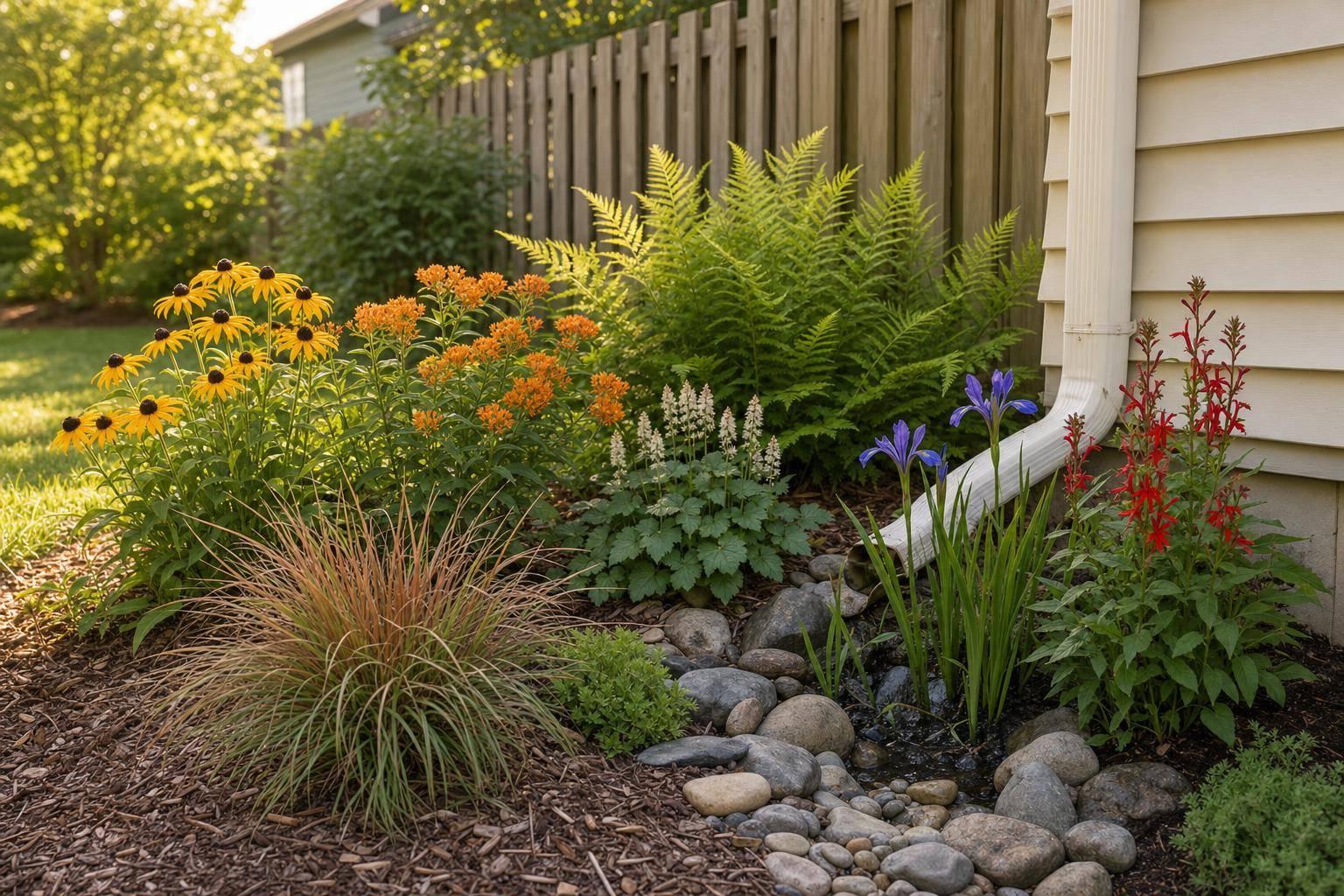
A Layered Garden Using Regionally Native Plants
sbb-itb-843f8be
Maryland Native Plants by Season
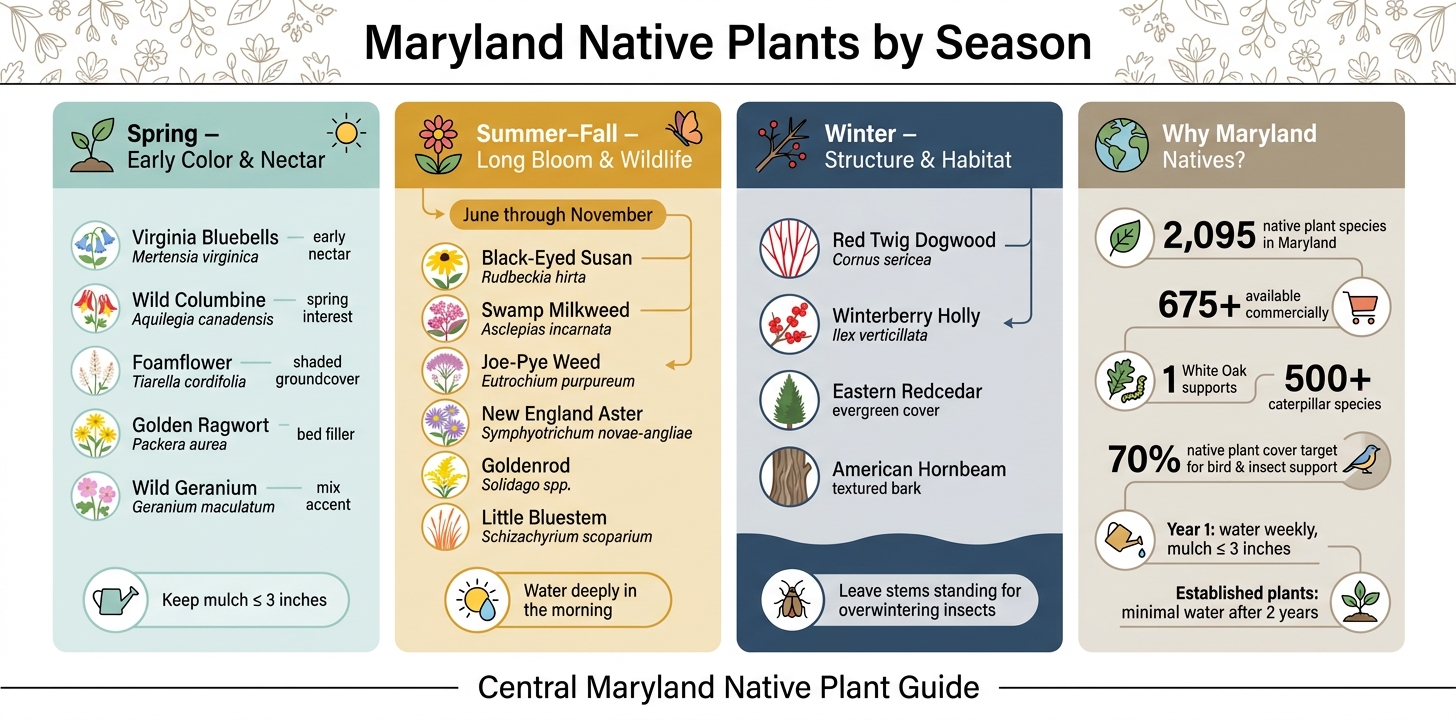
Maryland Native Plants by Season: What to Plant & When
Spring Native Plants for Early Color
Spring moves fast in central Maryland. That’s why early bloomers do a lot of heavy lifting for both color and pollinators. Virginia bluebells (Mertensia virginica) bring early-season color and nectar. Wild columbine (Aquilegia canadensis) is a steady pick for spring interest. In shaded spots, foamflower (Tiarella cordifolia) works well as a groundcover. Golden ragwort (Packera aurea) helps fill in beds in spring, and wild geranium (Geranium maculatum) finishes the mix nicely.
When you plant, keep mulch to no more than 3 inches [4].
Summer and Fall Native Plants for Long Bloom and Wildlife Support
Once spring ephemerals fade, native beds hit their longest bloom stretch from June through November. Black-eyed Susan (Rudbeckia hirta), swamp milkweed (Asclepias incarnata), Joe-Pye weed (Eutrochium purpureum), New England aster (Symphyotrichum novae-angliae), and goldenrod (Solidago spp.) keep flowers and nectar going well into fall. Little bluestem (Schizachyrium scoparium) adds shape and presence later in the season.
Hot Maryland summers can be tough on new plantings, so water deeply in the morning.
Winter Native Plants for Structure and Habitat
After the flowers are gone, the garden still has work to do. Winter is when structure stands out. Red twig dogwood (Cornus sericea) shows off bright stems, winterberry holly (Ilex verticillata) offers berries for birds, Eastern redcedar adds evergreen cover, and American hornbeam brings bark that catches your eye even in the coldest months.
Leave stems standing through winter. They shelter overwintering insects and help the bed keep its shape. These seasonal plant choices lead right into the care routine that comes next.
Year-Round Care Calendar for Central Maryland Native Beds
Native plants don’t ask for much once they settle in. But year one is different. New plantings need steady watering, mulch kept under 3 inches, and some protection from deer browsing [2][4].
In Central Maryland, timing matters just as much as plant choice. Clay-heavy soils and uneven drainage can make a good planting struggle if seasonal care is off. With the right natives in place, a simple seasonal routine helps keep beds healthy and steady through the year.
University of Maryland Extension notes that established natives can thrive in Maryland’s climate with minimal maintenance [2].
Late Winter Through Spring Tasks
Once plants have finished serving as winter habitat, it’s time to clean up. In late winter and early spring, cut back perennial stems to 2–4 inches before new growth starts. If clumps are getting crowded, divide them to fill open spots and help keep weeds down.
As University of Maryland Extension notes, "The more plant material that covers the area, the fewer weeds can germinate and grow, reducing the need to mulch." [4]
Keep mulch shallow, and pull it back from crowns and trunks so plants don’t stay too wet at the base.
Summer Through Winter Tasks
Summer care is mostly about moisture. New plantings need regular watering during the first year. Established beds usually only need extra water during long dry spells. Skip heavy fertilization, pull weeds as needed, and stake plants only when they need support.
Fall is the main planting window for new shrubs and trees. Leave seed heads and foliage standing so beds keep their shape through winter and still offer habitat for wildlife. In winter, check for frost heaving, snow damage, or ice damage, and make sure mulch stays in place over exposed roots.
The table below shows how those tasks shift by plant type.
| Season | Perennials | Shrubs & Trees | Grasses & Groundcovers |
|---|---|---|---|
| Late Winter / Spring | Cut stems back to 2–4 inches; divide crowded clumps | Check for winter or ice damage; prune for structure | Remove excess leaf litter from crowns; plant new groundcovers |
| Summer | Weed selectively; stake only when necessary | Deep watering during drought; check for pests | Check moisture; avoid heavy fertilization |
| Fall | Leave seed heads for birds; plant new perennials | Primary season for planting new shrubs and trees | Leave foliage standing for winter interest and habitat |
| Winter | Check for frost heaving | Check for snow or ice damage; protect new shrubs from deer browsing | Minimal maintenance; leave structure in place |
Designing Native Plant Beds for Maryland Homes
Once you know which native plants fit each season, the next step is placement. That means thinking about layer, sun, and moisture at the same time.
Plant Layers, Four-Season Interest, and Common Site Types
A good native bed is built in layers. Trees and large shrubs act as the backbone, giving the space shape through all four seasons. Mid-height perennials bring seasonal color and support pollinators. Groundcovers and sedges finish the edges, hide bare soil, and help keep weeds in check.
Site conditions matter just as much as plant height. Put full-sun plants where they’ll get the light they need, use shade plants where the canopy cuts the sun, and save wetter spots for species that can handle damp ground. For example, Black-eyed Susan and Little Bluestem fit sunny areas well. Spicebush and Christmas Fern do well in part shade. In wet ground, Swamp Milkweed and Winterberry Holly are a better fit.
The table below shows how these layers can work together in common central Maryland planting beds.
| Layer | Species Examples for Central MD | Seasonal/Site Highlight |
|---|---|---|
| Trees (Backbone) | Serviceberry, Eastern Redbud, White Oak | Spring flowers; fall color; winter structure |
| Shrubs | Winterberry Holly, Spicebush, Virginia Sweetspire | Winter berries; early spring nectar; fall foliage |
| Perennials | Butterfly Weed, Joe Pye Weed, Wild Columbine | Summer pollinators; wet soil tolerance; spring color |
| Groundcovers | Green-and-Gold, Wild Ginger, Christmas Fern | Shade tolerance; weed suppression; year-round green |
| Grasses/Sedges | Little Bluestem, Blue Sedge, River Oats | Fall color; winter texture; shade-tolerant grass |
If you want the bed to look alive across the whole year, lean on keystone species like White Oak (Quercus alba), Serviceberry (Amelanchier), and Goldenrod (Solidago). Then mix in Winterberry Holly for winter berries and Virginia Sweetspire for fall foliage. That way, the bed keeps its color, fruit, and shape instead of fading out after one season.
When to Bring in a Professional for Planting and Drainage Planning
Some yards need more than plant selection. If the site has heavy clay, poor grading, or drainage trouble, those issues can hold plants back before they even get established.
Pro Landscapes MD works with central Maryland homeowners and looks at sun, soil, moisture, and grading before planting starts. They match plants to each part of the property. Native beds can also be tied into drainage and hardscape features, so the whole site works as one system.
Conclusion: Building a Maryland Landscape That Works in Every Season
The seasonal picks above do their best work when they match your site from day one. A strong Maryland native landscape starts with the right plant in the right spot. From there, you build in layers that give you color and habitat through every season.
The low-maintenance side of this gets even better when native plant cover stays high enough to help wildlife. The 70% rule is a smart goal: landscapes with at least 70% native plant cover support more native birds and helpful insects. [4] And once native plants are established, they grow well in Maryland with little upkeep. [2] For established beds, keep mulch at 3 inches or less and skip fertilizer. [3][4]
Native beds also do more than make a yard look good. Since most of Maryland drains to the Chesapeake Bay, these plantings can help cut runoff. [1] If drainage or grading needs work, Pro Landscapes MD can connect native planting with the rest of the site plan.
FAQs
How do I know which native plants fit my yard?
Start by checking your yard’s sunlight, soil moisture, and which Maryland ecoregion you’re in: Mountain, Piedmont, or Coastal Plain. Then pick plants that fit those conditions. For accuracy, use each plant’s scientific name, not just its common name.
It also helps to match a plant’s mature height and spread to the space you have. A plant that looks small in a nursery pot can outgrow its spot before you know it. Double-check light needs too, using plant tags or trusted professional sources.
What should I do if my yard has poor drainage or heavy clay soil?
Start with a soil test so you know exactly what you’re working with. That gives you a clear read on site conditions before you plant anything. From there, improve the soil by mixing in organic matter across the entire area, not just in each planting hole.
If drainage is a problem, fix the site before it turns into a bigger headache. Use site management methods to move stormwater away from wet spots and trouble areas. Pro Landscapes MD can help with drainage installation, grading, land leveling, French drains, and dry riverbeds to control water flow and protect your landscape.
How long do Maryland native plants take to become low-maintenance?
Maryland native plants tend to get much easier to care for once they are well-established. In most cases, that happens during the first year after planting, when they need steady attention and regular watering.
After that, they usually need less work. Because these plants are suited to Maryland soils and climate, they often get by with fewer inputs and less hands-on care. It also helps to put the right plant in the right place, since that gives it a better shot at doing well.
Chat with Us