









- bhavya gada
- No Comments
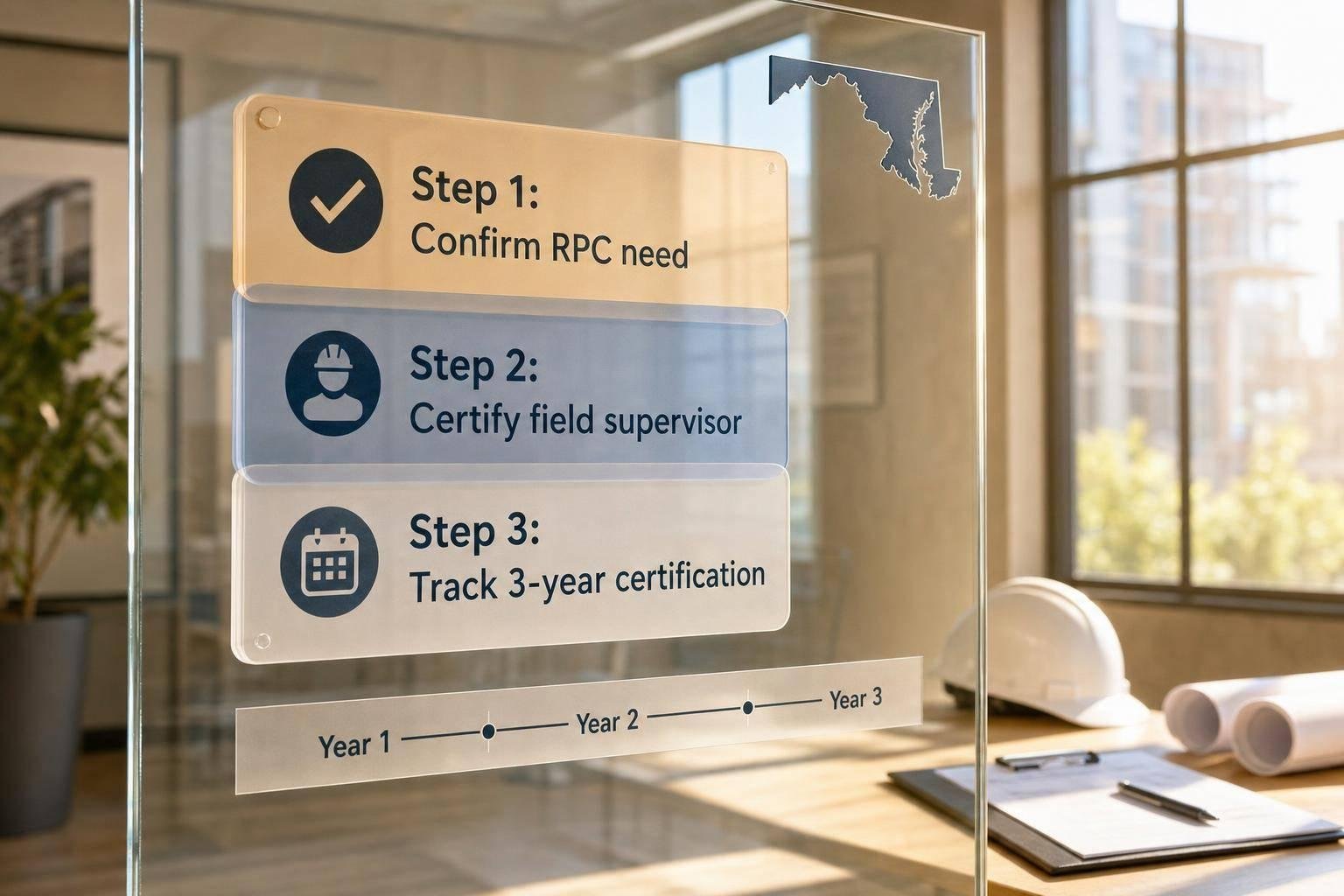
If your crew will supervise grading, clearing, or drainage work in Maryland, at least one field lead usually needs RPC before work starts. In short: I check the approved erosion and sediment control plan, confirm which supervisors need the card, register them for training, make sure they pass the exam, and track the 3-year expiration date.
Here’s the full path in plain English:
- Check the job first: I review the project scope and approved plan to see if RPC applies.
- Match the right people: RPC is for field supervisors like foremen and superintendents, not office staff.
- Register early: I sign people up through MDE or an approved provider before soil work begins.
- Finish class and test: The course covers Maryland sediment and erosion control rules and field practices.
- Keep records: I save certification numbers, issue dates, and renewal dates.
- Renew on time: Maryland RPC is valid for 3 years, so missing the date can leave a job short on coverage.
A few facts matter here. The certification must be in place before ground disturbance starts, and the assigned person’s name should appear on the approved plan. That means even small crew planning mistakes can delay grading, retaining wall work, or drainage installs.
So if I had to boil the article down to one line, it would be this: confirm the need, train the right supervisor, and keep the card current so the site stays covered.
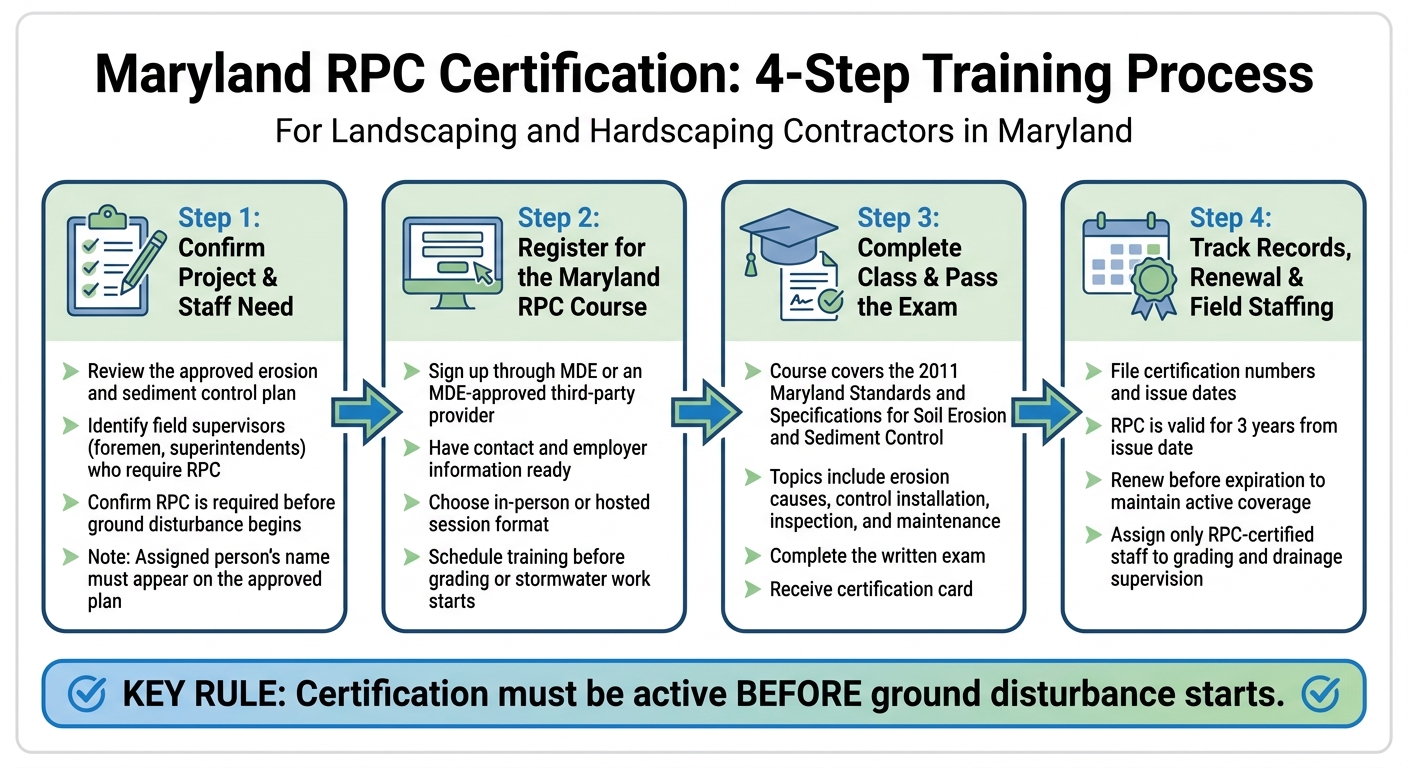
Maryland RPC Certification: 4-Step Training Process
Step 1: Confirm Whether Your Project and Staff Need RPC
Start by reviewing the approved erosion and sediment control plan, the project scope, and each field role. The goal is simple: confirm whether RPC coverage is required before any work starts.
Once you’ve confirmed that coverage is needed, register the assigned staff for training.
sbb-itb-843f8be
Step 2: Register for the Maryland RPC Course
Once you know who needs RPC, sign those team members up for training.
How to Sign Up and What Information to Have Ready
Go to the Maryland Department of the Environment (MDE) Erosion and Sediment Control training page. It includes direct links to the official online certification portal and a list of MDE-approved third-party training providers.
Before you register, have this information on hand:
- Contact information
- Employer information
Class Format, Timing, and Scheduling for Maryland Crews
Classes are available through MDE or MDE-approved providers, either in person or through hosted sessions. After registration, confirm the class date, location, and format so there are no surprises.
It also helps to schedule training before grading or stormwater work starts. That way, certification is active before any field work begins.
Once the class is on the calendar, the next step is reviewing the course topics and exam requirements.
Step 3: Complete the Class and Pass the Exam
Once your course is on the calendar, shift your attention to what the class actually tests: the rules, field methods, and day-to-day skills used on approved projects.
Core Topics Taught in Maryland RPC Training
RPC training teaches the standards used to install, inspect, and maintain erosion and sediment controls. The class is built around the 2011 Maryland Standards and Specifications for Soil Erosion and Sediment Control, which serves as the field standard for this work in Maryland.
In plain terms, that means you’ll spend time on how erosion happens and what crews and inspectors do in the field to control it. The training also covers the practices used to install controls the right way, check that they’re working, and keep them in working order over time.
After those topics are covered, trainees take the course exam.
Written Test, Passing Expectations, and Certification Card
To move forward, complete the exam and follow the training provider’s instructions to receive your certification card.
Step 4: Track Records, Renewal, and Field Staffing
Keep Certification Records Organized for the 3-Year Cycle
Once the exam is done, the paperwork doesn’t stop. You’ll need to track expiration dates and certification numbers as part of day-to-day compliance.
The Maryland RPC stays valid for 3 years from the issue date. Keep each certification number on file so you can confirm current status when needed. And renew before the expiration date so the certification stays active.
Assign RPC-Trained Staff to Grading and Drainage Work
After your records are in order, make field assignments based on active certification status. Only staff with an active RPC should handle field supervision tied to this requirement.
That means RPC-certified personnel should be assigned to grading and drainage work that calls for RPC supervision. Keep an eye on expiration dates and renew on time so job coverage doesn’t slip.
Conclusion: Follow the Training Path and Build RPC Into Daily Operations
RPC certification isn’t a one-and-done box to check. It’s part of staffing, recordkeeping, and compliance. So the process should stay simple and consistent: confirm the need, register, finish the training, pass the exam, then track records and renewal dates.
The payoff shows up before work even starts. When landscaping and hardscaping firms across central Maryland build RPC into pre-job planning, they can put certified supervision in place before ground disturbance begins. That helps keep crews staffed and work in line with compliance rules.
The firms that handle RPC well usually do three things:
- Assign certified staff where they’re needed
- Keep expiration dates current
- Renew before coverage lapses
FAQs
Who needs RPC on a Maryland jobsite?
RPC is required for supervisors who oversee construction or landscaping work that disturbs land. That includes work like clearing, grading, and putting erosion and sediment control plans into action.
In most cases, this applies to roles such as foremen, superintendents, and project engineers.
It’s generally required when a project disturbs more than 5,000 square feet or moves over 100 cubic yards of earth.
What happens if RPC expires during a project?
Maryland Responsible Personnel Certification stays active for three years and usually renews automatically.
If the Maryland Department of the Environment needs you to complete extra training to keep your certification active, they’ll reach out with instructions and deadlines.
To stay in compliance with Maryland erosion and sediment control standards during your project, keep your contact details up to date and complete any required training as soon as possible.
Can work start before the certified supervisor is listed on the plan?
No. Work can’t begin until the certified supervisor is identified and the project meets all requirements.
Before any land disturbance starts, you must have an on-site pre-construction meeting with the assigned inspector. That meeting is required to confirm that the site matches the approved plans, including erosion and sediment control measures.
If work starts too early, it can lead to violations and penalties.
Chat with Us