









- bhavya gada
- No Comments
Most retaining wall failures in Maryland come down to water, soil pressure, cold weather, or old construction – and the fix depends on which one is driving the damage.
If I were hiring for this kind of job, I’d focus on one thing first: the cause. A leaning or bulging wall often means trapped water behind it. Freeze-thaw cycles can crack concrete and mortar because water expands by about 9% when it freezes. And clay-heavy soil, steep grades, and shallow footings can add enough pressure to turn a small repair into a rebuild.
Here’s the short version:
- Poor drainage is the top failure pattern
- Clay soil holds water and pushes against the wall
- Freeze-thaw cycles crack, shift, and weaken materials
- Steep slopes and extra load near the top add more pressure
- Older timber, block, and masonry walls may cost more to patch than rebuild
- Homeowners now want a written plan, not a guess
- Hiring is shifting toward one contractor who can handle wall repair, grading, and drainage together
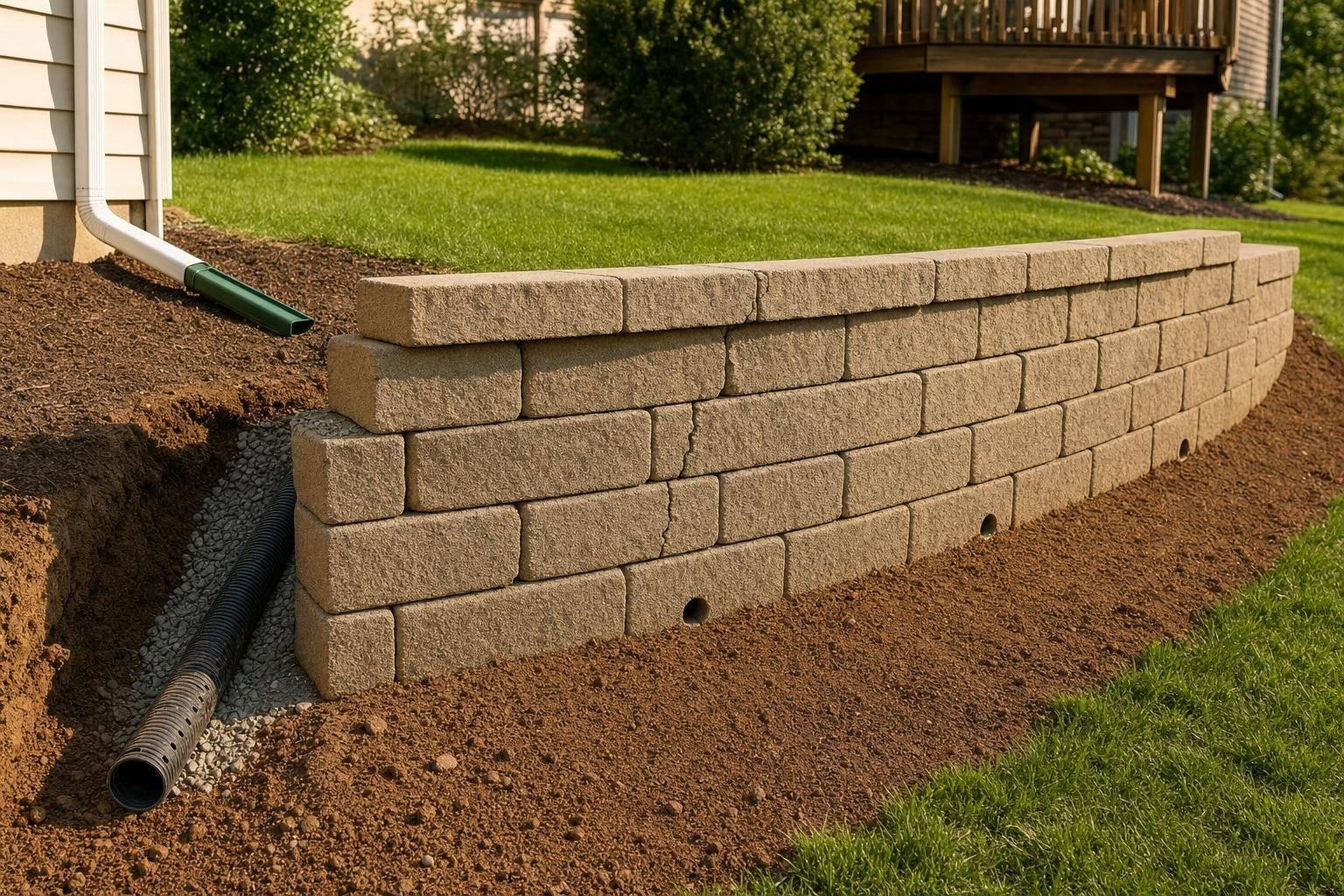
If you see bowing, leaning, white staining, wet spots, or erosion at the base, I’d treat those as signs that the wall likely needs more than a surface patch. In many cases, the work includes clean stone backfill, a 4-inch perforated drain pipe, fabric to keep fines out, and a safe outlet for water.
| Failure pattern | What it often looks like | What homeowners now ask for |
|---|---|---|
| Drainage trouble | Bulging, damp spots, efflorescence, erosion | Drain pipe, stone backfill, outlet plan |
| Freeze-thaw wear | Cracks, spalling, loose caps, heaving | Deeper base, drainage, rebuild if damage is broad |
| Slope/load pressure | Forward lean, toe rotation, mid-wall bulge | Reinforcement, base review, rebuild if wall has moved too far |
| Aging materials | Rot, shifting, broad cracking | Repair vs. rebuild decision before work starts |
So the hiring trend is simple: people want the repair plan to match the failure pattern, with clear scope, line-item pricing, drainage details, and one crew that can fix the wall and the site around it.
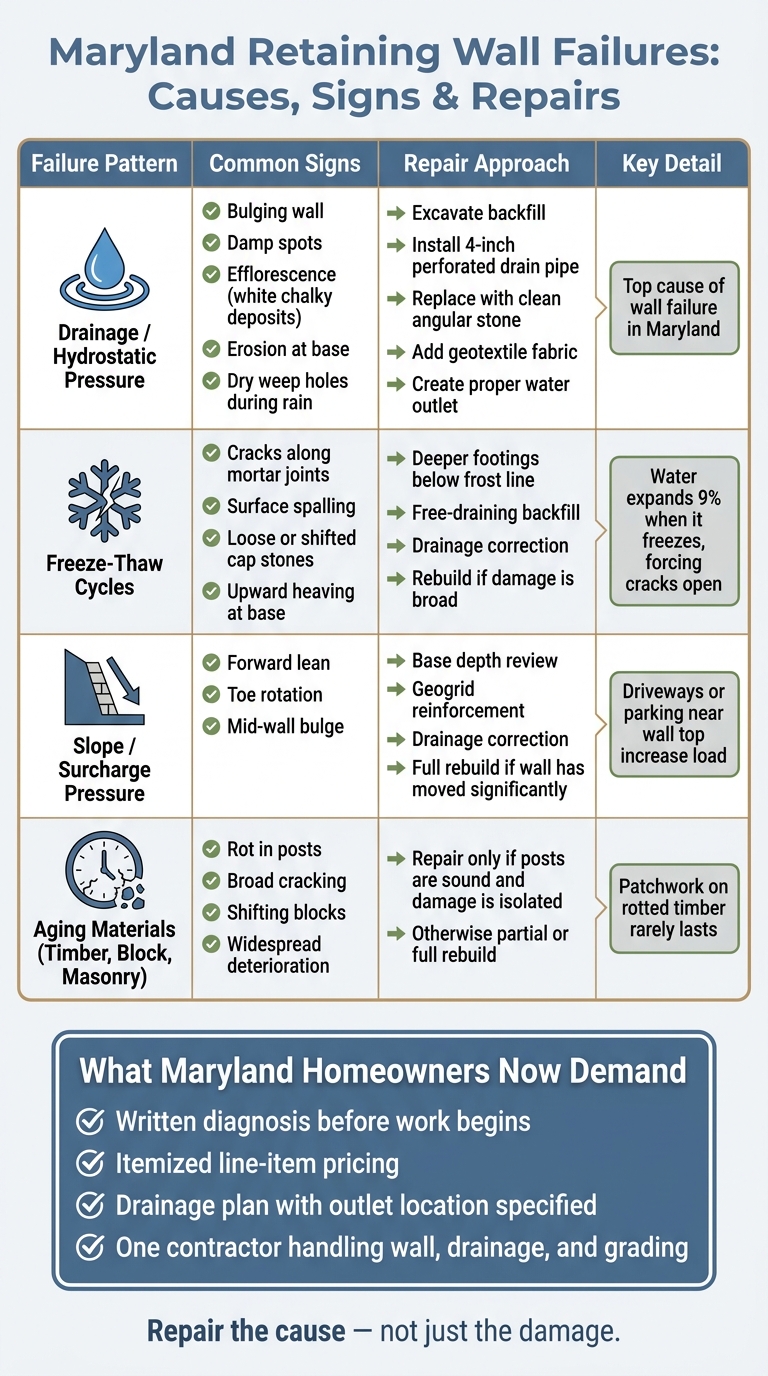
Maryland Retaining Wall Failures: Causes, Signs & Repairs
Drainage problems are the most common reason walls fail
When rain soaks into the soil behind a wall and has nowhere to go, it creates hydrostatic pressure, or trapped water pushing outward on the wall.[10][2] Add runoff from roofs, driveways, and sloped yards, and that pressure can climb well past what the wall was built to handle.
The trouble is that this kind of damage usually builds in silence. By the time a wall starts to bulge or lean, the soil behind it has often been waterlogged for a while.
Signs of hydrostatic pressure behind a wall
If a wall bows outward or leans forward, soil pressure is already winning. Bowing in the middle third often points to the area where pressure is hitting hardest.
The surface can tell the story too. Efflorescence – white, chalky mineral deposits on block or stone – shows that water is moving through the wall and leaving salts behind. Damp spots that stay wet long after rain, erosion at the base where water is escaping, and weep holes that stay dry during heavy rain all point to trapped water in the backfill.
When these signs show up together, the repair usually needs to deal with two things at once: wall movement and drainage.
Repair approaches that fix the water problem
Patching a wall without fixing drainage is a bandage, not a fix. A repair that lasts usually calls for excavation, removal of saturated backfill, replacement with clean angular stone, a 4-inch perforated drain pipe at the base, and geotextile fabric to keep fine soil out.[9][11][12][13] That kind of job calls for a contractor who can read the whole site, not just patch the face of the wall.
The pipe is only part of the job. The outlet matters just as much. Water needs a place to go that isn’t a sidewalk, a foundation, or a neighbor’s property. If the site has runoff issues beyond the wall – like downspouts emptying toward it or a driveway sending water downhill – regrading, French drains, and dry riverbeds can help redirect that flow before it reaches the backfill.
Once homeowners see that water caused the failure, they usually stop looking for a simple patch and start looking for someone who can handle both the drainage issue and the wall repair in one job.
How drainage failures change what homeowners look for in a contractor
After a wall fails once, people tend to ask better questions the next time around. They want to know how water moves across the whole yard, not just what the wall looks like from the front. That shift has pushed demand toward contractors who handle retaining wall repair along with site drainage review. Pro Landscapes MD fits that need by handling retaining wall repair and drainage together, including French drains, drain pipe placement, stormwater management, grading, and yard repair.
When drainage isn’t the only issue, freeze-thaw damage, slope pressure, and aging materials often shape the next repair choice.
sbb-itb-843f8be
Freeze-thaw damage, slope pressure, and aging materials
Drainage problems almost never show up by themselves. In Maryland, freeze-thaw cycles, steep slopes, and older construction can turn what looks like a simple fix into a full rebuild.
The pattern usually starts the same way: water gets trapped behind the wall.
How freeze-thaw cycles damage concrete, stone, and masonry
When water freezes inside concrete, stone, or mortar, it pushes cracks open and weakens the bond between materials.[8][20] Then the cycle repeats. Temperatures go up, the water thaws, moves deeper into the wall, and freezes again with the next cold snap.
You can often spot the damage in a few places:
- Cracks along mortar joints or through individual blocks
- Spalling on the surface
- Loose or shifted cap stones
- Upward heaving at the base when frozen soil expands below the wall
When this damage shows up near blocked weep holes or low spots, trapped water is usually the main issue, not just age.[14][6][16][7]
On steep slopes, water damage and soil load tend to work together. And that combination can push a wall out of line fast.
Slope pressure and poor construction details
A wall that holds back a steep grade is already carrying a lot of pressure. Put a driveway or parking area near the top, and the load goes up even more. In many cases, that added surcharge pushes the wall past what it was built to handle.[5][1][3][15]
The small construction choices matter here. Walls with thin bases, weak compaction, native clay backfill instead of clean angular stone, or no geogrid reinforcement at taller heights are far more likely to give way.[1][17][18][3] The warning signs are pretty consistent: forward lean, toe rotation, or a bulge around the middle of the wall. In plain terms, the wall starts to lose the fight against slope pressure.
Proper base depth, drainage, and reinforcement are what keep these walls stable.[1][17][18][3]
Older walls tend to fail sooner when that pressure bears down on weak or undersized construction.
When old materials make repair impractical
Timber walls don’t last forever, and Maryland’s wet conditions can shorten their lifespan more than many homeowners expect. A small repair only makes sense when the posts are still structurally sound, the wall is mostly straight, and the damage is limited to a few boards or one small section.[15]
Once the posts start to rot and the backfill begins to move, patchwork repairs usually don’t last. At that stage, partial or full rebuilding is often the lower-cost choice over time.[15][19]
Older block and masonry walls follow the same basic rule. If the wall is still plumb and the cracking is isolated, a limited repair may do the job. But once you see leaning, shifting, or broad deterioration, rebuilding is usually the better move.[1][15][3]
That line between repair and rebuild affects who homeowners hire. They want a contractor who can tell the difference before any work begins – someone who can judge whether the wall needs a drainage fix, a structural repair, or full replacement.
What Maryland homeowners now look for when hiring a wall repair contractor
Once the failure pattern is clear, hiring decisions change fast. The big split now is repair vs. rebuild. And before they hire anyone, homeowners want a diagnosis.
Clear repair scope and written plan
The biggest change in how Maryland homeowners hire is simple: they want a written explanation of why the wall failed before any work starts. If a contractor throws out a price and starts pulling blocks without finding the cause, that now looks like a red flag.
Homeowners want key details spelled out in writing. That usually includes the drainage plan, such as the drain pipe, clean stone backfill, and outlet location. They also want to see base depth for local frost conditions and any needed reinforcement.[4][22][23][3] Itemized pricing matters too. A single lump-sum number with no line items makes it tough to compare bids side by side.[23][21] A written timeline with major milestones also gives homeowners a clearer way to judge one proposal against another.[21]
That’s why surface fixes are losing favor.
Preference for full-site repairs over surface fixes
Homeowners now want the wall fixed as part of the whole site, not as a stand-alone patch job. If runoff still reaches the wall, the same failure can come back.[24][3]
A full-site repair often combines wall reconstruction with regrading and drainage correction. When one contractor handles the whole scope, there’s less chance that the root cause gets missed in the handoff between trades. Homeowners who’ve already dealt with finger-pointing between a wall contractor and a separate drainage crew are now leaning toward firms that can manage the full site.
Why Pro Landscapes MD fits current local demand
That all-in-one approach lines up with what Maryland homeowners now want. Pro Landscapes MD fits that model by handling retaining wall repair, drainage, grading, and landscape restoration across central Maryland. These failures often call for both structural repair and drainage work, so a contractor that can manage the whole scope is tackling the problem in a way that fits Maryland conditions.
Conclusion: Match the repair plan to the failure pattern
Most Maryland wall failures come back to a few common causes: drainage problems, freeze-thaw stress, slope load, and aging materials. In many cases, it’s not just one issue. It’s a mix of two or three working together.
That matters because each symptom calls for a different repair.
If hydrostatic pressure is the problem, the plan should focus on drainage correction. If freeze-thaw damage is driving the failure, the wall may need deeper footings and free-draining backfill. And when a wall has shifted too far, patchwork won’t cut it. At that point, structural rebuilding is the right move.
That shift in thinking has changed what homeowners look for first.
More Maryland homeowners want contractors who can handle structural repair, drainage, and grading under one scope. And that starts with the proposal.
The strongest proposal is a written scope that connects each fix to a specific failure cause.
Maryland wall failures are often predictable. The best repair plan deals with the cause, not just the damage.
FAQs
How do I know if my wall needs repair or a full rebuild?
It depends on how bad the structural damage is. Major leaning, bowing, or shifting often means the wall needs a full rebuild for safety and long-term stability.
Small surface problems may be repairable. But when a wall has been hit by poor drainage or heavy slope pressure – both common in Maryland – you usually need a professional assessment to find out whether the base structure is still sound.
Can a retaining wall be fixed without replacing the drainage?
No. Fixing a retaining wall without dealing with drainage is usually a losing battle.
A lot of wall failures begin when water gets trapped behind the wall. That water builds pressure, pushes against the structure, and can lead to cracks, bulging, or collapse.
A gravel layer behind the wall helps water drain instead of pooling. That cuts down on hydrostatic pressure, which is one of the main reasons retaining walls fail. In plain terms: drainage often matters more for long-term wall stability than the face material itself.
What should I ask a contractor before hiring for wall repair?
Ask how they plan to handle drainage and structural integrity. Be direct here. You want to know if they’ll install a gravel layer behind the wall to relieve water pressure and help reduce the risk of early failure.
You should also confirm that they understand local permit rules for walls over 36 inches tall or walls that support surcharge loads. And it’s smart to ask about their experience with long-term drainage solutions, not just surface-level fixes that look good at first but don’t hold up.
Chat with Us