









- bhavya gada
- No Comments
Yes, a backyard mini golf course can fit in many yards – but the plan only works if space, drainage, materials, and upkeep all line up from the start.
If I were planning one, I’d keep my focus on four things first:
- Yard fit: usable space matters more than total lot size
- Site work: grading, drainage, and utility marking often shape the build
- Build time: a basic putting green may take 2–4 days, while a small multi-hole course may take 1–2+ weeks
- Surface choice: nylon usually rolls faster but gets hotter in direct sun; polypropylene rolls a bit slower with less heat buildup
Here’s the short version: a small yard may fit 2–3 holes, while a nine-hole setup needs much more room and planning around patios, slopes, gardens, and walls. Water control under the turf also matters a lot. Poor drainage can lead to pooling, soft spots, seam lift, and uneven ball roll over time.
| Topic | What I’d check first |
|---|---|
| Space | Usable footprint, slope, clearance, hole count |
| Site prep | Grading, leveling, excavation, drain paths |
| Rules | County permits, HOA rules, 811 utility marking |
| Materials | Turf speed, heat, edging, obstacle wear |
| Upkeep | Brushing, drain cleaning, seam and edge checks |
Bottom line: if the base is level, water moves off the surface, and the layout fits the yard, the course is much more likely to play well and last longer.
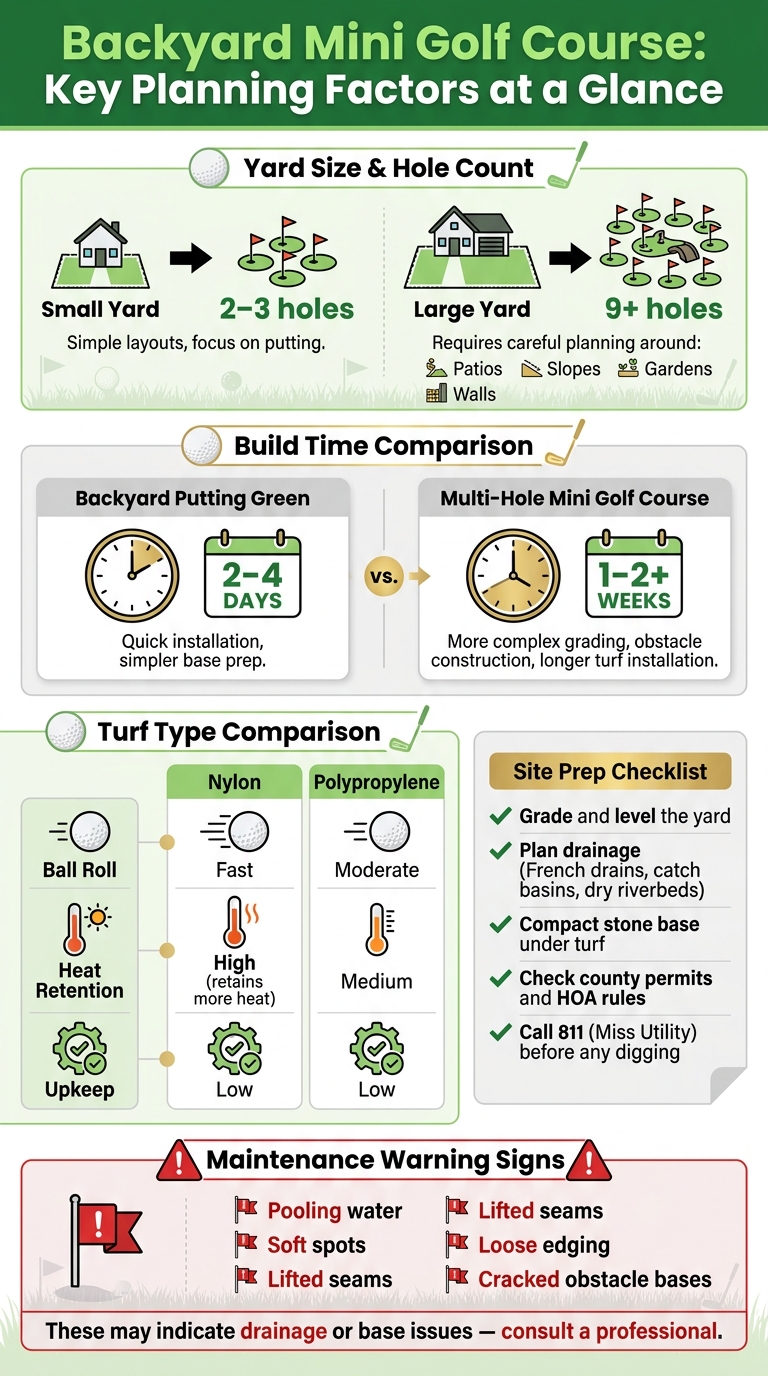
Backyard Mini Golf Course: Key Planning Factors at a Glance
Turn Your Backyard Into A Mini Golf Course
sbb-itb-843f8be
Will a mini golf course fit in my yard?
A backyard mini golf course can fit in a lot of yards. The big factor isn’t just lot size. It’s the usable footprint you have once you account for slopes, obstacles, and enough clearance around each hole.
That’s why it helps to map the yard first and then decide how many holes to build. A smaller yard will usually fit fewer holes and a simpler path from one shot to the next. A larger yard gives you more room for extra holes and more variety in shot shapes.
How many holes can I fit, and how much space do I need?
Yard size has a direct effect on hole count and layout options. In a modest space, a compact setup with two or three holes can work well. If you’re aiming for a full nine-hole course, you’ll need a lot more room, plus careful planning around the parts of the yard that already exist.
In plain terms: the more space you have, the easier it is to build a layout that feels smooth instead of cramped.
Can the layout work around patios, retaining walls, gardens, and slopes?
Fit isn’t only about square footage. It also comes down to how the course weaves around patios, garden beds, retaining walls, and grade changes.
Slopes don’t automatically rule out a backyard mini golf course. In fact, they can make the course more fun. A hill can become part of a multi-level hole, and a grade change can set up a drop shot that gives the hole a bit more personality.
Once the footprint is set, the next step is site prep and drainage. That’s what shapes how the course actually gets built.
What site prep, permits, and drainage work are typically required?
Site prep depends on two things: the size of the project and what your yard is like right now. Grading, leveling, excavation depth, and drainage planning all shape how the build comes together. Once the site plan is locked in, the next step is figuring out whether permits apply and if utility marking is needed.
When do grading, drainage changes, or permits apply?
Permit rules depend on the work being done, not the name of the project. Retaining walls, electrical work for course lighting, and major grading or drainage work often need approval. In Maryland, homeowners should check county permit rules and HOA requirements before the design is finalized. And before any digging or grading begins, call Miss Utility at 811 so underground lines can be marked first.
Why drainage matters under synthetic greens and along paths
Drainage is a big deal under synthetic greens and along paths. If water sits in place, ball roll can change, muddy spots can show up, and turf life can get cut short.
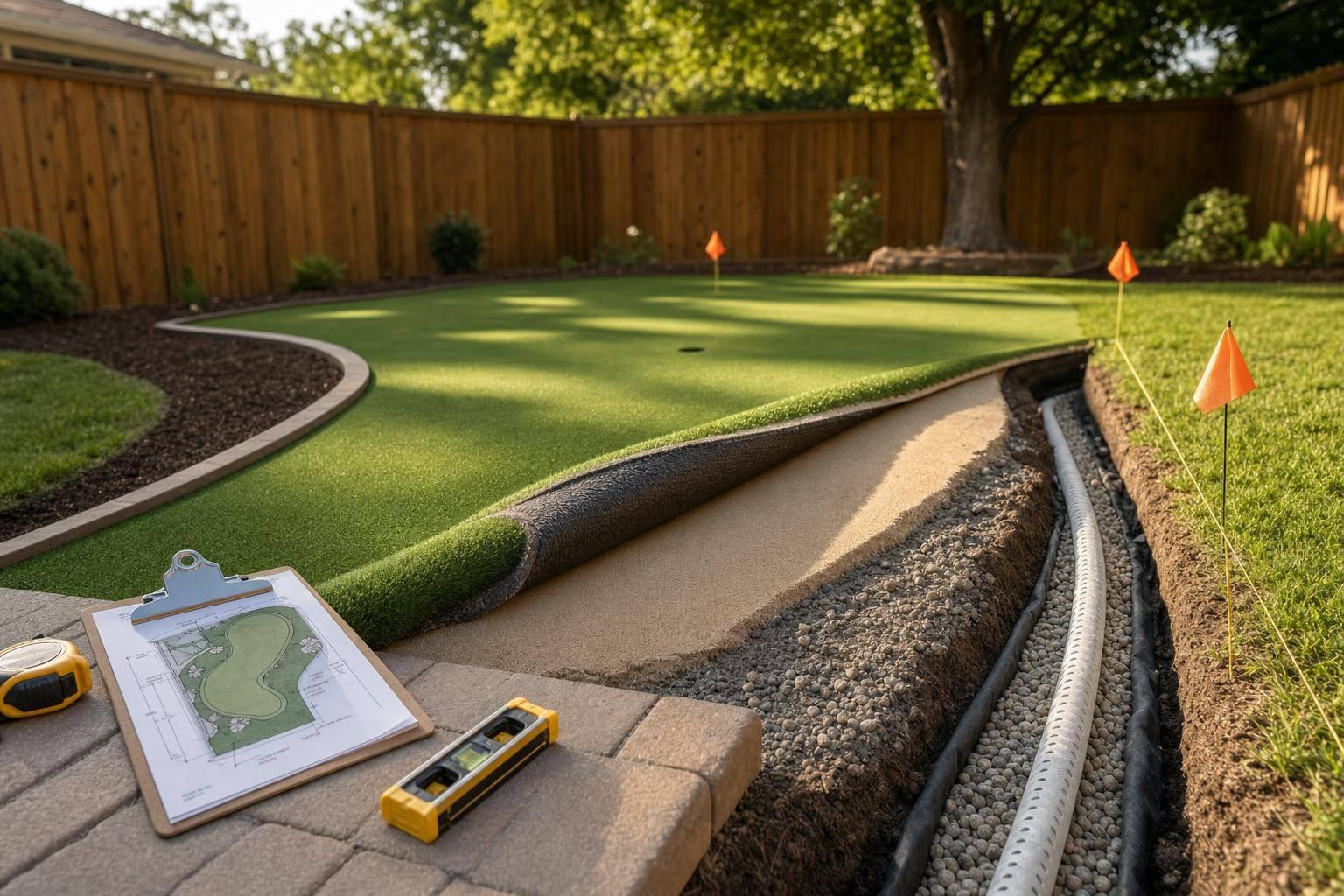
A stable installation usually starts with a compacted stone base under the turf. From there, surface grading helps guide water away. In some yards, that also means adding French drains, catch basins, or dry riverbeds to keep water moving off the course.
Professional leveling matters too. It helps prevent later settling, which can lead to soft spots or uneven breaks in the putting surface. Pro Landscapes MD handles grading, land leveling, drainage installation, and drain pipe placement to support a stable base. After the base is graded and drained, construction can move to turf, edging, and obstacles.
How long does construction take, and what materials work best?
Typical build time: putting green versus a small multi-hole course
Once grading and drainage are done, most homeowners want to know two things: How long will this take? And which turf should I choose?
The short answer is simple. A basic putting green usually goes in much faster than a mini golf setup with multiple holes, obstacles, and detailed edging. More features mean more layout work, more cuts, and more time on site.
| Feature | Backyard Putting Green | Multi-Hole Mini Golf Course |
|---|---|---|
| Typical construction time | 2–4 days | 1–2+ weeks |
Turf choices
Turf changes how the surface plays and how it feels during hot weather. It also affects routine care over time, like brushing and seam maintenance.
| Turf Type | Ball Roll | Heat | Upkeep |
|---|---|---|---|
| Nylon | Fast roll | Retains more heat in sun | Low upkeep |
| Polypropylene | Moderate roll | Medium heat | Low upkeep |
In plain terms, nylon tends to give you a faster roll, but it can get hotter in direct sun. Polypropylene usually rolls a bit slower and stays at a more moderate temperature. Both are fairly easy to maintain, though your final pick can shape how much brushing and seam care the surface needs over the long run.
What maintenance and repairs should homeowners expect?
Once the course is built, regular upkeep helps protect play quality and stops small issues from turning into bigger repairs. A backyard mini golf course doesn’t need heavy maintenance, but it does need steady attention to keep the turf smooth, the edges in place, and the drains flowing.
Routine care for turf, seams, edges, and obstacles
Homeowners should brush the turf, clear away debris, and check seams on a regular basis. It also helps to inspect edging for any movement and clean around obstacle bases so the course stays stable from season to season.
Drainage matters here, too. When water moves off the course the way it should, you’re less likely to deal with soft spots, seam stress, or settling. That’s why clearing drains and catch basins isn’t just something you do when there’s a problem. It’s part of normal upkeep.
Common repairs and warning signs
Drainage and base problems usually show up at the surface first. In plain terms, if the course starts to play differently, that can be a sign of a deeper issue.
Watch for these red flags:
- Pooling water
- Soft spots
- Lifted seams
- Loose edging
- Cracked obstacle bases
Tight paths, sharp turns, and obstacle zones need extra attention because they take the most wear. If you notice any of those warning signs, the issue may be tied to drainage or the base below the surface, not just normal surface wear. That’s usually the point where bringing in a professional makes sense.
Conclusion: Key factors that shape a successful backyard mini golf project
A successful backyard mini golf course usually comes down to four things: a layout that fits the yard, solid drainage and site prep, good materials and construction, and a steady upkeep plan. When those pieces are in place, the course stays playable and easier to manage over time.
FAQs
How do I know if my yard is too sloped?
A professional site evaluation is the best way to know for sure. In many cases, a gentle 5% slope works well for drainage. But if the ground is steeper or uneven, mini-golf construction can get a lot harder.
Pro Landscapes MD can assess your yard, flag drainage issues, and map out any grading or leveling needed to create a smooth, usable surface that fits your property and local requirements.
What obstacles are safest for kids and guests?
Choose obstacles that are smooth, rounded, and firmly anchored. Stay away from sharp edges, heavy materials, and anything that might cause trips or hard-impact injuries.
The safest pick is weather-resistant, soft-touch, low-profile elements. They should also let water drain properly and not create uneven areas that can lead to pooling or erosion.
When should I repair drainage issues?
Fix drainage problems as soon as you spot signs of water damage, like standing water in low areas, soil erosion, bare spots, or water flowing toward your home’s foundation.
Drainage problems can affect your property’s stability. That’s why flooding or erosion should be checked by a professional to figure out whether you need a repair, regrading, or a new system. In some Maryland cases, inspections may also be required every three years to stay in compliance.
Chat with Us