









- bhavya gada
- No Comments
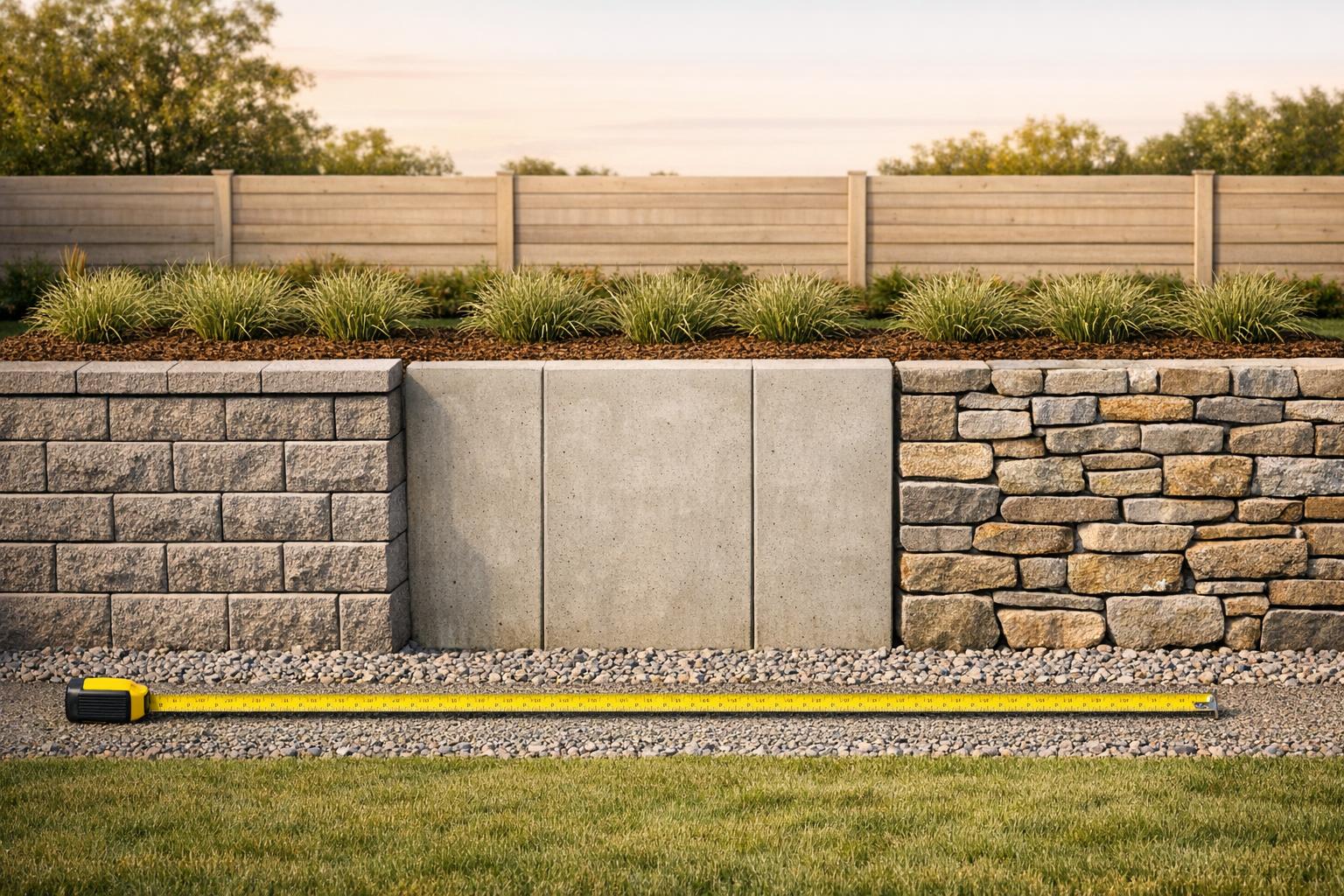
Looking for the most cost-effective retaining wall option? Here’s a quick breakdown of three popular types – modular block, poured concrete, and natural stone – based on cost, durability, and maintenance.
- Modular Block Walls: $35–$50/sq. ft. installed. Durable (50–100 years) and low maintenance. Great for DIY under 3 feet.
- Poured Concrete Walls: $20–$55/sq. ft. installed. Long lifespan (80–100 years) but prone to cracking in freeze-thaw climates.
- Natural Stone Walls: $15–$95/sq. ft. installed. Timeless look, lasts over 100 years, but higher labor and upkeep costs.
Key Takeaway: Modular block walls offer a balance of affordability, ease of installation, and longevity, making them a practical choice for most homeowners. They’re especially suited for Maryland’s soil and weather conditions, with efficient drainage and minimal maintenance needs. For taller walls, factor in permits and engineering costs (10–20% extra).
Quick Comparison
| Wall Type | Material Cost (per sq. ft.) | Labor Cost (per sq. ft.) | Total Installed Cost (per sq. ft.) | Lifespan | Maintenance |
|---|---|---|---|---|---|
| Modular Block | $15–$35 | $20–$40 | $35–$50 | 50–100 years | Low (easy block replacement) |
| Poured Concrete | $15–$27.50 | $15–$60 | $20–$55 | 80–100 years | Low to Medium (crack repair) |
| Natural Stone | $20–$100 | $25–$55+ | $15–$95 | 40–100+ years | Moderate (mortar resetting) |
Choose based on your budget, design preferences, and how much maintenance you’re willing to handle. Modular blocks are cost-effective for most projects, while natural stone offers premium aesthetics at a higher cost.
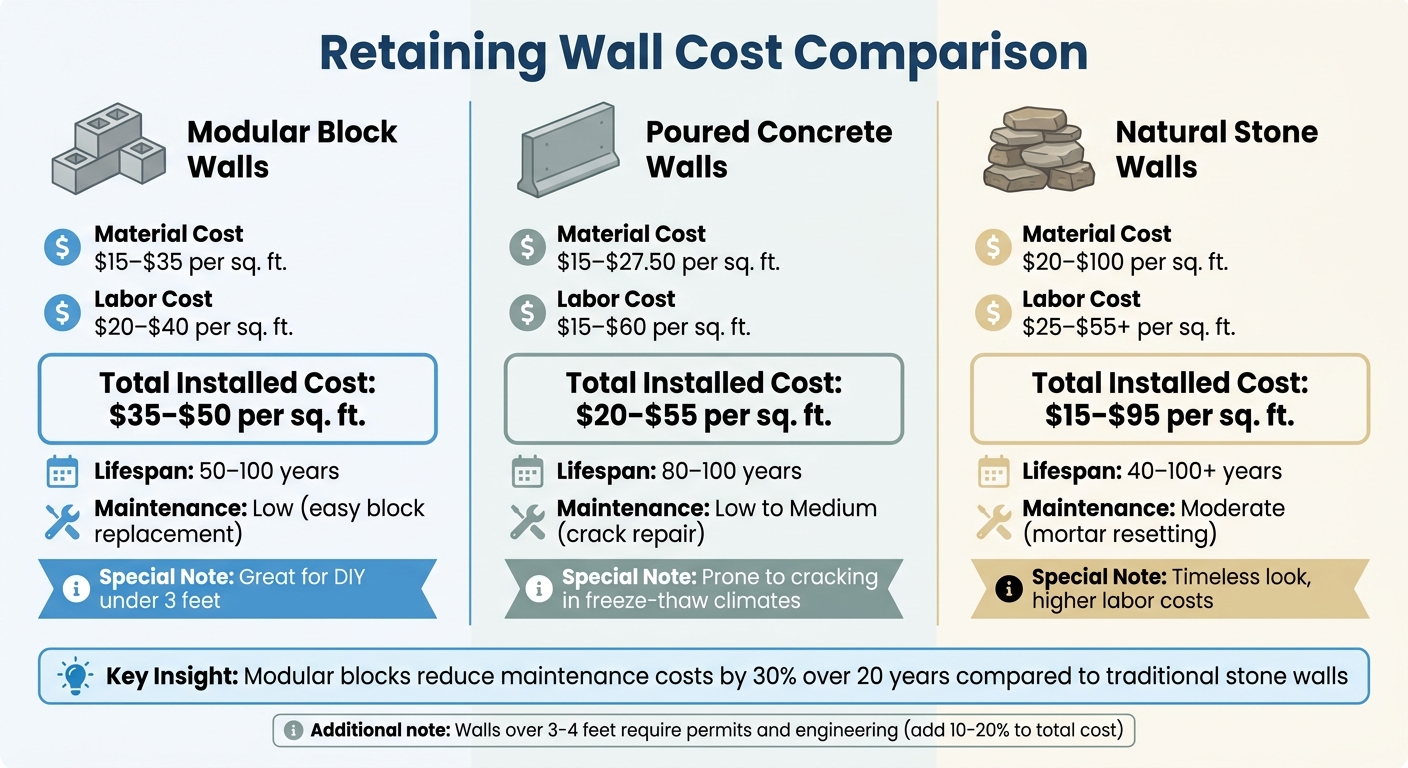
Retaining Wall Cost Comparison: Modular Block vs Poured Concrete vs Natural Stone
Modular Block Walls: Cost Breakdown
Material Costs
Modular block walls are built using interlocking concrete units that stack together without the need for mortar. These materials typically cost between $15 and $35 per square foot, making them a budget-friendly option for retaining wall construction [1][5]. For smaller projects or decorative purposes, individual blocks are available for $2 to $10 per block [1].
The price range depends on factors like quality, brand, and design. Well-known systems such as Allan Block and Keystone fall within this range and offer various textures and colors to suit different landscaping styles [3].
Let’s move on to the labor and installation expenses.
Labor and Installation Costs
The dry-stack system of modular blocks significantly reduces both installation time and labor costs. As Brainerd Boulders explains:
Modular concrete blocks not only lower both material and labor costs but also simplify installation [3].
Because these walls don’t require mortar or highly specialized masonry skills, professional labor costs generally range from $20 to $40 per square foot. Including site preparation, drainage systems, and professional installation, the total installed cost typically falls between $35 and $50 per square foot [1][2][3][6]. In comparison, natural stone walls can cost as much as $95 per square foot.
For walls under three feet tall, many homeowners opt for a DIY approach. With basic tools, which cost around $157, it’s possible to complete the installation yourself [1].
Now, let’s look at the upkeep and durability of modular block walls.
Maintenance and Longevity
One of the major advantages of modular block walls is their low maintenance requirements, which helps keep long-term costs manageable. When installed correctly, these walls can last between 50 and 100 years [2][5]. Reinforced concrete blocks, in particular, reduce maintenance expenses by about 30% over 20 years compared to traditional stone walls [5].
Routine upkeep includes inspecting for any shifting, cleaning drainage systems (like weep holes), and ensuring proper drainage functionality [2][5]. Thanks to their durability and minimal maintenance, modular block walls are a cost-effective solution for the long haul.
sbb-itb-843f8be
Poured Concrete Retaining Walls: Cost Breakdown
Material Costs
Poured concrete walls are built using a combination of concrete mix, forms, and rebar to create a single, continuous structure [1][3]. The material costs alone typically average around $15 per square foot [3], though this can vary depending on how much reinforcement is required.
Additional materials like rebar and waterproofing can add $3.50 to $12.50 per square foot to the overall cost [1][2]. These extra materials often lead to more complex labor needs, further influencing the total expense.
Labor and Installation Costs
Constructing poured concrete walls involves skilled labor and specialized tools for tasks like forming, pouring, and reinforcing the structure. This level of expertise results in higher labor costs compared to modular block walls. Contractors generally charge $15 to $60 per square foot for labor, depending on the region and the complexity of the project [2][3].
When you combine material and labor expenses, the total installed cost typically falls between $20 and $55 per square foot [1][2]. For walls exceeding 4 feet in height, additional requirements – such as engineering reviews and permits – can increase the budget by 10% to 20% [2][3]. Permit fees alone range from $40 to $450, depending on your local regulations and the size of the wall [1][2].
Maintenance and Longevity
One of the standout benefits of poured concrete walls is their minimal maintenance needs. Thanks to their solid, joint-free design, they are less prone to issues like cracking compared to block walls [7]. Seufert Construction highlights their strength, durability, and resistance to moisture as key advantages [7].
With proper care, these walls can last 80 to 100 years [5]. Their jointless construction reduces weak points where damage might occur. Routine maintenance typically involves tasks like clearing drainage systems, applying waterproof sealants, and repairing small cracks before they grow [5]. While the initial labor costs may be higher, the long lifespan and low upkeep make these walls a cost-effective option over time [7].
Natural Stone Retaining Walls: Cost Breakdown
Material Costs
Natural stone is known for its timeless look and durability, with costs ranging from $20 to $100 per square foot. Locally sourced fieldstone tends to be on the lower end of the spectrum, while imported options like granite or limestone push prices higher [4].
The variation in price is influenced by the structural elements required for high-quality walls. For example, "through stones" – large pieces that span the wall’s entire thickness to provide stability – add to the overall stone requirement and, consequently, the cost [4]. These factors play a significant role in shaping the overall project budget.
Labor and Installation Costs
Building natural stone walls requires expert craftsmanship. Each stone must be carefully selected and positioned, whether constructing a dry-stacked wall (which relies on gravity and friction) or a wet-laid wall (which incorporates mortar). This meticulous process demands significantly more time than other retaining wall types. Contractor Devin Devine explains:
This type of wall will take ten times longer than any other type listed here [4].
Labor costs typically fall between $25 and $55 per square foot, reflecting the skill and precision involved [2]. Unlike modular systems with pre-engineered interlocking pieces, natural stone installation involves working with irregular shapes and ensuring proper batter (a slight tilt into the hillside) for stability [4]. Professionals generally charge $50 to $100 per hour for this specialized work [5], making labor one of the biggest contributors to the overall expense.
Maintenance and Longevity
While natural stone retaining walls come with higher upfront costs for materials and labor, they offer exceptional durability. When properly maintained, these walls can last over 100 years [5]. Dry stone walls, in particular, are highly resilient. Their ability to shift slightly with ground movement helps them avoid the cracking issues common with rigid concrete walls.
In regions like Maryland, walls with mortar joints may require occasional upkeep due to freeze-thaw cycles. Maintenance tasks include clearing drainage systems, resetting dislodged stones, and reapplying mortar to joints as needed [5]. Additionally, keeping vegetation at bay is crucial to prevent roots from disturbing the stonework. Over a 20-year period, maintenance costs for natural stone walls can be up to 30% higher than those for reinforced concrete block systems [5]. However, their long lifespan often offsets these expenses, making them a worthwhile investment for many homeowners.
Cost Comparison: Modular Block vs. Poured Concrete vs. Natural Stone
Comparison Table
Here’s a quick look at the cost breakdown for each retaining wall option, summarizing material, labor, and total costs along with lifespan and maintenance needs.
| Wall Type | Material Cost (per sq. ft.) | Labor Cost (per sq. ft.) | Total Installed Cost (per sq. ft.) | Estimated Lifespan | Maintenance Level |
|---|---|---|---|---|---|
| Modular Block | $15 – $35 [1] | $20 – $40 [1][2][3] | $35 – $50 [1][2][3][6] | 50 – 100 years [2][5] | Low (easy block replacement) |
| Poured Concrete | $15 – $27.50 [1][2][3] | $15 – $60 [2][3] | $20 – $55 [1][2] | 80 – 100 years [5] | Low to Medium (crack repair) |
| Natural Stone | $20 – $100 [4] | $25 – $55+ [2] | $15 – $95 [1][2] | 40 – 100+ years [5] | Moderate (mortar/resetting) |
Modular block walls are often the go-to choice for homeowners due to their predictable costs and straightforward installation process. They strike a solid balance between affordability and longevity. Poured concrete walls, while slightly more expensive to install, offer a clean and modern look but demand skilled labor and precise engineering. Meanwhile, natural stone walls come with the widest price range because costs depend heavily on the type of stone and the complexity of the design. Labor often drives up expenses for these walls.
One major benefit of modular blocks is their repair-friendly design. Research suggests that reinforced concrete blocks can reduce maintenance expenses by as much as 30% over 20 years when compared to traditional stone walls [5]. With modular blocks, individual sections can be replaced without tearing down large portions of the wall. In contrast, poured concrete repairs often involve costly epoxy treatments or, in severe cases, complete demolition and reconstruction.
Keep in mind that for walls exceeding 3 to 4 feet in height, you’ll likely need permits and engineering services. These additional requirements can increase your total project cost by 10% to 20% [2][3]. These factors will be explored further in the next section, focusing on long-term costs and considerations.
How Much Does a Retaining Wall Cost
Long-Term Cost Factors
While the upfront cost of installation matters, the real financial picture includes long-term durability and maintenance. These factors can significantly influence overall expenses.
Durability and Maintenance Costs
When looking at the total cost of ownership, the initial price is just one piece of the puzzle. The durability of different wall types and their maintenance needs over the years play a big role in their overall cost.
- Modular block walls are low-maintenance. Their interlocking design allows for slight shifts without losing structural stability. Maintenance typically involves checking drainage and occasionally adjusting backfill.
- Poured concrete walls are sturdy but prone to cracking over time. Repairs often require epoxy injections or, in more severe cases, extensive fixes if the wall starts to lean.
- Natural stone walls can last for over a century but come with higher upkeep. Mortared stone walls need periodic reapplication of mortar, especially in areas with freeze-thaw cycles. Dry stone walls, while avoiding mortar issues, often require skilled resetting. Though their lifespan is impressive, the labor involved in maintenance can become costly.
Apart from the inherent durability of the materials, the local environment also impacts how well these walls perform over time.
Environmental Suitability
Maryland’s unique conditions, like heavy clay soils and freeze-thaw cycles, can challenge retaining wall structures. These environmental factors should be considered when choosing a wall type.
- Modular block walls excel in Maryland’s environment. Their crushed stone foundations and built-in drainage features, like weep drains, help manage the water pressure from clay-heavy soils. The interlocking design can handle soil movement effectively, and for taller walls, geogrid fabric can anchor the structure securely into slopes.
- Poured concrete walls, while strong, struggle with the state’s freeze-thaw cycles and moisture-heavy soils. Their rigid nature makes them prone to cracking and leaning when the soil shifts.
- Natural stone walls tend to perform better in Maryland’s conditions, especially dry stone varieties that avoid mortar issues during temperature swings. However, proper installation is critical to ensure they manage drainage and remain stable on slopes.
To prevent water buildup – a leading cause of wall failures in Maryland – it’s essential to maintain drainage systems and clear weep holes regularly. Modular block walls stand out here, as their design naturally facilitates water flow through joints, and the backfill system is optimized for drainage. This makes upkeep simpler compared to other wall types.
Conclusion
When weighing retaining wall options, modular block walls often strike the best balance between initial affordability and long-term value for homeowners in Maryland. They offer a practical mix of reasonable upfront costs, low maintenance needs, and long-lasting durability, making them a smart financial choice.
The advantages go beyond installation costs. For example, reinforced concrete blocks can cut maintenance expenses by up to 30% over 20 years compared to traditional stone walls[5]. This makes them an appealing option for anyone looking to minimize ongoing upkeep costs associated with other materials.
Your final decision will depend on your specific needs and priorities. If your property has heavy clay soils – common in Maryland – modular blocks are particularly effective at managing soil movement and drainage without the cracking issues that sometimes affect poured concrete. On the other hand, if aesthetics are a top priority and you’re open to a higher investment, natural stone provides a visually striking option, though it can cost as much as $95 per square foot[1][2]. Think about your budget, the conditions of your property, and how long you plan to stay in your home. A well-built retaining wall can boost your property value by up to 15%[1]. For taller walls (over 3 to 4 feet), don’t forget to factor in the cost of structural engineering and permits, which typically range from $40 to $450[1][2][3].
It’s essential to consider the total cost of ownership rather than just the upfront price. While modular blocks might not always be the cheapest option initially, their durability, low maintenance, and long lifespan make them one of the most cost-effective solutions for Maryland homeowners.
If you’re ready to move forward, Pro Landscapes MD can guide you in choosing and installing the perfect retaining wall for your property.
FAQs
What makes retaining wall costs go up the most?
The cost of building a retaining wall largely depends on three key factors: size, material, and site conditions. Bigger walls, particularly those exceeding 50 feet in length or 6 feet in height, demand more materials and labor, which naturally drives up expenses.
When it comes to materials, choices like natural stone or reinforced concrete tend to be pricier compared to other options. Additionally, challenging site conditions – such as uneven terrain, poor-quality soil, or the need for extra work like grading and drainage – can add to the overall cost.
Do I need a permit or an engineer for my wall height?
Permits or engineering are usually unnecessary for retaining walls unless they surpass the height or size limits set by local regulations. Since these rules differ depending on your location and the specifics of your project, it’s crucial to consult your local authorities to make sure you’re following the correct guidelines.
Which wall type handles Maryland clay and freeze-thaw best?
Poured concrete walls are a strong choice for managing Maryland’s clay soil and the challenges of freeze-thaw cycles. Their solid, joint-free construction offers better resistance to water infiltration, a key concern in areas with frequent freezing and thawing. In comparison, modular block walls, though sturdy, have joints that can let water seep through, which might lead to problems in these conditions.
Chat with Us