









- bhavya gada
- No Comments
Modular decking is a practical way to create a stable, level surface around your hot tub without the hassle of building a custom deck. These pre-cut kits are easy to install and come in various materials, each with its own pros and cons. Here’s a quick overview of the four main options:
- Aluminum Frame Systems: Lightweight, weather-resistant, and low maintenance; lasts 25–50 years but costs $15–$30+ per sq. ft.
- Steel Frame Platforms: Strong enough for heavy hot tubs, but heavier to install and needs rust protection; mid-to-high price range.
- Composite/PVC Deck Tiles: DIY-friendly and low maintenance; costs $4–$10 per sq. ft. but requires a pre-leveled base.
- Pressure-Treated Wood Kits: Budget-friendly at $2–$5 per sq. ft., but requires regular sealing and maintenance; lasts 10–15 years.
Each option has trade-offs in durability, cost, and upkeep. Choose based on your budget, maintenance preferences, and the look you want for your outdoor space.
Quick Comparison
| Feature | Aluminum Frame | Steel Frame | Composite/PVC Tiles | Pressure-Treated Wood |
|---|---|---|---|---|
| Durability | 25–50+ years | Depends on coating | 25–50 years | 10–15 years |
| Ease of Installation | Moderate (pro help) | Difficult (heavy) | Easy (DIY-friendly) | Moderate (carpentry) |
| Maintenance Needs | Very low | Low–moderate (rust) | Low (cleaning) | High (seal/stain) |
| Cost (per sq ft) | $15–$30+ | Mid-to-high range | $4–$10 | $2–$5 |
Pick the option that fits your budget and maintenance expectations while ensuring proper drainage and access to hot tub components.
Spa-Deck® Mini – Prefab Terrace & Hot Tub Base in 1 Hour | Modular DIY Deck Kit
sbb-itb-843f8be
1. Aluminum Frame Modular Deck Systems
Aluminum frame modular deck systems have become a go-to option for hot tub setups. They offer a lightweight yet sturdy structure, creating a reliable base for hot tubs.
Structural Material and Durability
One of aluminum’s standout features is its ability to withstand harsh weather. It doesn’t rot, splinter, crack, or warp, even after years of exposure to sun, rain, or snow. Many systems pair aluminum posts and railings with rigid PVC components, ensuring both strength and a polished appearance over time [2]. This is particularly appealing for Maryland homeowners, who face humid summers and freeze-thaw cycles in winter. The material’s durability makes it a practical choice for such challenging conditions.
Installation Requirements
Aluminum frame kits are designed with simplicity in mind. The components come pre-cut and pre-drilled, so assembly is as easy as bolting pieces together – no need for cutting or shaping on-site. However, the foundation is critical. A level and stable base, such as compacted gravel or a concrete pad, is essential to prevent shifting or uneven settling. This ease of installation makes aluminum systems a strong contender when comparing modular decking options.
Maintenance and Lifespan
One of the biggest perks of aluminum systems is their low-maintenance design. Forget about annual sealing, staining, or painting [2]. A quick rinse with a hose is all it takes to keep them looking great. Compared to wood-based decks that demand regular upkeep, aluminum offers a hassle-free, long-lasting solution.
2. Steel Frame Modular Platforms
Steel platforms are known for their strength and ability to handle heavy loads. Unlike aluminum, steel platforms are rigid and can support the immense weight of a fully loaded hot tub without bending. However, this strength comes with specific considerations regarding maintenance and installation.
Structural Material and Durability
When filled, a hot tub can weigh several thousand pounds, and steel platforms are designed to handle such stress efficiently. Their engineered construction ensures the load is distributed evenly, maintaining structural integrity over time [1]. That said, the density and weight of steel make shipping and installation more demanding compared to lighter materials like aluminum.
One critical point to keep in mind is steel’s susceptibility to rust. Without the protection of a galvanized or powder-coated finish, exposure to moisture from the hot tub environment can lead to corrosion. Always ensure the steel platform you choose includes a high-quality rust-resistant coating to prolong its lifespan.
Installation Requirements
To safely support the combined weight of the platform and the hot tub, a level and compacted base is essential. Common base materials include crushed stone or concrete pads [1]. Additionally, due to the weight of steel components, assembling the platform may require extra hands or specialized equipment.
Maintenance and Lifespan
Steel platforms can provide long-lasting performance when properly maintained. Regular inspections are key – check joints and fasteners for signs of rust or damage to the protective coating. Addressing these issues promptly helps ensure the platform remains safe and durable for years to come.
Cost and Value
Steel platforms generally fall into the mid-to-high price range. Their ability to bear heavy loads often makes them worth the investment. However, it’s important to factor in potential maintenance costs when assessing their overall value. These considerations are essential when comparing modular decking options for your hot tub setup.
3. Modular Composite/PVC Deck Tile Systems
Modular composite and PVC deck tile systems offer a mix of durability and convenience. These interlocking tiles, made from composite or PVC materials, are designed to fit together seamlessly on a flat, prepared surface – making them a popular option for hot tub surrounds.
Structural Material and Durability
Composite and PVC tiles are specifically designed to handle outdoor conditions without succumbing to common issues like rot, splintering, warping, or UV yellowing. Unlike wood, these materials maintain their integrity over time. Many systems even incorporate aluminum reinforcements to enhance their strength and extend their lifespan [2].
Installation Requirements
Installing these tile systems is straightforward thanks to their interlocking design. However, a properly leveled and prepared base is essential. Grading the surface to ensure proper drainage is especially important to prevent water from pooling under the tiles [1]. This combination of easy installation and thoughtful design makes these systems a low-maintenance solution.
Maintenance and Lifespan
One of the key benefits of composite and PVC decking is how little upkeep they require. Unlike traditional wood, there’s no need for yearly painting, staining, or sealing [2]. A simple rinse with a garden hose or a light scrub is usually enough to keep them looking great. Plus, if a tile gets damaged, you can replace it individually instead of redoing the entire surface.
Cost and Value
The reduced maintenance needs of composite and PVC systems translate into long-term savings for homeowners. Over time, these systems prove to be a practical and economical choice, offering a clean and polished look for hot tub surrounds without the hassle of constant upkeep.
4. Pressure-Treated Wood Modular Kits
Pressure-treated wood modular kits are made from factory-cut Southern yellow pine that’s chemically treated and pre-engineered into modular platforms, steps, and panels for hot tub setups.
Structural Material and Durability
The wood in these kits is chemically treated to resist both rot and insect damage. For areas near soil or concrete, it’s important to use ground-contact-rated lumber. Many high-quality kits include kiln-dried after treatment (KDAT) wood, which helps minimize warping or shrinkage after installation.
A fully filled 7-person hot tub can weigh between 4,000 and 6,000 pounds, so check that the kit specifies load ratings and recommends framing spacing of 12–16 inches on center. Also, use hot-dipped galvanized or stainless-steel fasteners, as standard hardware can corrode quickly in the damp, chemically active environment around a hot tub. With proper drainage and consistent maintenance, these decks can last 15–20 years or more. However, in areas with high moisture or coastal humidity, the lifespan may be closer to 10–15 years.
Installation Requirements
Installing pressure-treated wood kits requires careful preparation. While they are generally DIY-friendly, they do involve more effort compared to composite tile systems. You’ll need tools like a circular saw, drill-driver, level, framing square, and tape measure. The installation site must be stable and level, with options such as compacted gravel pads, concrete piers, or adjustable deck blocks providing a solid base. Leave 18–24 inches of clearance on at least one side for equipment access. If the deck is over 30 inches above ground, check your local building codes for guardrail requirements. If you’re unsure about any part of the process, consulting a professional is a smart move. For example, homeowners in central Maryland can seek assistance from experts like Pro Landscapes MD to seamlessly integrate hot tub decks into their outdoor spaces. Once installed, regular maintenance is crucial to ensure long-term durability.
Maintenance and Lifespan
Inspect your pressure-treated wood deck every spring for issues like soft spots, loose fasteners, or signs of rot, especially around post bases and joist ends. Clean the deck once or twice a year using a mild deck cleaner and a soft brush. To protect the wood from UV damage, moisture, and surface cracking, reapply a high-quality exterior wood stain or water-repellent sealer every 2–3 years. Thanks to the modular design, individual sections or boards can often be replaced without needing to dismantle the entire deck, making repairs simpler.
Cost and Value
Pressure-treated wood kits are typically the most budget-friendly option for modular hot tub decks. However, their affordability comes with the trade-off of higher maintenance compared to composite or metal alternatives. For homeowners who prioritize cost savings and don’t mind regular upkeep, these kits deliver good value. Plus, they offer the classic, warm aesthetic of natural wood, which many find appealing for their outdoor spaces.
Pros and Cons of Each Option
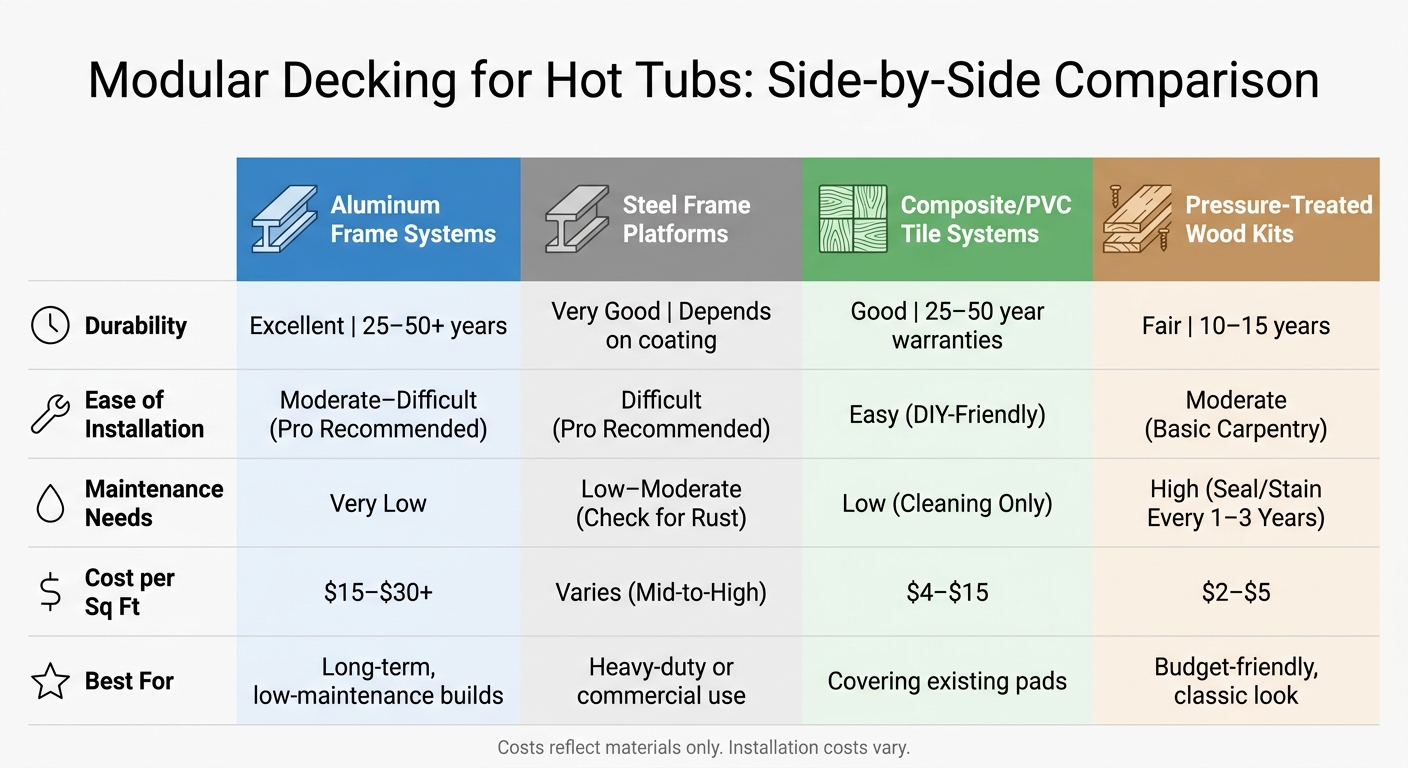
Modular Decking for Hot Tubs: Side-by-Side Comparison
Here’s a quick look at the strengths and weaknesses of each option, focusing on cost, maintenance, and lifespan. Every system has its trade-offs, so choosing the right one depends on your priorities.
Aluminum frame systems are known for their durability and low maintenance, lasting an impressive 25–50 years. However, they come with a hefty price tag, ranging from $15–$30+ per square foot for materials alone. Installation can also be tricky, often requiring a professional due to the need for precise leveling and specialized components.
Steel frame platforms are incredibly strong, making them ideal for supporting heavy loads like a filled hot tub (which can weigh 4,000–6,000 pounds). On the downside, steel is heavier and harder to work with than aluminum. Plus, any damage to the protective coating can lead to rust, especially in damp environments, meaning more maintenance over time.
Composite/PVC tile systems are the easiest to install and perfect for beginners. They’re splinter-free, require no staining or sealing, and damaged tiles can be replaced individually. However, these tiles aren’t structural, so you’ll still need a properly engineered base for the hot tub. Additionally, darker tiles can become very hot when exposed to direct sunlight.
Pressure-treated wood kits are the most budget-friendly option, costing just $2–$5 per square foot. But they require frequent sealing and maintenance to last, with a lifespan of 10–15 years if not regularly maintained.
Here’s a quick comparison of the key features:
| Feature | Aluminum Frame | Steel Frame | Composite/PVC Tiles | Pressure-Treated Wood |
|---|---|---|---|---|
| Durability | Excellent (25–50+ years) | Very good (depends on coating) | Good (25–50‑year warranties on boards) | Fair (10–15 years) |
| Ease of Installation | Moderate–difficult (pro recommended) | Difficult (heavy; pro recommended) | Easy (DIY-friendly) | Moderate (basic carpentry required) |
| Maintenance Needs | Very low | Low–moderate (check for rust) | Low (just cleaning) | High (seal/stain every 1–3 years) |
| Material Cost (per sq ft) | $15–$30+ | Varies; often similar to aluminum | $4–$10 (tiles); $8–$15 (composite boards) | $2–$5 |
| Best For | Long-term, low-maintenance builds | Heavy-duty or commercial use | Covering existing pads | Budget-friendly, classic look |
Conclusion
Picking the right modular decking for your hot tub boils down to three key factors: your budget, your willingness to handle upkeep, and how well the deck complements your backyard design.
If you’re looking to save on upfront costs, a pressure-treated wood modular kit is an affordable option. Just keep in mind it will require sealing every 1–3 years to maintain its condition. For those who prefer minimal maintenance, an aluminum frame system paired with composite or PVC decking offers excellent durability, especially in Maryland’s humid climate, where wood tends to wear out faster due to freeze-thaw cycles and moisture. Already have a concrete pad? Composite or PVC snap-together tiles provide a quick, stylish upgrade with little to no maintenance required.
Aside from cost and upkeep, design and functionality are just as important. Always ensure your deck has proper drainage and allows for easy access to your hot tub’s pumps and electrical components. These small details can save you from expensive repairs or modifications down the line.
For Maryland homeowners, integrating your modular deck into a larger outdoor setup – like paver patios, natural stone steps, seating walls, or fire pits – can create a unified and inviting space. Pro Landscapes MD specializes in helping homeowners in Howard County, Montgomery County, Baltimore County, and nearby areas achieve this. Their team handles everything from site evaluation and drainage solutions to full hardscaping designs, ensuring your hot tub area is both functional and visually appealing.
FAQs
Do I need a concrete pad under modular decking?
A solid concrete pad isn’t always necessary when it comes to modular decking. At Pro Landscapes MD, a stable base made of crushed stone combined with geotextile fabric is often the go-to solution. This setup helps with proper drainage, which is especially important in areas with clay-heavy soil. However, for spaces that see heavy foot traffic or have challenging conditions, a professionally prepared site with a well-compacted aggregate base becomes essential to ensure the deck stays durable and stable over time.
How do I ensure drainage around a hot tub deck?
Proper drainage around a hot tub deck is crucial to avoid issues like water pooling, erosion, and potential damage to your property. Experts at Pro Landscapes MD recommend using permeable pavers, which allow water to pass through layers of crushed stone and geotextile fabric, reducing surface runoff. For areas requiring more advanced drainage solutions, options like French drains, box-and-pipe systems, or berms and swales can effectively redirect both surface and subsurface water away from the deck and your home’s foundation.
How much access space should I leave for hot tub repairs?
When planning modular decking around your hot tub, make sure there’s enough room for maintenance and repairs. Aim for 18 to 24 inches of clearance around the side with the service panel. If you’re incorporating fixed features like stone accents or retaining walls, position them carefully to ensure they don’t block access to the service areas. This way, you can keep your outdoor space both functional and easy to maintain.
Chat with Us