









- bhavya gada
- No Comments
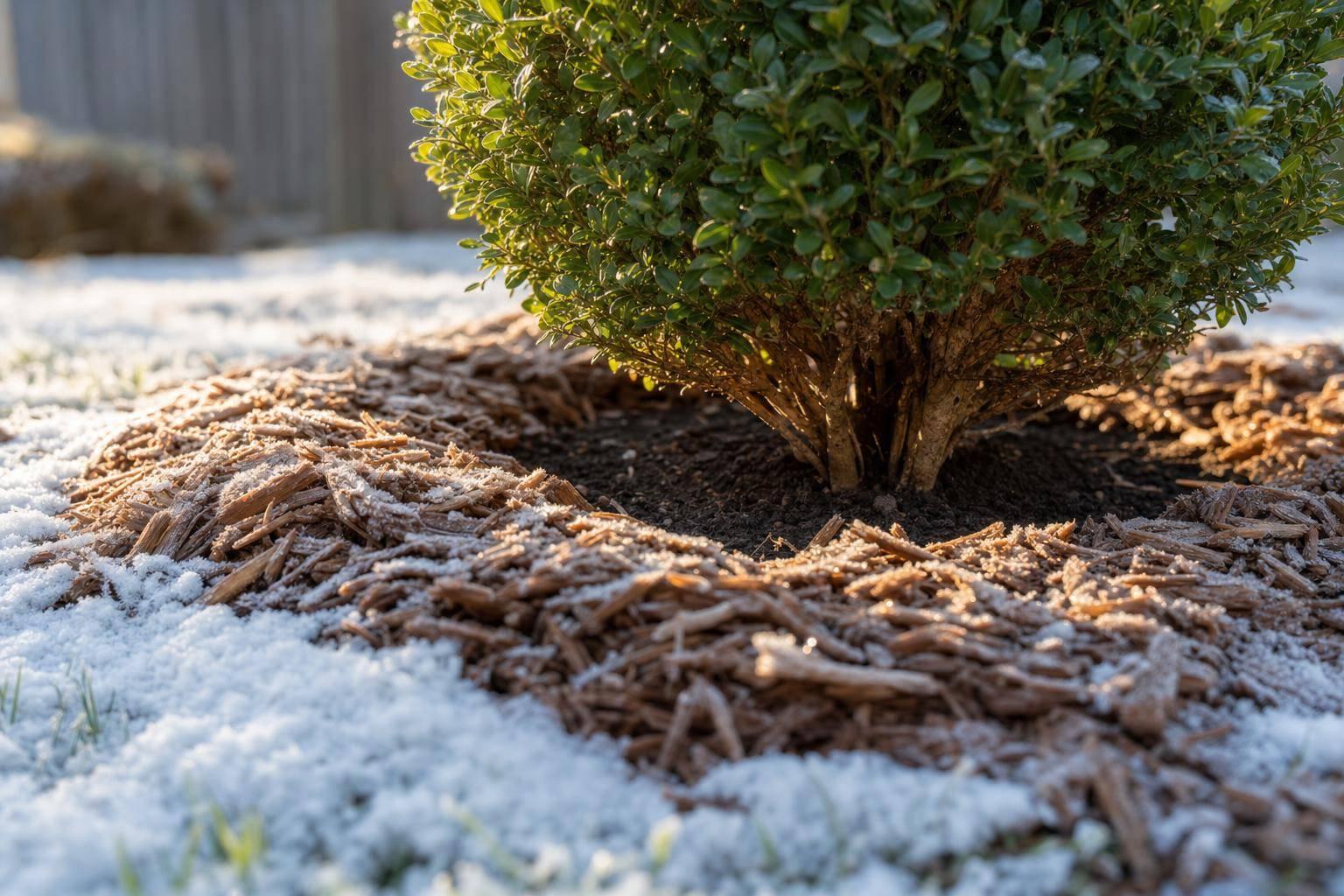
A simple mulch layer can help shrubs get through winter with less root stress, less drying, and less damage. In most cases, I’d use 2 to 4 inches of mulch over the root zone, keep it a few inches away from stems, and put it down in late fall.
Here’s the short version:
- I use mulch to help keep soil temperature more even during winter swings.
- It helps limit freeze-thaw stress and reduces soil heaving around shallow roots.
- It slows water loss, which matters for shrubs that can dry out in cold wind.
- Good mulch choices include wood chips, shredded bark, chopped leaves, and pine straw.
- I avoid piling mulch against trunks or stems, because that can lead to rot and pest issues.
- In Maryland, this matters a lot because winter often brings cold snaps, wind, and uneven moisture.
A few facts stand out:
- Most shrub roots sit near the surface, where cold hits first.
- A mulch layer that’s too thin won’t do much.
- A layer that’s too deep can trap too much moisture near the base.
- Broadleaf evergreens are often at risk of winter burn when frozen soil can’t replace lost moisture.
If I had to boil it down to one takeaway, it’s this: the right mulch, at the right depth, in the right spot helps shrubs hold steady through winter.
❄ Winter Mulching Tips for Your Garden – SGD 272 ❄
How Mulch Protects Shrubs From Winter Stress
Mulch acts like a buffer for the soil. It helps keep temperatures more even and slows moisture loss. That matters in winter, when shrubs deal with cold snaps, dry air, and shifting ground.
How Mulch Insulates Roots From Sudden Temperature Swings
Shrub roots often sit close to the soil surface. That makes them more exposed when temperatures drop fast. A 2- to 4-inch layer of mulch helps insulate the soil and slows those swings in temperature.
The big win here is stability. When soil stays more even, shallow roots face less freeze-thaw stress.
How Mulch Reduces Soil Heaving and Protects Root Stability
Mulch does more than help with temperature. It also cuts down on soil heaving, which happens when the ground freezes and thaws again and again. That movement can push shallow roots upward and leave them exposed to cold air.
By helping soil stay more even in temperature, mulch reduces heaving and helps keep roots in place.
How Mulch Helps Shrubs Hold Moisture Through Winter
Winter can dry shrubs out more than people expect. Mulch slows surface evaporation, so the soil holds onto moisture longer.
That stored moisture gives shrubs extra support during dry winter weather.
Best Mulch Materials for Winter Shrub Protection
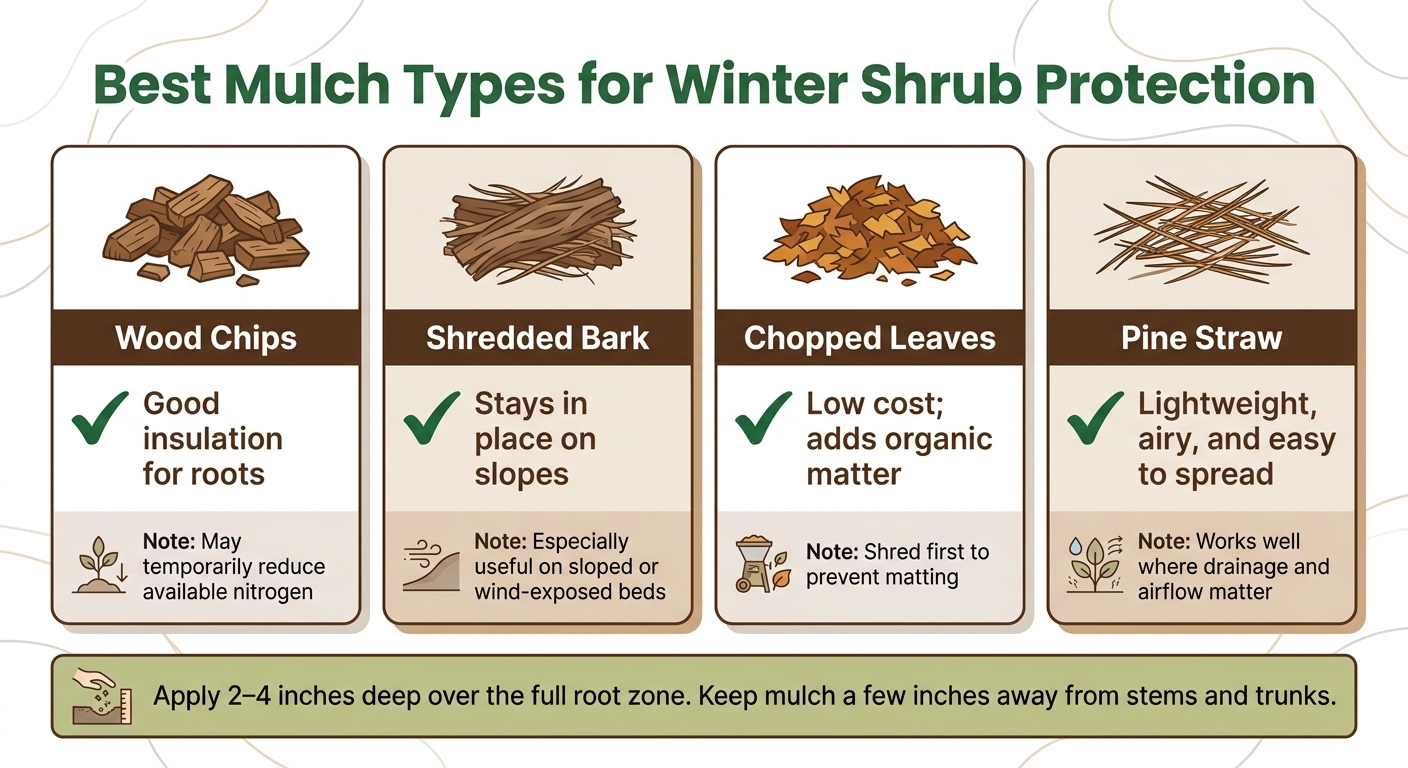
Best Mulch Types for Winter Shrub Protection
Pick a mulch that helps insulate roots and stays put through Maryland winter weather. For winter shrub protection, the best option is one that keeps soil temperatures more steady without shifting, washing out, or packing down.
Wood Chips, Shredded Bark, Leaves, and Pine Straw
Shredded bark is a strong pick for sloped beds or spots that catch snowmelt. Its fibers knit together, which helps it stay in place during heavy winter rain.
Wood chips do a good job insulating roots. One thing to watch: as they break down, they can temporarily reduce available nitrogen.
Chopped leaves are a low-cost mulch that also adds organic matter as they decompose. Just shred them first so they don’t mat together and block air and water.
Pine straw is light, drains well, and works best when you want mulch that stays loose and airy through winter.
Use this quick comparison to choose the best mulch for your shrub bed.
Comparing Mulch Types for Shrub Beds
| Mulch Type | Key Benefit | Notes |
|---|---|---|
| Wood chips | Good insulation for roots | May temporarily reduce available nitrogen |
| Shredded bark | Stays in place on slopes | Especially useful on sloped or wind-exposed beds |
| Chopped leaves | Low cost; adds organic matter | Shred first to prevent matting |
| Pine straw | Lightweight, airy, and easy to spread | Works well where drainage and airflow matter |
Even the best mulch won’t help much if it’s applied the wrong way. Depth matters, and mulch should always be kept clear of shrub stems.
sbb-itb-843f8be
How to Apply Mulch Correctly Around Shrubs
Once you’ve picked the right mulch, how you place it makes a big difference in how well it shields your shrubs.
Use the Right Depth and Cover the Full Root Zone
Spread mulch 2 to 4 inches deep across the full root zone, which usually reaches out to the canopy edge. That layer helps insulate roots, cuts down on freeze-thaw stress, and slows moisture loss during winter.
Keep Mulch a Few Inches Off Stems and Trunks
Keep mulch a few inches away from shrub stems and trunks. Don’t pile it against the base. Instead, leave a broad, even ring that covers the root zone while staying a few inches back from the stem.
A proper mulch ring works best when it’s applied at the right time.
Conclusion: A Simple Mulch Layer Can Prevent Costly Winter Shrub Damage
In Maryland, a simple mulch layer can help stop the winter shrub issues people run into most often. A 2- to 4-inch layer of mulch helps shrubs stay more even through winter.
You can use wood chips, shredded bark, leaves, or pine straw. Just keep the mulch a few inches away from stems and trunks. That small gap helps cut down on stem rot and pest trouble.
Apply it in late fall, then refresh it in spring. It’s a simple job, but it gives your shrubs a better shot during the cold months.
If you want help getting shrub beds ready for winter, Pro Landscapes MD serves central Maryland.
FAQs
Should I water shrubs before mulching for winter?
Yes. Water shrubs well before you put down winter mulch, and do it before the ground freezes.
Aim to moisten the soil 6 to 8 inches deep. Watering in the morning works best because the soil has time to soak it in. Once the ground starts to freeze, stop watering.
That extra moisture helps shrubs get through winter with less stress. When soil is frozen, roots can’t pull up water, which can lead to winter dehydration.
Can mulch help prevent winter burn on evergreen shrubs?
Yes. Mulch helps protect evergreen shrubs from winter stress because it insulates the soil and helps it hold moisture.
A 2 to 4 inch layer of organic mulch can also cut down on damaging freeze-thaw cycles that may expose roots. For best results, keep the mulch 2 to 3 inches away from the trunk.
When should I remove or refresh mulch in spring?
Refresh mulch in spring, usually once a year, to keep its protective layer doing its job and get your beds ready for the growing season.
If the mulch has packed down over time, loosen it first. Then keep the layer at 2 to 4 inches thick, and leave 2 to 3 inches of space around shrub trunks or stems.
Chat with Us