









- bhavya gada
- No Comments
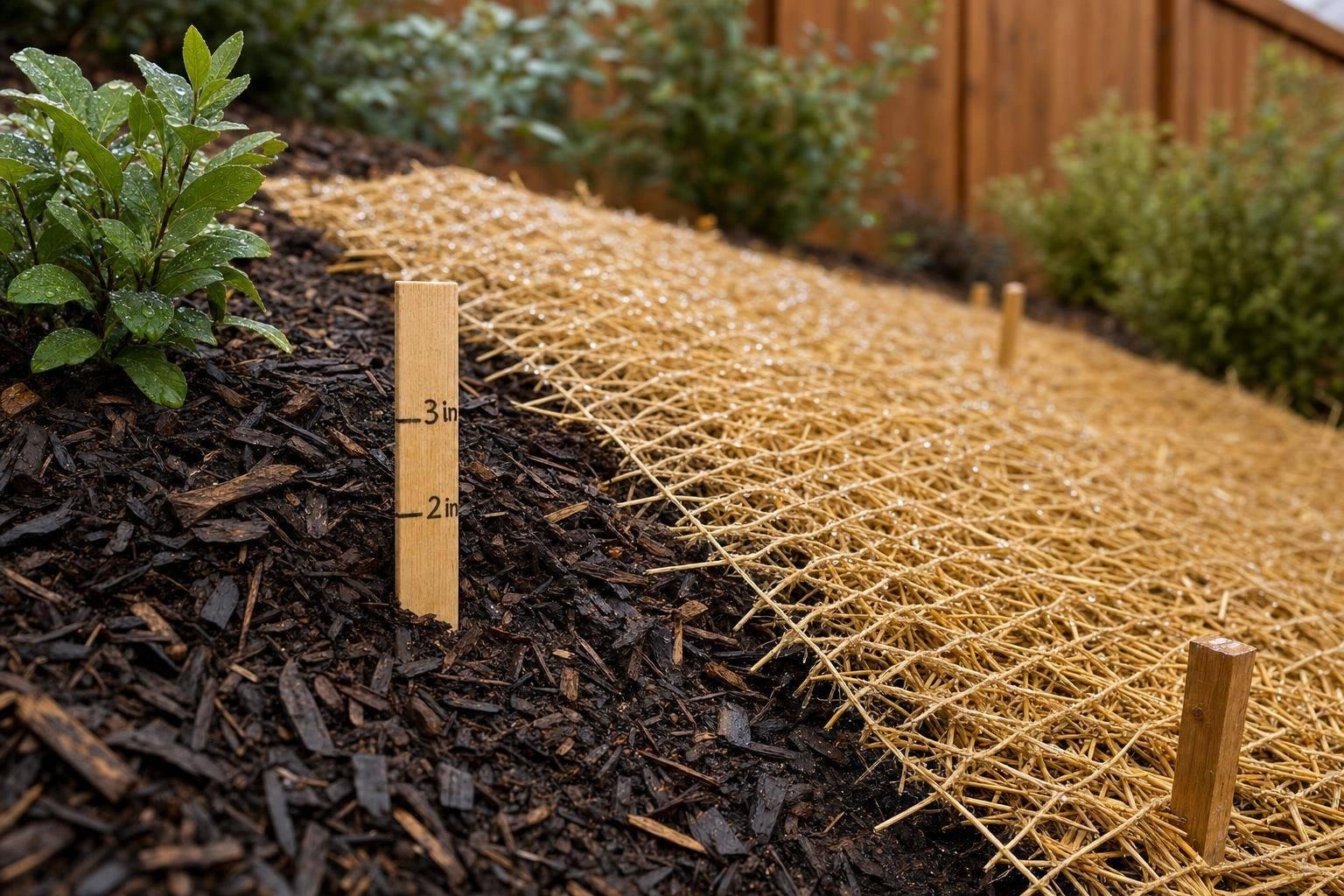
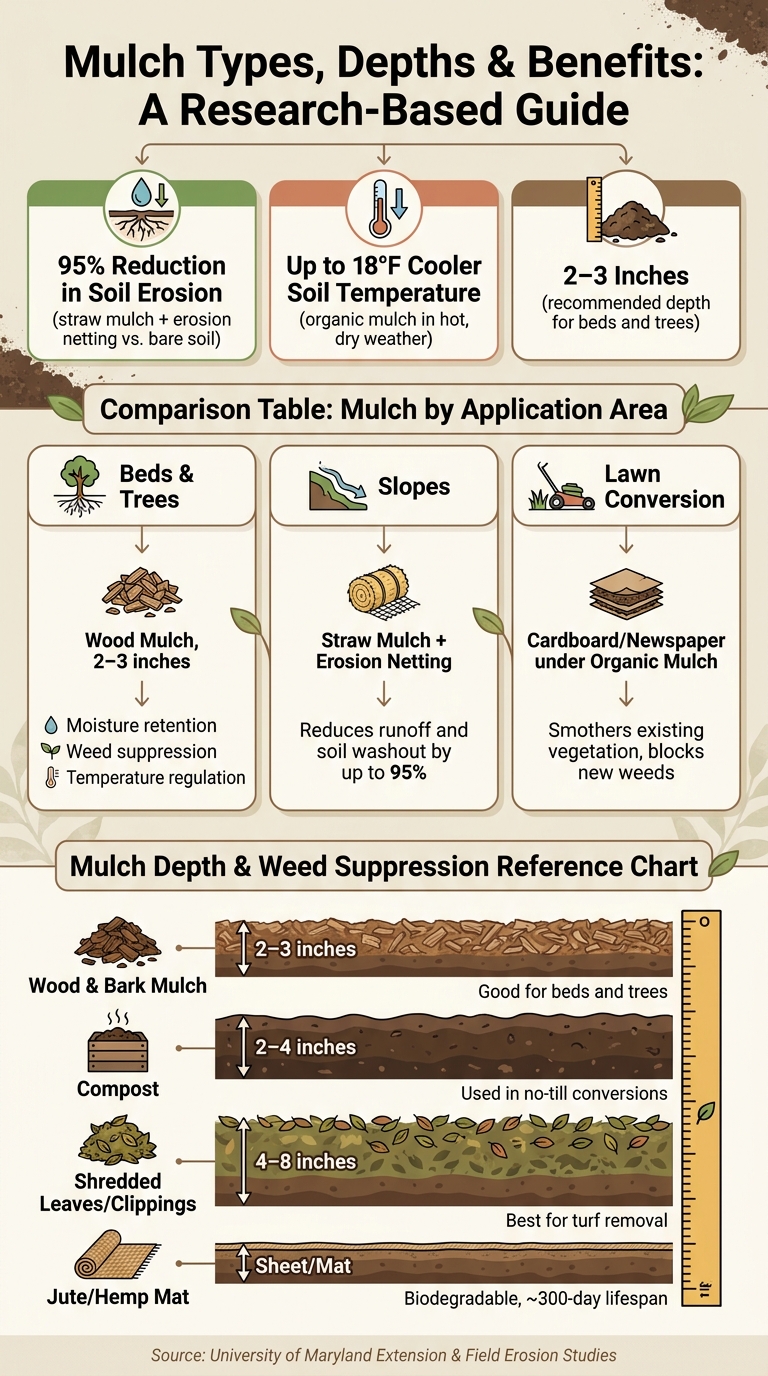
Mulch can cut soil erosion by up to 95% on slopes when used with erosion netting, and it also helps soil stay wetter and cooler. If you want the short answer, here it is: use organic mulch, keep it at 2–3 inches in most beds and around trees, and check it after heavy rain.
Here’s what I’d take from the research:
- Mulch lowers soil loss by softening rain impact and slowing runoff.
- It helps soil hold water longer by slowing evaporation.
- Organic mulch can cool soil by up to 18°F in hot, dry weather.
- It blocks light and cuts weed growth when coverage stays even.
- Too much mulch can cause drainage and plant stress, so depth matters.
- On slopes, mulch works best with erosion netting, not by itself.
If I were putting this into one simple rule, it would be this: match the mulch type and depth to the site. Beds, tree rings, and slopes do not all need the same setup.
| Area | What I’d use | Main reason |
|---|---|---|
| Beds and trees | Wood mulch, 2–3 inches | Holds moisture, cuts weeds, helps with temperature swings |
| Slopes | Straw mulch + erosion netting | Lowers runoff and soil washout |
| Lawn conversion | Cardboard/newspaper under organic mulch | Smothers old growth and blocks weeds |
This article comes down to a simple point: mulch works best when it is organic, not too deep, and used with extra slope control where runoff is a problem.
Mulch Types, Depths & Benefits: A Research-Based Guide
Mulching
sbb-itb-843f8be
Soil Loss and Runoff Reduction
On bare ground, raindrops hit hard. That impact can knock loose soil particles and send more water rushing downhill.
How Mulch Reduces Erosion According to Field and Extension Studies
Field studies show mulch slows runoff, protects soil structure, and increases infiltration on slopes [2]. That matters even more on Maryland slopes, where heavy rain can move topsoil in a hurry. Pine needles and other coarse organic mulches have reduced runoff and erosion in field studies [2]. In spots with a higher erosion risk, pairing organic mulch with erosion nets can improve results even more.
Bare Soil vs. Mulched Soil: What the Numbers Show
The difference in the numbers is hard to ignore. In sloped landscape areas, straw mulch paired with erosion nets has been found to reduce soil erosion by 95% compared with bare soil [2].
Bare soil tends to crust over, shed water, and lose sediment. Mulch changes that pattern. It softens raindrop impact, helps soil pores stay open, and cuts runoff and topsoil loss.
That same layer of surface cover doesn’t just limit erosion. It also helps the soil hold water and stay cooler.
Soil Moisture and Temperature Effects
After erosion control, the next big win is lower moisture loss and more even soil temperature. Mulch helps the soil hold water longer, and it softens temperature swings after rain and heat.
How Mulch Slows Evaporation
Mulch works like a cover over the soil. It adds shade and cuts down wind at the surface, which slows evaporation.
The University of Maryland Extension recommends applying 2–3 inches of wood mulch in garden beds and under trees to help retain soil moisture and cut back on frequent watering [3]. Jute and hemp mats also soak up water, and they break down fairly fast [1].
How Mulch Moderates Root Zone Temperature
Young roots don’t like sharp temperature swings. Those swings can reduce nutrient and water uptake [2].
Organic mulches like wood chips, bark, and straw can lower soil temperature by as much as 18°F (10°C) in hot, dry weather [2]. By contrast, plastic and fabric mulches do a poor job of regulating temperature and can let soil get too hot [2].
Those same surface conditions also make it harder for weeds to get started.
Weed Pressure and Mulch Depth
That same layer that helps soil hold water does another big job too: it cuts off light at the soil surface, which helps keep weeds down.
What Research Shows About Weed Suppression
Mulch suppresses weeds by blocking light. And coverage matters more than people sometimes think. If the mulch layer has bare spots or starts to thin out, more light reaches the soil, and weed emergence goes up. That means more plants competing for the water your mulch is trying to save in the first place.
For lawn conversion, you can place unwaxed cardboard or newspaper under organic mulch to smother existing vegetation and block new weeds [3].
How Material Choice and Depth Change Results
Not all mulches behave the same way. Coarse organic mulches tend to last longer, while finer materials break down faster and need to be refreshed more often.
| Mulch Type | Recommended Depth | Weed Suppression Notes |
|---|---|---|
| Wood and bark mulch | 2–3 inches [3] | Good for beds and trees; replenish from time to time to keep coverage in place. |
| Shredded leaves/clippings | 4–8 inches [3] | Works well for turf removal and smothering existing vegetation. |
| Compost | 2–4 inches [3] | Often used as a top layer in no-till conversions. |
| Jute/hemp (nonwoven) | Sheet or mat [1] | Suppresses weeds without herbicides; may break down within about 300 days. |
One caution: piling mulch on too deep can restrict drainage and stress plants [3]. Those depth ranges help guide what to do in beds, on slopes, and around trees.
Mulch Application Guidance and Key Takeaways for Maryland Properties
Best Practices for Beds, Slopes, and Tree Areas
Those findings boil down to three practical rules for Maryland yards.
For trees, use 2–3 inches of wood mulch out to the dripline, and keep the mulch pulled back from the trunk. That helps you avoid mulch piled against the trunk, which can lead to trouble over time [3].
On slopes, mulch should be one part of a bigger erosion-control plan. Pair straw mulch with erosion netting on steeper slopes, and use structural erosion controls on steep ground instead of relying on mulch by itself [2].
After heavy spring and summer rain, check planting beds to see whether mulch has washed into low spots or slid off slopes. Some biodegradable mulches can thin out or shift as time passes, which leaves soil exposed [1].
Conclusion: Research-Based Mulch Lessons for Long-Term Landscape Health
The research is pretty clear: mulch works, but only when it’s applied the right way. Depth matters. Material matters. And the site matters too.
For Maryland properties, that usually means sticking with 2–3 inches of mulch in tree areas and planting beds, then pairing mulch with erosion netting on slopes [3] [2]. When used the right way, mulch helps cut runoff, slow water loss, moderate root-zone temperature, and hold back weeds.
FAQs
What type of mulch works best for slopes?
On slopes, paper mulch works well because it’s light and easy to pin in place, so it doesn’t slide around. For the best results, cover it with 1–2 inches of wood chips or compost.
Groundcovers can also help hold steep slopes in place by rooting into the soil. Organic mulch helps keep moisture in and weeds down, but on a slope, it tends to work best when paired with stable features that slow runoff.
How often should mulch be checked or replaced?
Check mulch every month so you can catch thin spots, washout, or signs that plants aren’t doing well.
Add more when needed to keep mulch at 2 to 3 inches for standard wood mulch or 3 to 4 inches for new multi-layered plantings. Leave a small gap around trunks and stems so air can move and rot is less likely.
Can too much mulch hurt plants or trees?
Yes. Too much mulch can hurt plants and trees, especially when it’s piled up against a tree trunk. That can trap moisture at the base and lead to rot.
For the best results, use a 3 to 4 inch layer of organic mulch. Also keep it about 6 inches away from trunks and stems. That helps protect the root flare and lowers the risk of decay and disease.
Chat with Us