









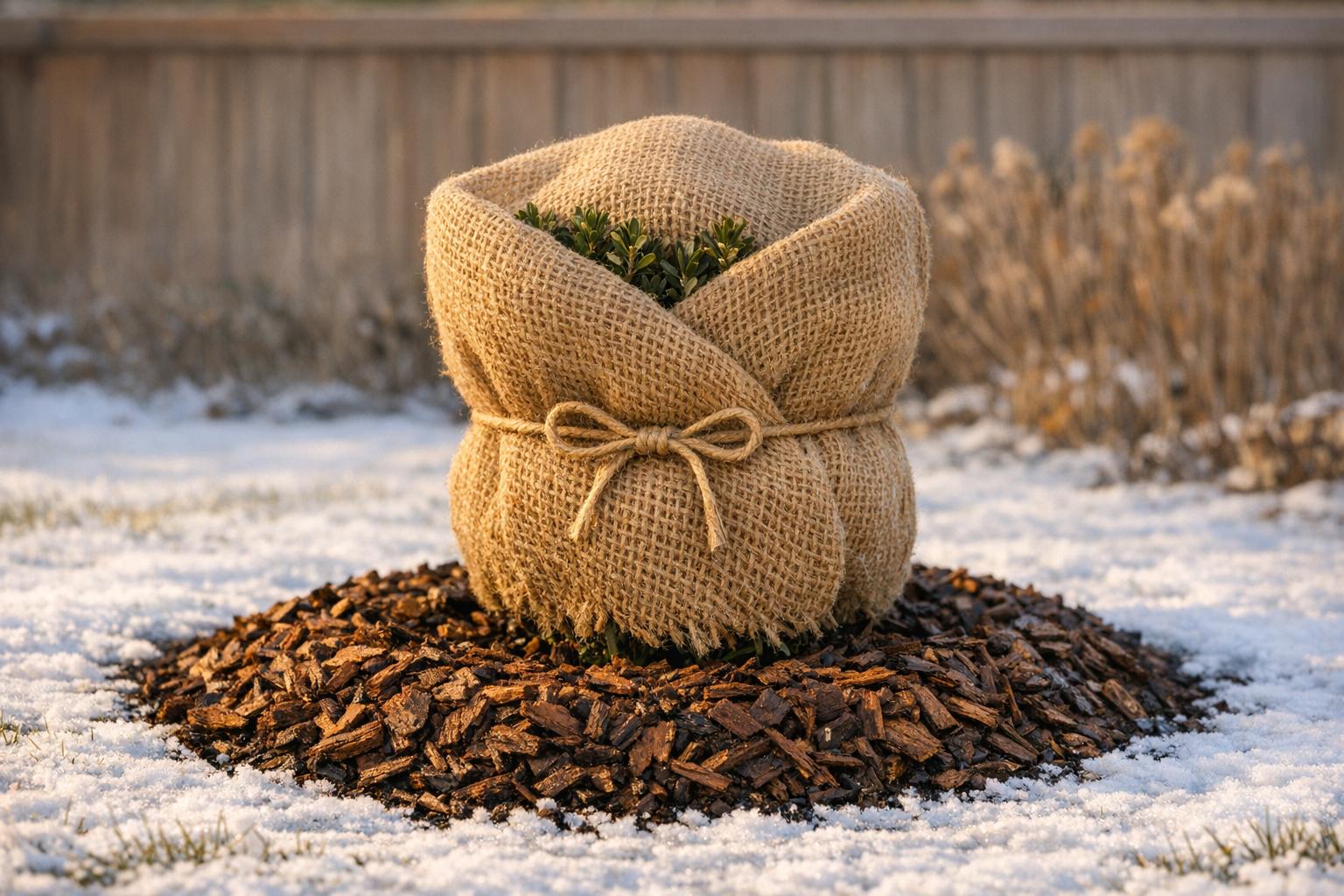
- bhavya gada
- No Comments
Protecting shrubs in winter requires shielding roots and foliage from harsh conditions. Mulch insulates the root zone, stabilizing soil temperature and moisture, while burlap protects foliage from drying winds, sunscald, and salt spray. For areas like Maryland (USDA Zones 6–7), combining these methods can prevent freeze-thaw damage, root desiccation, and winter burn.
- Mulch: Best for root insulation, preventing frost heaving, and retaining soil moisture. Apply 3–4 inches in late fall, keeping it 3 inches away from the trunk.
- Burlap: Ideal for protecting evergreen foliage from wind and sun. Install with stakes around the shrub, ensuring fabric doesn’t touch leaves.
Quick Comparison
| Feature | Mulch | Burlap |
|---|---|---|
| Protects | Roots, soil, and crowns | Foliage, branches, and bark |
| Benefits | Insulates soil, prevents frost heaving | Shields from wind, sunscald, and salt |
| Best For | Deciduous shrubs, root protection | Evergreens, wind-exposed plants |
| Timing | Late fall before ground freezes | November; remove after spring frost |
Key Takeaway: Use mulch for root care and burlap for foliage protection – or combine both for full winter defense.
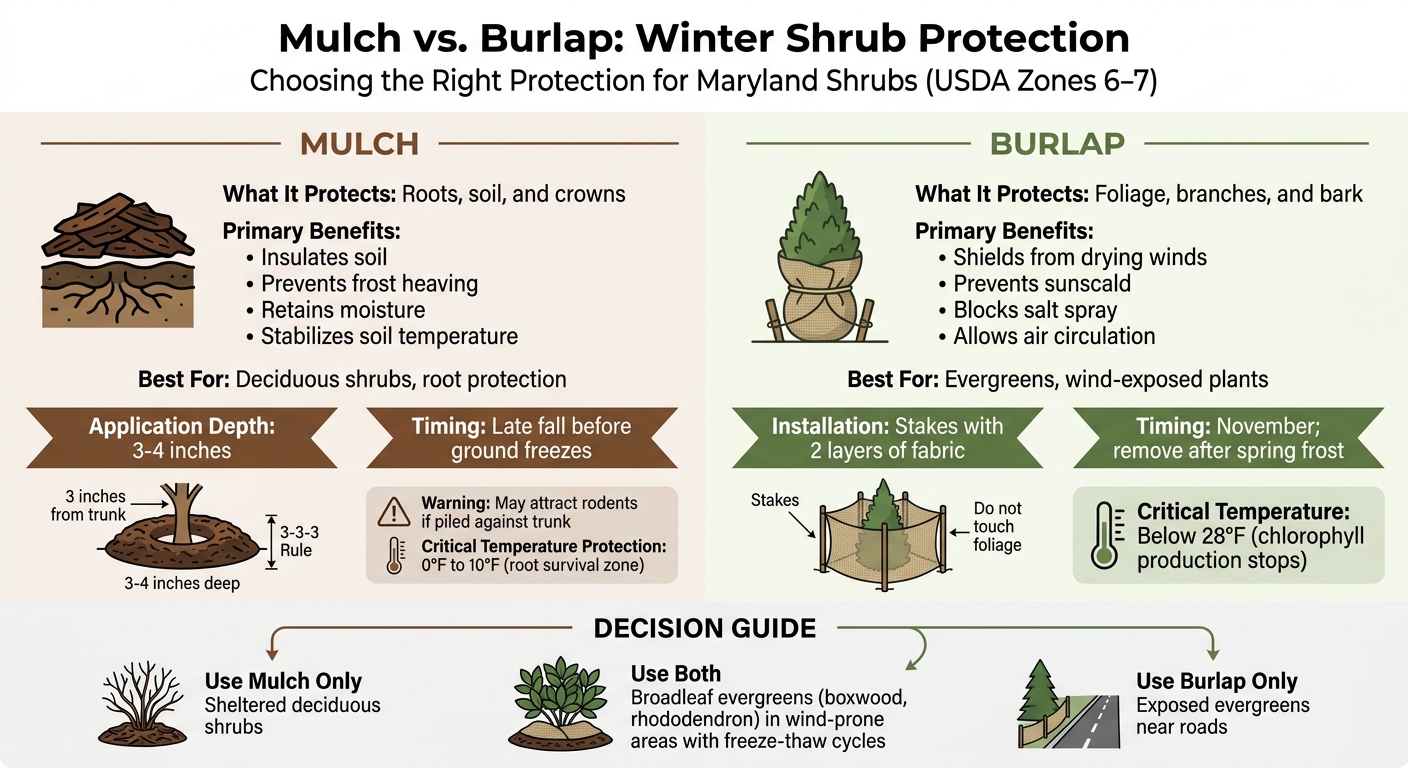
Mulch vs Burlap Winter Shrub Protection Comparison Chart
Right Way to Protect Plants in Winter – what works and what doesn’t
sbb-itb-843f8be
Using Mulch for Winter Shrub Protection
Mulch acts like a cozy blanket for your shrubs, shielding their roots from Maryland’s harsh winter weather. It insulates the soil, which is critical because while shrub stems can handle extreme cold, their roots are much more delicate. In fact, most shrub roots can’t survive if soil temperatures dip between 0°F and 10°F [1].
How Mulch Works
Mulch helps stabilize soil temperature and moisture, two key factors in keeping roots safe during winter. It prevents frost heaving caused by the freeze-thaw cycles and protects roots from freezing damage [1][3]. Moist soil retains heat better than dry soil, and mulch helps lock in that moisture. This is especially important in winter when frozen roots can’t replace water lost through transpiration, leading to desiccation [1][4].
"Snow cover and mulch act as insulators and keep soil temperatures higher." – UMN Extension [1]
Another bonus? Organic mulch doesn’t just protect – it enriches. As it breaks down, it improves the soil’s structure, setting the stage for healthier growth come spring [7]. These perks make proper application a must.
How to Apply Mulch Correctly
To get the most out of mulch, apply about 3 inches of organic material – think shredded wood chips, bark, pine needles, or compost – when soil temperatures drop below 45°F but before the ground freezes [3][4][7].
Follow the 3-3-3 rule as a quick guide: spread mulch 3 inches deep, in a 3-foot diameter around the shrub, and keep it 3 inches away from the trunk [7]. If you’re dealing with particularly harsh winters, a thicker layer (4 to 6 inches) can help maintain steady soil temperatures [1].
Avoid the common mistake of "volcano mulching", where mulch is piled against the trunk. Instead, create a donut shape by pulling the mulch back about 6 inches from the trunk. This prevents bark rot, pests, and disease issues [1][7].
If fall has been dry, give your shrubs a deep watering before the ground freezes. The mulch will help conserve this moisture throughout the season, reducing frost penetration [1][4].
Advantages and Disadvantages of Mulch
| Feature | Advantages | Disadvantages |
|---|---|---|
| Root Protection | Shields roots from freezing temperatures (0°F–10°F) [1] | Needs to be applied correctly to work effectively |
| Soil Stability | Prevents frost heaving and root damage [1][3] | Can attract rodents if piled against the trunk [1][6] |
| Moisture | Helps maintain consistent soil moisture [1][4] | Over-mulching can smother roots or trap too much moisture [3] |
| Temperature | Stabilizes soil temperature fluctuations [1][4] | Won’t work if applied too early or too late [3] |
| Soil Health | Enriches soil as it decomposes [7] | Requires yearly replenishment |
One challenge with mulch is that it can attract pests like mice and voles, which might use it as cover and chew on shrub bark during winter [1][6]. To combat this, keep mulch pulled back from the trunk and trim any nearby grass short to discourage nesting.
Using Burlap for Winter Shrub Protection
While mulch focuses on insulating the soil and protecting the root zone, burlap is designed to safeguard the above-ground parts of shrubs. This breathable fabric acts as a shield, defending exposed evergreens from freezing winds, heavy snow, and the harsh glare of winter sunlight.
How Burlap Works
Burlap serves as a protective barrier, reducing the risk of desiccation caused by winter winds that strip moisture from evergreen foliage. Since frozen roots can’t replenish lost moisture, this can lead to damage. Additionally, evergreen foliage cannot produce chlorophyll when temperatures drop below 28°F. This makes plants susceptible to bleaching from bright winter sun and moisture loss, highlighting the importance of burlap protection [1].
"Winter sun and wind cause excessive foliage water loss while the roots are in frozen soil and unable to replace lost water. This results in desiccation (drying out) and browning of the plant tissue."
– UMN Extension [1]
Burlap also guards against winter burn and sunscald, where sudden temperature drops after sun exposure can harm plant tissues. For shrubs located near roads, it acts as a barrier against harmful salt spray from traffic and snowplows. Unlike plastic, burlap allows air to circulate, preventing trapped heat that could trigger premature growth.
"Burlap is more effective than plastic because it allows the plant to breathe so air circulates and heat isn’t trapped."
– Gardening Know How [8]
This breathable protection is especially valuable in harsh winter conditions, and proper installation is key to its effectiveness.
How to Install Burlap Correctly
To set up burlap protection, start by driving three or four wooden stakes into the ground around the shrub to create a sturdy frame. Ensure the burlap doesn’t touch the foliage directly, as wet or frozen fabric can harm the plant. Drape two layers of burlap over the stakes and secure it with staples or twine, leaving the top open to allow light and air circulation [1][8][5].
Install burlap in late fall and remove it once spring weather stabilizes to prevent heat buildup. This technique is particularly useful for newly planted shrubs (within their first 1–3 years) and broadleaf evergreens like azaleas, rhododendrons, and boxwoods [8][6].
The table below highlights the main benefits and challenges of using burlap.
Advantages and Disadvantages of Burlap
| Feature | Advantages | Disadvantages |
|---|---|---|
| Wind Protection | Acts as a windbreak to prevent foliage desiccation | Requires a framework of stakes for support |
| Breathability | Allows air circulation without trapping heat | Must be installed carefully to avoid foliage contact |
| Sun Damage | Protects against winter burn and sunscald | Installation and removal can be time-consuming |
| Snow/Ice | Protects branches from heavy snow and ice | – |
| Salt Spray | Blocks road salt from reaching foliage | Only protects above-ground portions |
Although setting up burlap requires more effort than spreading mulch, it can make a significant difference for shrubs exposed to tough winter conditions. Properly installed burlap ensures healthier foliage and shields plants from the elements.
Mulch vs. Burlap: Main Differences
What Each Method Protects
Mulch and burlap serve distinct purposes when it comes to protecting shrubs. Mulch focuses on insulating the roots, soil, and crowns. It helps stabilize soil temperatures and reduces the risk of damage from freeze-thaw cycles. On the other hand, burlap shields the foliage, branches, and bark from harsh winter conditions like drying winds and sunscald.
Roots are particularly sensitive to temperatures between 0°F and 10°F, while foliage can dry out when exposed to extreme conditions. When used together, mulch and burlap complement each other – mulch protects the base and soil, while burlap safeguards the upper parts of the plant. This division of roles makes them a strong team for winter shrub care.
Side-by-Side Comparison
Here’s a quick comparison of mulch and burlap to help you decide which method suits your needs:
| Category | Mulch | Burlap |
|---|---|---|
| Protected Areas | Roots, soil, and crowns [1] | Foliage, branches, and bark [1][6] |
| Primary Benefits | Insulates soil; prevents frost heaving; retains moisture [1][6] | Shields against drying winds; prevents sunscald; protects from salt spray [1][6] |
| Main Drawbacks | May attract bark-eating rodents if piled too thickly near the trunk [1] | Can trap heavy snow, potentially causing damage [2][1] |
| Best Uses | Ideal for newly planted shrubs or marginally hardy species [2][1] | Great for broadleaf evergreens like Boxwood and Rhododendron or plants in windy or sunny spots [2][6] |
| Application Timing | Late fall before the ground freezes [1][6] | Apply in November and remove after the last spring frost [2][1] |
Deciding between mulch and burlap – or using both – depends on your specific shrubs, their location, and the challenges winter poses in your area. For example, in Maryland’s Zones 6–7, where freeze-thaw cycles and winter winds are common, many gardeners find that combining both methods provides the best protection for vulnerable plants.
Choosing Between Mulch, Burlap, or Both
When to Use Only Mulch
Mulch is a solid choice for shrubs in areas sheltered from strong winds. A 3-inch layer of organic mulch around the root zone provides plenty of insulation for deciduous shrubs, which primarily need root protection during the winter. This works particularly well in locations shielded from harsh winter winds.
Applying a 3–4 inch layer of mulch after the first hard frost can also help prevent frost heaving – a process where freeze-thaw cycles push young plants out of the soil. Just be sure to keep the mulch a few inches away from the trunk to avoid rot. However, for evergreens exposed to direct winds, mulch alone won’t be enough.
When to Use Only Burlap
Burlap is an excellent option for protecting evergreens in harsher conditions, especially those on the south, southwest, or windward sides of your property. These areas are more prone to sunscald and desiccation. The NYBG Plant Information Service highlights burlap’s usefulness:
"Burlap makes an excellent, permeable wind break to protect evergreen shrubs from over-desiccation in winter winds." [2]
Burlap is also helpful for shrubs near roads or sidewalks, shielding them from salt spray. To use it effectively, install the burlap in November with stakes to hold the fabric in place, ensuring it doesn’t directly touch the plant. In situations where both root and foliage protection is needed, combining burlap with mulch may be the best solution.
Using Mulch and Burlap Together
For shrubs that need both root and foliage protection, combining mulch and burlap offers a comprehensive defense. Mulch insulates the roots, while burlap shields the foliage from drying winds. Together, they address the full range of winter threats common in areas like central Maryland, where freeze-thaw cycles can be particularly harsh.
Mulch helps prevent soil temperatures from dropping to damaging levels (0°F–10°F), while burlap reduces moisture loss in foliage when plants can’t replace it. This combination is especially helpful for broadleaf evergreens like rhododendrons and boxwoods, which often face both exposure and marginal hardiness issues.
Pro Landscapes MD provides tailored winter protection systems to safeguard your plants from these challenges, ensuring both root and foliage vulnerabilities are effectively addressed for year-round health and beauty.
Conclusion
Mulch and burlap work together to shield shrubs during winter, each addressing specific needs. Mulch is excellent for insulating the root zone, helping to prevent frost heaving and retaining moisture – both essential for root health. A 4- to 6-inch layer is typically enough to maintain steady soil temperatures [1]. On the other hand, burlap focuses on protecting evergreen foliage, shielding it from drying winds and sunscald on bright, freezing days when temperatures dip below 28°F [1]. However, keep in mind that burlap doesn’t insulate roots and can trap moisture if applied incorrectly.
Burlap is especially useful for broadleaf evergreens like boxwoods and rhododendrons, as well as shrubs located near roads where salt spray is a concern. The best approach depends on factors like shrub type, location, and exposure. Deciduous shrubs in sheltered areas may only need mulch, while exposed evergreens often benefit from burlap. For wind-prone broadleaf evergreens in regions like central Maryland, where freeze-thaw cycles are common, combining both methods is often the best solution.
Timing and technique are key. Install protections in late fall, before the first hard freeze, and remove burlap after the final frost of the season. When done correctly, these steps ensure your shrubs are well-prepared for winter. If needed, consulting a professional landscaping service can help fine-tune the process for even better results.
FAQs
Which shrubs need burlap protection?
Shrubs that struggle with cold, wind, or sudden moisture changes often benefit from burlap protection during winter. This is especially true for young plants, newly planted shrubs, or varieties that aren’t as tolerant of cold, like azaleas, rhododendrons, and certain ornamental types. Wrapping these plants in burlap provides a barrier against icy winds and freezing air, helping to protect their delicate growth from winter damage.
What type of mulch is best for winter?
Straw is often a go-to option for winter mulch. It offers solid insulation, promotes proper air circulation, and usually doesn’t carry weed seeds, making it a great choice for shielding shrubs during the chilly season.
When should I remove burlap in spring?
Remove the burlap in spring once the danger of frost has passed and temperatures are consistently mild. Leave the stakes in place, just in case you need to cover the shrubs again if the weather takes an unexpected cold turn.
Chat with Us