









- bhavya gada
- No Comments
Native plants are a practical solution for managing stormwater and reducing runoff in Maryland landscapes. Unlike turfgrass, native species have deep root systems – up to 15 feet – that help water soak into the soil, prevent erosion, and filter pollutants. They also support local ecosystems by providing habitats for wildlife and pollinators.
Key Benefits:
- Improved Water Absorption: Native plants can enhance water infiltration by up to 50% compared to turfgrass.
- Erosion Control: Their roots stabilize soil and reduce sediment loss by 70–90%.
- Pollution Reduction: Features like rain gardens with native plants can filter out up to 90% of nutrients and chemicals from runoff.
Stormwater Features:
- Rain Gardens: Shallow depressions that hold water temporarily, allowing it to infiltrate the soil.
- Bioswales: Vegetated channels that guide water while slowing flow and improving absorption.
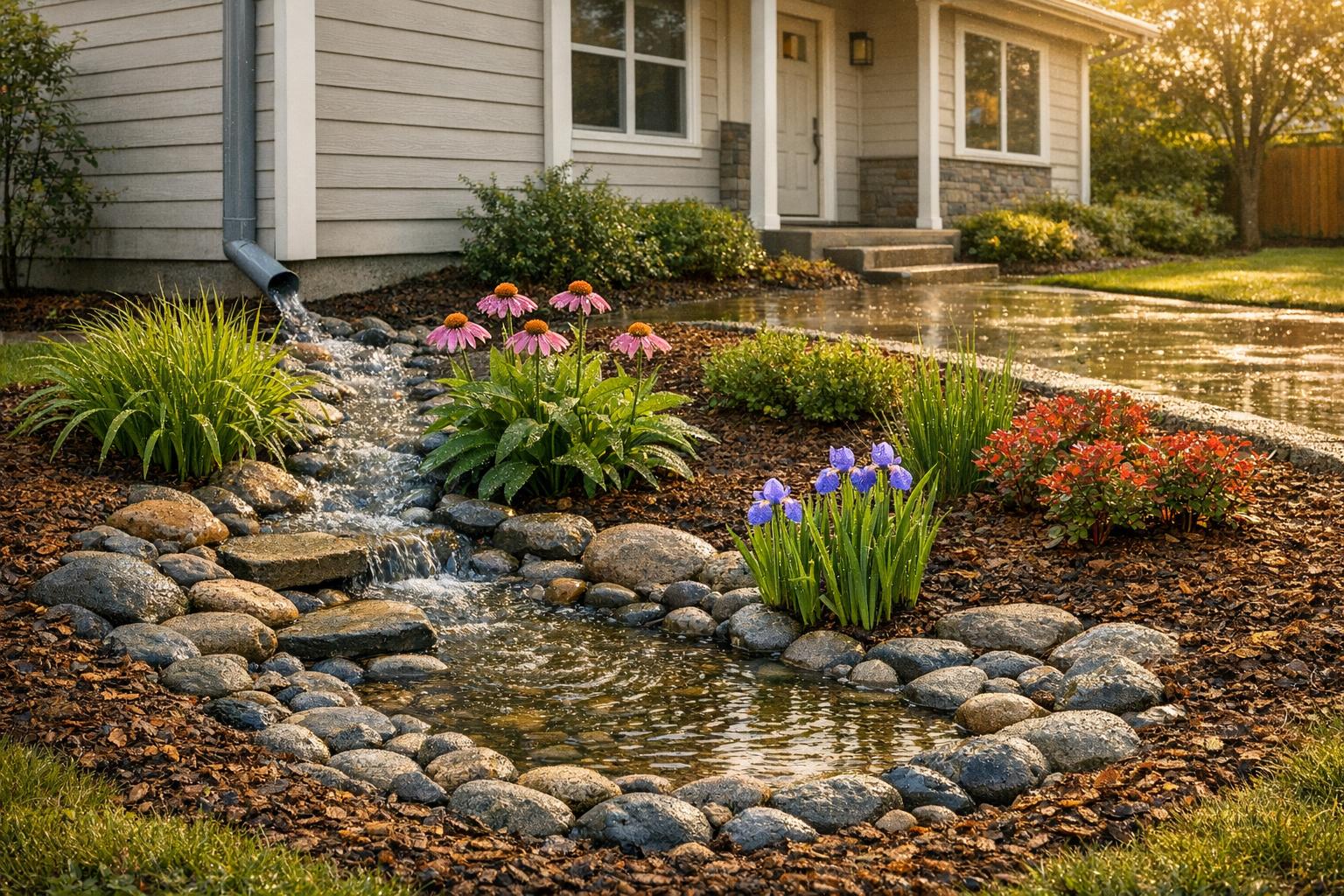
- Dry Riverbeds: Channels lined with stones and native plants to direct and manage runoff.
Proper plant selection is crucial based on soil type and moisture levels. For example:
- Wet Zones: Swamp Milkweed, Blue Flag Iris.
- Transitional Zones: Switchgrass, Red Twig Dogwood.
- Dry Zones: Little Bluestem, Purple Coneflower.
Regular maintenance – like weeding, mulching, and inspecting drainage – is essential to keep these systems effective. Native plants not only manage water but also reduce maintenance compared to traditional lawns.
For Maryland homeowners, integrating native plants with features like rain gardens and bioswales is a smart way to tackle stormwater issues while enhancing their yard’s functionality and ecological value.
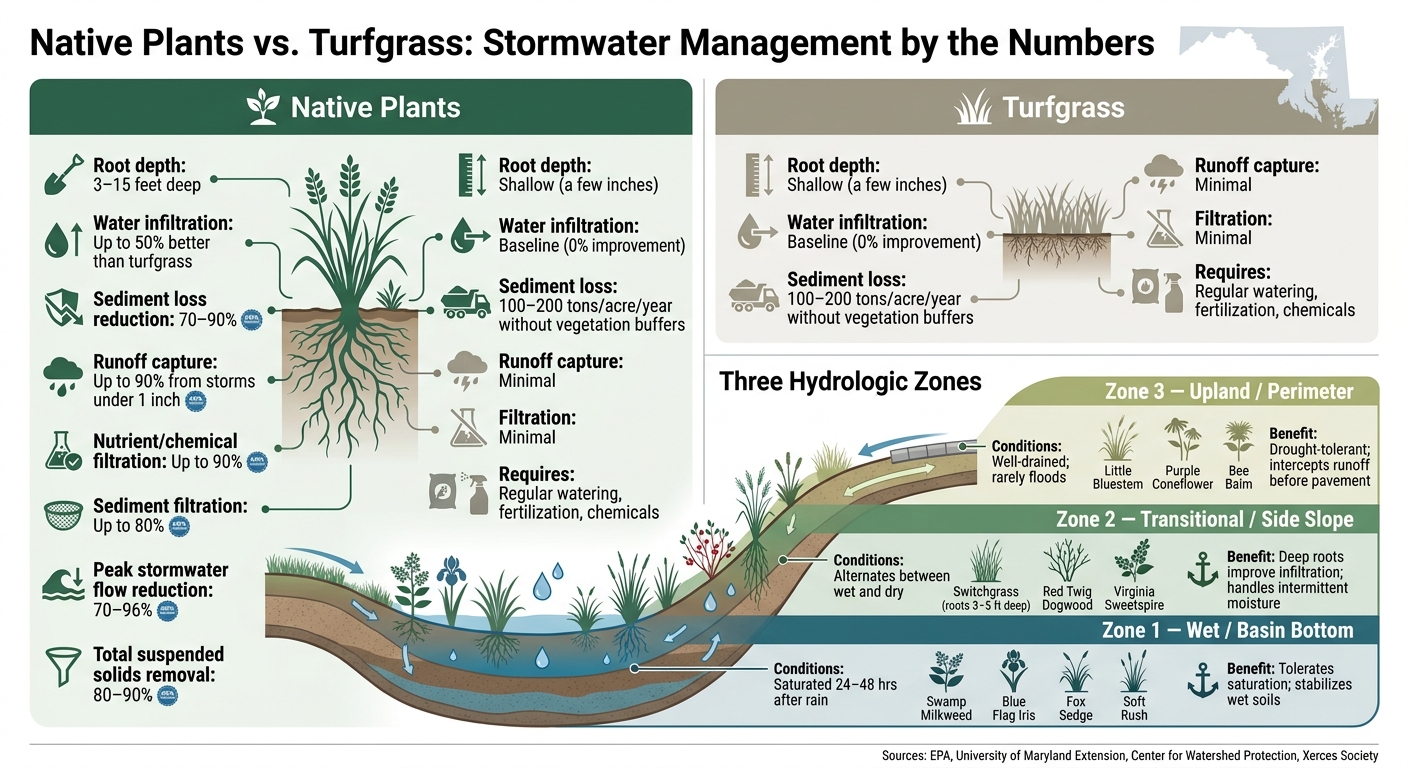
Native Plants vs. Turfgrass: Stormwater Management by the Numbers
Benefits of Native Plants in Stormwater Management
Water Absorption and Drainage
Native plants excel at soaking up water, thanks to their deep root systems that can grow anywhere from 3 to 15 feet deep. These roots create natural pathways in the soil, allowing water to infiltrate more effectively while filtering out pollutants before they reach storm drains. According to the EPA, native plants can improve water infiltration by as much as 50% compared to standard turf grass. When used in features like rain gardens or bioswales, they can capture and absorb up to 90% of runoff from storms producing less than an inch of rain. This not only helps manage stormwater but also reduces erosion and strengthens soil stability.
Erosion Control and Soil Stability
The dense root systems of native plants are also a powerful tool for preventing erosion. They anchor the soil, slowing down surface water and reducing the risk of topsoil being washed away. The Center for Watershed Protection highlights that areas without vegetation can lose over 100–200 tons of soil per acre annually, but native plant buffers and bioretention techniques can cut sediment loss by 70–90%. These plants are especially effective on slopes, near downspout discharge points, and along drainage swales, where water tends to move quickly and cause damage. Native grasses, sedges, and shrubs stand out because they maintain ground cover year-round, even after heavy rains. For challenging areas like steep slopes or persistently wet spots, combining native plants with structural solutions – such as French drains, proper grading, or dry riverbeds – can yield the best outcomes. Alongside their role in stabilizing soil, native plants also contribute to a thriving local ecosystem.
Support for Local Ecosystems
Incorporating native plants into stormwater management doesn’t just improve water quality – it also strengthens local ecosystems. These plants have evolved alongside regional wildlife, meaning they offer better support for local species compared to many ornamental plants. For example, research from the Xerces Society shows that native wildflowers significantly increase both the number and diversity of pollinators. Plants like Monarda, Echinacea purpurea, and Rudbeckia are excellent choices for rain gardens and bioswales because they attract pollinators while helping manage runoff. Additionally, native plant buffers along streams can remove 50–90% of nitrogen and phosphorus from surface runoff, protecting waterways and supporting wildlife. This dual benefit makes native plants an essential part of effective stormwater management strategies, particularly in regions like Maryland where water quality and biodiversity are key priorities.
Choosing Native Plants for Maryland Landscapes
Native Plant Zones in Maryland
When incorporating native plants into stormwater management, it’s essential to match the species to the specific moisture levels of your landscape. Maryland’s diverse soils and moisture conditions require careful selection of plants suited to the state’s various hydrologic zones.
Stormwater features, like rain gardens or swales, typically include three key zones. The bottom zone remains saturated for 24–48 hours after rainfall, so plants here must handle consistently wet conditions, often referred to as "wet feet." The side slopes, which alternate between wet and dry, demand plants that can tolerate these fluctuating conditions. Finally, the upper perimeter rarely floods but benefits from deep-rooted plants that help absorb runoff before it reaches paved areas.
Soil type plays a significant role in selecting the right plants. For instance, the Piedmont region, which covers areas like Howard, Montgomery, Carroll, and Frederick counties, has clay-heavy soils that retain water longer after storms. In contrast, the coastal plain, including parts of Anne Arundel and Prince George’s counties, features sandy soils that drain more quickly but may become waterlogged in low-lying areas. Meanwhile, the steeper terrains of Western Maryland prioritize erosion control. Understanding these zones and soil conditions is the foundation for choosing plants that will thrive and support stormwater management.
Recommended Native Species for Stormwater Management
An effective native plant palette for Maryland stormwater features combines grasses, sedges, shrubs, and flowering perennials to address the needs of the three hydrologic zones.
For wet basin bottoms, plants like Swamp Milkweed (Asclepias incarnata), Blue Flag Iris (Iris versicolor), Fox Sedge (Carex vulpinoidea), and Soft Rush (Juncus effusus) are ideal. These species not only tolerate temporary flooding but also stabilize waterlogged soils.
In transitional areas or side slopes, Switchgrass (Panicum virgatum) stands out with roots that extend 3–5 feet deep, improving soil stability and water infiltration. Shrubs like Red Twig Dogwood (Cornus sericea) and Virginia Sweetspire (Itea virginica) are also excellent choices, as their spreading root systems slow runoff and anchor soil on slopes.
For the upland perimeter, where soils are well-drained, plants like Little Bluestem (Schizachyrium scoparium), Purple Coneflower (Echinacea purpurea), and Bee Balm (Monarda didyma) thrive. These species are drought-tolerant and help reduce surface runoff. Shrubs such as Winterberry Holly (Ilex verticillata) and Inkberry Holly (Ilex glabra) are versatile options, bridging the gap between transitional and wetter zones with their ability to thrive in moist, acidic soils.
The table below provides a quick reference for selecting species based on hydrologic zones:
| Hydrologic Zone | Recommended Species | Key Benefit |
|---|---|---|
| Wet / Basin Bottom | Swamp Milkweed, Blue Flag Iris, Fox Sedge, Soft Rush | Tolerates saturation; stabilizes wet soils |
| Transitional / Side Slope | Switchgrass, Red Twig Dogwood, Virginia Sweetspire | Handles intermittent moisture; deep roots improve infiltration |
| Upland / Perimeter | Little Bluestem, Purple Coneflower, Bee Balm, Inkberry Holly | Drought-tolerant; intercepts runoff |
Choosing plants that match the specific conditions of each zone is critical. For example, a plant suited to a dry, sunny slope won’t survive in a rain garden’s saturated bottom. Getting the right fit from the beginning not only ensures the stormwater feature works as intended but also saves on replacement costs down the line.
Designing and Installing Stormwater Solutions with Native Plants
Rain Gardens and Bioswales
Rain gardens and bioswales are effective ways to manage stormwater while incorporating native plants. A rain garden is essentially a shallow depression – typically 4–8 inches deep – placed about 10–15 feet downslope from a building’s foundation. According to the University of Maryland Extension, its size should be around 10–20% of the area contributing runoff, such as a roof or driveway. These gardens are designed to temporarily hold water, allowing it to soak into the ground within 24–48 hours. The EPA highlights that well-designed rain gardens can filter out up to 90% of nutrients and chemicals and 80% of sediments from stormwater. To maximize efficiency, plant wet-tolerant species at the lowest point, transitional plants on the slopes, and drought-tolerant natives around the edges.
Bioswales, on the other hand, guide water through a gently sloped, vegetated channel with a 1–4% longitudinal slope to prevent erosion while controlling flow. For longer bioswales, adding stone check dams can slow the water, improving infiltration. Deep-rooted native plants like grasses, sedges, and perennials help stabilize the soil and withstand the force of moving water. If the soil is clay-heavy, bioswales can include an underdrain and gravel layer to redirect excess water into a pipe system. Dry riverbeds can also be added to further direct runoff safely away from high-risk areas.
Dry Riverbeds and Drainage Features
Dry riverbeds, when paired with native plantings, are another practical way to manage stormwater. These features are especially useful for channeling runoff from areas like foundations or slopes prone to erosion. The process involves excavating and grading a shallow channel along the natural drainage path, then lining it with geotextile fabric (if needed) and layering stones of varying sizes. Along the banks, native plants such as Switchgrass, Inkberry Holly, and Silky Dogwood (Cornus amomum) help stabilize the soil while maintaining water flow. When combined with disconnected downspouts that direct water toward rain gardens or bioswales, the entire yard can function as a cohesive stormwater management system.
Pro Landscapes MD‘s Approach to Stormwater Management

Successfully implementing these stormwater solutions requires careful planning and expertise. Proper stormwater design involves precise grading, well-thought-out drainage infrastructure, and a thorough understanding of water movement across a property. Pro Landscapes MD specializes in creating tailored systems that combine native plants with structural features to manage stormwater effectively.
Their services include grading, drain pipe installation, French drains, dry riverbeds, and comprehensive stormwater management planning throughout central Maryland. For example, in Washington, DC, they designed integrated dry riverbed and rain garden systems to address urban drainage issues while maintaining an aesthetically pleasing landscape. In Columbia, MD, they installed a custom bog and riverbed system to manage significant water accumulation on a residential property. These projects often incorporate native plantings alongside hardscape elements like environmental pavers, creating solutions that reduce runoff and ease the burden on municipal stormwater systems.
sbb-itb-843f8be
Maintaining Native Plant Landscapes
Seasonal Care for Native Plants
Caring for native stormwater plantings means sticking to a steady seasonal routine. In spring (March–May), cut back perennials and grasses to about 4–8 inches and spread 2–3 inches of mulch, making sure to leave space around plant crowns and stormwater inlets. Look for signs of winter erosion, and fill in any bare spots with native plugs before the heavy spring rains hit.
During summer (June–August), water newly planted areas deeply – aim for about 1 inch per week. For established native plants, extra watering is only needed during long dry spells. In the fall, clear away leaf buildup and replant or divide native plants to fill gaps in the landscape before frost sets in. When winter arrives, keep seed heads and standing grasses intact to reduce runoff and provide food and shelter for wildlife.
In addition to these seasonal tasks, staying on top of weed and pest issues is essential for keeping native plantings healthy and thriving.
Weed and Pest Management
Weeds are the biggest challenge during the first two years, before native plants grow enough to naturally crowd them out. In the first growing season, plan to weed every 2–3 weeks. Once the planting reaches 70–90% coverage, you can scale back to about 3–4 times a year. Hand-pulling weeds after rainfall – when the soil is softer – is the most effective method, especially near stormwater inlets and outlets, as it helps protect the native plants’ ability to manage runoff.
For pests and diseases, integrated pest management (IPM) is the way to go. Most native plants can handle minor insect damage without losing their ability to manage stormwater, and that damage often benefits birds and other helpful insects. Avoid using broad-spectrum pesticides in stormwater areas – they can easily wash into local streams and the Chesapeake Bay. If targeted pest control is absolutely necessary, opt for horticultural oils or insecticidal soaps. Apply them sparingly on calm, dry days and keep them well away from open water channels.
Monitoring and Adjusting Drainage Features
Regular inspections are just as important as seasonal care and weed management to keep stormwater systems working properly. Check stormwater features at least quarterly and always after major storms. The key thing to watch is how quickly water drains. In Maryland soils, a functioning rain garden or bioswale should clear standing water within 24–48 hours. If water takes longer to drain, it could indicate soil compaction or underdrain issues.
| What to Check | Warning Sign | Action |
|---|---|---|
| Inlets and outlets | Sediment or debris buildup | Clear blockages; remove sediment at ~2 inches |
| Soil surface | Crusting, algae, or bare patches | Loosen soil gently; add compost and mulch |
| Basin drainage speed | Standing water beyond 48 hours | Check for soil compaction or underdrain problems |
| Dry riverbeds/swales | Displaced stones, eroded banks | Re-set stones; stabilize banks with native grasses |
| Plant coverage | Bare spots or invasive species | Replant with natives; remove invasives promptly |
For dry riverbeds and swales, re-set any displaced stones and examine nearby banks for erosion. Making these adjustments in a timely manner helps maintain the entire stormwater system and ensures long-term performance. Keep a simple maintenance log to track dates, observations, and actions taken – this can also help meet HOA or municipal reporting requirements. If water consistently bypasses a feature or drainage problems don’t improve, it’s time to call in a professional to evaluate the grading and drainage infrastructure.
How to Build a Native Plant Rain Garden – A Step-by-Step Tutorial
Conclusion: Building Lasting Solutions for Maryland Landscapes
Native plants offer a science-based approach to improving soil infiltration, reducing runoff, and filtering pollutants before they enter local waterways like the Chesapeake Bay. Research highlights that well-designed bioretention systems with native vegetation can eliminate up to 80–90% of total suspended solids and cut peak stormwater flows by 70–96% during most storms. Features like French drains, dry riverbeds, and proper grading work hand in hand with native plants to divert water efficiently, stabilize soil, and filter any remaining flow. Together, these elements create a stormwater system built to last for years, not just a single season. Even better, these systems are designed to perform reliably while keeping maintenance needs low for homeowners.
Once established, native plantings are far easier to maintain compared to traditional lawns. They require less water, fewer chemicals, and no regular fertilization, all while providing year-round beauty and critical habitat for local wildlife. For Maryland property owners, this means cutting down on environmental impacts and weekend chores – a win-win scenario.
Partnering with Pro Landscapes MD
If you’re dealing with persistent wet spots, erosion, or water pooling around your home, these issues won’t resolve themselves. Pro Landscapes MD specializes in stormwater management solutions across central Maryland. Their services combine professional grading, French drains, dry riverbeds, and rain garden design with expert native plant selection and installation. With a team of skilled horticulturists, they bring together the engineering and plant science required to create long-lasting, effective systems.
Serving communities in Howard County, Montgomery County, Baltimore County, and beyond, they offer free estimates for drainage and landscaping projects. Call 410-940-9664 to schedule a site evaluation and explore how native plant solutions can transform your property.
FAQs
How do I know if my yard is a good fit for a rain garden?
A rain garden is a great solution if your yard tends to collect water or experiences runoff after heavy rain. These gardens help manage stormwater by capturing it, slowing its flow, and filtering it back into the ground. In Maryland, they pair effectively with features like swales, which help direct water where it needs to go. Pro Landscapes MD can evaluate your property and create a tailored design to address your landscape’s specific needs.
What’s the best native plant mix for clay vs. sandy soil in Maryland?
Native plants such as black-eyed Susans and butterfly weed are excellent options for Maryland gardens. While specific plant combinations for different soil types aren’t outlined, understanding your soil is key. For example, clay-heavy soil can impact drainage and overall plant health. To ensure your garden thrives, consider a professional soil assessment. Companies like Pro Landscapes MD offer expert advice to help you choose the right native plants tailored to your soil and environmental conditions.
When should I add a French drain or dry riverbed instead of just plants?
Native plants can be effective for managing stormwater, but sometimes, stronger measures are needed. If your property requires more robust water diversion or erosion control, a French drain or dry riverbed might be a better option. French drains are designed to redirect standing water and help prevent flooding, while dry riverbeds are perfect for handling heavy runoff and reducing erosion. These structural solutions, available through Pro Landscapes MD, are ideal for situations where planting alone can’t fully address water management challenges.
Chat with Us