









- bhavya gada
- No Comments
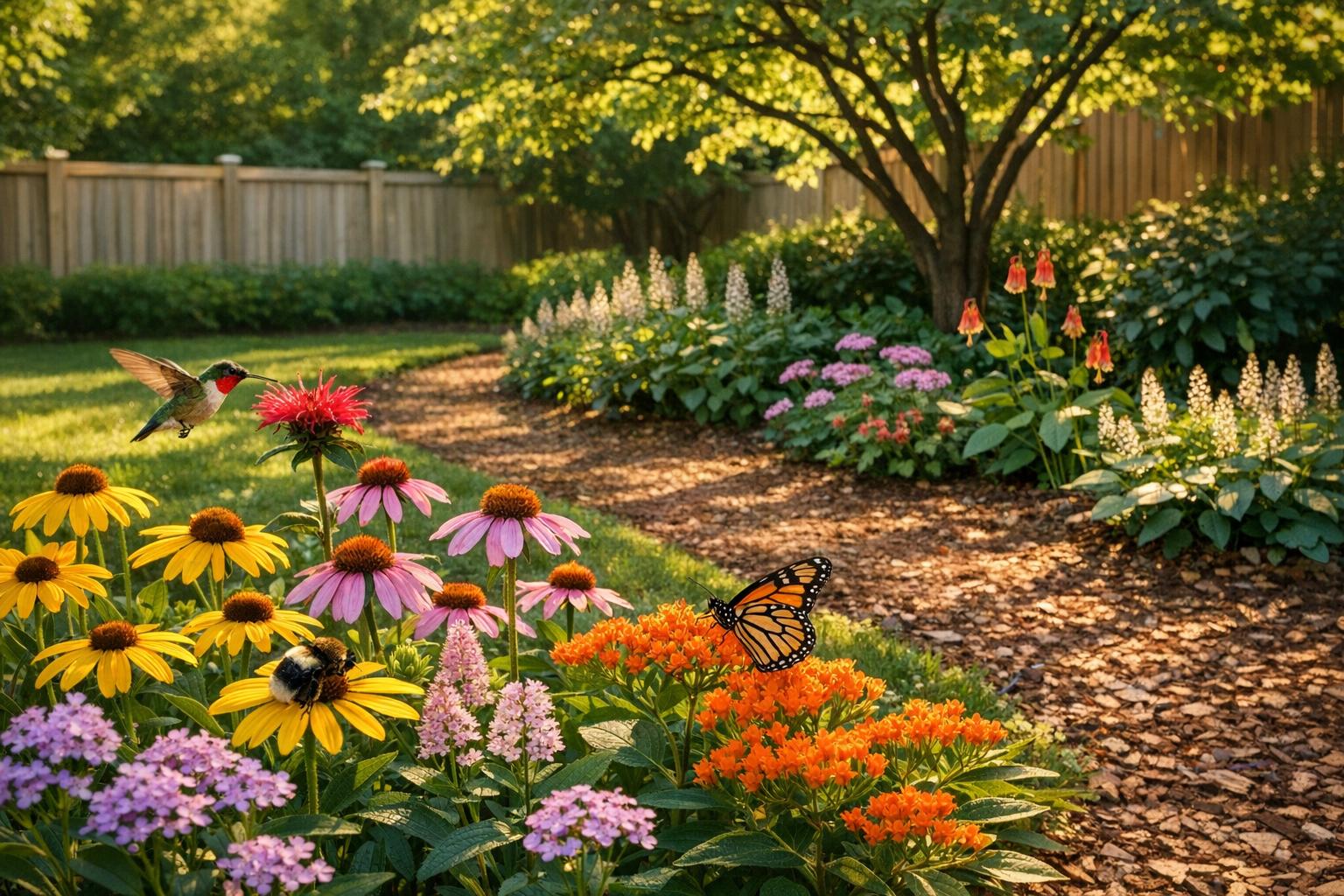
Native plants are key to supporting Maryland’s pollinators like bees, butterflies, and hummingbirds. These plants provide food, shelter, and nesting sites while requiring less maintenance compared to non-native species. Here’s how you can create a thriving pollinator garden:
- Full Sun Plants: Milkweed, Black-Eyed Susan, Goldenrod, Coneflower, and Ironweed are excellent for sunny areas, offering nectar and pollen throughout the growing season.
- Shade-Friendly Plants: Options like Dwarf Crested Iris, Silver Gem Violet, Wild Ginger, Foamflower, and Green and Gold thrive in partial or full shade, supporting pollinators in less sunny spots.
- Shrubs and Trees: Eastern Redbud, Serviceberry, Black Cherry, and Pinxterbloom Azalea provide year-round benefits, including early-season blooms and shelter.
Tips for Success:
- Avoid pesticides to protect pollinators.
- Leave garden debris for overwintering habitats.
- Prepare soil based on your yard’s conditions.
Pro Landscapes MD offers expert services to design and plant native gardens tailored to Maryland’s climate. Visit their website to learn more about transforming your space into a pollinator haven.
Transforming a Maryland Landscape with AMAZING Native Plants!
sbb-itb-843f8be
Native Pollinator Plants for Full Sun
If your garden enjoys six or more hours of direct sunlight, you’re in luck – these native plants thrive in full sun and are perfect for attracting pollinators. They’re well-suited to Maryland’s hot summers and unpredictable rainfall, flourishing in well-drained soil with minimal upkeep once established. Here are some standout choices that not only brighten your garden but also support Maryland’s diverse pollinator populations.
Milkweed (Asclepias spp.)
Milkweed, particularly Common Milkweed (Asclepias syriaca), is a lifeline for monarch butterflies, serving as a host plant for their caterpillars [4][5]. Its blooms, appearing from June through August, also draw native bees, hoverflies, and other butterflies. Milkweed thrives in sandy, well-drained soil and, once established, can handle drought conditions with ease [7][8].
Black-Eyed Susan (Rudbeckia hirta)
As Maryland’s state flower, Black-Eyed Susan is a reliable and cheerful addition to any sunny garden. Its vibrant yellow petals with dark centers bloom from June to October, offering nectar to native bees, butterflies, and hoverflies [5][7]. This hardy perennial self-seeds, naturally expanding its reach, and adapts well to various soil types as long as there’s good drainage.
Goldenrod (Solidago spp.)
Goldenrod is a crucial late-season nectar source, blooming from August to October when many other plants have finished flowering [4][7][8]. This makes it a vital resource for pollinators preparing for winter. It’s also incredibly versatile, thriving in a range of soil types and tolerating dry conditions, which means less work for you.
Coneflower (Echinacea spp.)
Purple Coneflower (Echinacea purpurea) is a garden favorite, known for its striking purple-pink petals and prominent central cone. Blooming from June through September, it attracts a wide array of pollinators throughout the season [5][7]. These low-maintenance plants prefer well-drained soil and benefit from deadheading to encourage more blooms. However, leaving the seed heads intact provides a winter food source for birds.
Ironweed (Vernonia noveboracensis)
New York Ironweed is a tall, eye-catching perennial that can grow up to seven feet, making it a great native alternative to invasive species. Its clusters of bright purple flowers bloom in late summer and fall, offering nectar to bees and butterflies when other plants have stopped flowering [4][8]. Ironweed thrives in moist soil and adds height and drama to your garden with its impressive stature.
Native Pollinator Plants for Shade and Partial Shade
Not every Maryland garden basks in full sunlight, but even shaded spots like woodland edges, areas beneath trees, or north-facing spaces can nurture essential pollinator populations. While sun-loving species thrive in open areas, these plants are perfect for bringing life to Maryland’s shadier gardens. They’re low-maintenance perennials and ground covers that offer vital nectar and pollen for bees, butterflies, and other beneficial insects, especially early in the season.
Dwarf Crested Iris (Iris cristata)
This petite perennial, standing under 6 inches tall, creates a compact ground cover with its lavender-blue blooms in spring. These flowers are a magnet for early-season bees and butterflies. Plus, it’s deer-resistant and drought-tolerant once it takes root, making it a great fit for Maryland’s Piedmont rain gardens. It also supports 17 species of butterflies and moths[1].
Silver Gem Violet (Viola walteri ‘Silver Gem’)
With its eye-catching silvery leaves and purple flowers that bloom in early spring, Silver Gem Violet is one of the earliest food sources for native bees and small pollinators. This shade-loving, deer-resistant ground cover forms dense mats and pairs beautifully with ferns and heuchera. It’s also a host plant for 29 species of butterflies and moths[1].
Wild Ginger (Asarum canadense)
Known for its glossy, heart-shaped leaves, Wild Ginger creates a lush ground cover perfect for deep shade. Its maroon flowers, hidden near the soil, attract ground-nesting bees and flies. This native plant thrives with minimal yard maintenance, handles humid conditions well, and is excellent for controlling erosion on slopes or stream banks. It grows steadily without becoming invasive[1].
Foamflower (Tiarella cordifolia)
A Maryland woodland native, Foamflower produces delicate white or pink flower spikes in spring, drawing in small bees, butterflies, and hoverflies. At 8 to 12 inches tall, it forms an appealing ground cover with its evergreen basal leaves. It thrives in moist, well-drained soils, making it a great choice for shaded or partially shaded areas[1].
Green and Gold (Chrysogonum virginianum)
This Maryland native boasts cheerful yellow, daisy-like flowers from spring through fall, providing a steady nectar supply for bees, butterflies, and beetles. Growing 6 to 12 inches tall, it forms a semi-evergreen ground cover that tolerates dry soils once established. It’s perfect for woodland edges or shaded spots beneath trees[1].
Native Shrubs and Trees for Pollinators
Perennials and ground covers might lay the groundwork for a pollinator garden, but native shrubs and trees bring something extra to the table. These larger plants provide nesting spots, shelter, and food sources that smaller plants simply can’t match. They play a critical role in supporting pollinators at every stage of their life cycles. Take black cherry, for example – it’s a host for countless butterfly and moth species. Let’s dive into how specific native shrubs and trees benefit Maryland’s pollinators, and how professional landscaping services can help you integrate them.
Eastern Redbud (Cercis canadensis)
Eastern redbud is one of the first to bloom in Maryland gardens, showcasing clusters of vibrant magenta-purple flowers before its leaves appear in early spring. This timing is key, offering much-needed nectar and pollen to bees and butterflies just waking up from winter. Standing 20 to 30 feet tall, this small tree (or large shrub) thrives in both full sun and partial shade. Once established, it’s also drought-tolerant, making it a resilient choice for pollinator gardens[1][2][3].
Serviceberry (Amelanchier spp.)
Serviceberry is a multi-tasker in the garden, serving both pollinators and wildlife throughout the year. This shrub or small tree, reaching 15 to 25 feet, features delicate white flowers in spring that attract early-season bees. Later, it produces edible berries that are a favorite of over 20 bird species. Its colorful fall foliage adds a decorative touch to any landscape. For best results, plant serviceberry in moist, well-drained soil with full to partial sun, and use mulch to retain moisture during its early growth[2].
Black Cherry (Prunus serotina)
Black cherry stands out as a vital resource for Maryland pollinators, supporting an impressive 456 species of butterflies and moths. Growing to a mature height of 50 to 80 feet, this tree produces fragrant white flowers in spring that draw in bees and other pollinators. Beyond its blooms, black cherry yields fruit for wildlife and provides caterpillars – an essential food source for young birds[1].
Pinxterbloom Azalea (Rhododendron periclymenoides)
This deciduous shrub, growing 6 to 15 feet tall, boasts fragrant pink-lilac flowers in late spring that attract bees, butterflies, and even hummingbirds. Ideal for woodland gardens, pinxterbloom azalea thrives in acidic, moist soil with partial shade. During its first growing season, regular watering is crucial to establish a strong root system[3].
Plant Selection Table by Light and Pollinator Type
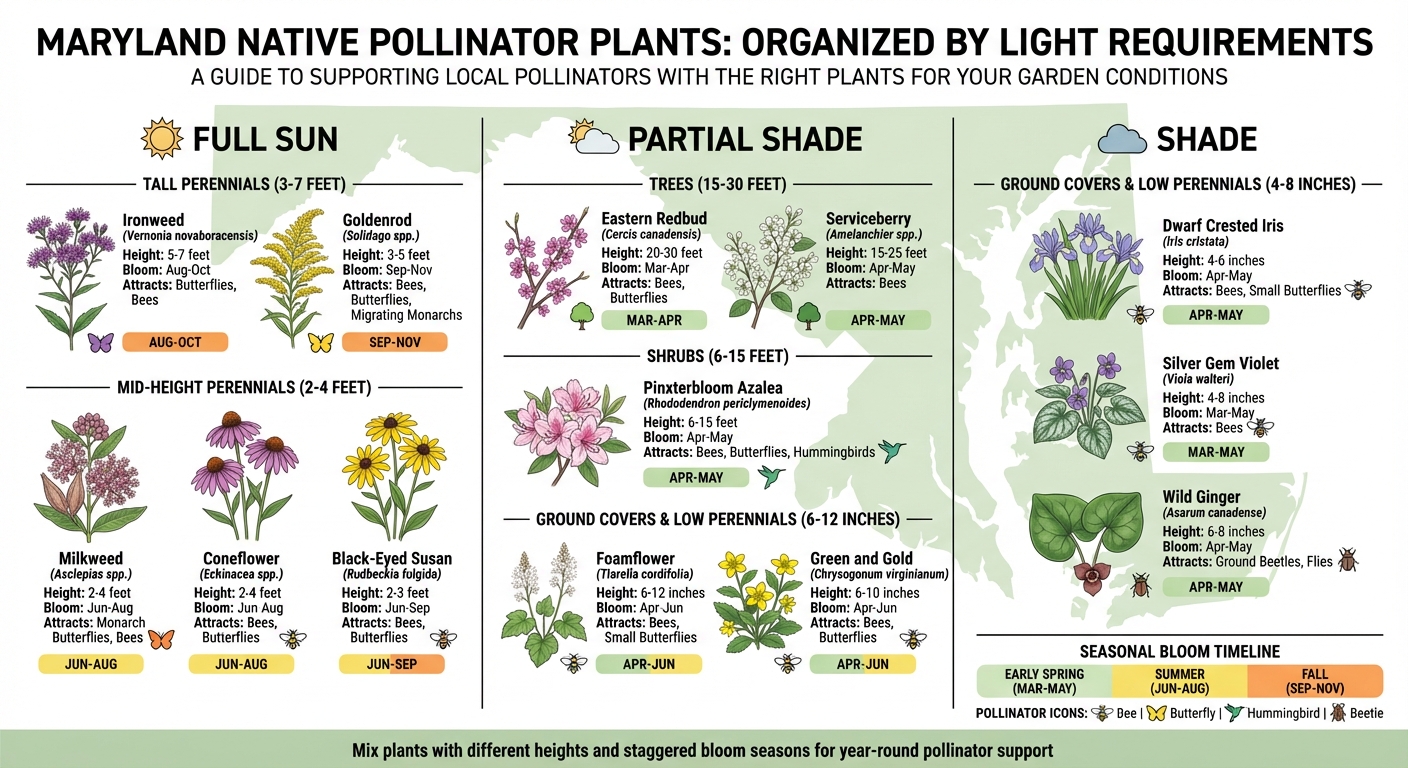
Native Maryland Pollinator Plants by Light Requirements and Bloom Season
Choose native plants that align with your garden’s light conditions to ensure blooms throughout the season. This approach supports pollinators with continuous access to nectar and pollen, which is especially important during critical events like monarch migrations.
The table below simplifies plant selection by summarizing their light needs, mature heights, bloom periods, and the primary pollinators they attract. Butterflies are often drawn to purple flowers and larger blooms, while bees prefer ultraviolet hues that might not be as noticeable to us.
| Plant Name | Light Requirements | Height | Bloom Season | Primary Pollinators |
|---|---|---|---|---|
| Milkweed (Asclepias spp.) | Full sun | 2–4 feet | June–August | Monarch butterflies, bees |
| Black-Eyed Susan (Rudbeckia fulgida) | Full sun | 2–3 feet | June–September | Bees, butterflies |
| Goldenrod (Solidago spp.) | Full sun | 3–5 feet | September–November | Bees, butterflies, migrating monarchs |
| Coneflower (Echinacea spp.) | Full sun | 2–4 feet | June–August | Bees, butterflies |
| Ironweed (Vernonia novaboracensis) | Full sun | 5–7 feet | August–October | Butterflies, bees |
| Dwarf Crested Iris (Iris cristata) | Shade to partial shade | 4–6 inches | April–May | Bees, small butterflies |
| Silver Gem Violet (Viola walteri) | Shade to partial shade | 4–8 inches | March–May | Bees |
| Wild Ginger (Asarum canadense) | Shade | 6–8 inches | April–May | Ground beetles, flies |
| Foamflower (Tiarella cordifolia) | Shade to partial shade | 6–12 inches | April–June | Bees, small butterflies |
| Green and Gold (Chrysogonum virginianum) | Partial shade | 6–10 inches | April–June | Bees, butterflies |
| Eastern Redbud (Cercis canadensis) | Full sun to partial shade | 20–30 feet | March–April | Bees, butterflies |
| Serviceberry (Amelanchier spp.) | Full sun to partial shade | 15–25 feet | April–May | Bees |
| Black Cherry (Prunus serotina) | Full sun | 50–80 feet | April–May | Bees, butterflies |
| Pinxterbloom Azalea (Rhododendron periclymenoides) | Partial shade | 6–15 feet | April–May | Bees, butterflies, hummingbirds |
To create a thriving garden, mix plants with different heights and staggered bloom seasons. This ensures a layered habitat that supports pollinators throughout the year.
Planting and Care Tips for Maryland Pollinator Gardens
Taking the right steps to plant and care for your garden ensures it supports Maryland’s pollinators effectively. The state’s diverse regions – western mountains, central Piedmont plateau, and coastal plain – each have distinct soil conditions that native plants are naturally suited for [4]. As the University of Maryland Extension advises:
Pick plants that complement your yard conditions rather than forcing plants that will not thrive in your yard or container.
Start by testing your soil and observing its moisture levels. For example, Cardinal flowers thrive in rich, moist, slightly acidic soils, while Wild Bergamot prefers dry, well-drained areas [4]. Preparing your soil properly upfront can help reduce the need for chemical inputs later and encourage natural pest control.
Skip the Chemicals
Avoid chemical pesticides and synthetic fertilizers. Research shows that over 90% of pollen samples from bee hives in agricultural settings contain at least one pesticide, with some hives showing traces of up to 20 different compounds [9][11]. These chemicals can harm pollinators by impairing their memory, causing disorientation, and lowering their foraging efficiency [9][12][13]. The good news? Native plants, which are already adapted to Maryland’s soil, generally need little to no fertilization [4][6].
Provide Habitat for Overwintering
Leave some garden debris intact. Many pollinators and beneficial insects rely on undisturbed spaces for nesting and winter shelter. Avoid excessive tilling or mowing in certain areas to protect these habitats [4]. For instance, ground-nesting bees experience a 42% reduction in nesting activity in soils with moderate pesticide exposure [12]. Fallen leaves and dead plant stalks also serve as vital protection for insects during Maryland’s cold winters.
Manage Pests Naturally
Start with physical controls if pests become a problem. Hand-pick pests, use row covers, or attract natural predators by planting nectar-rich species like yarrow and dill [13]. Diane De Luca from NH Audubon highlights:
Reducing or eliminating pesticide use is one of the most effective ways to protect pollinators.
If pest treatment becomes unavoidable, choose low-impact options such as neem oil or insecticidal soap. Apply these in the late evening, targeting only stems and leaves – never open flowers – to minimize harm to pollinators [10][11][13][14].
Set Up Planting Beds Correctly
Prepare planting beds by clearing debris to ensure proper drainage, but avoid over-cultivating the soil [6]. Once native plants are established – usually by the end of the first growing season – they will need minimal supplemental watering under Maryland’s typical weather conditions [4][6].
How Pro Landscapes MD Can Help with Your Pollinator Garden

Building a thriving pollinator garden in Maryland takes more than just planting flowers – it demands a deep understanding of the region’s soils, drainage, and microclimates. That’s where Pro Landscapes MD comes in. Their team of skilled horticulturists uses their local expertise to create gardens that suit the unique conditions of central Maryland properties. By focusing on native plant ecology, they help establish habitats that attract bees, butterflies, and hummingbirds.
Their services include tailored landscape design and planting, ensuring each native species is matched to the specific light and soil conditions of your garden. This precise plant selection works seamlessly with your overall plan to create a balanced and effective pollinator garden.
Good drainage and grading are essential for long-term success. Pro Landscapes MD offers solutions like French drains, stormwater management systems, and yard leveling to maintain the right moisture levels for your plants. For example, some species thrive in rain gardens with wetter soils, while others prefer drier conditions. Proper water management ensures that every plant gets what it needs to flourish.
In addition to plant-focused services, Pro Landscapes MD emphasizes sustainable hardscaping to complement your eco-friendly garden. They install features like flagstone walkways, garden walls, and environmental pavers that improve accessibility while protecting planting zones. This thoughtful combination of landscaping and hardscaping turns your outdoor space into a functional and inviting habitat for Maryland’s pollinators.
Conclusion
Planting native pollinator species in Maryland gardens is a win-win for local ecosystems and gardeners alike. These plants – well-suited to the region’s soils and climate – help bees, butterflies, and hummingbirds thrive while requiring minimal maintenance. For instance, goldenrod supports 115 species, while black cherry trees host an impressive 456 species, showcasing how native plants can significantly enhance biodiversity compared to non-native options [1].
Beyond supporting pollinators, native gardens play a bigger role in strengthening local food systems, aiding migrating species, creating wildlife habitats, and conserving resources like water while reducing the need for chemical inputs.
Whether you’re planting sun-loving perennials like coneflowers and milkweed or shade-friendly options like foamflower and wild ginger, choosing the right plants is key to success.
For Maryland gardeners looking to make a difference, expert help can make the process seamless. Pro Landscapes MD specializes in creating native gardens tailored to Maryland’s unique environment. From design and plant installation to eco-friendly hardscaping and drainage solutions, they handle it all across central Maryland.
Interested in transforming your space into a thriving pollinator haven? Visit prolandscapesmd.com to learn more about their custom garden design and planting services.
FAQs
How do I choose native pollinator plants for my yard’s light and soil?
Start by evaluating the light and soil conditions in your yard. For areas that get plenty of sunlight, plants like Black-eyed Susan, Butterflyweed, and Goldenrod are excellent choices. If you have shaded spots, go for plants such as Virginia Bluebells or Wild Bergamot.
Native plants, like Milkweed and Goldenrod, are particularly well-suited to Maryland’s soil. They require less upkeep and are ideal for creating a low-maintenance garden. To maximize support for pollinators, group plants in clusters and select species that bloom at different times from spring through fall. This ensures a steady supply of nectar and pollen throughout the growing season.
How can I keep blooms going from spring through fall in Maryland?
To enjoy flowers from spring to fall in Maryland, opt for native plants like Black-eyed Susan, Purple Coneflower, and Goldenrod, which bloom at different times of the year. Planting them in clusters with a mix of shapes, sizes, and colors not only enhances visual appeal but also draws in more pollinators. Regularly deadheading faded blooms can promote new growth, ensuring a longer flowering season. Native plants are particularly low-maintenance since they’re well-suited to Maryland’s climate. If you’re aiming for continuous blooms throughout the year, seeking help from professional landscapers might be a good idea.
What’s the safest way to deal with pests without harming pollinators?
To keep pests under control in a way that’s safe for pollinators, consider using integrated pest management (IPM) techniques. These methods focus on reducing chemical use whenever possible. If you do need to intervene, choose targeted, low-toxicity options like insecticidal soaps or neem oil. Apply these treatments during early morning or late evening hours when pollinators are less active.
Encouraging natural predators, such as ladybugs, can also make a big difference. Additionally, planting a variety of native plants can help create a balanced, thriving garden ecosystem that naturally keeps pests in check.
Chat with Us