









- bhavya gada
- No Comments
If I want the short answer: most Maryland front yards look and work better with a mix of native and ornamental plants. Natives usually do better in clay, wet spots, slopes, and runoff areas. Ornamentals usually work better near entries, raised beds, and other spots where I want a neat, formal look.
Here’s the simple breakdown:
- Choose native plants if I want lower care after the first year, more pollinator support, and plants that can handle Maryland’s wet-dry swings.
- Choose ornamental plants if I want clean lines, steady structure, and longer color in high-visibility areas.
- Fix drainage first if water sits in the yard. Plant choice will not solve grading or drain problems by itself.
- Expect both types to need regular watering at first, especially through the first full growing season.
- Use each plant where it fits best, instead of treating this as an all-or-nothing choice.
A few facts shape this choice in Maryland:
- The state’s soils often lean heavy clay, which can hold water and slow root growth.
- Maryland summers bring heat and humidity, while winter brings freeze-thaw cycles.
- Deer pressure can add plant loss and replacement costs over time.
- Native plants tend to support more bees, butterflies, and birds than many ornamental choices.
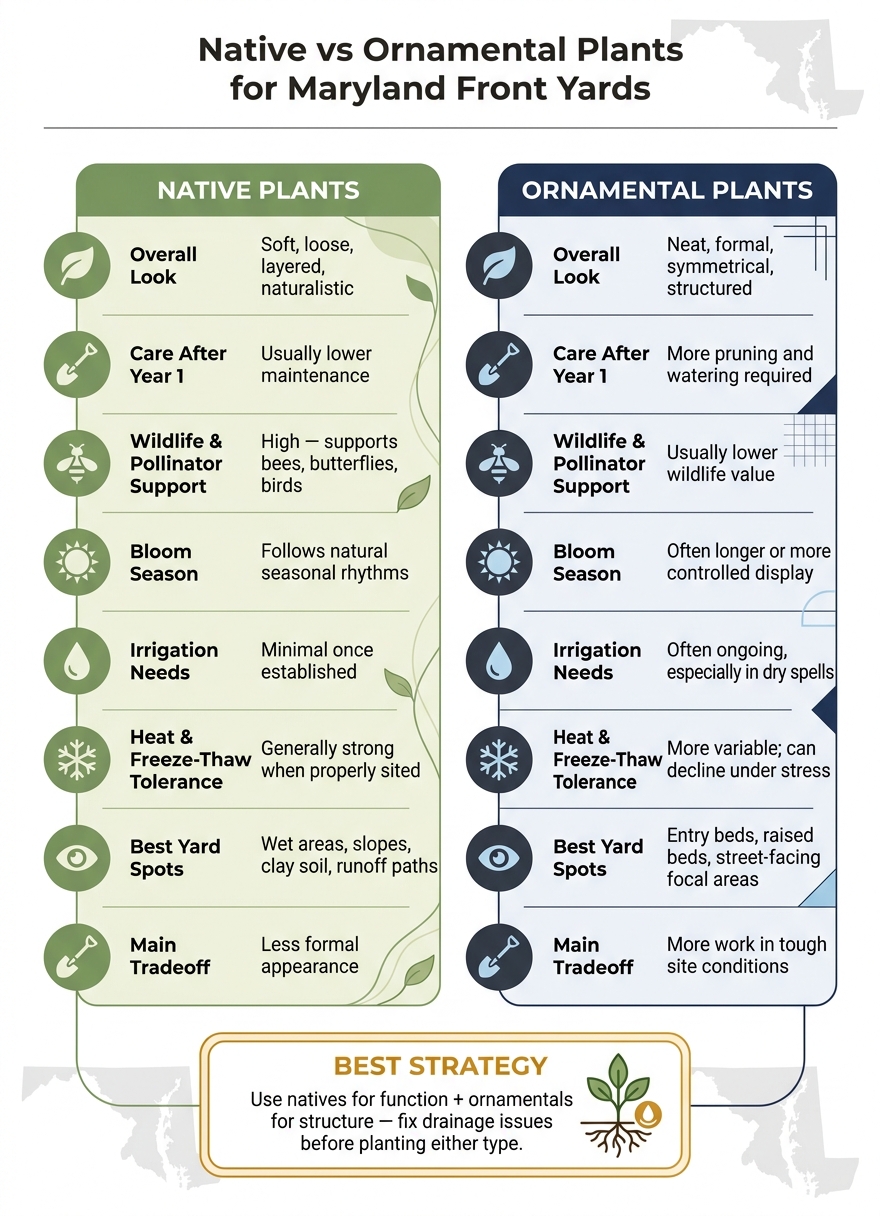
Native vs Ornamental Plants for Maryland Front Yards: Side-by-Side Comparison
Transforming a Maryland Landscape with AMAZING Native Plants!
sbb-itb-843f8be
Quick Comparison
| Factor | Native Plants | Ornamental Plants |
|---|---|---|
| Look | Soft, loose, layered | Neat, formal, shaped |
| Care after year 1 | Usually lower | Often more pruning and watering |
| Wildlife support | Higher | Usually lower |
| Bloom season | More tied to natural timing | Often longer display |
| Best spots | Wet areas, slopes, clay soil, runoff paths | Entry beds, raised beds, street-facing focal areas |
| Main tradeoff | Less formal look | More work in tough sites |
My takeaway: if I’m planting for curb appeal in Maryland, I’d use natives for function and ornamentals for structure. That gives me a yard that looks good from the street without making every weekend about pruning, watering, and replacing stressed plants.
Looks and Street Appeal: Soft Natural Texture vs Clean Formal Lines
If curb appeal matters most, the next call is pretty simple: do you want your front yard to feel natural or formal from the street?
That’s the main visual split here. Native plants tend to read softer and more relaxed. Ornamental plants usually look cleaner and more formal. Native plantings bring soft, layered texture, mixed heights, and seasonal movement. They fit well in foundation beds and curb-facing borders. Ornamentals, on the other hand, add structure to entry walks, symmetrical beds, and street-facing layouts.
| Visual Factor | Native Plants | Ornamental Plants |
|---|---|---|
| Overall style | Soft, layered, naturalistic | Neat, symmetrical, formal |
| Visual effect | Movement, height variation, seasonal shifts | Controlled, consistent appearance |
| Design feel | Natural and layered | Structured and uniform |
Where Native Plants Work Best in the Front Yard
Native plants work best when the goal is a naturalistic, layered look. Since they often mix groundcovers, perennials, and shrubs, they add depth and visual interest without looking stiff. That makes them a good fit for homeowners who want softer, more local curb appeal.
Where Ornamentals Deliver a More Formal Look
Ornamentals make more sense when you want the front yard to look neat and symmetrical. Their uniform shape gives the space a polished look that stays steady through the season. For a clean, formal presentation from the street, they’re often the stronger pick.
That visual choice also shapes upkeep, which becomes the next tradeoff in Maryland yards.
Care Needs and Long-Term Maintenance in Maryland
The maintenance gap tends to get bigger once plants settle in. During the first growing season, both natives and ornamentals need steady care. After that, native plants usually get easier to manage, while many ornamentals keep asking for more time and effort. That shift matters most after year one.
How Care Demands Shift After the First Growing Season
Both plant types need regular watering during the first growing season, which is usually the first full spring through fall after planting. Once they’re established, Maryland-adapted natives often need little to no irrigation. They also tend to handle short dry spells and summer heat well.
Ornamentals are often a different story. Many need more frequent watering and pruning to keep their shape and appearance. If you want a tidy, uniform look, that upkeep can become a steady chore.
| Care Factor | Native Plants | Ornamental Plants |
|---|---|---|
| Establishment-year care | Regular watering needed | Regular watering needed |
| Ongoing maintenance | Lower after first season | More consistent attention required |
| Irrigation needs | Minimal once rooted | Often ongoing, especially in dry spells |
| Pruning needs | Light, occasional shaping | More frequent to maintain uniform shape |
| Heat and freeze-thaw tolerance | Generally strong when properly sited | More variable; can decline under stress |
How Soil, Heat, and Deer Pressure Shape Upkeep
Maryland doesn’t make plant care easy. Clay soil, hot summers, freeze-thaw swings, and deer pressure can all add work.
Compacted clay slows establishment for both natives and ornamentals. But ornamentals growing in poorly drained soil often decline faster and may need to be replaced sooner. Natives picked for clay-heavy or moist-site conditions usually hold up better over time.
Summer humidity and freeze-thaw cycles can also push up replacement needs for ornamentals that aren’t a good match for the site. And then there’s deer. Some ornamental shrubs and perennials may need protection or more frequent replanting after browsing.
Lower upkeep is one clear plus for natives. Pollinator support is the next piece. Ornamentals can still do well when the site fits and grooming stays steady. Maintenance is only part of the choice; the next step is looking at which plants support more wildlife.
Pollinator Value and Season Length: Habitat Support vs Extended Display
Once maintenance is sorted out, the next question is value: habitat support or a longer display. That tradeoff shows up most when bloom time and wildlife value bump into the need for a polished front-yard look.
Why Native Plants Tend to Support More Wildlife
Native plants carry strong ecological value because they support local pollinators and birds. They serve as a better food source for bees, butterflies, and insect-feeding birds. If you want a front yard that helps local wildlife, natives usually do more per square foot. The result is a yard that feels alive and still works well.
How Ornamentals Can Fill Color and Structure Gaps
Ornamentals still matter. They can stretch bloom windows, add evergreen structure, and bring in planned color. Used the right way, they help a front yard stay polished through the seasons.
Native plants supply habitat. Ornamentals supply structure and focal color.
| Feature | Native Plants | Ornamental Plants |
|---|---|---|
| Wildlife support | High for pollinators, beneficial insects, and insect-feeding birds | Usually lower wildlife value |
| Bloom timing | Follows local seasonal rhythms | Often longer or more controlled for extended display |
| Structure | Varies by species and season | Often evergreen or more formally structured |
| Visual role | Natural, habitat-forward planting | Focal color and clean lines |
Site conditions often settle the issue, especially in wet areas, slopes, and runoff zones.
Drainage Fit and Best Uses by Site: Matching Plant Type to Front-Yard Conditions
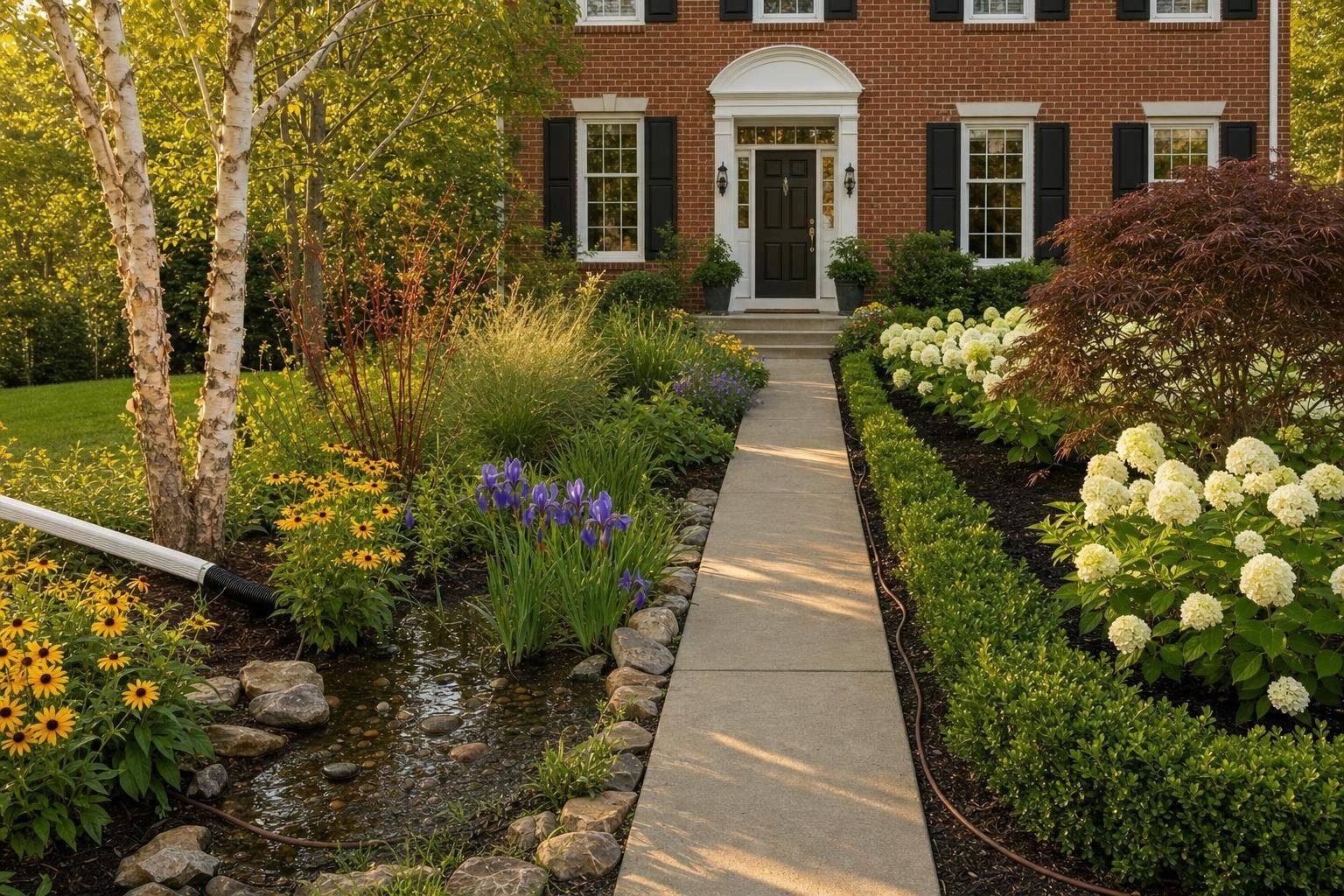
Once you know how water moves through the yard, plant placement gets a lot easier. Drainage is what decides where each plant type is most likely to do well. In Maryland front yards, native plants usually make the most sense in low spots, swales, and runoff paths. Ornamentals tend to fit better in raised beds, entry borders, and other well-drained areas where their tidy shape is easier to keep up.
Put simply: wet areas lean native, while formal ornamentals usually need corrected drainage to keep their shape and vigor. If poor drainage is the main issue, grading, drain repair, or leveling should come first.
| Site Condition | Best Plant Type | Reason |
|---|---|---|
| Low spots and swales | Native plants | Tolerate wet-dry cycles and heavy clay |
| Slopes and runoff paths | Native plants | Root systems stabilize soil and manage runoff |
| Raised beds and entry borders | Ornamental plants | Well-drained conditions support formal shape |
| High-visibility street-facing beds | Ornamental plants | Consistent drainage keeps appearance polished |
Conclusion: Most Maryland Front Yards Do Best with a Mix
After the soil drains the way it should, the last call is mostly about looks. Native plants work well in softer, problem-prone areas. Ornamentals fit cleaner, more formal spaces. Fix drainage first, then use natives in wet or sloped parts of the yard and ornamentals in the driest, most visible beds. That mix gives you the best curb appeal and the steadiest long-term performance.
FAQs
How do I decide where to use natives vs. ornamentals?
Assess your yard’s soil, sunlight, and drainage so you can tell where each plant type is most likely to do well.
Use native plants as the backbone of your landscape. They fit Maryland’s climate and support local ecosystems while needing less water and fertilizer. Then bring in carefully chosen, non-invasive ornamentals as accents for texture, color, or year-round interest. It also helps to group plants by mature size and water needs so the whole space works better together.
Can native plants still look neat in a front yard?
Yes. Native plants can look neat in a front yard when the design feels deliberate.
A simple way to do that is to plant in clusters instead of scattering plants here and there. Clean edging or mulch borders also make a big difference. You can also frame the space with a low border of evergreen shrubs or native grasses.
It helps to layer plants by height, with shorter plants in front and taller ones behind. Planning for year-round interest keeps the yard looking balanced and cared for in every season.
Should I fix drainage before planting anything?
Yes. Check drainage before you plant. It’s one of those early steps that can save you a lot of trouble later.
Poor drainage can lead to root rot and plant stress, which is why a site check and soil test should come first.
If the soil is compacted or slow to drain, mix in organic matter or add drainage features like French drains or dry riverbeds.
Chat with Us