









- bhavya gada
- No Comments
Natural stone is a top choice for mini-golf courses, offering durability, visual appeal, and the ability to handle Maryland’s challenging weather. Here’s a quick breakdown of the best options:
- Granite: Extremely durable, low-maintenance, and great for high-traffic areas. Ideal for retaining walls and bridges.
- Limestone: Affordable and visually appealing but better for decorative features due to its softness.
- Sandstone: Warm, earthy tones with good durability. Great for walkways and walls but requires proper installation and sealing.
- Slate: Modern, sleek look with excellent durability. Works well for pathways and decorative accents.
- Bluestone: Cool blue-gray tones, durable, and slip-resistant. Perfect for pathways and defining course zones.
Each stone has its strengths, from granite’s toughness to sandstone’s inviting tones. Proper installation and drainage are key to maximizing their lifespan. Granite and bluestone stand out for durability, while limestone and sandstone excel in decorative roles.
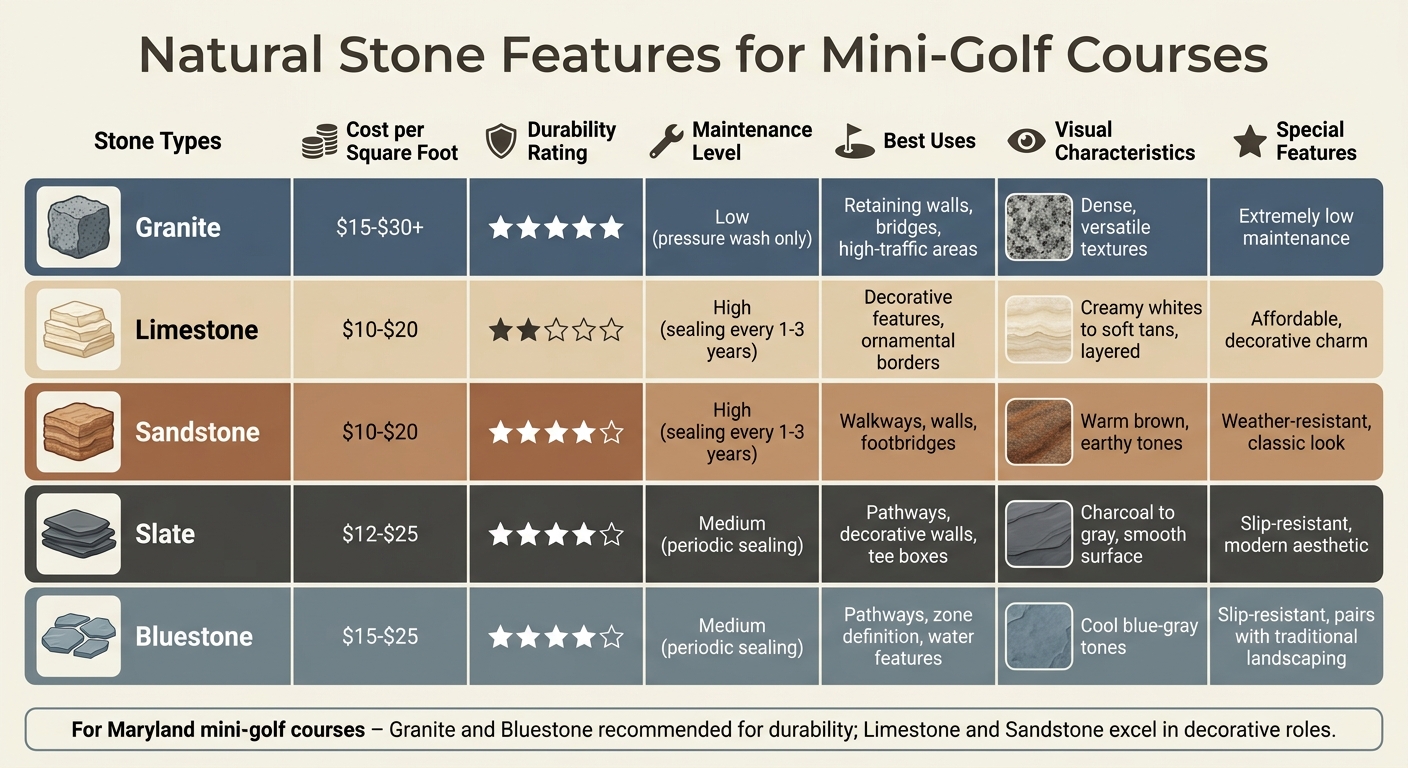
Natural Stone Comparison for Mini-Golf Courses: Durability, Cost, and Best Uses
1. Limestone
Limestone brings a natural charm to mini-golf courses with its layered texture and subtle color variations. Its sedimentary makeup gives it shades ranging from creamy whites to soft tans, blending beautifully into landscaped designs.
Durability
Because limestone is relatively soft, it’s better suited for decorative features rather than areas requiring high-impact resistance. Its primary strength lies in its visual appeal.
Cost
Limestone is often an affordable option, especially when sourced locally [2]. Pricing varies depending on the type of stone and its preparation. For example:
- Thin-cut limestone: Ideal for vertical uses and typically less expensive than thicker building stones.
- Pre-fabricated veneers: These can save on labor but are generally pricier in terms of materials.
Complex masonry work, such as creating split-face veneers with overgrout mortar joints, can also drive up labor costs [2]. However, limestone remains a practical choice for projects that balance cost, durability, and aesthetics.
Mini-Golf Suitability
Limestone shines in decorative roles, adding a traditional and welcoming feel to mini-golf courses. It’s perfect for features like stacked stone retaining walls, accents on pedestrian bridges, and ornamental borders around greens. When paired with materials like brown-toned flagstone, limestone helps create a harmonious, classic look [2]. This unique character makes it a standout option for enhancing mini-golf landscapes while maintaining a cohesive design.
sbb-itb-843f8be
2. Granite
Granite stands out as a powerhouse material, offering exceptional durability and aesthetic appeal for high-traffic mini-golf areas. Its natural formation under intense heat and pressure results in a dense, resilient surface that can handle the wear and tear of heavy use.
Durability
Granite’s unmatched strength makes it perfect for key structures like retaining walls near tee boxes or pedestrian bridges. A great example of its reliability is seen at Augusta National‘s 13th hole, where thin wall and building stone are used to create features that are both functional and long-lasting[2]. This toughness also translates to easier upkeep, as granite requires minimal maintenance over time.
Maintenance
Thanks to its natural resistance to stains and weathering, granite is low-maintenance. However, proper installation is critical to its longevity. Using strong, well-draining foundations helps prevent issues like settling or standing water, which could otherwise compromise its integrity.
Aesthetic Fit
Granite’s versatility in texture and finish makes it a great choice for mini-golf courses. Whether it’s a rustic split-face veneer or a sleek, squared finish, granite can enhance the course’s visual appeal. Its ability to blend seamlessly with different design styles ensures it complements the overall landscape beautifully.
Mini-Golf Suitability
Granite excels in both form and function, making it ideal for standout features like retaining walls, bridges over riverbeds, and decorative accents around greens. Its durability ensures it can withstand heavy use, while its visual appeal ties the course together, creating a cohesive and engaging experience for players[2]. Its ability to harmonize with surrounding landscaping adds both practicality and charm to any mini-golf layout.
3. Sandstone
After the strength and resilience of granite, sandstone brings a softer, more natural touch to mini-golf course design. Its warm, earthy tones and layered texture give courses a welcoming and timeless look. This stone not only enhances the visual charm of a course but also holds up well in the face of constant use.
Durability
Sandstone is tough enough to handle frequent foot traffic. A great example of its lasting strength is Augusta National’s Sarazen Bridge. Built in April 1955 using brown-hued pattern flagstone, the bridge commemorates Gene Sarazen’s legendary 1935 double eagle and showcases sandstone’s ability to endure over time [2]. Bluestone, a specific type of sandstone, is another popular choice for outdoor spaces like pool decks and patios, thanks to its durability and resistance to weather [2].
Maintenance
The key to sandstone’s longevity lies in proper installation. A solid, well-draining base is crucial to prevent settling and water buildup, which could affect the course’s usability [2]. Once installed, sandstone requires little upkeep – routine cleaning is usually enough to maintain its natural beauty.
Aesthetic Fit
Sandstone’s visual appeal is another reason it’s a favorite for mini-golf design. Its warm brown tones are reminiscent of the classic Masters’ style [2]. Outdoor Dreams notes:
"If the brown tones do not work with your home, a pattern bluestone would also work wonderfully in a Masters’ themed space"
[2]. Whether arranged in patterns or used as a split-face veneer, sandstone can create a rustic or polished look. Unlike the cool, sleek appearance of granite, sandstone adds a sense of warmth and tradition, blending practicality with style.
Mini-Golf Suitability
Sandstone is perfect for crafting authentic golf features like footbridges, walkways, and decorative walls. Its versatility makes it ideal for terraces and pathways that need both durability and aesthetic appeal. Plus, it integrates beautifully with surrounding landscaping, helping to create a cohesive and inviting mini-golf course design.
4. Slate
Slate brings a sleek, modern touch to mini-golf course designs. Its smooth surface and rich color range – spanning deep charcoal, silvery gray, and even subtle hints of green or purple – offer a sophisticated aesthetic. This makes it an excellent counterpart to warmer stones like sandstone, creating a striking contrast that enhances the overall visual appeal.
Durability
Thanks to its dense, layered structure, slate is highly durable and well-suited for outdoor use. While proper installation is key to its longevity, slate is prized for its ability to retain both its strength and appearance over time, even in challenging conditions.
Maintenance
When installed with a solid base and proper drainage, slate resists common issues like water pooling, which helps preserve its integrity. Maintenance is straightforward – regular cleaning and the occasional application of sealant in damp areas are typically all that’s needed to keep it looking great.
Aesthetic Fit
Slate’s modern, polished look makes it a fantastic choice for contemporary mini-golf designs. Its smooth, uniform surface contrasts beautifully with rustic stones and blends seamlessly with natural landscaping, adding an architectural edge to the course.
Mini-Golf Suitability
Slate introduces a modern twist to traditional mini-golf aesthetics. It’s a versatile option for pathways, decorative walls, and tee boxes, providing both functionality and a refined appearance that pairs well with natural elements.
For professional advice and installation services, Pro Landscapes MD specializes in natural stone designs that enhance both the style and durability of your mini-golf course.
5. Bluestone
Bluestone brings a cool, polished vibe to mini-golf courses, balancing the warmth of sandstone and the strength of granite. Its signature blue-gray tones add a refined touch that pairs beautifully with landscaping staples like azaleas, dogwoods, and boxwoods. When arranged in patterns, bluestone creates a structured yet natural look, blending formal design with the organic feel of the course.
Durability
Bluestone is known for its dense composition, which helps it maintain both its appearance and structural integrity over time. This makes it a great match for Maryland’s weather conditions. However, like all stone installations, proper drainage and a solid foundation are crucial to avoid settling or water damage.
Aesthetic Fit
Bluestone’s versatility makes it a standout choice for outdoor spaces with a golf theme. It pairs wonderfully with brick accents to mimic classic golf course features, such as the Sarazen Bridge at Augusta National. Landscape designers at Outdoor Dreams highlight its potential:
"If the brown tones do not work with your home, a pattern bluestone would also work wonderfully in a Masters’ themed space." [2]
Its cool tones and compatibility with traditional landscaping elements allow it to blend seamlessly into classic designs while adding a touch of elegance.
Mini-Golf Suitability
Bluestone’s clean, organized appearance helps define distinct areas within a mini-golf course. Its natural compatibility with traditional golf course colors, like green and white, creates a visually cohesive environment. This balance between structure and nature makes bluestone an excellent choice for integrating defined zones into the overall course design without overshadowing the surrounding landscaping. It’s a material that enhances the course’s visual flow and unity.
Advantages and Disadvantages
Choosing the right natural stone for your mini-golf course design means weighing costs, upkeep, and functionality. Here’s a closer look at the trade-offs of each option based on their features and maintenance needs.
Granite stands out for its durability and minimal upkeep, requiring little more than the occasional pressure wash. However, its premium price – ranging from $15 to over $30 per square foot installed – makes it the most expensive choice. That said, its low long-term maintenance costs can help justify the initial investment [1].
Limestone and sandstone come with a more affordable upfront cost, typically between $10 and $20 per square foot. The catch? These stones need sealing every 1–3 years to guard against water damage, stains, and algae. Over a decade, the cumulative maintenance expenses could surpass those of granite [1].
Slate offers a solid balance of cost and performance, priced at $12–$25 per square foot. Its natural slip-resistant surface makes it a safe pick for pathways. The main concern is spalling, where layers of the stone flake off, potentially creating sharp edges that need attention [1].
Bluestone combines aesthetics with functionality, priced similarly to slate at $15–$25 per square foot. Its slip-resistant texture and versatility make it ideal for pathways, edging, and water features. To maintain its signature blue-gray hue and prevent stains in damp conditions, periodic sealing is essential. Without it, the stone may fade over time [1].
For Maryland mini-golf courses, where weather durability is key, granite and bluestone provide excellent long-term value with their resilience and low upkeep. On the other hand, limestone and sandstone shine in decorative roles, offering natural beauty despite higher maintenance demands. For pathways, safety is a priority, and both slate and bluestone deliver the slip resistance needed for player comfort and security [1].
Conclusion
When it comes to mini-golf design, choosing the right stone is about finding the sweet spot between visual appeal and long-term durability. For Maryland mini-golf courses, this means balancing the toughness of the material with its look and maintenance needs. Stones like granite and bluestone are perfect for high-traffic areas and pathways since they handle weather changes well and require little upkeep. On the other hand, limestone and sandstone work beautifully as decorative touches, though they often need regular sealing to stay in top shape.
Key elements like proper grading, effective drainage, and retaining structures help maintain the stone’s integrity and handle elevation changes with ease. Adding well-placed lighting can highlight the stone’s natural textures, making evening play more inviting. Plus, carefully chosen stone colors can blend seamlessly with the surrounding landscape for a polished finish.
Pro Landscapes MD specializes in crafting stone and drainage solutions that suit Maryland’s unique terrain, bringing together rugged practicality and a unified, eye-catching design.
FAQs
What type of stone is safest for wet mini-golf walkways?
When it comes to choosing the safest stone for wet mini-golf walkways, there isn’t a definitive answer. However, it’s smart to focus on materials with textured surfaces or a natural grip. These features can help minimize the risk of slipping, especially when the surface gets wet.
How often should limestone and sandstone be sealed in Maryland?
Sealing limestone and sandstone in Maryland doesn’t come with specific, one-size-fits-all guidelines. How often you should seal these materials depends on several factors, including the local climate, the level of use, and how much wear the surfaces endure. To keep them looking good and protected, it’s a good idea to inspect the surfaces regularly. This way, you can spot signs of wear or fading and decide when it’s time to reseal to preserve their durability and appearance.
What drainage details prevent stone features from shifting or cracking?
Effective drainage systems are key to keeping natural stone features in mini-golf courses stable and crack-free. These systems work hand-in-hand with sturdy base structures that can handle heavy foot traffic while managing water efficiently. Together, they ensure the stones remain secure and durable for the long haul.
Chat with Us