









- bhavya gada
- No Comments
If you prune ornamental grasses at the wrong time, you can cut off new growth or leave plants open to winter damage. In USDA zones 6–7, I keep it simple: leave grasses standing in fall and winter, cut warm-season types to 3–6 inches in late winter, lightly trim cool-season types in early spring, and mostly just clean up sedges.
Here’s the whole article in one fast view:
- Warm-season grasses: cut back in late February through March in many zone 6–7 areas, when new shoots start showing
- Cool-season grasses: trim lightly in early spring and leave about one-third of the plant
- Sedges and evergreen types: usually need hand-combing or a light trim of up to one-third
- Summer pruning: keep it light; remove no more than one-third
- Fall pruning: usually skip it, unless disease is present
- Division: most clumps need dividing every 3 to 5 years
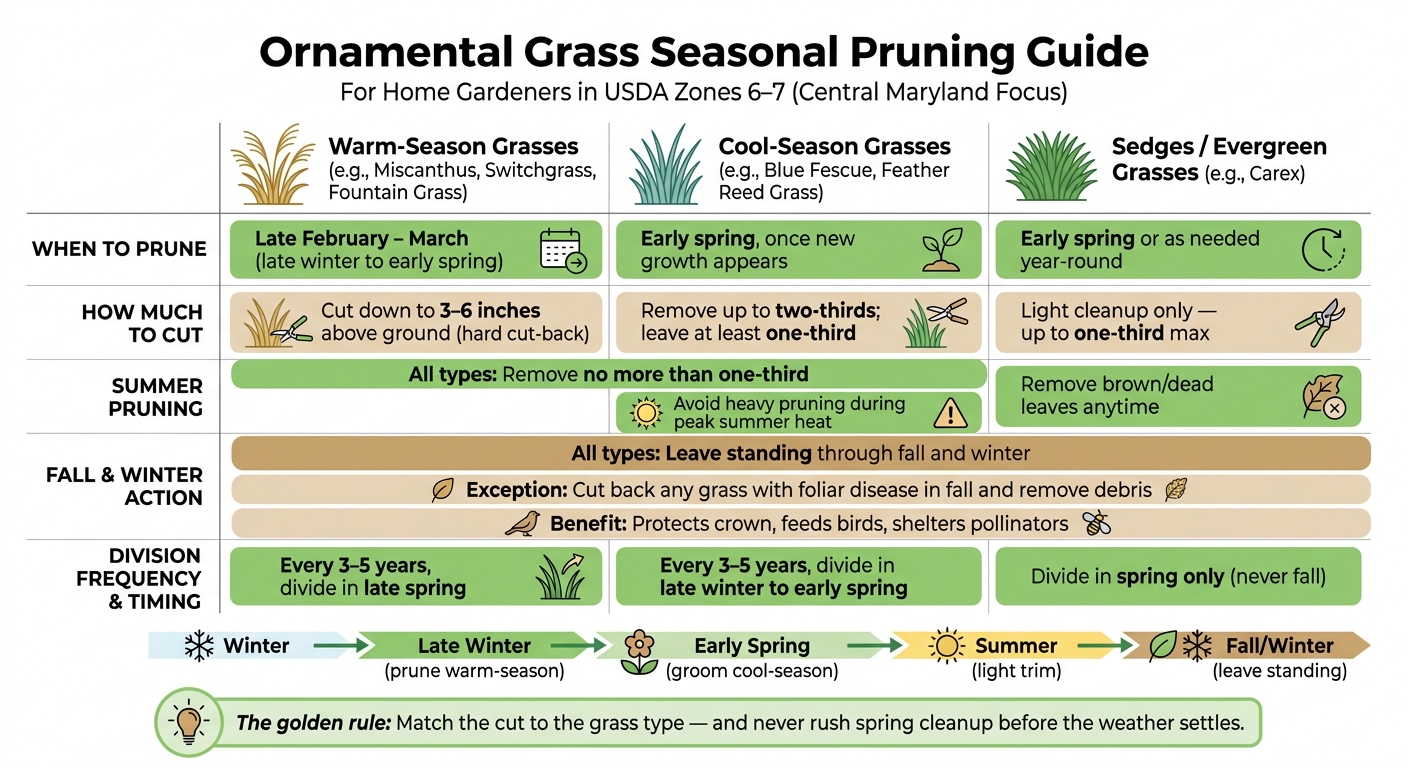
Ornamental Grass Seasonal Pruning Guide by Grass Type
How and When To Prune Ornamental Grasses the Easy Way – Demonstration.
Quick comparison
| Grass type | When I prune | How much I cut |
|---|---|---|
| Warm-season | Late winter to early spring | 3–6 inches above ground |
| Cool-season | Early spring | Remove up to two-thirds |
| Sedge / evergreen | Early spring or as needed | Light cleanup, up to one-third |
| Overgrown clumps | Spring, based on type | Cut first, then divide |
The main rule is simple: match the cut to the grass type, and don’t rush spring cleanup before the weather settles.
What to Know Before You Prune
Warm-season, cool-season, and evergreen grasses don’t all want the same haircut. Pick the right cut, and you help the plant bounce back well while keeping the garden looking neat from season to season.
Warm-season grasses like switchgrass and maiden grass go dormant in winter, so they can handle a hard cut. In late winter to mid-spring, cut them back to about 3–6 inches above the ground. Cool-season grasses like blue fescue and feather reed grass are less forgiving. A hard cut can hurt them, so remove no more than about two-thirds.
Evergreen and semi-evergreen grasses, including many sedges like Carex, are the main exception to full cut-backs. An easy way to tell sedges from true grasses is the stem: sedges have solid, three-sided stems – sedges have edges – and they usually need only light combing or a trim of up to one-third.
The timing matters too. Trim when new green shoots first appear at the base. Wait too long, and you’ll end up with stubby old stems that stay visible.
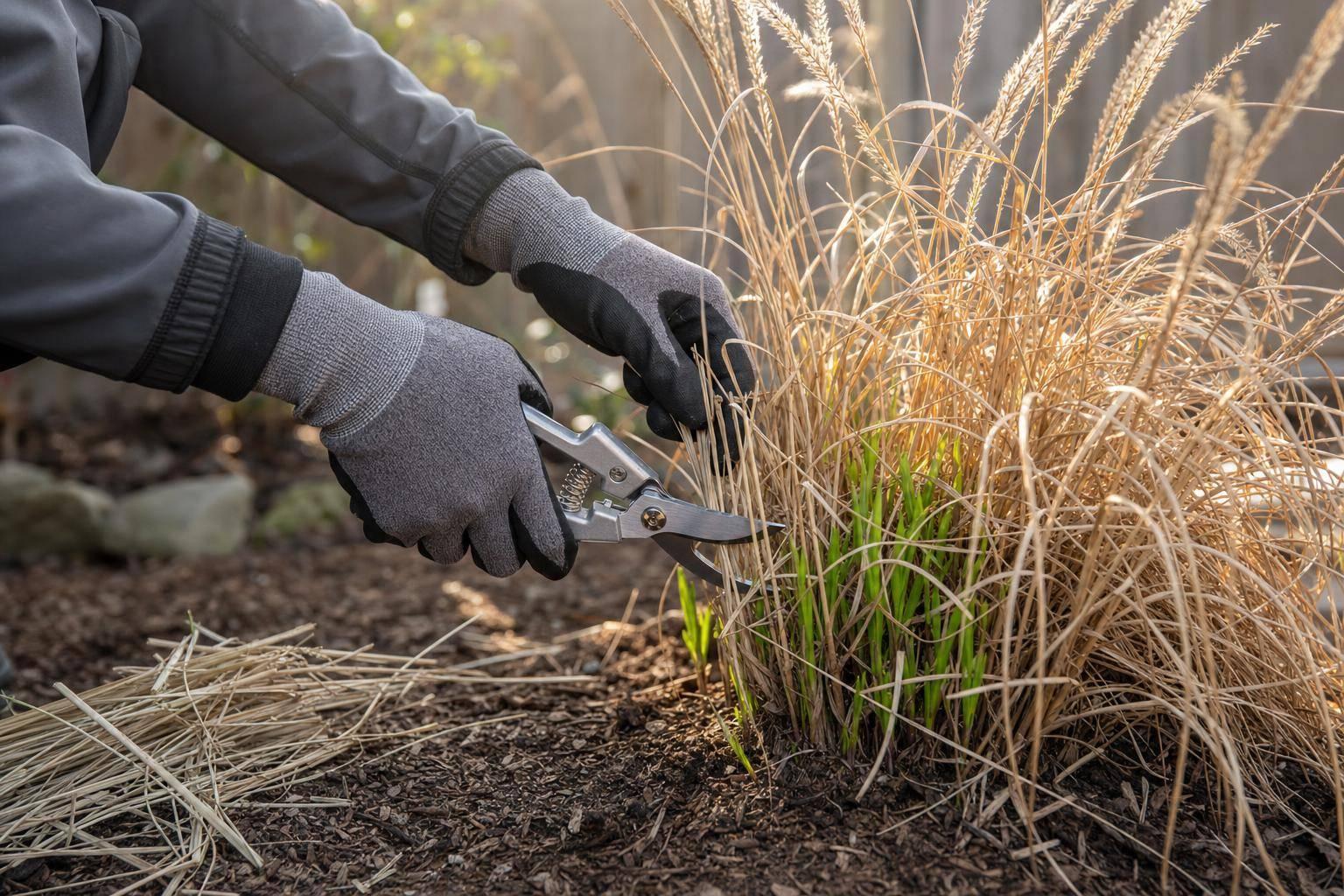
For tools, use sharp hedge shears for smaller clumps or a power trimmer for dense ones. Thick gloves and long sleeves are a smart move too; old grass blades can be rough on your hands and arms. Before cutting, tie the clump into a tight bundle 4–8 inches above the base. It gives you a cleaner cut line and makes cleanup a lot less of a chore.
Use these rules to choose the right cut for late winter, early spring, summer, and fall.
1. Pro Landscapes MD Seasonal Maintenance Support

Grass type is only one part of the work. The tougher part is getting the seasonal timing right across the whole property. Pro Landscapes MD helps central Maryland homeowners keep ornamental grasses on a pruning schedule that fits the landscape as a whole. That’s a big deal when those grasses sit alongside planting beds, hardscape edges, and seasonal cleanup deadlines.
Pruning timing depends on the type of grass. Cut when green shoots first show at the base. Warm-season grasses usually need a hard cut in late winter or early spring. Cool-season grasses need a lighter trim. Sedges, in most cases, need little more than grooming.
Central Maryland’s freeze-thaw cycles make timing more important than rushing the job. Heavy snow can press tall clumps down near walkways and patios, so it makes sense to watch conditions and let late freezes pass before cutting back, especially when new shoots are already exposed. [2]
From there, the work follows the season: a hard cut-back in late winter, light grooming in spring, and very little disturbance in fall.
2. Late Winter Cut-Back Before New Growth
Warm-season grasses need their main cut-back in late winter, right before spring growth starts moving.
Best Season or Timing
In Maryland, the sweet spot is late February through March. Wait until the worst hard freezes are mostly behind you, but don’t wait so long that the new shoots are already several inches tall. The best cue is at the base of the plant: cut when green shoots first start to show. [2][7]
Grass Type Suitability
This hard cut-back is for warm-season ornamental grasses that die back in winter. Evergreen grasses and sedges are different. They usually just need a light cleanup, not a full chop-down. [7][5]
Recommended Cut-Back Height
Cut most clumps down to 3–6 inches. For taller, thicker clumps, leave 4–8 inches so the crown stays a bit covered. [2][5]
A simple way to make the job less messy is to bundle the stalks 4–8 inches above the ground first, then cut them with sharp shears or hedge trimmers. [5][1]
Maryland Climate Considerations
Maryland springs can drag their feet. If that happens, wait until you see green growth at the base, then prune before that new growth stretches up. [2]
Cool-season grasses need a lighter early-spring cleanup instead.
3. Early Spring Grooming for Cool-Season Grasses
Cool-season grasses need a gentler touch than warm-season types. This is more like a tidy-up than a buzz cut. Trim too hard, and you can damage the crown and slow regrowth [1][8][5].
Best Season or Timing
Prune in late winter or early spring, once you see fresh growth starting in the center [2]. Wait too long, and the plant can end up with a rough, choppy look that sticks around for the rest of the season.
Grass Type Suitability
This lighter approach works for cool-season grasses such as blue fescue, feather reed grass, and northern sea oats [2][1][5]. For evergreen sedges like Carex, skip the hard cut. Instead, put on gloves and comb through the blades by hand to pull out dead material [7][6].
Recommended Cut-Back Height
Cut back only the top two-thirds of the plant. Leave at least one-third in place to protect the crown and shield new shoots [1][8][7][5]. Never cut it down to ground level. Sharp shears matter here too – they give you cleaner cuts and help lower disease risk [3].
Maryland Climate Considerations
In Maryland, if winter hangs on and late cold snaps are still in play, hold off on pruning until the freeze risk passes [2]. And if a clump has simply gotten too big for its spot, divide it in spring instead of cutting it lower.
sbb-itb-843f8be
4. Spring Division for Overgrown Clumps
If pruning stops fixing the shape, it’s time to divide the clump and start growth over. A hollow center or thin growth is the big giveaway. At that point, trimming alone usually won’t do much.
Most ornamental grasses do best when divided every 3 to 5 years to keep them growing well [2][1].
Best Season or Timing
Timing depends on the type of grass you’re dealing with.
- Cool-season grasses like fescues should be divided in late winter to early spring, right when new shoots start showing at the base [2][5].
- Warm-season grasses like switchgrass and maiden grass should be divided in late spring, once active growth is underway [2][5].
Grass Type Suitability
Evergreen grasses and sedges should only be divided in spring [2][5]. Fall division can leave them exposed heading into winter because they don’t go fully dormant [5].
For the job itself, a sharp spade works for most clumps. If the root mass is extra dense, use hedge shears or a reciprocating saw [4][3].
Recommended Cut-Back Height
Cut the clump back first so you can clearly see the crown. Then divide it cleanly and water the new sections right away [3].
Maryland Climate Considerations
In central Maryland, the usual window is late February through mid-March. In cooler mountain areas, wait about 2 to 3 weeks longer [4].
5. Summer Light Trimming to Manage Flop
Once spring growth calms down, summer pruning should tidy the plant’s shape, not start it over. If grasses begin to flop in early summer, trim only the outer blades or seed heads. A hard cut at this point is too much.
Best Season or Timing
Trim in the morning while temperatures are cooler. That puts less strain on the plant and gives fresh cuts time to recover.
Grass Type Suitability
Warm-season grasses can handle light shaping during summer heat. Cool-season grasses need a gentler touch, or it may be better to leave them alone during peak heat, since heavy pruning can cause permanent damage [1][5].
For evergreen sedges (Carex), you can remove brown or dead leaves anytime during the season with little stress on the plant [5].
Recommended Cut-Back Height
Take off no more than one-third of the plant. For cool-season grasses, keep at least one-third of the plant intact. After trimming, water the grass right away.
Maryland Climate Considerations
In central Maryland, hold off on trimming cool-season grasses during the hottest stretch of summer. Keep any grooming on warm-season grasses light. Once the heat starts to ease, stop trimming and let the clumps recover for fall.
6. Fall and Winter: Leave Grasses Standing
Once summer growth starts to taper off, put the pruners down and let grasses do their thing through winter. Leave ornamental grasses standing in fall and winter to help protect the crown, add texture to the garden, and give wildlife a place to feed and shelter. Their seedheads can feed birds like finches during the cold months, and the stalks give overwintering insects and pollinators cover [6][5].
Best Season or Timing
Wait to prune until late winter or early spring. Cutting in fall can push tender new growth right before winter, which can lead to damage [5].
Grass Type Suitability
Evergreen sedges (Carex) usually don’t need a hard cut. A light combing is enough.
Maryland Climate Considerations
There is one exception. If grasses had foliar disease during the season, cut them back in fall and clear away the debris [2].
Seasonal Pruning Quick-Reference Tables
Use these tables as a fast Maryland pruning reference.
Table 1: Grass Type Cut-Back Guide
| Grass Type | Best Cut-Back Season | Approx. Cut-Back Height | Maryland-Specific Notes |
|---|---|---|---|
| Miscanthus (warm-season) | Late winter to early spring | 3–6 inches | Heavy snow can flatten stalks; remove seedheads if self-seeding is a concern [1][2]. |
| Fountain grass (warm-season) | Late winter to early spring | 3–6 inches | Can self-seed; cut back before mid-spring warmup [1][2]. |
| Blue fescue (cool-season) | Very early spring | Leave 1/3 of height | Freeze-thaw cycles make hard cuts risky; trim lightly in early spring [1][7]. |
| Native warm-season grasses (e.g., switchgrass) | Late winter to early spring | 3–6 inches | Provides winter seeds and cover for local birds. Cut back in March once new growth appears at the base [2][5]. |
Table 2: Season-by-Season Pruning Summary
| Season | Primary Action | Key Benefit | Common Mistake to Avoid |
|---|---|---|---|
| Spring | Cut back warm-season grasses; groom cool-season grasses | Exposes the crown to sunlight and jump-starts new growth | Waiting too long and clipping the tips of new green shoots [2] |
| Summer | Light trimming to manage flop | Manages flop and keeps shape | Over-pruning cool-season grasses while they are heat-stressed [3] |
| Fall | Leave standing; cut only diseased plants | Provides winter insulation and wildlife habitat [5][2] | Cutting back too early, which may trigger wasted new growth [5] |
| Winter | Leave standing until late February or early March | Protects the crown from frost and feeds local birds | Cutting evergreen grasses hard instead of combing out dead blades [7][6] |
Next, review the most common pruning mistakes before you cut.
Common Pruning Mistakes to Avoid
Before you prune, watch for a few common slipups. Most problems come down to bad timing, cutting too much, or leaving the mess behind.
Don’t cut warm-season grasses in early fall. Wait until the plant is dormant. If you cut too soon, you can trigger new growth right before winter, and that’s the last thing the plant needs.
With cool-season grasses, don’t shear them all the way to the ground. Leave at least one-third of the plant in place to help protect the crown.
Another big mistake is waiting too long in spring. Once new shoots start coming up, pruning means slicing off that fresh growth and leaving the plant with a rough, uneven look. Check the base of the clump in late winter and prune before the green shoots get too far along [2][7].
In midsummer, keep pruning light. Remove only broken stems or dead stalks. Heavy cutting during peak summer heat can stress the plant and slow it down.
And don’t skip cleanup. Debris piled around the crown holds moisture and can invite mold and pests [3]. Clear that material away so air can move through the plant.
Conclusion
The main thing is simple: match pruning time to the type of grass you have.
Leave ornamental grasses standing through winter. Then cut warm-season grasses back in late winter, right before new growth begins. For cool-season grasses, do a lighter trim in early spring and leave about one-third of the plant in place. That timing helps protect the crown, cuts down on cleanup, and gives new growth a better start.
Near patios and walkways, clean trimming does more than make things look neat. It keeps grasses from flopping onto paths and helps control loose debris. When the cut lines up with the season and the grass type, ornamental grasses stay healthy, tidy, and strong all year.
FAQs
How do I tell warm-season and cool-season grasses apart?
Watch how your lawn grows and changes color over the year. Cool-season grasses start pushing out new shoots in late winter or early spring. They do best when temperatures stay mild, usually between 60°F and 75°F.
Warm-season grasses usually stay dormant until late spring or early summer. Then, as fall and winter set in, they often turn brown.
What happens if I prune ornamental grasses too early or too late?
Pruning ornamental grasses at the wrong time can throw off the plant’s normal growth cycle.
If you cut them back too early in the fall, especially during a warm spell, the plant may start putting out new growth. That’s a problem because it spends energy right before winter, when it should be slowing down.
Waiting too long during the growing season can cause trouble too. A late cut may push the plant to send up new shoots, and that often leads to shorter growth or leaves with a different shape.
If you skip pruning altogether, the plant usually won’t suffer. It just tends to look a bit messy.
How do I know if a grass clump needs dividing instead of pruning?
Consider dividing ornamental grasses, not just pruning them, when the clump gets crowded or starts to age out. In most cases, that means every three to five years.
A few clear signs tell you it’s time: the center turns dead, growth looks thinner, or the foliage loses some of its color and energy. Pruning clears away dead material. Division does more. It helps renew the plant, eases crowding, and gives you new sections to replant elsewhere.
Chat with Us