









- bhavya gada
- No Comments
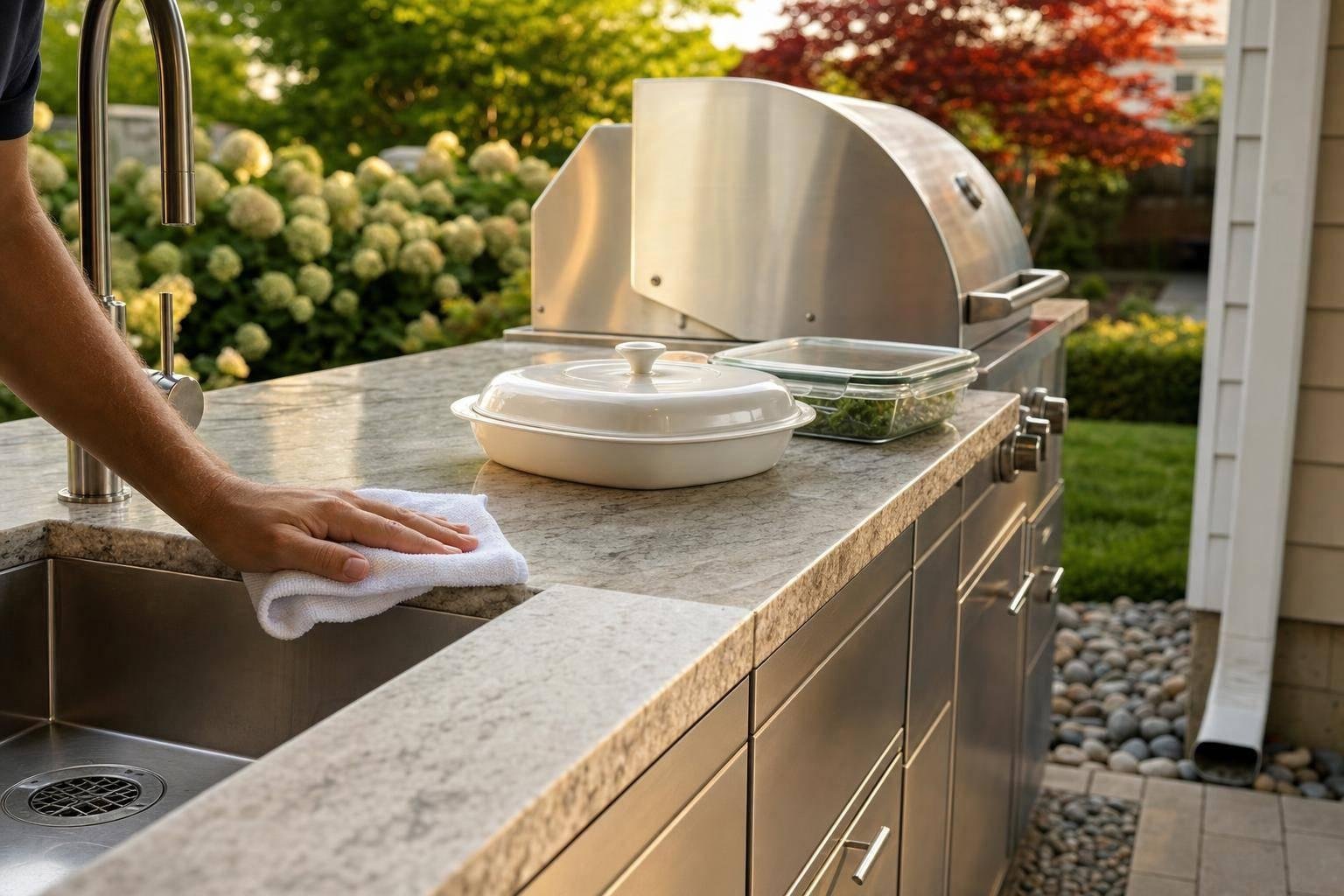
Yes – outdoor kitchens in Maryland can attract pests, but food scraps, standing water, and hidden gaps are the main problem, not the kitchen itself. If I keep surfaces clean, drains moving, and cabinets and utility openings sealed, I cut pest risk by a lot.
Here’s the short version:
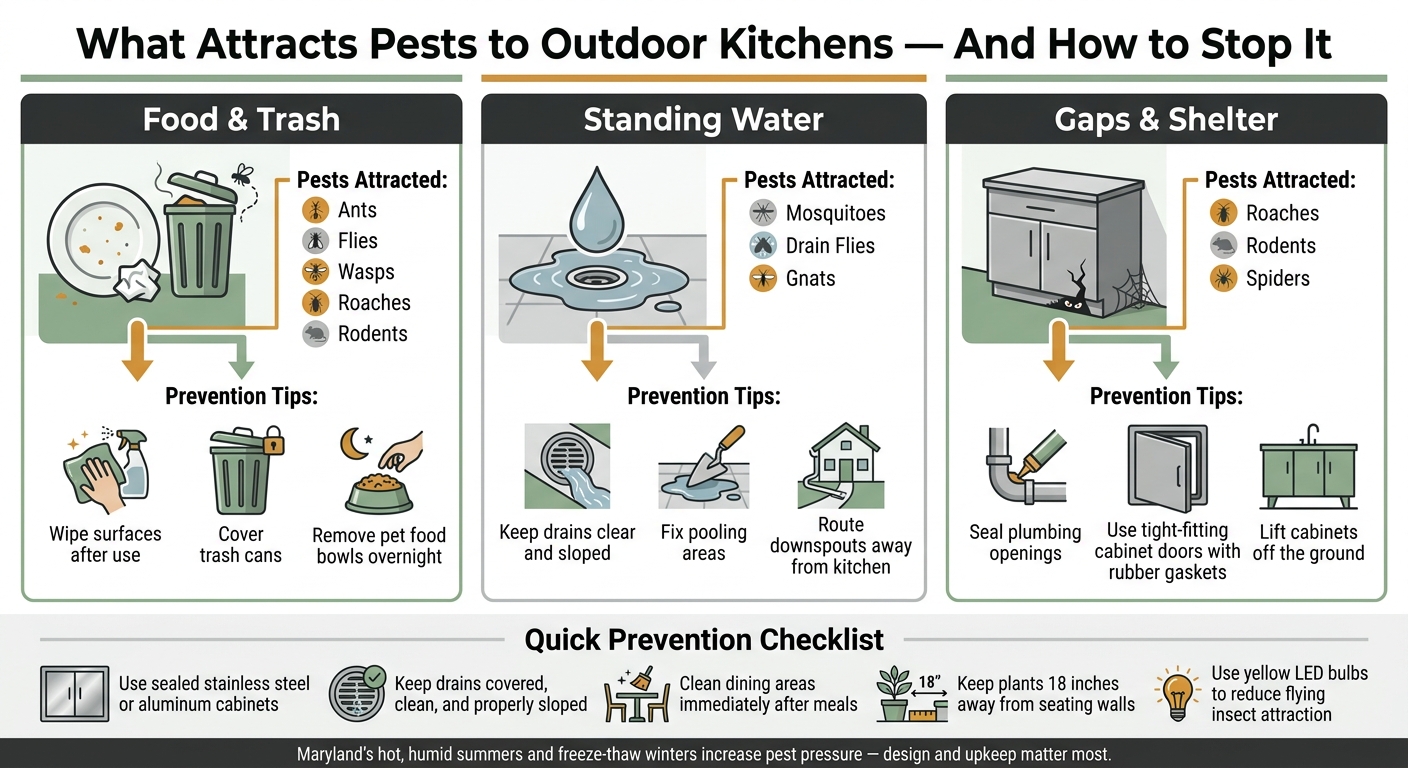
- Food residue draws ants, flies, wasps, roaches, and rodents.
- Standing water brings mosquitoes, gnats, and drain flies.
- Shelter gaps around cabinets, plumbing, and built-ins give pests a place to hide.
- Maryland weather makes this worse, especially in hot, humid summer months and during fall shelter-seeking season.
- Fast cleanup, dry storage, and sealed construction do most of the work.
A few simple design choices also help:
- Use sealed metal cabinets instead of materials that hold moisture.
- Keep drains covered, clear, and sloped so water doesn’t sit.
- Clean dining areas right after meals.
- Keep plants about 18 inches away from seating walls and bases.
- Use yellow LED lights if flying bugs are a problem.
| Main issue | What it attracts | What I’d do |
|---|---|---|
| Food and trash | Ants, flies, wasps, rodents | Wipe surfaces, cover trash, don’t leave pet food out |
| Water buildup | Mosquitoes, gnats, drain flies | Clear drains, fix pooling, move water away |
| Gaps and voids | Roaches, rodents, spiders | Seal openings, tighten doors, check utility lines |
In plain terms, a clean, dry, sealed outdoor kitchen is much less likely to turn into a pest spot, even with Maryland’s heat, rain, and freeze-thaw weather.
Tips for a Bug Free Cookout
sbb-itb-843f8be
What Draws Pests to Outdoor Kitchens Most Often
Outdoor Kitchen Pest Risks & Prevention in Maryland
In Maryland, the main pest magnets are food residue, standing water, and hidden shelter. The usual troublemakers are ants, flies, mosquitoes, wasps, cockroaches, and rodents. And most infestations start the same way: something gets left behind after cooking.
Food Residue, Trash, and Uncovered Dishes
Grease, crumbs, and spilled drinks are common reasons pests show up. Ants, flies, and wasps are all drawn to food residue, especially sweet spills and leftover food sitting on cooking surfaces or dining tables.
Open trash is another big trigger. Garbage cans with loose lids attract flies and ants, and in Maryland, raccoons and possums will also check out unsecured waste. Pet food bowls left outside overnight can cause the same issue. A simple habit helps a lot here: wipe down surfaces and secure trash right after use.
Standing Water Near Sinks, Drains, and Appliance Bases
Standing water near sinks, drains, or appliance bases attracts mosquitoes, drain flies, and gnats. This gets worse during Maryland’s humid summer months. Clogged drain covers and slow-draining sinks can trap leaves and food scraps, which gives insects a place to feed and multiply.
One of the best prevention steps is pretty straightforward: keep drains clear and make sure water flows away from the kitchen structure instead of pooling underneath it.
Dark Gaps and Sheltered Voids Around Built-Ins
Pests don’t just look for food and water. They also look for places to hide.
Loose doors, unsealed plumbing openings, and hollow spaces under counters or islands can give insects and rodents easy shelter. Roaches and rodents, in particular, take advantage of dark, protected areas. And this part matters more than many people expect. Even a well-built kitchen can run into pest trouble if plumbing openings aren’t sealed the right way.
Here’s how the main attractants break down.
| Attractant | Common Pests | What to Watch For |
|---|---|---|
| Food residue and trash | Ants, flies, wasps, roaches, rodents | Grease, crumbs, open bins, pet food |
| Standing water | Mosquitoes, drain flies, gnats | Slow drains, puddles, clogged covers |
| Dark gaps and voids | Roaches, rodents, spiders | Loose doors, unsealed openings |
Those risks can get worse or ease up depending on how the kitchen is built.
How Specific Outdoor Kitchen Features Affect Pest Risk
These features matter because they can do one of two things: give pests food, water, and hiding spots or make those things harder to find. Some outdoor kitchen features are lower risk by nature. But that only holds up when they stay sealed, dry, and clean.
Cabinets and Storage: Lower Risk When Sealed and Dry
Stainless steel and powder-coated aluminum are non-porous, so pests have fewer spots to tuck themselves into. Natural wood is a different story. It absorbs moisture, and that can make the space more inviting to pests.
Material matters, but it’s not the whole game. Risk usually comes down to three basics: sealed doors, dry storage, and nothing inside that draws pests in. Tight-fitting doors with magnetic seals and rubber gaskets help keep out ants and roaches. Cabinets set a few inches off the ground also make base access harder. And one simple rule goes a long way: don’t store food, paper goods, or damp items inside.
Drains: Lower Risk When Covered, Clean, and Draining Properly
Drains are low risk only when they stay clear and dry. Covered, clean drains with proper slope lower pest risk. That’s because bad drainage leaves behind standing water and bits of food near the kitchen structure.
It’s also smart to check utility line entry points near sinks. Small gaps around plumbing are common entry points for insects and rodents. Those gaps can be closed with purpose-built sealing plates or flexible rubber seals.
Seating Walls and Dining Spaces: Crumbs and Crevices Raise Risk
Seating walls can create shaded crevices where pests settle in. Keep plants at least 18 inches away and add a gravel buffer at the base [1].
Dining spaces tend to be riskier for a simple reason: this is where food gets handled, dropped, spilled, and forgotten. Crumbs and residue build up fast after meals, so cleanup speed matters most. Yellow LED bulbs can also help because they attract fewer flying insects than white lights.
| Feature | Pest-Resistant Approach |
|---|---|
| Cabinets | Sealed doors, dry interior, no food or damp items stored inside |
| Drains | Covered, properly sloped, regular cleanouts, sealed utility gaps |
| Seating Walls | Sealed stone, 18-inch plant buffer, gravel border at base |
| Dining Spaces | Immediate post-meal cleanup, yellow LED lighting |
Seasonal weather then shapes how much these risks show up.
How Maryland Weather Changes Pest Activity Around Outdoor Kitchens
Even a clean, sealed outdoor kitchen doesn’t stay the same all year. In Maryland, heat, rain, and freezing weather all change how pests behave around the space.
Spring and Summer Bring More Insects and Moisture Problems
Hot, humid weather gives insects more room to thrive. Mosquitoes, flies, wasps, and ants are all more likely to show up around an outdoor kitchen during Maryland’s warm months [2].
Summer rain can also turn small moisture issues into bigger ones. Water often collects in drains, low spots, and containers, and heat makes those damp areas more attractive to pests. Rain and overwatering may also draw slugs, snails, and fungus gnats [2] [1].
A few simple steps can help:
- Route downspouts away from the kitchen area.
- Clear standing water as soon as you see it.
- Water nearby plants in the morning so surfaces can dry before nightfall [1].
Fall and Winter Shift Attention to Shelter-Seeking Pests
Once temperatures drop, the same cracks and covered spaces that hide pests in summer can turn into winter entry points. Rodents and shelter-seeking insects start moving into protected areas, including outdoor kitchen cabinets, utility voids, and gaps around built-in appliances [3]. They’re usually looking for covered voids, not open cooking surfaces.
Leaf buildup in fall can make things worse by trapping water and keeping pests active later into the season. Cleaning gutters before winter can help cut down late-season mosquito activity [2]. Before the first freeze, it also helps to disconnect and drain water lines. That protects plumbing and can reduce moisture-related pest issues during Maryland’s freeze-thaw cycles [3].
Conclusion: Design and Upkeep Matter More Than the Kitchen Itself
Outdoor kitchens draw pests only when they offer food, moisture, and places to hide.
That’s why the small build details matter so much. Sealed, lifted cabinets, drains that stay clear and slope the right way, fast cleanup after meals, and paying attention to seasonal pest patterns do most of the heavy lifting.
Material choice matters too. Durable, sealed surfaces help cut down on moisture and hiding spots, which is a big deal in Maryland’s humid summers and freeze-thaw winters.
If you want those details built into a new outdoor kitchen, Pro Landscapes MD designs outdoor kitchens and drainage features that support cleaner, drier, more pest-resistant spaces.
FAQs
How often should I clean an outdoor kitchen to prevent pests?
Clean your outdoor kitchen right after every use to help keep pests away.
Wipe down surfaces, sweep up food scraps, and take out the trash. That steady cleanup gets rid of crumbs and other bits of food that draw ants and insects. If you can, store food and drinks indoors and keep the area free of clutter.
What cabinet material is best for reducing pest problems outdoors?
Stainless steel or powder-coated aluminum works best for outdoor kitchen cabinets. Both are non-porous, which makes them easier to wipe down. That means food crumbs and moisture are less likely to stick around and draw ants or other insects.
Skip untreated wood and other porous surfaces. They can trap moisture and bits of food, which is just asking for trouble.
Tight-fitting doors with magnetic seals also help. Add mesh liners or rubber gaskets, and you’ve got a much better shot at keeping smaller pests out.
When is pest activity around outdoor kitchens worst in Maryland?
Pest activity around outdoor kitchens in Maryland is usually at its worst during the warm, humid months, when insects are most active. Humidity can make the problem feel even worse, especially if the space wasn’t built with pest control in mind.
Long, sunny days in the warmer seasons also bring out mosquitoes, ticks, and cicadas. That’s why regular cleaning and smart design choices can go a long way toward making the space more comfortable during these peak months.
Chat with Us