









- bhavya gada
- No Comments
If your outdoor sink drains slowly, smells bad, or leaves water around the patio, the problem usually comes down to one of four things: a clog, bad pipe slope, poor venting, or a failed drain outlet. In many setups, the drain line needs at least 1/4 inch of drop per foot to work by gravity. And if the sink drains to a dry well or French drain, grease, soap, and food scraps can plug the gravel or soil over time.
Here’s the short version:
- Slow drain: often means grease, food, dirt, or leaves are stuck in the trap or line
- Bad odor: often means the P-trap water seal is gone or there’s a leak
- Gurgling: often points to a vent problem
- Pooling water outside: often means the yard grade, channel drain, or drain outlet is the issue, not the sink itself
- Repeat clogs: often mean the blockage is farther down the line or the drain area is saturated
- Freeze damage: in places with winter freeze-thaw, pipes can crack if they were not drained before cold weather
A few checks usually tell me where the trouble starts:
- Look under the sink for drips, cracked fittings, and loose slip nuts
- Remove and inspect the trap
- Test the drain with a large amount of water
- Check the pipe pitch with a level
- Trace the line to its end point, such as a sewer tie-in, dry well, French drain, or pop-up emitter
Fixes depend on the cause. That may mean clearing the trap, replacing washers, resetting pipe pitch, opening a blocked emitter, regrading the area, or changing the whole drain setup. For heavier use, a direct sewer or septic connection is often the better route. For lower-use graywater setups, a dry well or French drain may work if local code allows it.
Bottom line: I’d fix the root cause first, not just the symptom. That keeps the sink working and helps stop water from spreading into the patio, cabinet base, or yard.
How To Unclog That Garden Sink Drain Or Any Sink Drain
sbb-itb-843f8be
Common Outdoor Sink Drainage Problems
Outdoor sink drainage issues usually show up in a few clear ways: slow drainage, bad smells, or pooling water. Each one tends to point to a different part of the system, which makes troubleshooting a lot easier.
Slow Drains, Standing Water, and Recurring Clogs
Slow drainage usually starts with buildup. Grease, soap residue, food scraps, leaves, dirt, and grit can collect in the trap and drain line until water starts moving at a crawl. At first, it may seem minor. Then one day the sink holds water long after you’re done using it.
If you clear the clog and it comes back a few weeks later, that’s a sign the blockage may be farther down the line. In setups that drain into a dry well or French drain, soap and food debris can clog the surrounding gravel or soil and stop absorption completely[1][3]. When that happens, the issue isn’t just in the sink drain. It may be a clogged dry well, French drain, or another failed discharge line.
Put simply, recurring clogs usually mean the problem goes deeper than the sink basket.
Leaks, Drain Odors, and Gurgling Drains
A sewer smell usually points to a dried-out or failed P-trap seal. That water seal is what keeps drain gas from coming back up through the sink. If it’s gone, the odor has a straight path out.
Leaks tend to show up at the usual weak spots: slip joints, worn rubber washers, or trap connections that have shifted over time. Cold weather can make things worse. If pipes weren’t winterized, they can split and start leaking before the damage is easy to spot[1].
A gurgling drain points to a different issue. In most cases, that sound means the trouble has moved past the trap and toward the vent. The system can’t pull in enough air, so water doesn’t flow as smoothly as it should.
Pooling Water Around the Outdoor Kitchen
Water pooling around the sink, cabinet base, or patio often has less to do with the sink line itself and more to do with grading or surface drainage. A lot of outdoor kitchens are built on ground that slopes toward the structure instead of away from it. When that happens, runoff heads straight for the foundation[2].
Clogged channel drains are another common cause. If the grate or drain channel across the patio is packed with leaves or debris, surface water has nowhere to go and spills back into the entertaining area[6]. A blocked or crushed drain outlet can do the same thing. For example, a pop-up emitter buried under mulch may force water to back up through the whole line, sometimes all the way to the sink[5][3].
If the soil near the outdoor kitchen stays soggy for days after rain or heavy sink use, heavy clay soil may be draining too slowly. The first symptom you notice usually gives away the root cause, so it helps to trace that first sign before starting repairs.
How to Diagnose the Cause Before Making Repairs
If you fix the wrong thing, you lose time and the backup stays put. So before you grab tools, follow the path the water takes – from the sink to the outlet. Start with what you can see, then work your way out to the drain line and the discharge point.
Inspect the Sink, Trap, and Visible Pipe Connections
Start under the sink. Check for drips, damp spots, or loose slip nuts at the fittings. Those usually point to a slow leak.
Next, remove the P-trap and see what’s inside. Heavy grease, food scraps, and cracked fittings are common problems. The P-trap holds water to block sewer gas.
While the trap is off, look at the pipe layout too. Make sure no part of the line is holding water where it shouldn’t. A low spot can collect debris and slow the flow.
Test for Clogs, Slope Problems, and Venting Issues
Once the trap looks clean, run a large amount of water and watch how fast it drains. If it backs up right away, the clog is probably close to the sink. If the backup shows up after several minutes, the restriction is often farther down the line – or the discharge area is saturated [1][2].
Check that the pipe run has a steady downward pitch. Flat sections or back-pitched runs hold water and lead to backups. Use a level to check the line. If the slope is off anywhere, fix that section first. Otherwise, other repairs may not last.
Gurgling usually means a venting issue. If the vent can’t pull in enough air, the trap seal can be lost and sewer gas can escape.
Determine Where the Wastewater Actually Goes
Before you decide on a repair, confirm where the sink drains. Trace the line all the way to the outlet. If it ends at a pop-up emitter, make sure it opens freely and isn’t buried under mulch or blocked by debris [2]. Soggy ground or standing water near the outlet usually points to a failed discharge area, not the sink itself [2].
| Inspection Step | What to Check | Warning Signs |
|---|---|---|
| Sink & Trap | P-trap, slip nuts, washers | Drips, cracked fittings, sewer odors |
| Pipe Run | Slope/pitch along the drain line | Slow flow, standing water in pipes |
| Venting | Trap seal, vent stack | Gurgling sounds, recurring odors |
| Discharge Point | Pop-up emitter, dry well, or French drain exit | Soggy soil, overflow, bad smells near outlet |
Once you know exactly where the problem starts, the next fix is a lot easier to choose.
Practical Fixes and Long-Term Drainage Solutions
Outdoor Sink Drainage Methods Compared: Sewer vs. Dry Well vs. Lift Pump
Clear Clogs, Stop Leaks, and Correct Pipe Pitch
Once you know whether you’re dealing with a clog, a slope problem, a venting issue, or a bad discharge point, the next step is simple: fix the actual cause.
For an isolated clog, clean the trap. But if you see standing water, soggy spots in the yard, or pooling near the foundation, you’re likely dealing with a bigger drainage issue that calls for regrading or a more complete drainage fix[4][2].
Leaks at the connections usually come down to worn or loose parts. Tighten loose slip joints, and replace old washers or cracked fittings as needed. If part of the drain line is flat or pitched the wrong way, adjust it so the pipe keeps at least 1/4 inch of drop per foot of horizontal run[1].
For underground drainage that needs to last, solid 4-inch PVC is usually the better pick over corrugated pipe. It holds up better under pressure, has a smooth interior, and is less likely to clog over time[2].
Choose the Right Drainage Setup for Chronic Problems
If cleaning the line and fixing the pitch don’t stop the backup, the setup itself may be the issue.
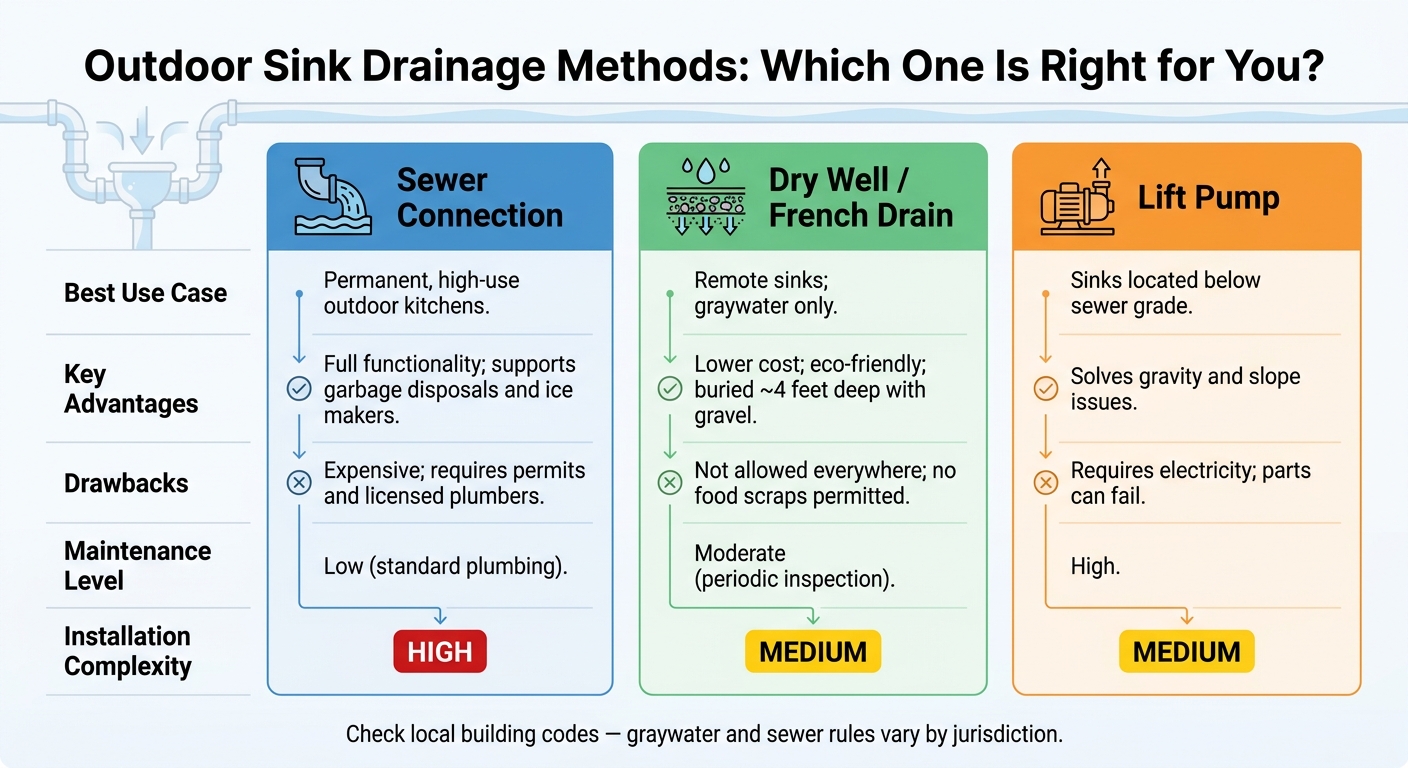
For outdoor sinks that get heavy use, connect the drain to the main sewer or septic line[1]. That option also supports garbage disposals and ice makers[1].
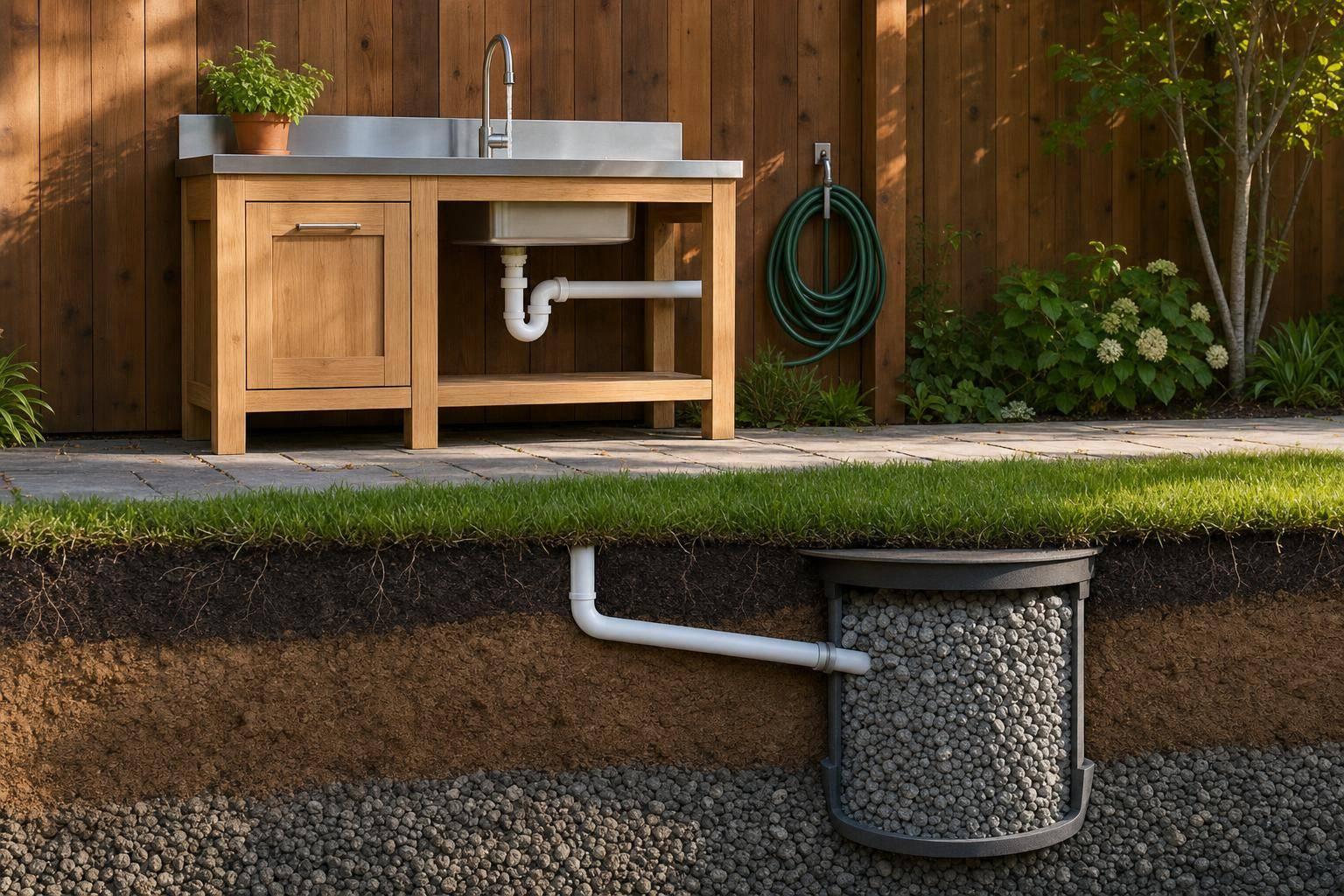
If the sink is far from a sewer connection and tying in isn’t practical, a dry well or French drain may work for graywater if local code allows it[1][4]. A typical dry well is buried about 4 feet deep and filled with gravel so water can soak into the ground slowly[1]. With that setup, keep food scraps and heavy soaps out of the drain. They can clog the system or affect the soil[1].
If the sink sits too low for gravity drainage to work, a lift pump can move wastewater to the discharge point[1].
| Drainage Method | Best Use Case | Advantages | Disadvantages | Maintenance Needs | Installation Complexity |
|---|---|---|---|---|---|
| Sewer Connection | Permanent, high-use outdoor kitchens | Full functionality; allows garbage disposals and ice makers | Expensive; requires permits and licensed plumbers | Low (standard plumbing) | High |
| Dry Well / French Drain | Remote sinks; graywater only | Lower cost; eco-friendly | Not allowed everywhere; no food scraps | Moderate (periodic inspection) | Medium |
| Lift Pump | Sinks below sewer grade | Solves gravity/slope issues | Requires electricity; parts can fail | High | Medium |
Check with your local building department before you choose a method, since graywater and sewer rules vary by jurisdiction[1].
Connect Sink Drainage to Patio and Landscape Drainage
Sometimes the sink drain works fine, but the area still turns into a puddle. In that case, the problem isn’t the sink line. It’s surface runoff.
If the patio slopes toward the outdoor kitchen instead of away from it, water can collect around the sink area. Channel drains or grate drains, installed flush with the patio surface, can catch that runoff before it starts pooling around the cooking area[6]. That water can then move into underground piping tied to the larger landscape drainage system[2][6].
It also helps to grade the surrounding yard so stormwater moves away from the outdoor kitchen instead of settling around it[6].
Preventive Maintenance and Conclusion
Maintenance Steps That Keep Outdoor Sink Drains Working
Once you fix the drain, the next job is simple: keep it from failing again.
Don’t let food scraps or too much soap wash down the drain. That matters even more if your setup drains into a French drain or dry well. Scraps and soap can clog the gravel or the soil where the water needs to move.
If you’re in Maryland, winter prep is a must. Before the first frost, drain the outdoor sink and shut off the supply line. That helps prevent burst pipes.
Use this seasonal checklist to help protect the drain, P-trap, and discharge point.
| Maintenance Task | Recommended Frequency | Why It Matters |
|---|---|---|
| Clean sink strainer | After each use | Keeps large food scraps out of the drain line |
| Flush with hot water and inspect P-trap | Monthly | Dissolves minor grease buildup and confirms the water seal is intact |
| Clear discharge outlets | Seasonally | Prevents backups at pop-up emitters from mulch or debris |
| Inspect exposed pipes | Spring and Fall | Catches leaks or cracks before they saturate the soil |
| Winterize plumbing | Before first frost | Prevents burst pipes |
| Check for standing water | After heavy rain | Spots grading or drainage failures early |
One more small thing goes a long way: trim grass and pull mulch back from pop-up emitters so they can open without getting stuck.
With steady cleaning and proper winter prep, most outdoor sink drains work well all year.
Conclusion: Fix the Root Cause and Protect the Whole Outdoor Space
Fix clogs and leaks near the sink as soon as you spot them. Then make sure the site has the right long-term drainage setup for its layout and soil. It also helps to keep the plumbing and nearby hardscape in good shape.
For central Maryland property owners dealing with standing water or erosion, Pro Landscapes MD offers grading, French drains, stormwater management, and other drainage solutions across Howard County, Montgomery County, Baltimore County, and nearby areas.
Keep the drain clear, the trap sealed, and the outlet open.
FAQs
Can I use an outdoor sink without a vent?
It depends on your local building codes and the drainage method you choose. Check with local authorities before installation.
Temporary setups, like an under-sink collection bucket, may not need old-school venting. Permanent installations tied into a sewer or septic system usually need to meet plumbing code for safe, proper use.
How do I know if my dry well has failed?
A failed dry well usually shows poor drainage. You might notice standing water near the sink or in your yard that sticks around for more than 48 hours after rain. Other signs include soil erosion, persistent mosquitoes, or water backing up into the drain line.
Dry wells can fail when the soil around them stays saturated. They can also clog in the gravel and bucket area from debris like soap or food scraps. If you think something’s wrong, it’s best to get a professional evaluation.
When should an outdoor sink drain connect to the sewer?
Connect an outdoor sink drain to the home’s main sewer or septic system if you plan to use it much like an indoor kitchen sink and local building codes allow it.
This route is more complex. In many cases, it calls for the right pipe slope and, if the sink sits far from the house, possibly a pump. Always check local rules and talk with a licensed plumber before installation.
Chat with Us