









- bhavya gada
- No Comments
Most patio problems start before the first shovel hits the ground. If I want a patio that lasts 25 to 50 years instead of failing in 5 to 10, I need to get four things right from the start: layout, drainage, base work, and material choice.
Here’s the short version:
- Plan for use, not just looks: leave room for dining, seating, cooking, and walking
- Keep water moving away from the house: use about 1/4 inch of slope per foot
- Build the base right: in Maryland, that often means 8 to 10 inches of excavation and proper compaction
- Pick materials that can handle rain and freeze-thaw cycles: some surfaces crack or wear out much sooner
- Don’t skip permits, utility marking, shade, lighting, or privacy
Maryland adds extra pressure. With about 44 inches of rain each year and around 60 frost days, small planning mistakes can turn into puddles, movement, cracks, and trip hazards much faster than many homeowners expect.
If I had to boil the whole article down to one line, it would be this: a patio has to fit the way people move, stay dry, and stand up to local weather – or it becomes an expensive fix.
7 Backyard Patio Mistakes You’ll Regret Almost Immediately
sbb-itb-843f8be
Quick Comparison
| Area | What to check first | Common mistake | What happens |
|---|---|---|---|
| Layout | Size, zones, walking space | Patio is too small or awkwardly placed | Feels cramped and gets used less |
| Drainage | Slope and runoff path | Surface is too flat | Pooling water, algae, sinking pavers |
| Base | Excavation depth and compaction | Weak or thin base | Shifting, settling, frost heave |
| Materials | Freeze-thaw performance and heat | Wrong surface for Maryland weather | Cracks, stains, hot surfaces |
| Code and comfort | Permits, 811, shade, lighting, privacy | Last-minute add-ons or skipped checks | Delays, extra cost, lower use |
That’s the big picture, and it covers the main mistakes this guide helps me avoid.
Planning and Layout Errors That Make Patios Hard to Use
Most patio problems begin before any digging starts. What you decide on paper – or don’t decide at all – shapes whether the space works in daily life. In most cases, the trouble comes down to three things: use, access, and placement.
Designing for Looks Instead of Daily Use
A common mistake is treating the patio like one big open slab. It may look clean on a sketch, but it often falls apart once people start using it.
A patio that works well needs separate zones for cooking, dining, and relaxing. Each area also needs enough space for people to move around without bumping into chairs, tables, or each other. If the layout feels tight, it won’t get used much.
A simple way to test this: mark out furniture zones at full scale before digging. Then put actual chairs and a table inside those outlines to see how the fit feels.
Picking the Wrong Size, Shape, or Location
A patio stops working when its layout doesn’t match how people live. The best spot is usually where people already move between the house and yard. If the patio sits off to the side with no natural connection, it can feel awkward from day one.
Sun exposure gets missed all the time. Then summer hits, and the patio becomes a hot plate. In Maryland, a west-facing patio can turn uncomfortably hot by 4 p.m. in summer, which makes it hard to use during the exact hours most people want to be outside [3][5].
Before you lock in the location, watch how sunlight moves across the yard at 9 a.m., noon, and 4 p.m. on a clear day [5]. That one step can save a lot of regret later.
Blocking Access and Creating Unsafe Movement
Bad access can make even a nice patio annoying to use. Main walkways should be 4 to 5 feet wide so two people can walk side by side with no squeeze [1]. Secondary paths should be at least 3 feet wide so they don’t feel cramped or force people into single file [1].
Step placement matters too. One lone step is easy to miss, which makes it a trip hazard on the way up and a fall risk on the way down. A level transition is better. If that’s not possible, use at least two steps.
It also helps to think about how people face each other. Set the grill or outdoor kitchen so the cook faces guests instead of turning their back the whole time. And for fire pits or outdoor fireplaces, keep them at least 10 feet from any structure or combustible material [5].
| Feature | Recommended Measurement | Why It Matters |
|---|---|---|
| Main walkway width | 4 to 5 feet | Allows two people to walk side by side [1] |
| Secondary path width | 3 feet minimum | Prevents cramped, single-file movement [1] |
| Fire pit setback | 10 feet from structures | Fire safety and heat clearance [5] |
Once the layout works, the next question is whether the base and drainage can support it.
Drainage and Structural Mistakes That Shorten Patio Life
After layout, drainage and base prep make or break a patio.
Flat Surfaces, Bad Slope, and Water Pooling Near the House
A patio can look level and still be a problem. If there’s no planned slope, water just sits there. And when water has nowhere to go, it starts causing trouble fast.
A common standard is a pitch of 1/4 inch per foot away from the house, or about 1 inch of drop for every 8 feet of distance [1][6].
Here’s what that problem often looks like in the yard:
- Puddles after rain
- Joint sand washing out
- Algae growth
- Sinking pavers
- Water moving toward doors or the foundation
The table below shows the most common drainage options and typical Maryland cost ranges [4][1]:
| Drainage Option | Approx. Cost (USD) | Best Use Case | Suitability for Clay Soils | Maintenance Level | Stormwater Benefits |
|---|---|---|---|---|---|
| French Drains | $20–$50 per linear ft | Managing trapped groundwater | High | Low to medium | High |
| Permeable Pavers | $20–$35 per sq ft | Areas with strict runoff limits | Moderate | Medium | Excellent |
| Channel/Linear Drains | $30–$100 per linear ft | Where patios meet house walls or driveways | High | Low to medium | Moderate |
| Gravel Borders | $5–$15 per linear ft | Perimeter drainage and edge softening | Moderate | Low | Moderate |
Drainage needs to be figured out before excavation starts. Slope helps with runoff, but it only works if the base underneath is built the right way. That’s where many patios start to fail.
Weak Base Preparation, Poor Compaction, and Soil Problems
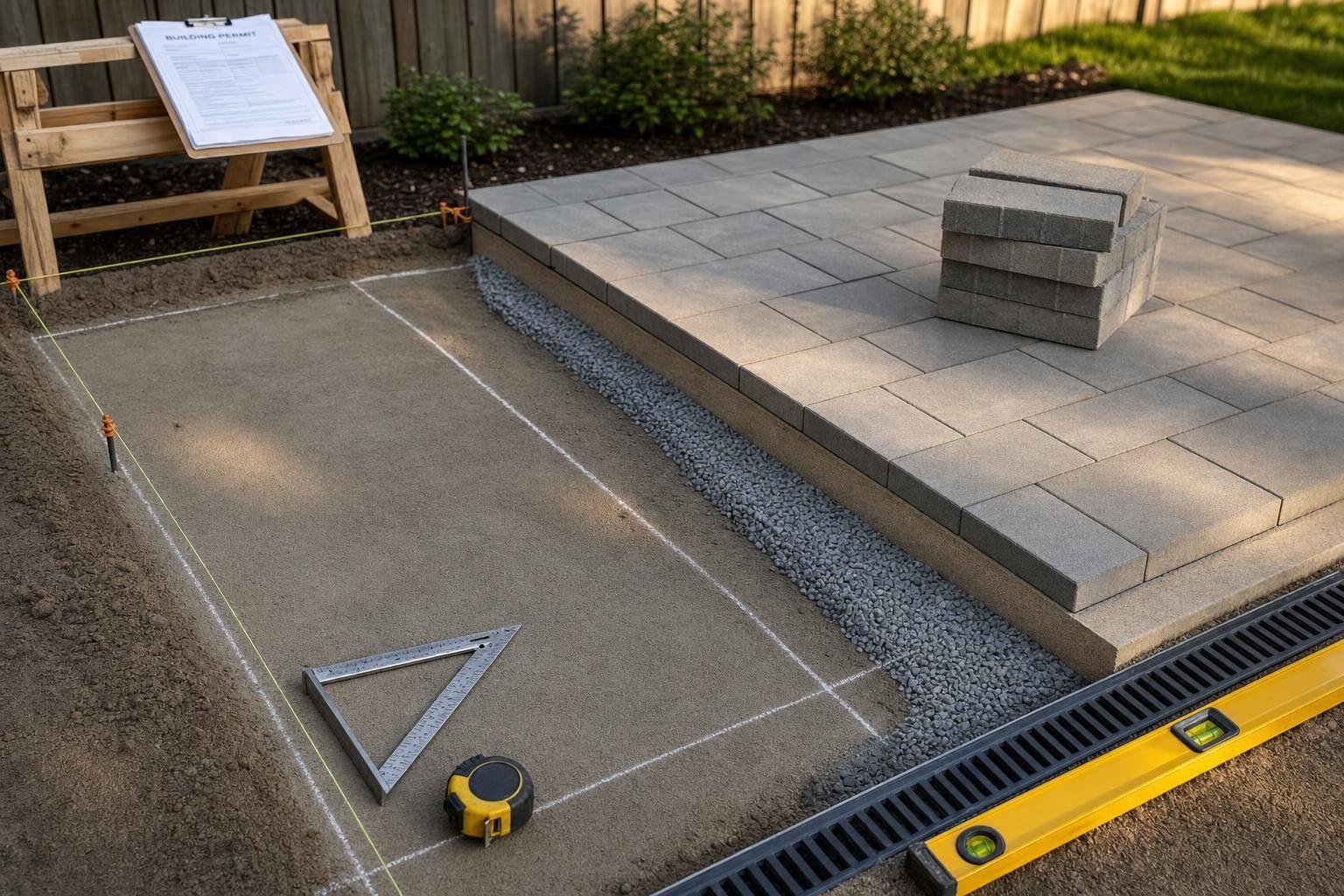
A long-lasting patio starts below the surface. In Maryland, that usually means 8–10 inches of excavation, a geotextile fabric separator, 4–6 inches of compacted crushed limestone (21A), and 1–2 inches of concrete sand for the bedding layer [4][1].
Geotextile fabric matters most in clay-heavy soils. It helps stop the subgrade from mixing with the aggregate base during freeze-thaw cycles [4]. Each layer should be compacted before the next one goes in, with aggregate installed in 2-inch lifts until the needed compaction level is reached [4].
A simple field check helps: the base should not dent under firm foot pressure. Edge restraints also matter more than many homeowners think. Aluminum, steel, or heavy-duty plastic restraints, spiked every 2 feet, help limit side-to-side paver movement over time [4].
"The base should be 8–10 inches deep to prevent frost heave due to Maryland’s weather conditions." – Rock Remodeling [4]
Freeze-Thaw Stress, Buried Utilities, and Tree Roots
The Annapolis area averages about 60 frost days per year [1]. If water gets trapped in a weak base, it can freeze, expand, and push pavers out of line. That’s one reason material quality matters. Concrete pavers rated to ASTM C936, with absorption below 5%, hold up better through freeze-thaw cycles than lower-grade options [4].
Rock salt can also cause issues on new patios. Sand or calcium chloride is a better pick instead [1].
Before any digging starts, two other problems need attention: buried utilities and tree roots. Maryland law requires contacting Miss Utility at least three business days before digging begins, and conduit sleeves should be installed before the base is compacted [4][3].
Tree roots can cause trouble too. If a patio is built too close to the root zone, roots may lift the pavers later. Aggressive species like silver maple or Norway maple are common troublemakers.
Material, Comfort, and Style Choices That Age Poorly
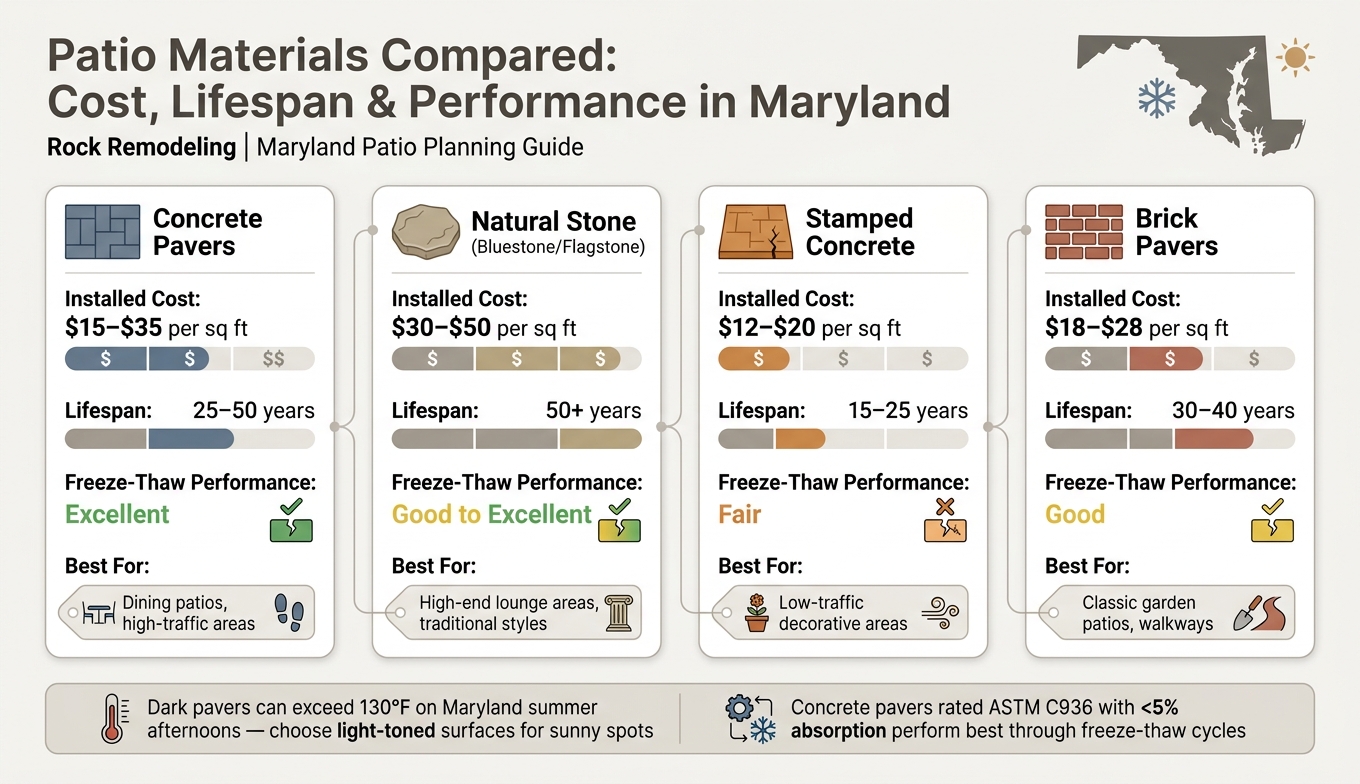
Patio Materials Compared: Cost, Lifespan & Performance in Maryland
Choosing the Wrong Paving Material for the Job
After drainage and base prep, the next place patios tend to go wrong is the surface material.
In Maryland, that choice has a big effect on how a patio handles freeze-thaw cycles, stains, and summer heat. It often decides how long the patio holds up. With temperatures swinging from -10°F in winter to 95°F in summer [4], the wrong surface can crack, stain, or wear out far sooner than expected.
Interlocking concrete pavers are one of the safer picks for Maryland. If one piece gets damaged, you can swap out that unit instead of tearing up the whole patio. Pennsylvania Bluestone is another strong option for the Mid-Atlantic because it has low thermal expansion and holds up well over time [4]. Imported sandstones are riskier here. Some types can start to break down within five years in this climate [4].
Stamped or poured concrete is the material most likely to disappoint in Maryland. Because it forms one rigid slab, it has a harder time dealing with freeze-thaw stress and is more likely to crack as the years pass [1][4].
| Material | Approx. Installed Cost | Lifespan | Freeze-Thaw Performance | Best For |
|---|---|---|---|---|
| Concrete Pavers | $15–$35 per sq ft | 25–50 years | Excellent | Dining patios, high-traffic areas |
| Natural Stone (Bluestone/Flagstone) | $30–$50 per sq ft | 50+ years | Good to Excellent | High-end lounge areas, traditional styles |
| Stamped Concrete | $12–$20 per sq ft | 15–25 years | Fair | Low-traffic decorative areas |
| Brick Pavers | $18–$28 per sq ft | 30–40 years | Good | Classic garden patios, walkways |
Heat matters too. Dark-colored pavers can exceed 130°F on a full-sun Maryland afternoon [10]. That’s hot enough to make people avoid the space altogether. In sunny spots, light-toned pavers or porcelain stay cooler underfoot, which makes a noticeable difference in July and August.
Trend-Driven Finishes and Oversized Furniture
A patio can last for years and still miss the mark if it feels out of place with the house or too tight to use well.
Trend-heavy finishes are often the first thing to look dated. A safer move is to match the material and color tone to the home’s architecture. Modern homes usually look better with large-format pavers and clean lines. Traditional or Mediterranean homes tend to work better with stone, brick, or warm textured surfaces [5].
Oversized furniture causes just as many problems. It’s easy to fall for a showroom setup, then realize the pieces eat up half the patio. Measure the patio first, then choose furniture that fits the footprint. Leave 3 to 4 feet of clearance behind chairs so people can move around without that awkward squeeze-between-the-table feeling. Before buying, mark the furniture layout with painter’s tape or chalk on the patio surface.
Leaving Out Shade, Lighting, and Privacy
A patio isn’t just supposed to survive the weather. It also has to feel good to use.
Patios with no shade can heat up fast in Maryland summer sun [2][10]. Pergolas and shade sails work best when they’re part of the first plan, not an afterthought added once the space is already too hot.
Lighting should also go in during construction. Retrofits are harder, messier, and more disruptive [7][3]. Warm, layered lighting – like path lights, sconces, and accent lights – helps with safety and makes the patio feel pulled together after dark.
Privacy is another detail people skip until it becomes a problem. A patio set too close to a property line, or left wide open to the neighbors’ view, often doesn’t get used the way people hoped. Fences, lattice, and plantings can block sightlines without making the area feel boxed in.
Code, Maintenance, and a Final Maryland Patio Checklist
Permits, Setbacks, and Safety Requirements
Once you’ve nailed down the layout, drainage, and materials, the next step is getting approval and making sure the plan meets local code. Before you lock in the design, check permit rules, setback limits, and any HOA restrictions.
| Project Size | Typical Permit Requirement |
|---|---|
| Under 200 sq. ft. | Usually no permit; verify setbacks [4] |
| 200–500 sq. ft. | Building permit typically required [4] |
| Over 500 sq. ft. | Building permit plus site plan review [4] |
Montgomery County applies stormwater management rules to any hardscape over 100 sq. ft. [4]. Rules can get stricter near tidal water, in the Chesapeake Bay Critical Area, and in neighborhoods with HOA oversight [4][1][3].
Before digging, call 811 at least three business days ahead so underground utilities can be marked [4]. That step is easy to skip when you’re eager to get started, but hitting a gas or electric line is the kind of mistake you only make once. Fire pits and outdoor fireplaces need at least 10 feet of clearance from any combustible structure or low-hanging branches [5]. Electrical work may also need its own permit.
Upkeep Needs and Landscape Integration
Once the patio is installed, routine care helps protect both the surface and the drainage below it. Even a solid patio needs some upkeep. Polymeric joint sand should be refreshed every 3–5 years to help stop weeds and ant hills from moving in [1][9]. A breathable sealer every 2–3 years helps guard against UV fading and organic staining from leaf tannins [2][1].
On sloped Maryland lots, a patio usually can’t do the job on its own. Retaining walls, seat walls, and grading help deal with elevation changes and push runoff away from the structure. Planting beds around the edge can soften the look, add privacy, and help with runoff in clay-heavy soils [6][8]. The best patios feel tied into the yard, with grading, beds, and walkways planned as one system instead of patched together later.
Checklist: What to Confirm Before You Build
Use this signoff list before excavation starts:
- Drainage, base, materials, and fit: Confirm the drainage plan before excavation, check base depth and freeze-thaw material rating, and make sure furniture fits before locking the footprint
- Utilities: Call 811 at least three business days before excavation [4]
- Permits and HOA: Confirm county permit thresholds and any HOA limits on materials or placement [4][3][1]
- Landscape tie-in: Plan walkways, planting beds, and grading as part of the same project, not as afterthoughts
FAQs
How do I know if my patio is big enough?
Think about how the patio will work in everyday life. Maybe it’s for outdoor dinners, lazy afternoons, or weekend grilling. That use should shape the size.
If the patio is too small, it can feel cramped fast. If it’s too big, the space may feel bare and a little exposed.
A simple test helps: map out your furniture right on the ground with chalk, stakes, or painter’s tape. It’s an easy way to see the layout before anything gets built.
For movement, leave 36 to 48 inches of walkway space behind chairs. That gives guests enough room to pass through without bumping into furniture or getting stuck in tight spots.
What patio materials hold up best in Maryland?
In Maryland, the best patio materials are the ones that can stand up to freeze-thaw cycles and heavy rain. Concrete pavers are a smart pick because they’re durable, have a bit of flex, and are easier to fix than poured concrete.
If you want a timeless, high-end look, natural stone like bluestone is also a strong option. Whatever material you choose, the base matters just as much. A stable, well-draining base with 4 to 6 inches of compacted crushed stone is key.
When do I need a permit for a patio?
In Maryland, permit rules change by county and by the size of the job. In many areas, patios under 200 square feet may not need a permit. Patios between 200 and 500 square feet often need a building permit.
Once a project goes over 500 square feet, the rules usually get stricter. The same goes for work that includes electrical lines, gas lines for fire pits, or major grading. In those cases, you’ll often need a permit and a site plan review.
If that sounds like a lot to sort through, you’re not alone. Pro Landscapes MD can help you figure out what your local county requires.
Chat with Us